The Erosion of Faith
How extreme suffering can shatter deeply held spiritual beliefs.
Quote
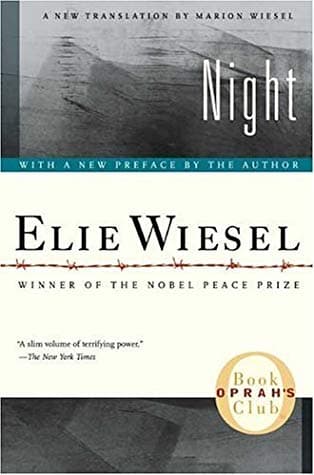
Never shall I forget that night, the first night in camp, which has turned my life into one long night, seven times cursed and seven times sealed. Never shall I forget that smoke. Never shall I forget the small faces of the children whose bodies I saw transformed into smoke under a silent sky. Never shall I forget those flames which consumed my faith forever.
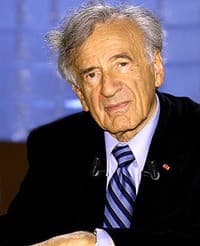
Wiesel's memoir shows the deep spiritual crisis the Holocaust caused. Before Auschwitz, Eliezer was a devout, even mystical, young Hasidic Jew. His life centered on Torah study and prayer, believing in a good God. The systematic dehumanization, arbitrary cruelty, and large scale of death, especially of children, challenged this belief. He sees a young boy (the 'pipel') suffer a long death during a hanging, and this event symbolizes the death of God in his heart. His faith does not just weaken; it is consumed by the crematoria. This is...
Supporting evidence
Wiesel describes his initial fervent prayer and study, contrasting it with his later refusal to fast on Yom Kippur, a deliberate act of rebellion against God, feeling that God had broken His covenant with the Jewish people. The hanging of the 'pipel' is a pivotal moment where he states, 'Behind me, I heard the man asking: 'For God's sake, where is God?' And from within me, I heard a voice answer: 'Where He is? This is where - hanging here on this gallows...''
Apply this
This takeaway challenges individuals to reflect on the nature of faith and suffering. It encourages empathy for those whose beliefs are tested by trauma and prompts contemplation on how one's spiritual or ethical framework might withstand extreme adversity. It's a call to understand that faith is not static but a dynamic process, often reshaped or even destroyed by lived experience.