BookBrief
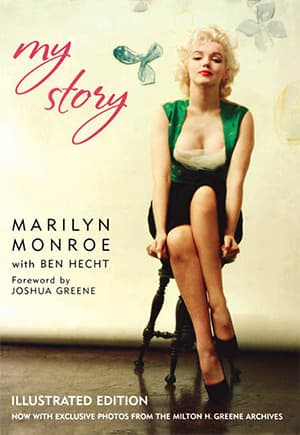
My Story cover
Archivist's Choice

My Story

Marilyn Monroe (1974)

Genre

Biography / Memoir / History / Creativity

Reading Time

180-240 min

Key Themes

See below

Track Your Reading

Sign in to track this book

Marilyn Monroe's 'My Story' offers an honest look into the life of an icon, showing the intelligent, sensitive woman behind the public image, from her lonely childhood to her sense of her own tragic end.

Core Idea

Marilyn Monroe's 'My Story' is a raw, personal account of her early life and rise to fame, showing the difference between the public Marilyn Monroe and the sensitive, intelligent Norma Jeane Mortenson. It argues that her public image, created from a difficult childhood, became both a protection and a trap, used by an industry that valued her looks but ignored her mind and artistic goals. The book shows the emotional cost of being seen as an object and the constant effort to be her true self and gain creative respect amid huge fame and personal problems.
Reading time
180-240 min
Difficulty
Medium
✓ Read this if...
You are fascinated by Marilyn Monroe beyond the pop culture icon, want to understand the origins of her complex persona, or are interested in the early struggles of a woman navigating a predatory Hollywood system.
✗ Skip this if...
You are looking for a comprehensive, linear biography of her entire life, a purely academic analysis, or prefer a less fragmented and more polished narrative style.

Core idea

The central argument and framework that powers the entire book.

Marilyn Monroe's 'My Story' is a raw, personal account of her early life and rise to fame, showing the difference between the public Marilyn Monroe and the sensitive, intelligent Norma Jeane Mortenson. It argues that her public image, created from a difficult childhood, became both a protection and a trap, used by an industry that valued her looks but ignored her mind and artistic goals. The book shows the emotional cost of being seen as an object and the constant effort to be her true self and gain creative respect amid huge fame and personal problems.

At a glance

Reading time

180-240 min

Difficulty

Medium

Read this if...

You are fascinated by Marilyn Monroe beyond the pop culture icon, want to understand the origins of her complex persona, or are interested in the early struggles of a woman navigating a predatory Hollywood system.

Skip this if...

You are looking for a comprehensive, linear biography of her entire life, a purely academic analysis, or prefer a less fragmented and more polished narrative style.

Key Takeaways

1

The Scars of an Unwanted Childhood

Early life trauma shaped Marilyn's profound insecurity and longing for belonging.

Quote

I was never used to being happy, so I didn't know what it felt like. I was only used to being unhappy, and I could tell the difference between feeling unhappy and feeling nothing.

Monroe's book shows a childhood marked by instability, neglect, and a constant search for a stable home. Moved between orphanages, foster families, and her mother's friends, she lacked consistent love and security. This early trauma created a deep insecurity and a strong need for approval, which stayed with her throughout her life, even at the height of her fame. Her desire for a 'normal' family and a sense of belonging influenced many of her later relationships and career choices. The story describes a child who learned to adapt and ...

Supporting evidence

Her detailed accounts of living in various foster homes, the institutional environment of the orphanage, and the intermittent presence of her mentally ill mother, Gladys Baker.

Apply this

Recognize how early life experiences, particularly those lacking stability and affection, can profoundly impact an individual's self-worth and emotional resilience, even in adulthood. Develop empathy for those who carry the burden of childhood trauma.

childhood-traumainsecurityabandonment-issues
2

Norma Jeane vs. Marilyn Monroe

The constant struggle between her true self and the manufactured persona.

Quote

Marilyn Monroe was a creature of the studio, a manufactured product. Norma Jeane was me.

Monroe clearly describes the difference between her private self, Norma Jeane Mortenson, and the public Marilyn Monroe. She calls Marilyn a character she created, a separate person for the cameras and public admiration. This inner split was not just an acting technique but a core part of her identity, leading to constant inner conflict. While Marilyn brought her fame, Norma Jeane wanted authenticity and a life away from constant public attention. The book shows the emotional cost of keeping up this image, where the line between actres...

Supporting evidence

Her reflection on changing her name, the development of her 'Marilyn' voice and mannerisms, and her feelings of detachment when watching herself on screen.

Apply this

Consider the impact of public personas and the importance of maintaining a connection to one's authentic self. Reflect on how societal expectations can create pressure to perform a role rather than simply 'be'.

identity-crisispublic-personaauthenticity
3

The Intelligence Behind the Image

Marilyn was far more astute and self-aware than her 'dumb blonde' stereotype suggested.

Quote

I knew I belonged to the public and to the world, not because I was talented or even beautiful, but because I had never belonged to anyone else.

Contrary to the common 'dumb blonde' idea, Monroe's book shows a sharp, thoughtful, and intelligent woman. Her writing is clear, her observations are keen, and her self-analysis is strikingly honest and insightful. She understood human nature and the workings of fame, often sharing deep insights into her own situation and the industry. The book shows her awareness of how she was seen and her smart, though often emotionally costly, control of that perception. She was not a passive victim of her image but an active part in its creation,...

Supporting evidence

Her detailed descriptions of her thought processes, her reflections on her acting craft, and her poignant predictions about her own tragic end.

Apply this

Challenge preconceived notions and look beyond surface appearances to understand the depth and complexity of individuals. Avoid stereotyping based on public image or perceived roles.

misconceptionsstereotype-breakingself-awareness
4

The Burden of Objectification

Her body was her currency, but also her cage.

Quote

I never quite understood it — the way men looked at me. It was as if I were a piece of meat.

Monroe's story strongly conveys the constant objectification she faced, both personally and professionally. While her looks were a key factor in her rise to fame, they also became a source of great pressure and isolation. She describes feeling constantly watched, reduced to a set of physical traits rather than a whole person. This objectification took away her control and made her feel always exposed and vulnerable. The book shows how her body became a public item, celebrated and desired, yet also a source of deep discomfort and a bar...

Supporting evidence

Her recounting of the non-consensual sexual experience, the constant attention to her figure, and the industry's focus on her 'sex appeal' over her acting talent.

Apply this

Reflect on how objectification, in any form, can dehumanize individuals and impact their sense of self-worth. Promote respectful interaction that values a person's intellect and character over their physical appearance.

objectificationsexismbody-image
5

Love as a Mirage

Her quest for love was often intertwined with a desperate search for salvation and stability.

Quote

I wanted to be loved, but I didn't know how to be loved. I only knew how to be wanted.

Monroe's account of her relationships, especially her marriage to Joe DiMaggio, shows a deep desire for a love that could give her the stability and unconditional acceptance she missed in childhood. Her search for love often had unrealistic expectations, seeing partners as potential rescuers who could fill her inner emptiness. The story suggests that her intense desire to be loved made her open to disappointment. She wanted a love that was both passionate and grounding, but the pressures of her fame, her own insecurities, and expectat...

Supporting evidence

Her detailed descriptions of her feelings for DiMaggio, their arguments, and her longing for a quiet, domestic life away from the public eye.

Apply this

Understand how past emotional voids can influence present relationship dynamics. Recognize that genuine love involves seeing and accepting a person fully, beyond their public image or perceived utility.

relationship-dynamicsunconditional-lovecelebrity-relationships
6

The Price of Fame

Stardom brought adoration but also profound isolation and loss of privacy.

Quote

Fame is a funny thing. It can give you everything, and it can take everything away.

The book acts as a clear warning about the mixed blessings of fame. While it gave Monroe opportunities, it also came at a huge personal cost. She tells of the constant pursuit by the press, the constant watching, and the complete loss of her privacy. This lack of personal space led to a deep sense of isolation, as real connections became hard to form amid the superficiality and opportunism often found with celebrity. The adoration of millions did not bring personal happiness; instead, it often made her feel more lonely and misundersto...

Supporting evidence

Her descriptions of paparazzi encounters, the difficulty of having a normal life, and her feeling of being 'owned' by the public.

Apply this

Consider the ethical implications of celebrity culture and the media's role in shaping public perception. Prioritize personal well-being and privacy over external validation and fleeting fame.

celebrity-cultureprivacy-lossisolation-of-fame
7

A Prescient Vision of Her Own Demise

Marilyn possessed a chilling foresight regarding her tragic end.

Quote

I had a vision of myself, a premonition, of being found dead in the hall bedroom with an empty bottle of sleeping pills in my hand.

One of the most haunting parts of 'My Story' is Monroe's disturbingly accurate sense of her own death. Written years before it happened, this specific and clear image points to a deep sadness and an awareness of her own vulnerability. It suggests that even during her successes, a deep sense of doom remained, a feeling that her life was headed toward a tragic end. This foresight highlights the depth of her inner struggles and the constant fight she had with her own problems. It is a moving reminder that outward success often hides grea...

Supporting evidence

The exact quote about her premonition, which eerily mirrors the circumstances of her actual death.

Apply this

Pay attention to early warning signs of despair or mental health struggles in others, even when they are outwardly successful. Foster environments where individuals feel safe to express their deepest fears.

presciencemental-healthtragedy
8

The Creative Struggle of an Actress

Beyond the glamour, a serious artist yearned for recognition of her craft.

Quote

I wanted to be an artist, not just a sex symbol. I wanted to be taken seriously.

While often seen as a 'dumb blonde' and known mostly for her looks, Monroe's book shows her sincere desire to be recognized as a serious actress. She details her dedication to her craft, her struggles with stage fright, and her deep commitment to understanding her characters. She felt frustrated by the industry's unwillingness to see beyond her image and give her more challenging roles. Her work with acting coaches and her efforts to improve her skills show a deep artistic ambition that often went unnoticed. This takeaway highlights t...

Supporting evidence

Her discussions about attending the Actors Studio, her detailed thoughts on character development, and her frustration with the limited roles offered to her.

Apply this

Recognize and value the artistic and intellectual contributions of individuals, even when their public image might suggest otherwise. Support artists in their pursuit of depth and complexity in their work.

acting-craftartistic-ambitiontypecasting
9

The Power of Vulnerability

Her raw honesty in the memoir provides a timeless connection.

Quote

I don't mind being vulnerable. It's how I feel most alive.

One of the lasting strengths of 'My Story' is Monroe's remarkable openness and raw honesty. She does not hesitate to detail her insecurities, emotional wounds, or struggles with mental health. This willingness to expose her deepest fears and flaws makes the book so compelling and relatable, even decades after her death. Her honesty creates a strong connection with the reader, going beyond her iconic status and revealing the universal human experience of pain, longing, and the search for identity. This honesty, often seen as a weakness...

Supporting evidence

Her open discussions about her non-consensual sexual experience, her periods of depression, and her fear of loneliness.

Apply this

Embrace vulnerability as a pathway to authentic connection and self-understanding. Recognize that sharing one's true self, even with its imperfections, can be a powerful act of courage and resilience.

vulnerabilityauthenticityemotional-honesty

Critical analysis

Notable Quotes

I used to think I wasn't pretty enough. I thought all the other girls were prettier than I was. Then I started to realize that it wasn't about being pretty, it was about being me.

Reflecting on her early insecurities and journey to self-acceptance.

Hollywood is a place where they'll pay you a thousand dollars for a kiss and fifty cents for your soul.

A cynical observation about the industry's values and exploitation.

I restore myself when I'm alone.

Highlighting her need for solitude and privacy amidst constant public scrutiny.

It's better to be absolutely ridiculous than absolutely boring.

A playful and defiant statement about embracing individuality.

Sometimes I feel like my whole life has been a series of open doors, and I've just walked through them, not knowing what was on the other side.

Musing on the serendipitous and often unplanned trajectory of her career and life.

I don't mind living in a man's world, as long as I can be a woman in it.

Expressing her desire to maintain her femininity and power within a male-dominated industry.

I have too many fantasies to be a housewife. I think I am more than just a woman.

Articulating her ambitions and self-perception beyond traditional societal expectations.

A career is wonderful, but you can't curl up with it on a cold night.

Reflecting on the limitations of professional success in fulfilling emotional needs.

I knew I belonged to the public and to the world, not because I was talented or even beautiful, but because I had never belonged to anything or anyone else.

A poignant insight into her feeling of public ownership stemming from a lack of personal belonging.

Success for me is not a final destination, it's a journey.

Defining her perspective on achievement as a continuous process rather than a static goal.

The true story is never the one you read in the papers.

A commentary on the discrepancy between public perception and her private reality.

I felt like I was always searching for something or someone to make me whole.

Admitting to a deep-seated longing for completeness and connection.

I was never good at being a person, but I was good at being Marilyn Monroe.

Distinguishing between her private self, Norma Jeane, and her public persona, Marilyn Monroe.

People had a habit of trying to tell me who I was. I wanted to tell them who I was.

Expressing her frustration with external definitions and her desire for self-definition.

Quiz

Test Your Knowledge

Ready to see how well you understood this book? Take our interactive quiz with 10 questions.

10
Questions
~5
Minutes
?
Best Score

Key Questions (FAQ)

'My Story' is an autobiography by Marilyn Monroe, written during her lifetime but published posthumously. It details her challenging childhood as an orphan, her early career in Hollywood, her rise to fame, and her marriage to Joe DiMaggio, offering an intimate look at her life from her own perspective.

About the author