BookBrief
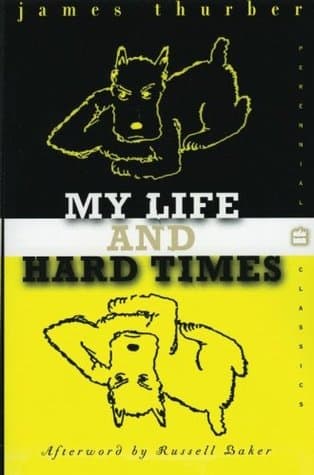
My Life and Hard Times cover
Archivist's Choice

My Life and Hard Times

James Thurber (1933)

Genre

Biography / Memoir

Reading Time

120-180 min

Key Themes

See below

Track Your Reading

Sign in to track this book

James Thurber's memoir is a funny look at his eccentric family, peculiar pets, and the absurdities of life in Columbus, Ohio.

Core Idea

James Thurber's 'My Life and Hard Times' shows how to turn ordinary, awkward, and bizarre moments from a Midwestern upbringing into timeless comedic essays. Using deadpan humor, exaggerated stories, and a sharp eye for human flaws, Thurber suggests that life's true richness and humor come from chaotic, illogical, and memorable everyday events, especially within a wonderfully dysfunctional family. He shows how memory, viewed through a comedic lens, can make personal stories into universal truths about human nature and the strangeness of existence.
Reading time
120-180 min
Difficulty
Easy
✓ Read this if...
You appreciate dry wit, absurd situations, and a nostalgic look at family life through a comedic, slightly exaggerated lens. Ideal for those who enjoy short, humorous essays that find profundity in the peculiar.
✗ Skip this if...
You prefer straightforward narrative non-fiction, detailed historical accounts, or books with a clear, overarching argument that isn't primarily delivered through humor and anecdote. Also, if you dislike understated humor or stories that lean into the surreal.

Core idea

The central argument and framework that powers the entire book.

James Thurber's 'My Life and Hard Times' shows how to turn ordinary, awkward, and bizarre moments from a Midwestern upbringing into timeless comedic essays. Using deadpan humor, exaggerated stories, and a sharp eye for human flaws, Thurber suggests that life's true richness and humor come from chaotic, illogical, and memorable everyday events, especially within a wonderfully dysfunctional family. He shows how memory, viewed through a comedic lens, can make personal stories into universal truths about human nature and the strangeness of existence.

At a glance

Reading time

120-180 min

Difficulty

Easy

Read this if...

You appreciate dry wit, absurd situations, and a nostalgic look at family life through a comedic, slightly exaggerated lens. Ideal for those who enjoy short, humorous essays that find profundity in the peculiar.

Skip this if...

You prefer straightforward narrative non-fiction, detailed historical accounts, or books with a clear, overarching argument that isn't primarily delivered through humor and anecdote. Also, if you dislike understated humor or stories that lean into the surreal.

Key Takeaways

1

The Absurdity of the Everyday

Life's most mundane moments are ripe for comedic exaggeration and observation.

Quote

The things that happen to people are not often as much a matter of conscious design as they are of subconscious compulsion.

Thurber shows how the ordinary parts of daily life, from family talks to household accidents, are often absurd and driven by strange human quirks rather than logic. He turns these common experiences into funny stories, revealing the humor in our collective struggles with technology, pets, and each other. He doesn't invent wild scenarios; instead, he finds the hidden ridiculousness in situations many would see as frustrating or forgettable, proving that humor is a way to see the world, not just a reaction to it. This view encourages a ...

Supporting evidence

The recurring theme of mechanical objects failing spectacularly, like the family car that only ran when pushed, or the furnace that defied all logical repair, highlights the futility and humor in battling inanimate objects.

Apply this

Cultivate an observational eye for the humorous potential in your own daily frustrations. Instead of succumbing to annoyance, try to reframe minor inconveniences as comedic vignettes, perhaps even journaling them for later amusement.

absurdism-humorobservational-comedyeveryday-life
2

The Glorious Dysfunction of Family

Families are rich tapestries of eccentricities, where chaos often reigns supreme.

Quote

We were a household of some twenty-five, counting the dogs, the cat, and the parrot, and there was always something going on.

Thurber's family is a group of lovable eccentrics, each adding to a home filled with delightful disorder. His mother, with her dramatic statements and strange fears, and his grandfather, living in the past, are not just characters but examples of family oddity. The book celebrates this dysfunction, showing it not as a source of unhappiness, but as a source of endless stories and unique charm. It highlights that our families, with all their quirks and disagreements, are important in shaping who we are and providing constant material fo...

Supporting evidence

His mother's conviction that burglars were constantly lurking, leading to elaborate and often comical security measures, and his grandfather's belief that he was still fighting the Civil War, are prime examples of individual quirks shaping the family dynamic.

Apply this

Instead of striving for a perfectly ordered family life, recognize and appreciate the unique personalities and eccentricities within your own family. Document family stories, focusing on the humorous and unexpected moments that define your shared history.

family-dynamicsmemoircharacter-study
3

The Unpredictable Nature of Animals

Pets are not just companions; they are independent agents of chaos and comedy.

Quote

Our dog, Rex, was a brindle bull terrier, and the only dog I have ever known who was afraid of thunder. His fear took the form of a desire to smash windows.

Thurber's portrayal of animals, especially dogs, is not overly sentimental. He shows them as forces of nature, often misunderstood, frequently destructive, and always unpredictable. Rex, the bull terrier afraid of thunder, and the other dogs in his memoir, are not cute sidekicks but important, often disruptive, members of the household. This view challenges the idealized image of pets, offering a more realistic and funnier take on the difficulties and joys of living with creatures who follow their own logic. It suggests that real affe...

Supporting evidence

Rex's dramatic reactions to thunderstorms, which involved him attempting to jump through windows, and the incident with the 'ghost' dog that caused the family to flee their home, showcase the animals' disruptive influence.

Apply this

Observe your own pets (or those of friends) with a critical, yet affectionate, eye. Instead of trying to control every behavior, appreciate their unique personalities and the unexpected moments of humor they bring into your life. Share these stories.

pet-humoranimal-behaviormemoir
4

Memory as a Creative Tool

Recollection is not passive recall, but an active, often embellished, act of storytelling.

Quote

It is a pleasure to remember the people one has known, and the events in which one has played a part, but it is not always a pleasure to set them down.

Thurber's memoir shows that memory is not a perfect recording device, but something that can be changed by interpretation, exaggeration, and storytelling. He doesn't claim to offer a purely factual account; instead, he shapes his memories into engaging, funny stories. This approach frees the memoirist (and anyone thinking about their past) from needing perfect historical accuracy, allowing for creative freedom to create a more compelling story. It shows that the 'truth' of a memory often lies in its emotional impact and its ability to...

Supporting evidence

The very tone of the book, which frequently uses hyperbole and dramatic framing for even minor events, suggests a deliberate shaping of memories for comedic effect rather than strict journalistic reporting.

Apply this

When recounting personal stories, don't be afraid to lean into the humorous exaggerations or dramatic flourishes that make them more engaging. Focus on the emotional truth and the entertainment value, rather than getting bogged down in minute details.

memory-recollectionnarrative-craftmemoir-writing
5

The Enduring Power of Childhood

Early experiences, no matter how chaotic, fundamentally shape one's worldview and comedic sensibility.

Quote

It is a mistake to think that the experiences of the young are less complex than those of the old.

Thurber's entire comedic world seems to come from his early years in Columbus, Ohio. The worries, the strange characters, the home upsets — these were not just isolated events but experiences that shaped his unique view of life. The book suggests that childhood, with its strong emotions and often illogical rules, is a place where one's sense of humor and understanding of human nature develop. It suggests that by looking back at and reinterpreting these early 'hard times,' one can find deeper insights into oneself and the world, turnin...

Supporting evidence

The entire collection is a retrospective look at his childhood and youth, with every chapter drawing directly from specific events and characters from that period, demonstrating their lasting impact on his adult perspective.

Apply this

Reflect on your own childhood experiences, particularly the 'hard times' or confusing moments. How did they shape your current sense of humor or your approach to challenges? Consider writing down these memories, looking for the underlying comedic or insightful patterns.

childhood-memorypersonal-developmenthumor-origins
6

The Battle Against Technology (and Losing Gracefully)

Humanity's often-futile struggle with machinery is a timeless source of comedic frustration.

Quote

The automobile was a challenge that my father met with a kind of desperate, almost religious zeal, which it rarely deserved.

Thurber's world is one where inanimate objects seem to have a mean will of their own. Cars won't start, furnaces explode, and electricity acts strangely. This constant battle against stubborn machines is a recurring funny theme, showing humanity's often pointless attempts to control its surroundings. It's a relatable struggle, as technology continues to annoy us, and Thurber's humor in these situations provides a comforting echo that we are not alone in our frustration. His approach is not to conquer the machines, but to describe the ...

Supporting evidence

The extensive account of the family's unreliable automobile, which only functioned under specific, often inconvenient, conditions, and the repeated incidents with the house's unpredictable electrical system.

Apply this

When faced with technology that refuses to cooperate, resist the urge for pure anger. Instead, try to narrate the situation in your head (or aloud) as if it were a Thurber-esque anecdote, finding the humor in the absurdity of the situation.

technological-frustrationhuman-machine-interactioncomedy-of-errors
7

The Art of Understatement and Exaggeration

Humor often resides in the delicate balance between dramatic build-up and deadpan delivery.

Quote

The police, after some investigation, decided that the shots had been fired by my grandfather, who was shooting at a burglar whom he imagined he saw in the dining room.

Thurber's comedic skill is not just in what he says, but how he says it. He uses both subtle wit and exaggerated situations to create the most humor. A dramatic event, like gunshots in the house, is often followed by a calm, almost official explanation that increases the absurdity. Conversely, a small problem can be inflated into a grand, almost epic struggle. This dual style is important to his humor, teaching us that how a story is told can be as important as the story itself. It encourages a playful use of narrative tone to make st...

Supporting evidence

The incident where his grandfather discharges a gun in the house, which is then recounted with a dry, matter-of-fact explanation that underscores the bizarre reality of the event.

Apply this

When telling a story, experiment with your delivery. Try building up a dramatic scenario only to deflate it with a casual remark, or conversely, describe a minor event with overly dramatic language to amplify its comedic potential.

literary-humorrhetorical-devicesnarrative-technique
8

Embrace the Peculiarities of Human Nature

Our individual quirks and irrationalities are not flaws, but the essence of our charm and comedic potential.

Quote

We are all in the same boat, in a stormy sea, and we owe each other a terrible loyalty.

Thurber's characters, from his family members to casual acquaintances, are defined by their unique and often illogical behaviors. He doesn't judge these peculiarities but observes them with an affectionate, amused eye. This view is a strong argument for accepting the oddities in ourselves and others, rather than trying to fit into some ideal norm. It suggests that our quirks are what make us interesting, memorable, and ultimately, human. By highlighting these individual eccentricities, Thurber creates a sense of shared humanity, where...

Supporting evidence

His mother's various unfounded fears and dramatic tendencies, his grandfather's consistent anachronistic behavior, and the various odd reactions of neighbors and visitors to the Thurber household's chaos.

Apply this

Identify a 'peculiar' trait in yourself or someone you know and try to see it through Thurber's lens – not as a flaw to be corrected, but as a defining characteristic that adds richness and humor to life.

human-psychologycharacter-traitssocial-observation
9

The Liberating Power of Self-Deprecation

Finding humor in one's own misfortunes and awkwardness is a path to resilience and connection.

Quote

I was to suffer a good deal from the fact that my parents were not of the same mind as to whether I should be allowed to go to college.

Thurber does not avoid showing his own youthful awkwardness, worries, and the various difficult situations he found himself in. His willingness to be the target of his own jokes is very appealing and effective. This self-deprecating humor not only entertains but also makes him relatable, suggesting that vulnerability and a willingness to laugh at oneself are strong tools for dealing with life's challenges. It reminds us that we don't always have to present a polished, perfect image; sometimes, admitting our struggles or past mistakes ...

Supporting evidence

His accounts of his struggles with higher education, his inability to draw 'correctly' (leading to his unique style), and various personal embarrassments throughout his youth.

Apply this

Practice self-deprecating humor in appropriate situations. When you make a mistake or experience an awkward moment, try to find the humor in it and share it lightheartedly with others, fostering connection and reducing personal stress.

self-humorvulnerabilitypersonal-narrative
10

Humor as a Universal Language

Despite specific contexts, the underlying human experiences that elicit laughter are timeless and cross-cultural.

Quote

We are a species that likes to laugh, and the things that make us laugh are often the same things that make us cry.

While 'My Life and Hard Times' is deeply rooted in a specific time and place (early 20th-century Columbus, Ohio), Thurber's humor goes beyond these limits. The main human experiences he explores — family problems, the fight with technology, the quirks of pets, the worries of youth — are universal. His ability to find laughter in these common struggles speaks to the lasting power of humor as a way to deal with life's difficulties. This idea suggests that while the specific ways 'hard times' appear may change across generations and cult...

Supporting evidence

The enduring popularity of the book decades after its publication, and its continued appeal to readers from diverse backgrounds, suggests the universal resonance of its themes and humor.

Apply this

Seek out humor in different cultural contexts and historical periods. Notice how universal human experiences are often the common thread in comedic works, helping you to connect with a broader range of people and perspectives.

universal-humorcross-cultural-comedytimeless-themes

Critical analysis

Notable Quotes

It is better to have loved and lost than to have made an unholy mess of your whole life.

Reflecting on the nature of love and regret in his youth.

The dog was not so much a dog as he was a furry, four-footed embodiment of the human spirit of chaos.

Describing his family's chaotic Airedale terrier, Muggs.

I was to find out later that my mother had a way of suddenly thrusting into the conversation a subject that had no connection with what was being discussed.

Observing his mother's eccentric conversational style.

He was a man who knew what he wanted, and he usually got it, unless it involved another human being.

Characterizing his grandfather's stubborn and often solitary nature.

The things that can happen in a house in the middle of the night are beyond the ken of mortals.

Recounting a series of imagined or real nighttime disturbances in his childhood home.

It is not so much that the world is crazy as that it is full of people who are not quite sane.

A general observation on human behavior and the perceived madness of the world.

My father was a man who believed that the only proper way to take a bath was to fill the tub to the brim.

Detailing his father's peculiar bathing habits and the resulting floods.

I suppose if you're going to be a writer, you have to be a little bit crazy.

Reflecting on the nature of his profession and his own eccentricities.

We are all in the same boat, in a stormy sea, and we owe each other a terrible loyalty.

A more serious reflection on human connection and shared struggle.

The trouble with the world is that too many people are trying to get something for nothing.

A cynical observation on societal values and human greed.

I have been through a lot of things, and I have found that the only way to get through them is to laugh.

Emphasizing the importance of humor in coping with life's difficulties.

My family was a strange and wonderful collection of individuals, each with their own unique brand of madness.

Summarizing the eccentricities and charm of his immediate family.

The truth is, I was always a little bit afraid of my own shadow, and sometimes, I still am.

A moment of vulnerability, acknowledging his lifelong anxieties.

It was a time when things were simpler, but no less complicated.

Reflecting on his childhood and the paradoxical nature of its perceived simplicity.

Quiz

Test Your Knowledge

Ready to see how well you understood this book? Take our interactive quiz with 10 questions.

10
Questions
~5
Minutes
?
Best Score

Key Questions (FAQ)

'My Life and Hard Times' is a memoir by James Thurber, first published in 1933. It humorously chronicles his early life, growing up in Columbus, Ohio, focusing on the eccentricities of his family, his boyhood experiences, and various comical encounters with pets and machinery.

About the author

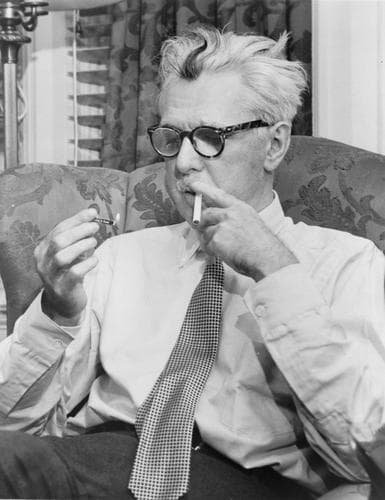
James Thurber

James Grover Thurber was an American cartoonist, writer, humorist, journalist and playwright. He was best known for his cartoons and short stories, published mainly in The New Yorker and collected in his numerous books.