BookBrief
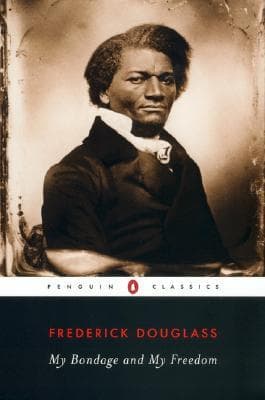
My Bondage and My Freedom cover
Archivist's Choice

My Bondage and My Freedom

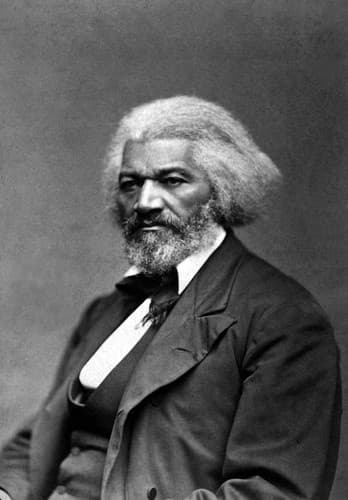
Frederick Douglass (2017)

Genre

Biography / Memoir / History

Reading Time

10-12 hours

Key Themes

See below

Track Your Reading

Sign in to track this book

Frederick Douglass escapes slavery, finding his freedom and articulating a complex vision for emancipation that influenced the world.

Core Idea

Frederick Douglass's 'My Bondage and My Freedom' explores how slavery works psychologically and socially, and the difficult journey to real freedom. It argues that slavery is not just physical restraint but a system that dehumanizes both the enslaved and the enslaver. Douglass says that knowledge and self-assertion are key to breaking free, and that true freedom goes beyond legal emancipation. It includes an individual's right to independent thought and a voice in their own destiny, even if that means disagreeing with allies.
Reading time
10-12 hours
Difficulty
Medium
✓ Read this if...
You are interested in the nuanced psychological and societal impacts of slavery, the intellectual journey of a self-emancipated individual, or the complexities of the abolitionist movement from a primary source perspective.
✗ Skip this if...
You prefer a purely historical account without deep personal introspection, or you are looking for a light, easy read without confronting uncomfortable truths about human nature and systemic injustice.

Core idea

The central argument and framework that powers the entire book.

Frederick Douglass's 'My Bondage and My Freedom' explores how slavery works psychologically and socially, and the difficult journey to real freedom. It argues that slavery is not just physical restraint but a system that dehumanizes both the enslaved and the enslaver. Douglass says that knowledge and self-assertion are key to breaking free, and that true freedom goes beyond legal emancipation. It includes an individual's right to independent thought and a voice in their own destiny, even if that means disagreeing with allies.

At a glance

Reading time

10-12 hours

Difficulty

Medium

Read this if...

You are interested in the nuanced psychological and societal impacts of slavery, the intellectual journey of a self-emancipated individual, or the complexities of the abolitionist movement from a primary source perspective.

Skip this if...

You prefer a purely historical account without deep personal introspection, or you are looking for a light, easy read without confronting uncomfortable truths about human nature and systemic injustice.

Key Takeaways

1

Knowledge as Emancipation

Literacy was the key to unlocking the chains of mental and physical servitude.

Quote

I would at times feel that learning to read had been a curse rather than a blessing. It had given me a view of my wretched condition, without the remedy. It opened my eyes to the horrible pit, but to no ladder upon which to get out. In moments of agony, I envied my fellow-slaves for their stupidity.

Douglass shows that literacy was more than an academic pursuit; it was a revolutionary act. His early secret efforts to learn to read and write, often at great personal risk, demonstrate that intellectual freedom comes before physical freedom. Reading allowed him to understand the wrongs of slavery, grasp the ideas of liberty, and see beyond his enslaved life. Though it first caused him pain by making him fully aware of his plight, literacy eventually gave him the tools for his escape and his later powerful advocacy. It changed him fr...

Supporting evidence

Douglass's detailed accounts of Mrs. Auld's initial kindness in teaching him the alphabet, her subsequent cessation under Mr. Auld's influence, and his ingenious methods of learning from white boys in the streets of Baltimore by trading bread for lessons.

Apply this

Support and advocate for universal literacy programs, recognizing that education, especially foundational literacy, is a critical component of empowerment and social mobility for marginalized communities. Prioritize access to books and learning resources in underserved areas.
literacyempowermenteducationresistance
2

The Corrupting Influence of Power

Slavery dehumanized not only the enslaved but also the enslaver, distorting moral character.

Quote

Slavery proved as injurious to her, as it did to me. When I went there, she was a pious, warm, and tender-hearted woman. There was no sorrow or suffering for which she had not a tear. She had bread for the hungry, clothes for the naked, and comfort for every mourner that came within her reach. Slavery soon proved its ability to divest her of these heavenly qualities. Under its influence, the tender heart became stone, and the lamblike disposition gave way to that of a tiger.

Douglass paints a chilling picture of how absolute power, found in slavery, corrupts the human spirit. His description of Mrs. Auld changing from a kind woman to a cruel oppressor is a clear example. This is not just about individual meanness; it is about a system that destroys empathy, encourages brutality, and warps the morals of those who hold power. The book argues that slavery's effects go beyond the physical suffering of the enslaved. It creates a moral emptiness that harms all of society, turning even 'good' people into agents ...

Supporting evidence

The detailed narrative of Mrs. Auld's change from a benevolent mistress who taught him to read to a harsh overseer who actively sought to prevent his education, demonstrating how the 'poison' of slavery permeated her character.

Apply this

Be vigilant against systems and ideologies that grant unchecked power to individuals or groups, as such power almost invariably leads to abuses and moral degradation. Advocate for accountability, transparency, and checks and balances in all forms of governance and social structures.

power-dynamicsmoral-corruptiondehumanizationsystemic-evil
3

The Illusion of Benevolent Slavery

There was no such thing as 'good' slavery; even the most 'kind' masters perpetuated profound injustice.

Quote

I assert most unhesitatingly, that the religion of the south is a mere covering for the most horrid crimes,—a justifier of the most appalling barbarity,—a sanctifier of the most hateful of all frauds,—and a dark shelter under which the darkest crimes may be committed with impunity.

Douglass carefully debunks any romantic ideas of 'benevolent' slavery. He shows that even masters who seemed 'less cruel' still took part in a system that denied human dignity, rights, and freedom. The book exposes the hypocrisy of slaveholders who claimed to be Christian while doing brutal things. This is not just a criticism of individual actions but a condemnation of the whole system, arguing that its very basis is wrong. Douglass shows that different levels of cruelty did not change the fundamental wrongness of owning another pers...

Supporting evidence

His accounts of religious slaveholders who were exceptionally cruel, using scripture to justify their brutality, such as Master Thomas Auld, who, despite his newfound Methodism, became even more severe and hypocritical.

Apply this

Challenge and deconstruct narratives that minimize or rationalize historical injustices, understanding that systemic oppression cannot be mitigated by individual 'kindness' within an inherently unjust framework. Recognize that 'good intentions' do not absolve one from complicity in oppressive systems.

hypocrisymoral-relativismsystemic-injusticechristianity-and-slavery
4

The Psychological Scars of Bondage

Slavery inflicted deep psychological wounds, fostering self-doubt and internalizing oppression.

Quote

I was broken in body, soul, and spirit. My natural elasticity was crushed; my intellect languished; the disposition to read departed; the cheerful spark that lingered about my eye died out; the dark night of slavery closed in upon me; and behold a man transformed into a brute!

Beyond physical suffering, Douglass explores the deep psychological harm caused by slavery. He describes periods of despair, the weakening of his spirit, and his internal fight against the dehumanizing ideas forced on him. The book reveals how the constant threat of violence, the denial of identity, and the systematic suppression of intelligence could lead to feelings of worthlessness and hopelessness. His fight against this internal control, especially after his brutal encounter with Covey, highlights the immense mental strength need...

Supporting evidence

His detailed description of his 'breaking' by Edward Covey, the 'slave-breaker,' where Douglass lost his spirit and intellect, feeling himself reduced to an animal, before his pivotal fight with Covey that reignited his sense of self.

Apply this

Acknowledge and address the intergenerational trauma and psychological impacts of historical oppression. Support mental health resources and initiatives that help individuals and communities heal from systemic injustices, understanding that freedom is also a state of mind.

psychological-traumainternalized-oppressionself-worthresilience
5

The Power of Resistance and Self-Assertion

Even within bondage, acts of resistance, large and small, affirmed humanity and paved the way for freedom.

Quote

This battle with Mr. Covey was the turning-point in my career as a slave. It rekindled the few dying embers of freedom, and revived within me a sense of my own manhood. It recalled the time when I was a mere child, and my mother died, and I was left to the care of my grandmother, and I was taught to believe that I was a child of God, and that I had a right to be free.

Douglass's story is a testament to the human spirit's lasting ability to resist. His physical fight against Covey, the 'slave-breaker,' is a crucial turning point, not just for his body but for his spirit. This act of self-assertion, though dangerous, brought back his sense of manhood and control. But resistance was not only violent; it included learning to read, sharing knowledge with other slaves, trying to escape, and finally, speaking out against slavery. These acts, often secret, were vital affirmations of human dignity against a...

Supporting evidence

The detailed account of his two-hour physical struggle with Edward Covey, where Douglass refused to be whipped, leading to Covey's retreat and Douglass's renewed sense of self and hope for freedom.

Apply this

Encourage and support acts of peaceful protest and civil disobedience against injustice. Recognize the importance of individual agency and collective action in challenging oppressive systems, understanding that every act of resistance, no matter how small, contributes to broader change.

resistanceagencyself-liberationdignityrebellion
6

The North's Complicity in Slavery

Northern society, despite its abolitionist sentiments, was deeply entangled in and benefited from the institution of slavery.

Quote

I had been in New Bedford but a short time, when I observed the marked difference between the condition of the colored people of that place, and those of the South. The former lived in houses better than the slave-quarters, and were more intelligent and industrious. But I also found that prejudice against color was stronger than in the South.

Douglass challenges the simple idea of a clear divide between North and South, showing that while the North did not have chattel slavery, it was far from innocent. His experiences in New Bedford expose widespread racial prejudice, discrimination, and economic systems that still oppressed Black people, even 'free' ones. Northern industries often profited from slave labor, and its society had deep-seated biases that limited opportunities and continued a different, but still painful, form of bondage. This complex view makes readers confr...

Supporting evidence

His observations upon arriving in New Bedford, where he found that despite legal freedom, Black people faced severe economic and social discrimination, preventing them from working in skilled trades and relegating them to menial labor.

Apply this

Examine and address systemic racism and economic inequalities that persist today, recognizing that historical injustices have long-lasting effects. Support policies that promote equitable opportunities and dismantle discriminatory practices, even in regions that claim to be progressive.

northern-racismeconomic-injusticesystemic-racismabolitionism-critique
7

The Evolving Nature of Freedom

Freedom was not a singular event but a continuous journey of self-discovery, advocacy, and breaking new chains.

Quote

I have been frequently asked how I felt when I found myself in a free State. I have never been able to answer the question with any satisfaction to myself. It was a moment of the highest excitement, but it was not the joy that I had anticipated. My mind was still occupied with the perils that I had escaped, and the dangers that still surrounded me.

Douglass's 'freedom' was not an end but a new beginning, full of its own difficulties. His escape to the North brought legal emancipation but not true liberation from prejudice, economic hardship, and the constant threat of re-enslavement. The book details his ongoing struggle to define himself, earn a living, and find his voice as an abolitionist. This change from runaway slave to famous speaker and editor shows that freedom is a dynamic process. It requires continuous effort, self-education, and advocacy, even after physical chains ...

Supporting evidence

His experiences after escaping to New York and then New Bedford, where he faced the immediate need to change his name, find work, and navigate a society still deeply prejudiced against Black people, despite being 'free.'

Apply this

Recognize that achieving social justice is an ongoing process, not a singular victory. Be prepared for continuous engagement, adaptation, and advocacy, understanding that new forms of oppression can emerge even after previous ones are dismantled.

post-slaveryliberationpersonal-growthsocial-justice-journey
8

The Power of the Spoken Word

Douglass's transformation into an orator was central to his effectiveness as an abolitionist.

Quote

I was a slave for twenty years, and the first seven years of my life, I was unable to utter a word. I had a stammering tongue, and could not express myself. But when I got among the Abolitionists, I learned to speak. I found that I could speak.

Douglass's journey from a hesitant, uneducated slave to one of the most articulate speakers of his time shows the power of language. His ability to describe the horrors of slavery with personal experience and intellectual rigor captivated audiences and changed public opinion. The book details his initial doubts and his later mastery of public speaking, which became his main weapon against injustice. This emphasizes that effective communication, especially powerful storytelling and persuasive speech, is essential for social change, giv...

Supporting evidence

His accounts of being encouraged by William Lloyd Garrison to speak at abolitionist meetings, his initial discomfort, and his subsequent development into a compelling speaker whose words moved thousands.

Apply this

Cultivate strong public speaking and communication skills to advocate for causes you believe in. Understand that personal narratives, when articulated powerfully, can be incredibly effective tools for persuasion and social change.

oratorypublic-speakingadvocacyrhetoricstorytelling
9

Breaking with Mentors and Independent Thought

True intellectual freedom required Douglass to forge his own path, even if it meant separating from influential allies.

Quote

I will not be a tool. I am a man, and I will be treated as a man. I will not be a thing. I will not be used by any man, for any purpose, without my consent.

A main idea in 'My Bondage and My Freedom' is Douglass's intellectual growth and his eventual break with William Lloyd Garrison and his followers. While acknowledging Garrison's important role early in his career, Douglass asserts his independence, especially regarding political action and how he understood the Constitution. This separation came not from malice but from a deep need to develop his own voice, strategies, and understanding of how best to fight for abolition. It highlights the importance of critical thinking and the coura...

Supporting evidence

His detailed explanation of his growing disagreement with Garrison's 'no-government' stance and his belief that the Constitution, if properly interpreted, could be an anti-slavery document, leading to his decision to start his own newspaper, 'The North Star.'

Apply this

Encourage independent thought and critical analysis, even within established movements or groups. Be prepared to respectfully challenge authority or conventional wisdom when your convictions and research lead you to a different conclusion, fostering intellectual autonomy.

intellectual-autonomymentorshipdissentleadershipcritical-thinking
10

The Global Dimension of Human Rights

Douglass's international travels broadened his perspective and amplified his message.

Quote

I found myself surrounded by the friends of humanity, who, though of a different complexion, and speaking a different language, were animated by the same noble spirit that fired the hearts of my abolitionist friends at home.

Douglass's travels abroad, especially to Ireland and Great Britain, greatly shaped his understanding of freedom and human rights. He found more personal liberty and less racial prejudice there than in America, which energized him and offered a strong contrast to conditions at home. These travels were not just personal journeys but strategic moves that gained international support for the abolitionist cause and helped secure his legal freedom from his former owner. This global perspective showed that the fight for human rights crosses ...

Supporting evidence

His detailed accounts of his speaking tours in Ireland and Scotland, where he was treated as an equal, able to move freely and speak without fear of re-enslavement, and how British abolitionists raised funds to purchase his freedom.

Apply this

Seek out diverse perspectives and engage with global movements for human rights and social justice. Understand that interconnectedness can strengthen advocacy efforts and provide valuable lessons and support in local struggles.

international-solidarityhuman-rightsglobal-activismcultural-exchange

Critical analysis

Notable Quotes

I was born in Tuckahoe, near Easton, Talbot county, Maryland. I have no accurate knowledge of my age, never having seen any authentic record that could supply me with the information.

Opening lines of the book, establishing his birth and lack of knowledge about his exact age due to slavery.

Slavery proved as injurious to her, as it did to me.

Referring to his mistress, Mrs. Auld, and how the power of owning slaves corrupted her initially kind nature.

To make a contented slave, it is necessary to make a thoughtless one.

Reflecting on the methods used to oppress slaves and the importance of education and thought for freedom.

I would at times feel that learning to read had been a curse rather than a blessing.

Describing the pain and increased awareness of his enslaved condition that came with literacy.

He was a cruel man, hardened by a long life of slaveholding.

Describing one of his cruel masters, Captain Anthony, and the dehumanizing effect of slavery on slaveholders.

I have no words to describe the depths of my agony.

Expressing his profound despair and suffering during particularly harsh periods of his enslavement.

I have been frequently asked how I felt when I found myself in a free State. I have never been able to answer the question with any satisfaction to myself.

Reflecting on his escape to freedom and the complex emotions, relief mixed with apprehension and uncertainty.

I was now my own master. It was a happy moment, the rapture of which can be understood only by those who have been slaves.

Describing the profound feeling of self-possession upon achieving freedom.

I prayed for light, but I also prayed for strength.

Highlighting his spiritual and personal quest for both understanding and the power to act against slavery.

The white man's happiness cannot be purchased by the black man's misery.

A powerful statement on the inherent injustice and moral bankruptcy of slavery.

I was a slave, and a slave for life, and had been so for nearly twenty years. But on the 3rd of September, 1838, I ceased to be a slave.

A concise and powerful declaration of his transition from bondage to freedom.

My mind had been so exercised by the great danger in which I was involved, that I had no time for anything else.

Recalling the constant anxiety and focus required to plan and execute his escape from slavery.

I had been a slave, and now I was free. I had been a poor, neglected, and degraded slave. I was now a free man, but I was still poor, and had no means of obtaining a livelihood.

Acknowledging the realities of freedom, which brought liberty but not immediate prosperity or security.

I was never more than a man. I was never less than a man.

A profound assertion of his inherent humanity, despite the dehumanizing institution of slavery.

Quiz

Test Your Knowledge

Ready to see how well you understood this book? Take our interactive quiz with 10 questions.

10
Questions
~5
Minutes
?
Best Score

Key Questions (FAQ)

My Bondage and My Freedom is Frederick Douglass's second autobiography, written a decade after his legal emancipation. It details his life from slavery to freedom, offering a more mature and analytical reflection on his experiences and his evolving commitment to the abolitionist movement.

About the author