BookBrief
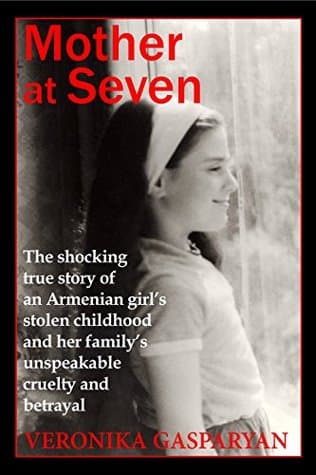
Mother at Seven cover
Archivist's Choice

Mother at Seven

Veronika Gasparyan (2016)

Genre

Biography / Memoir

Reading Time

360 min

Key Themes

See below

Track Your Reading

Sign in to track this book

In the shadow of Russia's Black Sea, a seven-year-old girl endures a decade of horrific familial abuse, clinging to an unwavering belief in a brighter future to survive the unimaginable.

Core Idea

Veronika Gasparyan's "Mother at Seven" is a memoir that shows how a child can be exploited and abandoned by those who should protect her. Gasparyan argues that resilience is a survival mechanism formed in despair, where the will to live often comes from small acts of kindness and the pursuit of escape through education. The book documents the long-term effects of childhood trauma. It shows that the betrayal by family, neighbors, and society leaves scars that shape a life, even as it highlights the human capacity for hope, forgiveness, and the journey towards healing.
Reading time
360 min
Difficulty
Hard
✓ Read this if...
You are interested in powerful true stories of survival against extreme adversity, the psychological impact of childhood trauma, and the complex journey of healing and forgiveness. This book is for readers who appreciate deeply personal memoirs that explore themes of resilience, betrayal, and the search for identity.
✗ Skip this if...
You are sensitive to graphic descriptions of child abuse, neglect, and exploitation, or prefer narratives with less emotional intensity. Readers looking for light or purely inspirational stories without significant exploration of suffering may find this challenging.

Core idea

The central argument and framework that powers the entire book.

Veronika Gasparyan's "Mother at Seven" is a memoir that shows how a child can be exploited and abandoned by those who should protect her. Gasparyan argues that resilience is a survival mechanism formed in despair, where the will to live often comes from small acts of kindness and the pursuit of escape through education. The book documents the long-term effects of childhood trauma. It shows that the betrayal by family, neighbors, and society leaves scars that shape a life, even as it highlights the human capacity for hope, forgiveness, and the journey towards healing.

At a glance

Reading time

360 min

Difficulty

Hard

Read this if...

You are interested in powerful true stories of survival against extreme adversity, the psychological impact of childhood trauma, and the complex journey of healing and forgiveness. This book is for readers who appreciate deeply personal memoirs that explore themes of resilience, betrayal, and the search for identity.

Skip this if...

You are sensitive to graphic descriptions of child abuse, neglect, and exploitation, or prefer narratives with less emotional intensity. Readers looking for light or purely inspirational stories without significant exploration of suffering may find this challenging.

Key Takeaways

1

The Illusion of Family

Biological ties do not guarantee love or protection; sometimes, the greatest threats come from within one's own household.

Quote

The people who were supposed to love and protect me were the very ones who inflicted the deepest wounds.

Gasparyan’s memoir directly shows that 'family' can be a source of trauma, not comfort. From her earliest memories, Veronika experiences physical and emotional abuse from her mother, grandmother, and uncle. This breaks the common idea that family bonds are nurturing. The book makes readers face the truth that abuse often happens in private, done by those meant to care. This betrayal of trust is more damaging than abuse from strangers, as it destroys a child’s basic sense of security and belonging, leading to deep psychological scars a...

Supporting evidence

The daily beatings, forced labor, starvation, and psychological torment inflicted by her mother and grandmother, often with the complicity or indifference of other relatives like her uncle.

Apply this

Challenge societal assumptions about family sanctity. Be vigilant for signs of abuse even within seemingly 'normal' family structures, and understand that a child's safety and well-being should always supersede biological ties.

familial-abusebetrayal-of-trustchildhood-trauma
2

Resilience Forged in Despair

Even in the darkest circumstances, the human spirit possesses an extraordinary capacity for endurance and the will to survive.

Quote

My body was bruised, my stomach empty, but my spirit, somehow, refused to break.

Veronika’s childhood shows the human spirit's resilience. Despite constant physical and emotional abuse, starvation, and neglect from age seven, she never fully gives up hope. Her ability to find small moments of joy, dream of a better future, and keep a sense of self, even when told she was worthless, is remarkable. This shows that resilience is not just bouncing back, but the ongoing process of resisting destruction and keeping an inner light despite overwhelming darkness. It is a reminder that even the most brutal conditions cannot...

Supporting evidence

Her meticulous record-keeping of the abuse, her secret studies, her ability to find solace in nature, and her unwavering belief that she would one day escape and have a family of her own.

Apply this

Recognize and nurture the innate resilience in children and ourselves. Understand that hope, even in its smallest forms, can be a powerful survival mechanism during crises.

resiliencesurvival-spirithope-in-adversity
3

The Power of a Single Kind Act

In a world devoid of compassion, even a fleeting moment of kindness can offer a lifeline and reinforce the belief in human goodness.

Quote

Sometimes, a single word, a small gesture, was enough to remind me that not all people were cruel.

Amidst the cruelty, Veronika sometimes meets people who offer brief, unexpected kindness. These short interactions—a shared meal from a stranger, a teacher's encouraging word, or a neighbor's sympathetic glance—become vital lifelines. They remind her that not everyone is bad, challenging the abusive stories she constantly hears. These small acts of humanity provide a different view, stopping her from fully believing she is unworthy of love or that the world is evil. They are anchors of hope, helping her through the worst times and str...

Supporting evidence

The woman who gave her bread, the teacher who noticed her intelligence despite her ragged appearance, or the brief, sympathetic interactions with certain neighbors.

Apply this

Never underestimate the profound impact of small acts of kindness. Be a source of light and compassion, as you may be the only positive interaction someone experiences in a day.

compassionempathyhuman-connection
4

Education as Escape

For those trapped in oppressive circumstances, knowledge and learning can represent the ultimate path to freedom and self-worth.

Quote

Every page I read, every lesson I learned, was another step towards a life where I could be free.

Despite being denied proper schooling and often forced into hard labor, Veronika values every chance to learn. Her desire for knowledge becomes a strong form of resistance and an escape. Education, even if self-taught or from old books, offers her information and a look into a world beyond her tormentors. It provides intellectual stimulation, a sense of achievement, and a growing belief in her own abilities, going against the constant degradation she faces. This pursuit of knowledge shows the power of education, not just for skills, b...

Supporting evidence

Her secret reading of books, her attempts to attend school despite her family's objections, and her dedication to learning whenever possible, even under harsh conditions.

Apply this

Prioritize and protect access to education, especially for vulnerable populations. Recognize that learning is not just about careers, but about fostering dignity, hope, and the capacity for self-determination.

education-empowermentintellectual-freedomself-improvement
5

The Lingering Scars of Trauma

Survival is not an endpoint; the profound wounds of childhood abuse continue to shape an individual long after the physical torment ceases.

Quote

Even after I was free, the shadows of my past still clung to me, whispering doubts and fears.

Gasparyan’s story continues beyond her escape, describing the long-term psychological effects of ongoing trauma. While the book focuses on the abuse itself, the reader understands that the scars of such a childhood are not easily removed. Constant fear, eroded trust, struggles with self-worth, and difficulty forming healthy attachments are common for survivors. This shows that 'healing' is a complex, ongoing process, not a sudden event. It highlights the importance of recognizing the lasting nature of trauma and the need for sustained...

Supporting evidence

Her continued vigilance, difficulty trusting, and the emotional baggage she carries even after finding a better life, as hinted at in her later reflections.

Apply this

Cultivate empathy and patience for trauma survivors, understanding that their past experiences profoundly influence their present behaviors and emotional responses. Advocate for long-term psychological support for those who have endured abuse.

trauma-recoveryPTSDchildhood-abuse-effects
6

The Betrayal of Neighbors and Society

The silence and inaction of a community can be as damaging as the abuse itself, perpetuating a cycle of suffering.

Quote

Everyone knew, but no one dared to speak. Their silence was another form of cruelty.

A chilling part of Veronika's story is the apparent knowledge and inaction of many neighbors and some authorities. The culture of 'don’t ask, don’t tell,' perhaps from fear, apathy, or a skewed idea of privacy, allowed the abuse to continue for years. This collective silence supported the torment, making Veronika feel more invisible and hopeless. This shows a critical societal failure: that the responsibility to protect vulnerable people goes beyond immediate family. When a community ignores problems, it becomes part of the suffering....

Supporting evidence

Neighbors who witnessed her being beaten, starved, or forced to work, but never intervened or reported the family to authorities.

Apply this

Challenge bystander apathy. Educate communities on the signs of abuse and the importance of reporting. Foster a culture where protecting children is a shared responsibility, not a private family matter.

bystander-effectsocietal-complicitychild-protection
7

Hope as a Survival Mechanism

An unwavering belief in a better future, however distant, can be the most potent force for enduring unimaginable present pain.

Quote

In my darkest moments, I clung to the smallest flicker of hope, believing that one day, I would see the sun.

Veronika's story is a testament to the power of hope. Despite being treated as less than human, she never completely loses her vision of a life free from abuse. This hope is not naive; it is a deep belief that keeps her fighting, planning, and enduring. It fuels her secret studies, her dreams of escape, and her belief that she deserves a different destiny. Hope, in this context, works as an active psychological strategy for survival. It provides a future outlook that allows her to get through immediate pain and imagine a purpose beyon...

Supporting evidence

Her persistent dreams of having her own loving family, her mental planning for escape, and her conviction that 'better days lie ahead' despite overwhelming evidence to the contrary.

Apply this

Cultivate and protect hope within yourself and others, especially during difficult times. Understand that offering a vision of a positive future can be a powerful tool for resilience and motivation.

power-of-hopefuture-orientationpsychological-resilience
8

The Long Road to Healing and Forgiveness

True liberation from trauma involves a complex journey of self-acceptance, processing pain, and potentially, finding a path towards understanding, if not condoning, past wrongs.

Quote

Forgiveness wasn't about excusing them; it was about freeing myself.

While the book focuses on immediate survival, Gasparyan's later thoughts and the act of writing her memoir suggest a journey towards healing and a clear understanding of her past. Forgiveness, as she explains, is not about excusing her abusers but about freeing herself from hatred and resentment. This is an important difference for survivors. It shows that healing is an active, often lifelong process of facing trauma, making peace with one's past, and taking back one's story. It involves self-compassion, building healthy relationships...

Supporting evidence

The author's decision to share her story, her stated desire for her narrative to inspire others, and her reflections on finding peace and building a loving family of her own, implying a process of internal resolution.

Apply this

Encourage and support survivors in their healing journeys, recognizing that forgiveness is a personal and often lengthy process that may not involve reconciliation with abusers. Focus on empowering the survivor to reclaim their narrative and peace.

trauma-healingforgivenessself-compassion
9

The Universal Language of Suffering and Love

Despite cultural specifics, the core human experiences of profound suffering and the yearning for love transcend geographical and social boundaries.

Quote

Though my story happened in a small Russian town, the pain and the hope I felt are understood by hearts everywhere.

Veronika's memoir, set in a specific Russian context, speaks to common human experiences. The reality of child abuse, the need for love and safety, and the power of hope are themes that resonate across cultures and time. The details of her suffering are unique, but the underlying emotions of fear, loneliness, yearning, and resilience are understood by everyone. This makes her story powerful, allowing readers from different backgrounds to connect with her struggle and triumph. It reminds us that while circumstances differ, the basic hu...

Supporting evidence

The widespread global appeal and understanding of her story, despite its specific setting in Sochi, Russia, which allows readers from various backgrounds to connect with her emotional journey.

Apply this

Use personal narratives to foster global empathy and understanding. Recognize that shared human experiences, particularly those of pain and resilience, can connect people across different cultures and backgrounds.

universal-themeshuman-conditioncross-cultural-empathy

Critical analysis

Notable Quotes

At seven, I became a mother to my siblings, a role I never asked for but one that shaped my entire being.

Opening reflection on the book's title and central theme.

In the silence of our home, I learned that love is not just a feeling but a series of actions—cooking, cleaning, comforting.

Describing daily life caring for younger siblings after their mother's absence.

They called me 'little mother,' a nickname that carried both affection and the weight of a world too heavy for small shoulders.

Recalling how neighbors and relatives perceived her role.

I traded my dolls for diapers, my playground for a kitchen, and my innocence for a wisdom no child should possess.

Reflecting on the loss of a typical childhood.

Sometimes, in the dark, I would whisper to the moon, asking it to watch over us because I felt too small to do it alone.

Sharing a private moment of vulnerability and fear.

My siblings' laughter was the music that kept my heart beating, even on days when I forgot how to smile.

Highlighting the joy and purpose found in caring for her family.

I learned that strength isn't about never falling; it's about getting up each time, even when your knees are scraped and your spirit is weary.

A lesson drawn from overcoming daily struggles.

The world saw a child, but in my reflection, I saw an old soul with hands that had known too much work and too little play.

Contrasting external perception with internal reality.

Every meal I cooked was a prayer, every stitch I sewed a promise that we would survive another day.

Describing the ritualistic nature of her caregiving tasks.

I carried my mother's absence like a shadow, always there, reminding me of what we lost and what I had to become.

Reflecting on the impact of her mother's absence on her identity.

In teaching my siblings to read, I taught myself that knowledge is a light that can pierce even the darkest of times.

Sharing an educational moment that brought empowerment.

Our home was built not with bricks, but with whispered stories at bedtime and shared dreams at dawn.

Defining the essence of family and home in their circumstances.

I realized that motherhood, at its core, is an act of faith—in yourself, in others, and in a future you cannot yet see.

A philosophical insight gained from her experiences.

Quiz

Test Your Knowledge

Ready to see how well you understood this book? Take our interactive quiz with 10 questions.

10
Questions
~5
Minutes
?
Best Score

Key Questions (FAQ)

'Mother at Seven' is a memoir by Veronika Gasparyan detailing her traumatic childhood in Sochi, Russia, where she endured a decade of severe abuse from her family. The book highlights her resilience, hope, and miraculous survival, emphasizing that better days can come even in the darkest times.

About the author