BookBrief
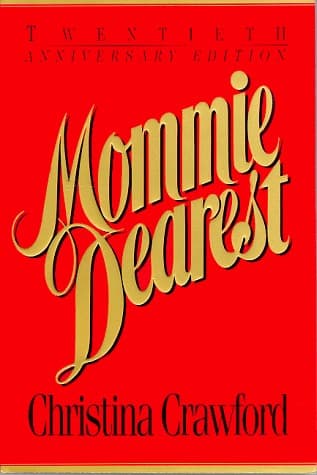
Mommie Dearest cover
Archivist's Choice

Mommie Dearest

Christina Crawford (1978)

Genre

Biography / Memoir

Reading Time

10-12 hours

Key Themes

See below

Track Your Reading

Sign in to track this book

Behind Hollywood's glamour, a daughter exposes her adoptive mother, screen legend Joan Crawford, revealing a brutal struggle for survival and escape from a gilded cage.

Core Idea

Christina Crawford's "Mommie Dearest" details her harrowing experience as the adopted child of Hollywood icon Joan Crawford. The book contrasts Crawford's glamorous public image with her brutal private life, marked by severe physical and psychological abuse. Driven by alcoholism, narcissism, and a need for control, Joan inflicted lasting trauma. Christina's memoir confronts these painful experiences, allowing her to reclaim her story and identity.
Reading time
10-12 hours
Difficulty
Medium
✓ Read this if...
You are interested in the dark side of celebrity, the long-term effects of child abuse, the complexities of family trauma, or a raw, unflinching memoir of survival.
✗ Skip this if...
You are sensitive to detailed descriptions of child abuse, psychological torment, or prefer narratives with clear resolutions and less emphasis on enduring trauma.

Core idea

The central argument and framework that powers the entire book.

Christina Crawford's "Mommie Dearest" details her harrowing experience as the adopted child of Hollywood icon Joan Crawford. The book contrasts Crawford's glamorous public image with her brutal private life, marked by severe physical and psychological abuse. Driven by alcoholism, narcissism, and a need for control, Joan inflicted lasting trauma. Christina's memoir confronts these painful experiences, allowing her to reclaim her story and identity.

At a glance

Reading time

10-12 hours

Difficulty

Medium

Read this if...

You are interested in the dark side of celebrity, the long-term effects of child abuse, the complexities of family trauma, or a raw, unflinching memoir of survival.

Skip this if...

You are sensitive to detailed descriptions of child abuse, psychological torment, or prefer narratives with clear resolutions and less emphasis on enduring trauma.

Key Takeaways

1

The Public Mask vs. Private Torment

Beneath Hollywood's glamour, a dark reality of abuse unfolded behind closed doors.

Quote

There was a public image and a private reality. The public image was Joan Crawford the movie star, the glamorous, successful woman. The private reality was a woman consumed by rage and alcohol, a tormentor.

Christina Crawford's memoir sharply contrasts Joan Crawford's public image with the private reality her children faced. Joan appeared as a devoted mother, a glamorous Hollywood icon, and a strong, controlled woman. This facade hid a disturbed person who abused her adopted children emotionally and physically. The book shows how Joan's drive, perfectionism, and need for control, which made her a star, turned into tools of torment at home. This difference highlights how abuse often stays hidden and the large psychological burden on victi...

Supporting evidence

Joan's public appearances, carefully curated photographs, and interviews depicting her as a loving mother, directly contradicted by Christina's detailed accounts of beatings, verbal assaults, and psychological manipulation at home.

Apply this

Recognize that outward appearances can be deceiving, especially in cases of abuse. Cultivate skepticism towards idealized public images and prioritize the well-being of individuals over superficial perceptions.

narcissistic-abusepublic-personachild-abuse
2

The Weaponization of Control

Joan Crawford's need for absolute control extended to every facet of her children's lives, turning daily routines into battlegrounds.

Quote

Every single thing had to be perfect. The clothes, the house, my behavior. If it wasn't perfect, there was hell to pay.

Joan Crawford's abusive behavior stemmed from an overwhelming, almost obsessive, need for control. Christina details how this control affected every part of her life, from organized closets and clean clothes to strict schedules and dictated emotions. This was not just about discipline; it was about submission. Joan used control to strip Christina of her independence, identity, and self-worth. The 'no wire hangers' incident, though famous, is one example of a pattern where any deviation from Joan's rules led to explosive rage and sever...

Supporting evidence

The infamous 'no wire hangers' scene, the forced scrubbing of floors with harsh chemicals, the strict monitoring of Christina's diet and friendships, and the constant fear of arbitrary punishments for minor transgressions.

Apply this

Identify and challenge controlling behaviors in relationships, recognizing that true care fosters independence, not subjugation. Advocate for personal boundaries and autonomy in the face of overbearing demands.

controlling-behaviorparental-abusepsychological-manipulation
3

Alcoholism as an Enabler of Abuse

Joan Crawford's heavy drinking fueled her volatile temper and intensified her abusive tendencies.

Quote

The drinking made her worse, much worse. It amplified everything that was already there – the anger, the paranoia, the cruelty.

Christina Crawford clearly shows how Joan's chronic alcoholism was a main factor in her escalating abuse. While alcohol does not cause abuse, it lowers inhibitions, distorts perception, and amplifies psychological issues. For Joan, drinking often came before her most violent outbursts and irrational demands, making her an even more unpredictable and frightening figure. The children lived in constant fear of 'the drinking,' knowing it meant more danger and potential severe punishment. This shows the link between substance abuse and dom...

Supporting evidence

Numerous accounts of Joan's drunken rages, her erratic behavior after consuming alcohol, and the way her personality shifted dramatically when under the influence, becoming more aggressive and punitive.

Apply this

Recognize the dangerous interplay between substance abuse and violence. Seek help for individuals struggling with addiction, and prioritize the safety of those living with an alcoholic abuser.

alcoholism-and-abusesubstance-abusedomestic-violence
4

The Scars of Emotional Incest

Joan's blurring of parental boundaries forced Christina into inappropriate emotional roles, blurring the lines of love and manipulation.

Quote

She wanted me to be her confidante, her companion, her personal assistant, her punching bag. But never just her child.

Beyond physical violence, "Mommie Dearest" reveals the emotional incest in Joan Crawford's parenting. Joan often treated Christina not as a daughter, but as a substitute spouse, a rival, or an extension of herself. She confided adult problems in Christina, demanded emotional support, and expected her to fill roles far beyond her age. This blurring of boundaries caused great confusion and psychological harm, as Christina was denied a normal childhood and forced to navigate a complex, often conflicting emotional situation. This dynamic ...

Supporting evidence

Joan's demands for Christina to act as her secretary, her confidante in adult relationships, and her expectation that Christina would always prioritize Joan's needs above her own, often accompanied by guilt-tripping.

Apply this

Establish clear, healthy boundaries in parent-child relationships, ensuring children are allowed to experience their childhood without being burdened by adult responsibilities or emotional demands.

emotional-incestparental-alienationboundary-violations
5

Survival Through Resistance

Christina's journey demonstrates that even in extreme abuse, the human spirit can find ways to resist and endure.

Quote

I knew, even then, that I had to survive. I had to get out, and I had to tell my story.

Despite the extensive abuse, Christina Crawford's memoir is a story of resilience and the will to survive. From a young age, Christina developed ways to cope and small acts of defiance that helped her keep some sense of self. Whether it was mentally planning escapes, finding comfort in school, or simply refusing to be completely broken, her spirit of resistance showed through. Her decision to write "Mommie Dearest" was an act of reclaiming her story and independence. This shows that even in very oppressive situations, victims can find...

Supporting evidence

Christina's consistent efforts to excel in school, her pursuit of acting against Joan's wishes, her eventual move to New York for independence, and her decision to publish the book despite potential backlash.

Apply this

Support and empower survivors of abuse by validating their experiences and providing resources for healing and reclaiming their narratives. Cultivate resilience by focusing on inner strength and seeking external support.

resiliencesurvivor-narrativepost-traumatic-growth
6

The Silence of the Enablers

The complicity of those around Joan Crawford allowed the abuse to continue unchecked.

Quote

No one ever really intervened. Everyone was too afraid of her, or too dependent on her, or simply chose to look the other way.

A disturbing part of "Mommie Dearest" is the silence and involvement of those around Joan Crawford. Many, from staff to Hollywood executives and family members, knew about Joan's temper and the abuse of her children, but few intervened effectively. This inaction came from fear of Joan's power, dependence on her for work or status, and a general reluctance to interfere in celebrity lives. The book shows how the silence of those who enable abuse allows it to continue, leaving victims isolated and without help. This brings up uncomfortab...

Supporting evidence

Accounts of housekeepers, nannies, and chauffeurs witnessing abuse but remaining silent; the general 'don't ask, don't tell' attitude prevalent in Hollywood regarding the private lives of stars; the lack of intervention from extended family.

Apply this

Challenge the culture of silence around abuse by speaking up, reporting suspected abuse, and supporting victims. Recognize the responsibility of bystanders to intervene and advocate for those who cannot.

bystander-effectenabling-behaviorcollusion-of-silence
7

The Legacy of Abuse on Identity

Growing up with an abusive parent profoundly shapes a child's sense of self, often leading to a lifelong struggle for identity.

Quote

For so long, I didn't know who I was without her influence, without her shadow. It took years to find my own voice.

Christina Crawford's story looks beyond the immediate abuse to its lasting effects on her identity and mental health. Living under Joan's control meant Christina's sense of self was constantly warped, defined by her mother's needs and judgments rather than her own qualities. This led to a struggle to set personal boundaries, trust her own perceptions, and develop self-worth. The book highlights how childhood trauma can leave deep, lasting scars, requiring a long and often painful journey of self-discovery and healing to reclaim one's ...

Supporting evidence

Christina's struggles in her early adult relationships, her difficulty in trusting others, her battles with anxiety and self-doubt, and her continuous efforts to understand and process her past experiences.

Apply this

Support individuals in their healing journeys from trauma, recognizing that identity formation after abuse is a complex process. Encourage self-reflection and professional help to rebuild a healthy sense of self.

trauma-and-identitycomplex-traumaself-worth
8

Breaking the Cycle: A Voice for Others

By sharing her story, Christina Crawford transformed personal trauma into a powerful catalyst for social change.

Quote

My story was not just my story. It was the story of so many others who had suffered in silence, and I had to tell it for them too.

The lasting impact of "Mommie Dearest" is not just its shocking revelations but its effect on breaking the silence about child abuse. Christina Crawford's bravery in publishing such a personal account, especially about a famous public figure, started an important conversation. Her book validated the experiences of many other victims who felt alone and ashamed. By giving a voice to those who had none, Christina helped change public views, making it more acceptable to discuss and confront family abuse. This change from personal trauma t...

Supporting evidence

The immediate public reaction to the book, the subsequent increase in discussions about child abuse, and the book's lasting influence on the discourse surrounding celebrity and private lives.

Apply this

Support and amplify the voices of survivors, understanding that their narratives are vital for raising awareness, challenging societal norms, and fostering empathy. Advocate for policies that protect children and hold abusers accountable.

advocacysurvivor-empowermentsocial-change
9

The Perils of Idolization

The public's blind adoration of celebrities can obscure the dark realities of their private lives.

Quote

People wanted to believe in the myth, the glamour. The truth was too ugly for them to face.

"Mommie Dearest" reminds us of the dangers of idolizing celebrities. Joan Crawford was admired, and the public was largely unwilling to accept any story that challenged her carefully built image. This collective desire to maintain the illusion of glamour and perfection made it hard for Christina's story to be believed at first, and even now, some fans strongly defend Joan. The book shows how public adoration can shield abusers, as the public's emotional investment in the celebrity blinds them to uncomfortable truths. It encourages a m...

Supporting evidence

The initial backlash against Christina and the book, with many fans refusing to believe the allegations and defending Joan's character, highlighting the strong emotional ties the public had to the star.

Apply this

Cultivate critical thinking regarding public figures, separating their professional achievements from their personal ethics. Avoid blind idolization and be open to challenging narratives, especially when abuse is alleged.

celebrity-culturepublic-perceptionmedia-literacy
10

The Enduring Power of Forgiveness (or Lack Thereof)

While not explicitly stated, the book implicitly explores the complex, often unattainable, nature of forgiveness in severe abuse.

Quote

I didn't hate her. I just wanted her to stop hurting me. And after she was gone, I just wanted the truth to be known.

While Christina Crawford does not explicitly discuss forgiveness in "Mommie Dearest," the book explores the complex emotional aftermath of severe abuse. Her main goal is truth and validation, not revenge. The story suggests that for some survivors, especially of such deep and constant abuse, traditional ideas of forgiveness may be irrelevant or impossible. Instead, the focus shifts to healing, reclaiming one's story, and finding peace through honesty rather than reconciliation with the abuser. This offers an important perspective that...

Supporting evidence

Christina's consistent pursuit of telling her story accurately, her focus on the factual accounts of abuse, and her lack of sentimental or redemptive portrayals of Joan, even after her death.

Apply this

Respect the individual healing journey of abuse survivors, understanding that forgiveness is a personal and complex process that may not be necessary or even possible for all. Prioritize validation and support over pressure to forgive.

forgiveness-in-traumahealing-journeysurvivor-autonomy

Critical analysis

Notable Quotes

No wire hangers, ever!

Joan discovers a wire hanger in Christina's closet.

I never had a mother.

Christina reflects on her relationship with Joan.

I was not adopted. I was purchased.

Christina describes her early understanding of her adoption.

The price of stardom was total submission.

Christina observes Joan's demanding career and personal life.

She didn't love me, she loved the idea of me.

Christina differentiates Joan's perception from reality.

My mother was a genius at self-promotion and manipulation.

Christina analyzes Joan's public persona versus private behavior.

The bathroom was her stage, and we were her captive audience.

Describing Joan's elaborate bathing rituals and demands.

She was always trying to prove something, even to herself.

Christina muses on Joan's deep-seated insecurities.

The orphanage was a paradise compared to what I found at home.

Christina's shocking comparison of her early life.

She was a perfectionist and expected nothing less from us.

Christina on Joan's demanding standards for her children.

I survived, and that, in itself, was an act of defiance.

Christina's reflection on her resilience after years of abuse.

Her love was a conditional weapon, always ready to be aimed.

Christina describes the nature of Joan's affection.

I was never allowed to forget that I was a child of charity.

Joan constantly reminding Christina of her adopted status.

The glamour was a facade, a carefully constructed illusion.

Christina's perspective on the public image of Joan Crawford.

Quiz

Test Your Knowledge

Ready to see how well you understood this book? Take our interactive quiz with 10 questions.

10
Questions
~5
Minutes
?
Best Score

Key Questions (FAQ)

'Mommie Dearest' is Christina Crawford's personal memoir detailing her experiences of abuse at the hands of her adoptive mother, Joan Crawford. While presented as her truth, some individuals close to Joan Crawford have disputed the extent or nature of the events described.

About the author

Christina Crawford

Christina Crawford was an American author and actress, best known for her scandalous 1978 memoir, "Mommie Dearest." The book detailed her alleged abusive childhood at the hands of her adoptive mother, movie star Joan Crawford. While controversial, the memoir became a bestseller and was later adapted into a film, cementing its place in popular culture.