BookBrief
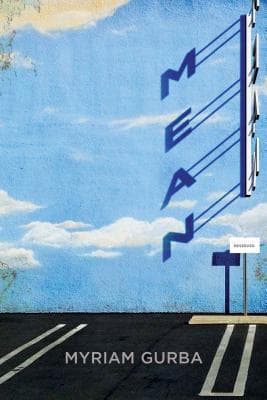
Mean cover
Archivist's Choice

Mean

Myriam Gurba (2017)

Genre

Biography / Memoir

Reading Time

150 min

Key Themes

See below

Track Your Reading

Sign in to track this book

Myriam Gurba's "Mean" is a funny and bold memoir where a queer, mixed-race Chicana uses sharp humor to fight sexual assault, racism, and misogyny, showing that meanness, when done well, is a powerful art.

Core Idea

Myriam Gurba's "Mean" is a memoir that uses dark humor and direct honesty to explore Chicana identity, sexual violence, and cultural expectations. Through a broken, non-chronological story, Gurba takes back her narrative, pushing against the social pressures that demand silence from victims. She turns personal trauma into an act of self-assertion, using 'meanness' as a shield and a way to tell the truth against misogyny and racism. The book argues for the power of humor and unconventional storytelling as a way to survive and resist. Gurba breaks down typical ideas of femininity and victimhood, showing a protagonist who is complex, angry, funny, and deeply human. It is about finding power and a voice after trauma, embracing an identity built on defiance.
Reading time
150 min
Difficulty
Medium
✓ Read this if...
You appreciate memoirs that are raw, unconventional, and use dark humor to confront serious topics like sexual assault, cultural identity, and intergenerational trauma. You're looking for a book that challenges traditional narrative structures and offers a unique, defiant voice.
✗ Skip this if...
You prefer linear narratives, are sensitive to explicit discussions of sexual violence, or are put off by a confrontational and often 'mean' authorial voice. This book does not shy away from discomfort.

Core idea

The central argument and framework that powers the entire book.

Myriam Gurba's "Mean" is a memoir that uses dark humor and direct honesty to explore Chicana identity, sexual violence, and cultural expectations. Through a broken, non-chronological story, Gurba takes back her narrative, pushing against the social pressures that demand silence from victims. She turns personal trauma into an act of self-assertion, using 'meanness' as a shield and a way to tell the truth against misogyny and racism.

The book argues for the power of humor and unconventional storytelling as a way to survive and resist. Gurba breaks down typical ideas of femininity and victimhood, showing a protagonist who is complex, angry, funny, and deeply human. It is about finding power and a voice after trauma, embracing an identity built on defiance.

At a glance

Reading time

150 min

Difficulty

Medium

Read this if...

You appreciate memoirs that are raw, unconventional, and use dark humor to confront serious topics like sexual assault, cultural identity, and intergenerational trauma. You're looking for a book that challenges traditional narrative structures and offers a unique, defiant voice.

Skip this if...

You prefer linear narratives, are sensitive to explicit discussions of sexual violence, or are put off by a confrontational and often 'mean' authorial voice. This book does not shy away from discomfort.

Key Takeaways

1

The Art of Mean

How 'meanness' becomes a radical act of self-preservation and social critique for marginalized individuals.

Quote

We act mean to defend ourselves from boredom and from those who would cut off our breasts. We act mean to defend our clubs and institutions. We act mean because we like to laugh. Being mean to boys is fun and a second-wave feminist duty. Being mean to men who deserve it is a holy mission. Sisterhood is powerful, but being mean is more exhilarating.

Gurba redefines 'meanness' not as simple cruelty, but as a complex, necessary defense and a strong form of resistance. For a queer, mixed-race Chicana navigating a world full of racism, misogyny, and homophobia, traditional 'niceness' is often a weakness, a way to fit in that erases identity and allows abuse. Instead, meanness, used with wit and care, becomes a weapon—a shield against forces that try to silence, diminish, or harm. It is a refusal to be agreeable, a deliberate break from polite society's expectations, and a way to asse...

Supporting evidence

The author's repeated framing of 'being mean' as a 'holy mission' and an 'art form,' particularly for 'queers,' directly challenges conventional morality and empowers the marginalized.

Apply this

Reflect on situations where 'niceness' has disempowered you. Consider if a carefully deployed, strategic 'meanness' (e.g., setting firm boundaries, using sharp wit to deflect unwanted advances, refusing to engage with microaggressions) could be a more effective and self-preserving response. Practice asserting your boundaries with a playful, yet firm, refusal to compromise.


radical-resistancesubversive-humorself-preservation
2

Humor as a Healing Weapon

Caustic humor and formal fluidity transform personal tragedy into piercing, revealing comedy.

Quote

This is a confident, funny, brassy book that takes the cost of sexual assault, racism, misogyny, and homophobia deadly seriously.

Gurba uses humor to dissect and expose the absurdity and cruelty of her experiences with sexual assault, racism, misogyny, and homophobia, rather than making them seem less serious. Her 'caustic humor' and 'radical formal fluidity' are not just style choices; they are central to her coping and storytelling. By adding wit and unexpected turns to traumatic stories, she challenges the reader to face uncomfortable truths without falling into despair. This approach allows her to process pain, regain control, and turn what might otherwise b...

Supporting evidence

The book's description explicitly highlights how it 'turns what might be tragic into piercing, revealing comedy,' indicating Gurba's deliberate use of humor to confront serious topics.

Apply this

When facing difficult or uncomfortable truths, try to find the absurd, the ironic, or the darkly humorous elements. This isn't about trivializing pain, but about finding a new lens through which to process and communicate it, potentially making it more accessible and impactful for others, and more manageable for yourself.

dark-humortrauma-narrativecomedic-relief
3

Chicana Identity and the 'Mean' Gaze

Navigating the complexities of being a queer, mixed-race Chicana through a defiant, critical lens.

Quote

Myriam Gurba's debut is the bold and hilarious tale of her coming of age as a queer, mixed-race Chicana.

Gurba's identity as a queer, mixed-race Chicana is not just a background but the core of her story. Her 'mean' perspective is especially strong when focused on race, gender, and sexuality. She examines the stereotypes, small slights, and systemic oppressions faced by women of color, particularly within the Chicana experience. This viewpoint is important because it offers an insider's criticism, challenging both outside prejudices and internal community dynamics. Her meanness becomes a way to define herself, rejecting the 'model minori...

Supporting evidence

The book's entire premise revolves around Gurba's experience as a 'queer, mixed-race Chicana,' making her identity central to the narrative and the application of her 'meanness.'

Apply this

For those with intersecting marginalized identities, embrace the power of your unique perspective. Don't feel pressured to conform to external expectations of 'niceness' or 'palatability.' Use your voice, even if it's considered 'mean' or disruptive by the dominant culture, to articulate your truth and advocate for your community.

intersectionalitychicana-feminismidentity-politics
4

Reclaiming the Narrative of Trauma

Using unconventional storytelling to dismantle conventional victimhood narratives and assert agency.

Quote

Blending radical formal fluidity and caustic humor, Mean turns what might be tragic into piercing, revealing comedy.

Gurba refuses to present her experiences with sexual assault in a way that seeks pity or follows typical victim narratives. Instead, through 'radical formal fluidity' and 'caustic humor,' she reclaims the power of her story. She does not just recount trauma; she examines it, makes fun of its perpetrators, and uses it as a starting point for broader social commentary. This approach empowers the survivor by showing that their story is not only defined by the violence, but by their resilience, wit, and ability to turn pain into a powerfu...

Supporting evidence

The description explicitly states the book 'takes the cost of sexual assault... deadly seriously' while simultaneously transforming it into 'piercing, revealing comedy,' highlighting the re-framing of trauma.

Apply this

If you are a survivor of trauma, consider how you might tell your story in a way that feels empowering and authentic to you, even if it defies conventional expectations. This might involve humor, non-linear storytelling, or focusing on your strength and defiance rather than solely on the pain. Find your unique voice to reclaim your narrative.

survivor-narrativetrauma-informedagency-reclamation
5

Sisterhood and its Limits

Exploring the complexities of female solidarity and the sometimes-more-exhilarating power of 'meanness.'

Quote

Sisterhood is powerful, but being mean is more exhilarating.

While recognizing the power of 'sisterhood,' Gurba suggests that 'being mean is more exhilarating.' This is not a rejection of female solidarity, but a nuanced look at its limits and the need for individual control. Sometimes, the demands of sisterhood can lead to complicity, silence, or suppressing individual anger for the sake of group harmony. Gurba argues that strategic meanness, especially towards deserving men, can be a more direct, freeing, and effective form of resistance. It allows for an unfiltered expression of rage and a r...

Supporting evidence

The direct quote 'Sisterhood is powerful, but being mean is more exhilarating' is a core tenet Gurba uses to challenge traditional feminist ideals.

Apply this

Examine your own experiences with 'sisterhood' or group solidarity. Are there times when maintaining harmony has come at the cost of your own voice or boundaries? Consider if there's a place for assertive, even 'mean,' communication to protect yourself or advocate for justice, even if it disrupts traditional notions of solidarity.

feminist-critiquefemale-solidarityanger-as-resistance
6

The Divine in Defiance

Connecting the act of 'being mean' to a higher, almost spiritual understanding for certain individuals.

Quote

These virtuosos live closer to the divine than the rest of humanity. They're queers.

Gurba makes a deep claim: that 'virtuosos' of meanness, specifically 'queers,' 'live closer to the divine than the rest of humanity.' This is not an exaggeration; it suggests that those who live outside social norms, who must develop unique survival strategies and see the world from a marginalized perspective, have a deeper understanding of truth and justice. Their 'meanness' is not petty; it is a refined art form born from necessity and a clearer view of inequality. It implies that conformity often hides truth, while defiance, especi...

Supporting evidence

The explicit statement linking 'virtuosos' of meanness, identified as 'queers,' to living 'closer to the divine' is a direct expression of this concept.

Apply this

If you identify as queer or marginalized, reflect on how your unique perspective and experiences have given you a heightened awareness of societal injustices or hypocrisies. Embrace this insight as a strength and a form of wisdom, allowing it to inform your actions and voice, even if those actions are perceived as 'mean' by the dominant culture.

queer-theoryspiritual-defiancemarginalized-wisdom
7

Challenging Boredom with Brazenness

Using 'meanness' as an antidote to the dullness and complacency of oppressive systems.

Quote

We act mean to defend ourselves from boredom and from those who would cut off our breasts.

Gurba links 'meanness' to defending against 'boredom,' showing how oppressive systems often appear not just as clear violence but also as soul-crushing sameness and the removal of vibrant individuality. The expectation for marginalized people to be compliant, quiet, or always 'nice' is inherently boring and helps keep things as they are. By being 'mean' — through wit, defiance, and refusal to conform — Gurba brings life and disruption into this dulling situation. This is not just about entertainment; it is about keeping one's spirit a...

Supporting evidence

The phrase 'We act mean to defend ourselves from boredom' directly supports the idea of meanness as an antidote to dullness and oppression.

Apply this

When faced with situations that feel disempowering or mind-numbingly conformist, consider how you can introduce an element of 'brazenness' or 'meanness' (e.g., a pointed question, a witty retort, a refusal to comply with an unreasonable request) to challenge the complacency and assert your presence.

conformity-critiqueboredom-as-oppressionindividual-expression
8

The Performativity of Identity

Gurba's background as a spoken-word performer influences her fluid, performative approach to identity and narrative.

Quote

Myriam Gurba is a queer spoken-word performer, visual artist, and writer from Santa Maria, California.

Gurba's identity as a 'spoken-word performer' is key to understanding the 'radical formal fluidity' of 'Mean.' Her story is not just written; it feels performed, with changes in tone, voice, and structure that mimic the dynamic energy of live performance. This performativity allows her to inhabit different parts of her identity — queer, Chicana, survivor, comedian — with a fluidity that resists fixed categories. The book itself becomes a stage where she experiments with persona, challenges expectations, and directly engages the reader...

Supporting evidence

The author's profession as a 'spoken-word performer' is explicitly stated, connecting her craft to the book's 'radical formal fluidity.'

Apply this

Consider how you 'perform' your identity in different contexts. How can you intentionally use elements of performance (e.g., storytelling, humor, assertive communication) to express different facets of yourself or to challenge societal expectations in your daily life?

identity-performancenarrative-structurespoken-word
9

The Weight of the Unsaid

The book's brevity and potent conciseness amplify the impact of its themes.

Quote

Pages: 175.

Despite its short length of 175 pages, 'Mean' delivers a dense and impactful story. Gurba's conciseness is a strength, forcing the reader to confront deep themes without unnecessary details. Every word, every style choice, carries significant weight, increasing the 'cost of sexual assault, racism, misogyny, and homophobia.' This brevity keeps the reader from becoming numb to the difficult subject matter and instead creates a concentrated emotional and intellectual experience. It shows Gurba’s skill that she can pack so much power into...

Supporting evidence

The book's page count (175) is explicitly mentioned, contrasting with the depth and breadth of the themes discussed in the description.

Apply this

When communicating complex or sensitive ideas, consider the power of conciseness. Instead of overwhelming with detail, focus on distilling your message to its most potent form, allowing the inherent weight of the topic to resonate more deeply.

concise-writingnarrative-impactliterary-economy

Critical analysis

Notable Quotes

The greatest trick the patriarchy ever pulled was convincing women that they were not a class.

A powerful statement on the systemic nature of gender inequality.

I often think about how much of my life has been spent trying to make myself small, trying to be palatable, trying to be less.

Reflecting on the societal pressures women face to diminish themselves.

Monsters are not born. They are made. And sometimes, they are made by people who love them.

Exploring the origins of violence and trauma, often within seemingly loving relationships.

The truth is a wild animal. You can cage it, but it will always try to break free.

Discussing the enduring nature of truth and the difficulty of suppressing it.

Being a woman is like being a perpetually open wound. Everyone wants to pick at it.

A raw metaphor for the vulnerability and constant scrutiny experienced by women.

Grief is not a linear process. It's a spiral. You keep coming back to the same points, but from a different height each time.

Describing the cyclical and evolving nature of grief and healing.

Silence is not neutral. Silence is a choice, and it often serves the oppressor.

Emphasizing the complicity of silence in perpetuating injustice.

My body remembers things my mind tries to forget.

Highlighting the somatic impact of trauma and the body's memory.

There's a particular kind of rage that only women know, a rage born of constant violation and disbelief.

Articulating the unique anger experienced by women facing systemic abuse and dismissal.

Sometimes, the only way to survive is to become a monster yourself. Or at least, to project the image of one.

Exploring the protective mechanisms adopted by survivors in hostile environments.

The stories we tell about ourselves, and the stories others tell about us, are rarely the same.

Reflecting on the divergence between self-perception and external narratives.

Language is a weapon. And I learned to wield it.

Emphasizing the power of words and storytelling as tools for agency and resistance.

To be a woman in this world is to constantly negotiate your own existence, to constantly justify your space.

A commentary on the ongoing struggle for women to assert their right to exist and thrive.

Forgiveness is not for the person who hurt you. It's for you. But it's not mandatory.

A nuanced perspective on forgiveness, emphasizing personal healing over obligation.

Quiz

Test Your Knowledge

Ready to see how well you understood this book? Take our interactive quiz with 10 questions.

10
Questions
~5
Minutes
?
Best Score

Key Questions (FAQ)

'Mean' is a memoir by Myriam Gurba that chronicles her coming of age as a queer, mixed-race Chicana. It explores themes of sexual assault, racism, misogyny, and homophobia through a unique blend of humor and formal experimentation.

About the author