BookBrief
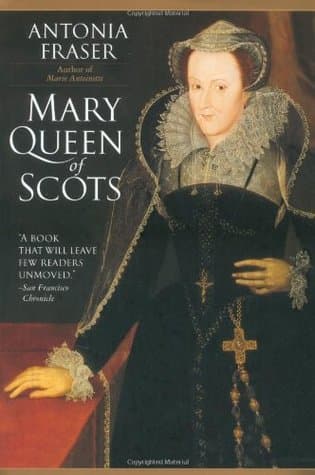
Mary Queen of Scots cover
Archivist's Choice

Mary Queen of Scots

Antonia Fraser (1969)

Genre

Biography / History

Reading Time

15-20 hours

Key Themes

See below

Track Your Reading

Sign in to track this book

Mary Stuart, a queen born to three crowns, instead found her life defined by an impulsive heart, scandalous passions, and a deadly rivalry with Elizabeth I that ultimately led to her beheading.

Core Idea

Antonia Fraser's "Mary Queen of Scots" offers a well-researched and empathetic look at one of history's most tragic figures. The book suggests Mary Stuart, despite her royal birth and charm, was a victim of her gender in a male-dominated world, her Catholic faith in Protestant Britain, and a strong dynastic claim that made her a constant threat to Elizabeth I. Fraser presents Mary's complex personal choices—her marriages, loves, and political mistakes—not as simple errors, but as desperate actions from a queen often alone, often betrayed, and consistently underestimated by male advisors and rivals. The story shows how Mary's character, both strong and naive, clashed with the harsh politics of 16th-century Scotland and England, leading to her long imprisonment and execution.
Reading time
15-20 hours
Difficulty
Medium
✓ Read this if...
You are fascinated by the lives of powerful women in history, the intricate political and religious machinations of 16th-century Europe, or enjoy detailed, character-driven historical biographies that explore the human element behind grand historical events.
✗ Skip this if...
You prefer concise historical overviews, are not interested in extensive biographical detail, or are looking for a purely political history without deep dives into personal lives and motivations.

Core idea

The central argument and framework that powers the entire book.

Antonia Fraser's "Mary Queen of Scots" offers a well-researched and empathetic look at one of history's most tragic figures. The book suggests Mary Stuart, despite her royal birth and charm, was a victim of her gender in a male-dominated world, her Catholic faith in Protestant Britain, and a strong dynastic claim that made her a constant threat to Elizabeth I. Fraser presents Mary's complex personal choices—her marriages, loves, and political mistakes—not as simple errors, but as desperate actions from a queen often alone, often betrayed, and consistently underestimated by male advisors and rivals. The story shows how Mary's character, both strong and naive, clashed with the harsh politics of 16th-century Scotland and England, leading to her long imprisonment and execution.

At a glance

Reading time

15-20 hours

Difficulty

Medium

Read this if...

You are fascinated by the lives of powerful women in history, the intricate political and religious machinations of 16th-century Europe, or enjoy detailed, character-driven historical biographies that explore the human element behind grand historical events.

Skip this if...

You prefer concise historical overviews, are not interested in extensive biographical detail, or are looking for a purely political history without deep dives into personal lives and motivations.

Key Takeaways

1

A Queen's Education, A Queen's Isolation

Mary's French upbringing shaped her as a cultured European monarch, but alienated her from her Scottish roots.

Quote

From the age of five, Mary Stuart was brought up in the most cultured court in Europe, that of France, where she was educated as a French princess, not a Scottish queen.

Mary's early life in France, engaged to the Dauphin Francis, included an excellent education in arts, languages, and court behavior. She was a celebrated figure, fluent in many languages, skilled in music and poetry, and deeply involved in French Catholic culture. This upbringing, though enriching, created a big gap between her and the rough, Protestant-leaning Scottish nobility she would later rule. Her French advisors and a strong French cultural identity often put her at odds with her Scottish lords, who saw her as a foreign monarc...

Supporting evidence

Fraser details Mary's education at the French court, her close relationship with Catherine de' Medici and Henri II, and the retinue of French advisors she brought back to Scotland, which immediately caused friction with Scottish lords like Lord James Stewart (later Earl of Moray).

Apply this

When leading diverse groups, actively bridge cultural or experiential gaps. Understand the existing norms and expectations of your audience rather than imposing a singular vision, even if well-intentioned. Adaptation and empathy are crucial for effective leadership across disparate backgrounds.
cultural-alienationforeign-influenceroyal-education
2

Love, Lust, and Political Suicide

Mary's impulsive romantic choices repeatedly undermined her political authority and ultimately sealed her fate.

Quote

Mary's heart, so often a source of strength in personal adversity, proved to be her greatest weakness in the political arena.

Mary Queen of Scots's personal life was tied to her political downfall. Her marriage to Lord Darnley, a Catholic cousin with a weak character and a strong claim to the throne, began as a love match but quickly became a disaster, upsetting powerful Scottish lords and causing English hostility. Even worse was her later relationship with the Earl of Bothwell, widely thought to have murdered Darnley. Her quick marriage to Bothwell, after a disputed 'abduction' many believed was consensual, was a public relations disaster. It ruined her cr...

Supporting evidence

The detailed accounts of Darnley's murder (Kirk o' Field), the Casket Letters controversy, and Mary's subsequent marriage to Bothwell, which led directly to the confederate lords' rebellion and her imprisonment at Lochleven Castle.

Apply this

Leaders must recognize the profound impact personal decisions have on public perception and political stability. Emotional impulses, if unchecked, can lead to irreversible strategic errors. Prioritize long-term goals and strategic alliances over fleeting personal desires, especially when in a position of power.

political-marriageroyal-scandalabdication
3

The Weight of the 'Casket Letters'

The authenticity of the Casket Letters remains debated, but their existence was a powerful propaganda tool against Mary.

Quote

Whether forged or genuine, the Casket Letters provided Mary's enemies with the perfect weapon to condemn her in the eyes of the world.

The Casket Letters—a collection of sonnets and letters supposedly written by Mary to Bothwell, connecting her to Darnley's murder—were central to the case against her. Fraser explores arguments for and against their truth, highlighting inconsistencies, the suspicious timing of their 'discovery,' and the political reasons of those who presented them. Whatever their true origin, their impact was clear. They were used by Scottish lords to justify her removal and later by Elizabeth I's commissioners to weaken Mary's claim to the English t...

Supporting evidence

Fraser's detailed analysis of the various commissions (e.g., York and Westminster conferences) where the Casket Letters were presented, the arguments made by both sides regarding their authenticity, and the political fallout for Mary.

Apply this

Be acutely aware of the narratives being constructed around you, especially in times of crisis. Disputed evidence, even if false, can have devastating real-world consequences if not effectively countered. Proactively manage your public image and address accusations swiftly and thoroughly.

propagandahistorical-evidencepolitical-conspiracy
4

Elizabeth I: The 'Sister' Rivalry

The relationship between Mary and Elizabeth was a complex dance of kinship, political necessity, and existential threat.

Quote

For Elizabeth, Mary was not merely a cousin, but a rival queen, a Catholic claimant to her throne, and a constant, living threat to her Protestant settlement.

The relationship between Mary Queen of Scots and Elizabeth I of England was one of history's most compelling rivalries. Fraser presents it as a mix of genuine, though careful, sisterly affection and harsh political calculation. Mary, as a Catholic and direct descendant of Henry VII, was a constant threat to Elizabeth's Protestant rule and her legitimacy. Elizabeth's hesitation to execute Mary for decades came from a strong dislike of killing a monarch and the fear of setting a dangerous example, but her main concern was always the saf...

Supporting evidence

Fraser details the numerous letters exchanged between Mary and Elizabeth, the various plots (e.g., Ridolfi, Throckmorton, Babington) that implicated Mary, and Elizabeth's agonizing over the execution warrant, reflecting her moral and political dilemma.

Apply this

Understand that even close relationships can be fraught with underlying competition when high stakes are involved. Identify true threats versus perceived ones, but acknowledge that perception can be as powerful as reality. Leaders must sometimes make difficult, unpopular decisions for the greater good or stability of their organization/nation.

royal-rivalrysuccession-crisispolitical-pragmatism
5

The Prisoner Queen: A Life in Custody

Mary's long imprisonment in England showcased her resilience and continued ability to inspire loyalty and fear.

Quote

Even in captivity, Mary remained a queen, her spirit unbroken, her charm undiminished, a focal point for hope and conspiracy alike.

For almost two decades, Mary Queen of Scots lived as a prisoner in various English castles, under the watchful eye of Elizabeth's appointed guards. Fraser vividly describes her life in captivity: her health problems, her continued hobbies like embroidery, her many letters, and her firm belief in her royal rights. Despite her confinement, Mary remained a strong symbol for English Catholics and European powers, inspiring many plots to free her and place her on the English throne. This period shows Mary's remarkable endurance and her abi...

Supporting evidence

Fraser recounts Mary's various places of imprisonment (e.g., Tutbury, Sheffield, Fotheringhay), her interactions with her jailers (e.g., the Earl of Shrewsbury), her attempts to communicate with the outside world, and the details of the Babington Plot which led to her trial.

Apply this

Even in restrictive or challenging circumstances, maintaining one's dignity, purpose, and network can be crucial for survival and future influence. Resilience in adversity is a powerful trait, but it must be tempered with an understanding of one's limitations and the consequences of one's actions, even from a position of perceived weakness.

royal-imprisonmentresiliencecatholic-plots
6

A Martyr's End: The Execution at Fotheringhay

Mary's execution solidified her image as a Catholic martyr and cemented her legendary status.

Quote

Mary met her death with a dignity and courage that transformed her from a flawed monarch into a legendary martyr.

Fraser's account of Mary's execution at Fotheringhay Castle is perhaps the most moving part of the book. Despite years of imprisonment and political plotting, Mary faced her death with notable calm and dramatic flair. Dressed in crimson, the color of martyrdom in the Catholic Church, she stated her innocence of treason against Elizabeth and affirmed her Catholic faith. Her final moments, including the bungled beheading and the discovery of her pet dog hidden in her skirts, are told in clear detail, emphasizing the stark brutality of t...

Supporting evidence

The detailed description of Mary's last days, her meticulously chosen attire, her final speeches, the execution itself, and the immediate aftermath as recorded by contemporary witnesses and chroniclers.

Apply this

The manner in which one faces adversity, especially a definitive end, can profoundly shape one's legacy. Dignity and conviction in the face of insurmountable odds can transform a perceived failure into an enduring symbol. Understand how narrative and symbolism can transform an event's meaning.

martyrdomroyal-executioncatholic-cause
7

The Power of Dynastic Claim

Mary's claim to the English throne was her greatest asset and her ultimate undoing.

Quote

It was her blood, not her actions alone, that made Mary Stuart a constant and intolerable threat to Elizabeth's peace of mind and the security of her realm.

Mary's claim to the English throne, from her grandmother Margaret Tudor (Henry VIII's elder sister), was arguably stronger in the eyes of many Catholics than Elizabeth's, whose legitimacy was questioned due to her parents' controversial marriage. This right to the throne was Mary's strongest political card, making her a rallying point for English Catholics and European powers looking to remove Elizabeth. However, it was also the main reason for Elizabeth's constant hostility and, ultimately, Mary's execution. Fraser shows that even wh...

Supporting evidence

The historical context of Henry VIII's will, the Act of Succession, and the various Catholic plots (e.g., the Northern Rebellion) that explicitly aimed to replace Elizabeth with Mary, all predicated on Mary's dynastic claim.

Apply this

Recognize that inherent advantages or disadvantages (like inherited status or a unique skill set) can be both a source of power and vulnerability. Leverage your unique strengths, but be acutely aware of how they might also make you a target or create unforeseen challenges. Understand that some threats are existential, not just transactional.

dynastic-claimlegitimacysuccession-threat
8

A Woman in a Man's World

Mary's gender often hampered her ability to exert authority and navigate the patriarchal political landscape.

Quote

As a woman, Mary faced unique challenges in a political world dominated by men, where her emotions were often seen as weakness and her independence as defiance.

Fraser subtly shows the difficulties Mary faced as a female monarch in 16th-century Scotland and Europe. Her decisions, especially about marriage and succession, were judged through a male-centered view. Her advisors and male nobles often challenged her power, questioned her judgment, and tried to control her. Her emotional responses, which might have been accepted in a male ruler, were often seen as weakness or irrationality. The need to produce an heir, a key duty for a queen, also made her open to manipulation through marriage. Whi...

Supporting evidence

The constant pressure on Mary to marry and produce an heir, the condescending attitudes of some Scottish lords (e.g., John Knox's misogynistic attacks), and the way her 'feminine' emotions were often cited as reasons for her political missteps.

Apply this

Be cognizant of implicit biases that may exist in your environment, especially those related to gender, and how they might affect perception and influence. Develop strategies to assert authority and make decisions that are not easily dismissed or undermined by such biases. Understand that navigating a world with entrenched norms requires both skill and resilience.

gender-biaspatriarchyfemale-monarch
9

The Enduring Power of Charisma

Mary's personal charm and beauty captivated many, even those who were her enemies or jailers.

Quote

Even in her darkest hours, Mary's inherent charm and regal bearing never deserted her, winning over many who initially came to condemn.

Throughout her life, Mary Queen of Scots had a clear personal charm. Fraser often describes her beauty, wit, grace, and ability to inspire loyalty. This charisma was a double-edged sword: it won her strong supporters and lovers, but also made her a dangerous figure to her enemies. Even during her long imprisonment, her jailers and their families often fell under her spell, making Elizabeth's job of keeping her safely contained harder. This personal appeal went beyond political loyalties and beliefs, showing how an individual's persona...

Supporting evidence

Fraser's accounts of Mary's ability to charm French courtiers, Scottish lords, and even her English custodians like the Earl of Shrewsbury and Sir Amias Paulet, despite their initial instructions to treat her strictly. Her ability to inspire deep loyalty in her household staff, even unto death.

Apply this

Cultivate genuine charisma and strong interpersonal skills. Understand that personal connection and likability can open doors, build alliances, and even disarm opponents. However, be wary of relying solely on charm; it must be backed by substance and strategic acumen to be truly effective and avoid being perceived as manipulative.

charismapersonal-influencehuman-element-in-history
10

Legacy: Tragedy, Romance, and Historical Debate

Mary's life and death continue to fascinate, positioning her as a romantic heroine and a subject of endless historical reinterpretation.

Quote

Mary Queen of Scots, whether saint or sinner, victim or schemer, remains one of history's most compelling and endlessly reinterpreted figures.

Mary's story has gone beyond simple historical fact to become a powerful myth. Fraser ends by reflecting on the lasting appeal of Mary Queen of Scots, noting how she has been romanticized, demonized, and reinterpreted through centuries of literature, art, and film. Her tragic life, marked by beauty, passion, betrayal, and a dramatic execution, makes her an irresistible figure for artists and historians alike. She embodies the ultimate romantic heroine who lost her throne for love, a Catholic martyr, and a fierce queen battling a power...

Supporting evidence

Fraser discusses the various historical interpretations of Mary, from contemporary pamphlets to later romantic novels and plays, highlighting the differing perspectives on her character and actions.

Apply this

Recognize that narratives, especially those involving powerful figures, are rarely static; they evolve over time. Be aware of how your own story might be interpreted and reinterpreted by future generations. Strive for clarity in your actions and communications, but accept that complete control over your legacy is often impossible.

historical-legacymyth-makinghistorical-interpretation

Critical analysis

Notable Quotes

In my end is my beginning.

Mary's personal motto, often embroidered and used throughout her life.

For the world, I am a queen without a kingdom; for myself, I am a prisoner.

Reflecting on her captivity in England, lamenting her loss of power and freedom.

I am of the opinion that there is more need of a good judge than of a good executioner.

Said in response to the English legal proceedings against her, questioning their fairness.

I am a Queen, and I will die a Queen.

Her defiant declaration before her execution, asserting her royal status to the very end.

The tears of my subjects are dearer to me than their treasures.

Expressing her concern for the well-being of her Scottish people, despite political turmoil.

My heart is entirely French.

Reflecting her deep affection and cultural ties to France, where she spent her youth.

I have been so long in prison that I am worn out with grief and sorrow.

A poignant expression of her prolonged suffering during her long imprisonment.

I protest that I am a Catholic, and that I die for my religion.

Her final words before her execution, emphasizing her religious conviction.

Fear not, for in the end, truth will triumph.

A hopeful sentiment expressed during a period of great difficulty, believing in ultimate vindication.

I am innocent of the crime laid to my charge.

Her consistent plea of innocence regarding the plots against Elizabeth I.

I am a Queen, but I have no friends.

A lament about her isolation and lack of true allies amidst political machinations.

The greatest glory is not in never falling, but in rising every time we fall.

A reflection on resilience and perseverance, fitting for her turbulent life.

God forgive them that have thirsted for my blood.

A prayer of forgiveness for her persecutors, uttered shortly before her death.

I would rather lose my life than my honour.

Stating her preference for death over dishonor, reflecting her strong sense of personal integrity.

Quiz

Test Your Knowledge

Ready to see how well you understood this book? Take our interactive quiz with 10 questions.

10
Questions
~5
Minutes
?
Best Score

Key Questions (FAQ)

Mary Queen of Scots, also known as Mary Stuart, was the Queen of Scotland from 1542 to 1567 and a claimant to the English throne. Her life was marked by political intrigue, multiple marriages, and ultimately, her execution for treason.

About the author

Antonia Fraser

Antonia Fraser was a celebrated British historian and biographer, renowned for her vivid and meticulously researched works. Her most famous book, 'Mary Queen of Scots,' is considered a definitive account of the monarch's life. Fraser's prolific career spanned decades, earning her critical acclaim for bringing historical figures to life with compelling narrative flair.