BookBrief
Marie Antoinette cover
Archivist's Choice

Marie Antoinette

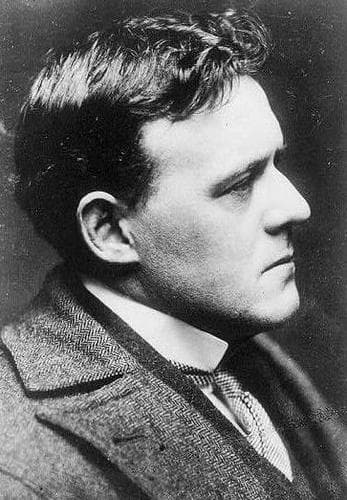
Hilaire Belloc (1909)

Genre

Biography / History

Reading Time

10-12 hours

Key Themes

See below

Track Your Reading

Sign in to track this book

Hilaire Belloc's biography offers a sympathetic, yet clear-eyed, look at Marie Antoinette, the Austrian queen whose early mistakes and unfortunate friendships led her from the French throne to the guillotine.

Core Idea

Belloc's "Marie Antoinette" argues that the Queen's tragic end was an almost certain outcome of many circumstances, not just her own faults. Her foreign birth, young age when she gained power, and the scrutiny from both the French court and an increasingly radical public set the stage for her fall. The book shows how outside pressures, bad friendships, and the French monarchy's instability during a time of great social change made her a symbolic victim. It also highlights how stories can shape history and suggests her fate was unavoidable.
Reading time
10-12 hours
Difficulty
Medium
✓ Read this if...
You are interested in a classic, sympathetic, yet critical historical biography of Marie Antoinette, focusing on the environmental factors and political pressures that shaped her life and ultimate demise.
✗ Skip this if...
You prefer modern historical analyses with extensive primary source citation, or a narrative that places more emphasis on her personal agency and less on external determinism.

Core idea

The central argument and framework that powers the entire book.

Belloc's "Marie Antoinette" argues that the Queen's tragic end was an almost certain outcome of many circumstances, not just her own faults. Her foreign birth, young age when she gained power, and the scrutiny from both the French court and an increasingly radical public set the stage for her fall. The book shows how outside pressures, bad friendships, and the French monarchy's instability during a time of great social change made her a symbolic victim. It also highlights how stories can shape history and suggests her fate was unavoidable.

At a glance

Reading time

10-12 hours

Difficulty

Medium

Read this if...

You are interested in a classic, sympathetic, yet critical historical biography of Marie Antoinette, focusing on the environmental factors and political pressures that shaped her life and ultimate demise.

Skip this if...

You prefer modern historical analyses with extensive primary source citation, or a narrative that places more emphasis on her personal agency and less on external determinism.

Key Takeaways

1

The Burden of Foreign Birth

Marie Antoinette's Austrian heritage was a constant political liability in France.

Quote

She was a foreigner, and that was her first and last undoing in the eyes of the populace.

Marie Antoinette arrived in France as an Austrian Archduchess, a symbol of a strategic alliance, but the French people and nobility always viewed her with suspicion. Her 'foreignness' was a huge obstacle, making her an easy target for xenophobic propaganda and blame during national crises. This inherent difference kept her from ever truly fitting in or being seen as fully French, despite her efforts. Belloc argues this was a systemic disadvantage, not just a personal failing, and it existed before any of her own mistakes. Her actions,...

Supporting evidence

Belloc details the initial public reception and the persistent whispers and pamphlets that continuously emphasized her Austrian origins, especially during conflicts or perceived slights to French interests. The 'Austrian Committee' slander, though unfounded, perfectly encapsulated this deep-seated fear.

Apply this

Leaders or public figures entering a new cultural or political landscape must proactively address and mitigate pre-existing biases or 'otherness' to build genuine trust, rather than assuming assimilation will naturally occur.
xenophobiapolitical-alienationidentity-politics
2

The Peril of Early Power

Ascending to the throne at a young age left Marie Antoinette ill-prepared for its immense responsibilities.

Quote

Her youth, which should have been her charm, became her greatest vulnerability in a court that demanded seasoned wisdom.

Marie Antoinette entered the demanding, complex world of the French court and then the monarchy at a very young age, barely out of childhood. This quick rise meant she lacked the political skill, life experience, and understanding of her subjects' problems needed for effective rule. Her early years showed a natural leaning toward frivolous entertainment and little serious involvement in state affairs, a common issue for many young royals. Belloc suggests that while she matured later, the first impression and habits formed in her youth...

Supporting evidence

Belloc recounts her early days at Versailles, focusing on her love for parties, fashion, and theatricals, and her initial disregard for the complex political machinations around her. Her initial lack of interest in her husband, Louis XVI, and statecraft is highlighted.

Apply this

Leadership transitions, especially for young individuals, require robust mentorship and a structured development path to bridge the gap between youthful inexperience and the demands of high office. Delegating wisely is also key.

youthful-leadershiproyal-prerogativepolitical-maturity
3

The Unforgiving Court of Public Opinion

Her every action, real or fabricated, was magnified and distorted by an increasingly hostile public sphere.

Quote

Every misstep, every rumour, every whispered calumny found fertile ground in the hungry soil of public discontent.

Before modern mass media, pamphlets, caricatures, and gossip were powerful tools for public opinion, and Marie Antoinette became their main target. Belloc argues that her real mistakes, like excessive spending on fashion and the Petit Trianon, were magnified and distorted by a public already facing economic hardship. Beyond that, outright lies, such as the Diamond Necklace Affair, cemented her image as a wasteful, uncaring queen. She was caught in a cycle where negative perceptions led to more negative stories, making it impossible fo...

Supporting evidence

The detailed accounts of the Diamond Necklace Affair and the widespread circulation of libellous pamphlets and caricatures depicting her as 'Madame Deficit' or engaging in scandalous behavior are central to Belloc's argument.

Apply this

Public figures must understand that perception often trumps reality, especially in volatile times. Proactive communication, transparency, and a strong narrative are crucial to counter misinformation and manage public image effectively.

public-relationsmisinformationreputation-management
4

Friendships That Led to Ruin

Her choice of confidantes, often based on personal affection, proved politically disastrous.

Quote

Her chance friendships failed not in mere disappointments but in ruin; her lapses of judgment betrayed her not to stumbling but to an abyss.

Marie Antoinette, looking for real connection in the isolated court, formed close friendships with people like the Polignac family. While these relationships offered personal comfort, they lacked political wisdom. Her favoritism led to their quick wealth and influence, alienating older nobility who felt ignored and fueling public accusations of corruption and cronyism. Belloc highlights how these friendships, born from an innocent desire for companionship, were seen as blatant abuses of power. This furthered the idea of a queen detach...

Supporting evidence

The elevation and lavish gifts bestowed upon the Polignac family, particularly Gabrielle de Polastron, Duchesse de Polignac, are cited as prime examples of her politically naive choices in friendship, leading to widespread resentment.

Apply this

Leaders must exercise extreme caution in their personal relationships, recognizing that perceived favoritism can undermine trust and legitimacy. Professional boundaries and ethical considerations must always supersede personal affections in matters of state.

cronyismpolitical-patronageethical-leadership
5

The Tragedy of Misunderstanding

A fundamental inability to grasp the depth of French suffering doomed her reign.

Quote

She saw the world through the gilded bars of Versailles, unable to comprehend the true hunger of the streets.

Belloc argues that one of Marie Antoinette's most tragic flaws was not malice, but a deep lack of understanding of the economic and social realities facing most French citizens. Raised in luxury and shielded by court life, she truly struggled to grasp the depth of poverty and resentment growing outside the palace. Her famous, though likely untrue, 'Let them eat cake' quote, even if never said, perfectly captures this perceived disconnect. This lack of empathy, stemming from ignorance rather than cruelty, made it impossible for her to ...

Supporting evidence

Belloc discusses her insulated upbringing, her focus on courtly entertainments, and the physical and psychological distance between Versailles and the common people. He details instances where she seemed genuinely unaware of the severity of the financial crisis or food shortages.

Apply this

Effective leadership demands a deep, empathetic understanding of the constituents' lived experiences. Leaders must actively seek out diverse perspectives and challenge their own biases to avoid becoming detached and irrelevant to the populace they serve.

empathy-gapsocial-disconnectclass-divide
6

The Weight of a Faltering Monarchy

She inherited a monarchy already in decline, burdened by centuries of debt and systemic issues.

Quote

She was but a player in a game long lost, a symbol of a system already condemned.

Belloc emphasizes that Marie Antoinette alone did not cause the French Revolution. She inherited a monarchy already close to collapse, weighed down by huge national debt from previous wars (like the Seven Years' War and American Revolutionary War), an inefficient and corrupt tax system, and deep social inequalities. Enlightenment ideas challenging absolute monarchy were already widespread. While her actions certainly worsened the situation and gave fuel to revolutionaries, the underlying structural problems were too ingrained for any ...

Supporting evidence

Belloc provides historical context regarding France's financial woes preceding Louis XVI's reign, the resistance to tax reforms by the nobility, and the growing intellectual ferment of the Enlightenment challenging the divine right of kings.

Apply this

Leaders must critically assess the systemic challenges they inherit, recognizing that individual actions, while important, often operate within larger, pre-existing frameworks. Systemic issues require systemic solutions, not just individual blame.

systemic-failurehistorical-contextpolitical-inheritance
7

The Power of Narrative Control

The revolutionaries expertly crafted a damning narrative that defined her in the public eye.

Quote

The narrative woven around her was more potent than any truth, a web of lies that ensnared a queen.

The French Revolutionaries, especially the Jacobins, were skilled at propaganda and controlling the narrative. They systematically demonized Marie Antoinette, portraying her as the embodiment of everything wrong with the Ancien Régime: foreign, extravagant, immoral, and detached. Her genuine efforts at reform or austerity in later years were dismissed or twisted to fit the predetermined story of a villainess. Belloc implicitly argues that her inability to effectively counter this narrative, or perhaps the impossibility of doing so giv...

Supporting evidence

Belloc discusses the relentless stream of revolutionary pamphlets, newspapers, and public speeches that consistently depicted Marie Antoinette in the worst possible light, culminating in the highly politicized and biased trial.

Apply this

In any conflict or political struggle, controlling the narrative is paramount. Leaders must understand the power of storytelling and actively work to shape public perception, rather than allowing opponents to define the terms of engagement.

propagandanarrative-warfarepublic-perception
8

The Irony of Her Final Dignity

Despite a life of missteps, she faced her end with remarkable courage and composure.

Quote

It was in her final, darkest hours that the true strength and dignity of the woman emerged, a stark contrast to the frivolous queen of earlier years.

Belloc notes a significant change in Marie Antoinette during her imprisonment and trial. Stripped of all luxuries, power, and even her children, she shed the frivolity of her early reign. She faced her accusers and her execution with remarkable courage, stoicism, and a new dignity. This final act of defiance against her oppressors, enduring a sham trial and public humiliation with composure, sharply contrasted with the flighty, pleasure-loving queen of Versailles. Belloc suggests that while her life had serious errors, her death revea...

Supporting evidence

Belloc details her conduct during the Revolutionary Tribunal, her final letter, and her demeanor on the scaffold, noting her calm and resolute bearing in the face of immense pressure and certain death.

Apply this

Even in moments of ultimate failure or defeat, maintaining integrity and composure can leave a lasting legacy. True character often reveals itself most clearly under extreme duress.

courage-under-pressurepersonal-transformationdignity-in-adversity
9

The Unavoidable Nature of Her Fate

Her individual character flaws were secondary to the unstoppable forces of historical change.

Quote

Her tragedy was not merely personal, but the inevitable collision of a flawed individual with the crushing weight of historical necessity.

While Belloc details Marie Antoinette's personal failings and poor judgments, he ultimately frames her story as a tragedy driven by forces larger than herself. The French Revolution was a huge societal upheaval, the result of centuries of socio-economic inequality, philosophical shifts, and political mismanagement. Even a 'perfect' queen might have struggled to navigate such turbulent times. Her youth, foreignness, and the timing of her reign placed her in an impossible position. Belloc suggests that her individual character, while ad...

Supporting evidence

Belloc's overarching narrative consistently places her story within the broader context of pre-revolutionary France, emphasizing the deep-seated grievances and intellectual currents that made radical change almost inevitable, irrespective of the monarch's personality.

Apply this

Leaders must understand that sometimes, even their best efforts cannot alter the course of powerful historical or societal movements. The ability to recognize and adapt to macro-level shifts is crucial, as is the humility to accept when one is simply caught in the tide.

historical-determinismsocial-revolutioninevitable-change

Critical analysis

Notable Quotes

The mind of a woman, especially a Queen, is not a simple mechanism; it has its own laws.

Reflecting on Marie Antoinette's decision-making and character.

It is characteristic of the French Revolution that it did not begin when men were most oppressed, but when they were beginning to be less so.

Discussing the preconditions and timing of the French Revolution.

She was born to an age of transition, and she met it with a mind singularly unfitted to understand it.

Commenting on Marie Antoinette's inability to adapt to the changing political landscape.

The greatest tragedy of her life was not her death, but her inability to comprehend the forces that destroyed her.

Summarizing the core tragedy of Marie Antoinette's reign and downfall.

Monarchy, if it is to survive, must be something more than a pageant; it must be a power.

Analyzing the declining power of the French monarchy before the revolution.

There are moments in history when the whole weight of the past seems to fall upon one individual.

Describing the immense pressure on Marie Antoinette during the revolutionary period.

Her frivolity was not vicious, but it was profoundly ignorant of the terrible realities brewing around her.

Addressing Marie Antoinette's reputation for extravagance and its implications.

The true meaning of the Revolution lay in its absolute rejection of the past, not in any particular reform.

Explaining the fundamental nature and radicalism of the French Revolution.

She had charm, but not wisdom; beauty, but not foresight.

A concise characterization of Marie Antoinette's personal qualities versus her political shortcomings.

The people, once awakened to their power, are a force that no individual, however highly placed, can long withstand.

Reflecting on the power of popular uprising during the revolution.

Her courage in the face of death redeemed much of her earlier thoughtlessness.

Discussing Marie Antoinette's conduct during her trial and execution.

The tragedy of the French monarchy was that it had ceased to govern effectively long before it ceased to exist.

Analyzing the long-term decline of the Bourbon monarchy.

She was a symbol more than a ruler, and it was the symbol that the Revolution sought to destroy.

Explaining Marie Antoinette's symbolic importance to the revolutionaries.

The greatest errors are often those committed not from malice, but from a lack of imagination.

A general observation on the mistakes made by the royal family and aristocracy.

History does not judge by intentions, but by results.

A concluding thought on historical judgment applied to Marie Antoinette's reign.

Quiz

Test Your Knowledge

Ready to see how well you understood this book? Take our interactive quiz with 10 questions.

10
Questions
~5
Minutes
?
Best Score

Key Questions (FAQ)

Marie Antoinette was an Austrian royal, born in 1755, who became the Queen of France through her marriage to Louis XVI. She is a significant figure in French history, particularly known for her life during the tumultuous period leading up to and during the French Revolution.

About the author