BookBrief
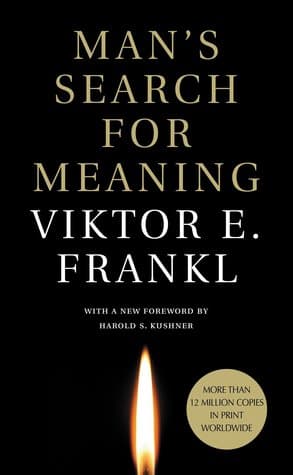
Man's Search for Meaning cover
Archivist's Choice

Man's Search for Meaning

Viktor E. Frankl (1946)

Genre

Biography / Memoir / History / Spirituality / Philosophy

Reading Time

120 min

Key Themes

See below

Track Your Reading

Sign in to track this book

In the horror of Auschwitz, psychiatrist Viktor Frankl learned that the last human freedom is choosing one's attitude and finding meaning, not pleasure, as the ultimate will to live.

Core Idea

Viktor Frankl, a psychiatrist and Holocaust survivor, says the main human drive is not pleasure (Freud) or power (Adler) but the 'will to meaning.' From his terrible experiences in Nazi concentration camps, Frankl states that even in the worst, most suffering-filled situations, people can choose their attitude and find meaning in their lives. This meaning can come from creating something, experiencing something or someone (like love), and, importantly, from how we face unavoidable suffering. The book says life has meaning no matter the situation, and seeing this meaning helps with psychological survival and spiritual well-being. Frankl introduces logotherapy, a type of therapy that helps patients find their unique meaning. He says suffering can become an achievement when one finds a purpose in it, and that despair often comes from a lack of meaning, not from outside events. By taking responsibility for one's life and finding meaning in both its joys and its tragedies, people can get past their suffering and live a life with purpose, reaching self-transcendence instead of just self-actualization.
Reading time
120 min
Difficulty
Medium
✓ Read this if...
You are grappling with suffering, searching for purpose, or want a profound perspective on human resilience and the power of choice in the face of adversity. This book is essential for understanding existential philosophy and the human spirit.
✗ Skip this if...
You are looking for a light, easy read with prescriptive self-help steps, or if you are not prepared to engage with profound philosophical questions about suffering and existence.

Core idea

The central argument and framework that powers the entire book.

Viktor Frankl, a psychiatrist and Holocaust survivor, says the main human drive is not pleasure (Freud) or power (Adler) but the 'will to meaning.' From his terrible experiences in Nazi concentration camps, Frankl states that even in the worst, most suffering-filled situations, people can choose their attitude and find meaning in their lives. This meaning can come from creating something, experiencing something or someone (like love), and, importantly, from how we face unavoidable suffering. The book says life has meaning no matter the situation, and seeing this meaning helps with psychological survival and spiritual well-being.

Frankl introduces logotherapy, a type of therapy that helps patients find their unique meaning. He says suffering can become an achievement when one finds a purpose in it, and that despair often comes from a lack of meaning, not from outside events. By taking responsibility for one's life and finding meaning in both its joys and its tragedies, people can get past their suffering and live a life with purpose, reaching self-transcendence instead of just self-actualization.

At a glance

Reading time

120 min

Difficulty

Medium

Read this if...

You are grappling with suffering, searching for purpose, or want a profound perspective on human resilience and the power of choice in the face of adversity. This book is essential for understanding existential philosophy and the human spirit.

Skip this if...

You are looking for a light, easy read with prescriptive self-help steps, or if you are not prepared to engage with profound philosophical questions about suffering and existence.

Key Takeaways

1

Meaning Over Pleasure

The primary human drive is the pursuit of meaning, not pleasure.

Quote

Man's Search for Meaning is a profound exploration of the human spirit's ability to transcend suffering by finding a purpose.

Frankl says that Freud's focus on pleasure as the main human motivator is wrong. Instead, from his observations in the concentration camps, he concluded that people with a 'why'—a reason for living, a future goal, or a loved one to return to—were much more resilient and likely to survive. This search for meaning, even in great suffering, gives the psychological and spiritual strength needed to endure. Logotherapy, Frankl's therapy, is built on this idea, stating that life's challenges are chances to find and fulfill one's unique meani...

Supporting evidence

Frankl's own experience and observations of fellow prisoners in Auschwitz and other concentration camps, noting that those who lost their sense of future or purpose often succumbed more quickly.

Apply this

Identify your 'why.' What is your overarching purpose, a task yet to be completed, or a person you love? Consciously connect daily actions to this larger meaning to build resilience and motivation.

logotherapywill-to-meaningexistential-vacuum
2

Freedom of Inner Choice

Even in extreme suffering, we retain the freedom to choose our attitude.

Quote

Everything can be taken from a man but one thing: the last of the human freedoms—to choose one’s attitude in any given set of circumstances, to choose one’s own way.

This is perhaps Frankl's most powerful idea. Despite the terrible conditions and dehumanization in the concentration camps, he saw that prisoners still had a 'last inner freedom.' They could choose how they reacted to their suffering: with despair, or with defiance, compassion, and inner dignity. This freedom is not about changing outside events, but about the internal decision of how one relates to those events. This choice shows character and offers a strong sense of control, even when everything else is gone. It shows that our resp...

Supporting evidence

Frankl's examples of prisoners who shared their last crust of bread, comforted others, or found beauty in a sunset, despite their own imminent demise, demonstrating a chosen attitude of nobility.

Apply this

When faced with unavoidable difficulty, pause and consciously choose your response. Instead of reacting impulsively, ask yourself: 'How can I choose to interpret this? What attitude will best serve my values and dignity?'

existential-freedomresponse-abilitydignity-of-suffering
3

Suffering as Achievement

Unavoidable suffering can be transformed into a profound human achievement.

Quote

When we are no longer able to change a situation, we are challenged to change ourselves.

Frankl says that suffering, when it cannot be avoided, is not meaningless. Instead, it offers a chance for human growth and finding unique meaning. By facing the challenge of suffering with a courageous and dignified attitude, a person can achieve a deep inner victory. This view changes suffering from a negative experience to be avoided, into something that can build character, show inner strength, and deepen one's understanding of life. It is about finding meaning in pain, guilt, and death, and turning them into personal success.

Supporting evidence

Frankl's observation that some prisoners, despite their suffering, grew spiritually, becoming more compassionate or insightful, demonstrating a 'triumph of the spirit' over adversity.

Apply this

When facing unavoidable hardship, instead of asking 'Why me?', ask 'What is this teaching me?' or 'How can I grow through this?' Seek to find the meaning or lesson embedded within the struggle.

tragic-optimismmeaning-in-sufferingcharacter-development
4

Anticipatory Anxiety & Hyper-Intention

Over-focusing on a desired outcome can paradoxically prevent its achievement.

Quote

The more one aims at pleasure, the more one misses it.

Frankl describes 'anticipatory anxiety' and 'hyper-intention' to explain how trying too hard to achieve certain states (like happiness, sleep, or sexual potency) can make them harder to get. Anticipatory anxiety happens when the fear of a bad outcome (e.g., insomnia, performance anxiety) creates that very outcome. Hyper-intention is focusing too much on a goal, which can stop natural processes. Logotherapy often uses 'paradoxical intention'—telling patients to wish for what they fear—to break this cycle, showing the power of changing ...

Supporting evidence

Frankl's therapeutic examples, such as a man with a severe sweating phobia being told to try and sweat more, or an insomniac encouraged to stay awake, which often broke the cycle of anxiety and allowed the desired outcome to occur naturally.

Apply this

If you're struggling with something you're trying too hard to achieve (e.g., falling asleep, being spontaneous), try 'paradoxical intention.' Lean into the fear or the opposite outcome, or simply detach from the intense desire. Often, the desired state will emerge naturally when the pressure is released.

paradoxical-intentionself-transcendencenoo-dynamics
5

The Provisional Existence

Living without a clear future purpose erodes the will to live.

Quote

A man who could not see the end of his provisional existence was not able to aim at an ultimate goal in life.

In the concentration camps, Frankl saw 'provisional existence.' This state, marked by indefinite waiting and uncertainty, deeply affected prisoners. Those who could not imagine a future, a 'return home' or a task to finish, often fell into deep despair. Without a future goal, the present suffering became unbearable and meaningless, leading to a loss of the will to live. This shows how important hope and future-oriented meaning are for psychological survival.

Supporting evidence

Frankl recounts how many prisoners succumbed to 'giving up' around Christmas or New Year's if they had set arbitrary release dates that passed without fulfillment, demonstrating the psychological impact of shattered future expectations.

Apply this

Cultivate future goals and projects, no matter how small, to give your present actions meaning and direction. Regularly remind yourself of your long-term aspirations and break them into achievable steps to maintain hope and purpose.

future-orientationhopeexistential-frustration
6

Love as Ultimate Meaning

Love is the highest goal and the most profound source of meaning.

Quote

The salvation of man is through love and in love.

Frankl often says love is a main source of meaning. He describes how, even in brutal conditions, thoughts of his wife and their love gave him great strength. Love lets one see the unique essence of another person and find meaning in that connection, even if the loved one is absent. It is not just an emotion but an act of deep recognition and commitment. This view suggests that our deepest human fulfillment comes from looking beyond ourselves to connect with and value others, offering a timeless message of hope and purpose.

Supporting evidence

Frankl's vivid internal experiences of conversing with his wife's image, feeling her presence, and finding solace and meaning in their shared love, even when uncertain of her fate.

Apply this

Actively cultivate and express love in your relationships. Recognize that genuine connection and care for others are not just pleasant experiences but fundamental sources of meaning and resilience in life.

self-transcendenceunconditional-lovespiritual-survival
7

The Tragic Triad & Optimism

Meaning can be found even in pain, guilt, and death.

Quote

To suffer unnecessarily is masochistic rather than heroic.

Frankl introduces pain, guilt, and death as unavoidable parts of human existence. However, he does not suggest passive acceptance but 'tragic optimism.' This means keeping hope and meaning when facing these inevitable sufferings. It is about finding purpose in suffering (when unavoidable), learning from guilt, and accepting life's finite nature as a reason to act meaningfully. This optimistic stance is not naive; it shows human ability to turn adversity into personal success and find value even in life's darkest moments. It reminds us...

Supporting evidence

Frankl's own journey through the camps, where he contemplated suicide but found a reason to live in his unfinished scientific work and the possibility of helping others, demonstrating the choice for optimism amidst tragedy.

Apply this

When confronted with loss, regret, or the realization of mortality, instead of succumbing to despair, actively seek out what meaning can be derived. How can this experience shape your future actions or appreciation for life?

tragic-optimismexistential-analysismeaning-therapy
8

Beyond Self-Actualization

True fulfillment comes from self-transcendence, not self-focus.

Quote

Man is not fully self-actualized unless he is self-transcendent.

While Abraham Maslow's hierarchy of needs ends with self-actualization, Frankl says true human fulfillment goes beyond it, to 'self-transcendence.' This means looking beyond oneself, dedicating one's life to something greater than personal gain—a cause, a loved one, a creative work. Happiness and self-actualization, he says, are not direct goals but 'side effects' of pursuing meaning outside oneself. When a person focuses on contributing to the world or serving others, personal fulfillment naturally follows. This view challenges moder...

Supporting evidence

Frankl's observation that prisoners who focused on helping others, sharing resources, or maintaining their dignity for the sake of a higher principle (e.g., God, family) seemed to fare better psychologically than those solely focused on their own survival.

Apply this

Shift your focus from 'What can I get?' to 'What can I give?' Actively seek opportunities to contribute to a cause, help others, or create something of value. Your own well-being will often improve as a byproduct.

self-transcendencealtruismcontribution
9

The Uniqueness of Meaning

Each individual's meaning in life is unique and must be discovered.

Quote

Everyone has his own specific vocation or mission in life to carry out a concrete assignment which demands fulfillment.

Frankl says that meaning is not a universal concept dictated by others but is deeply personal and unique to each person. It is not made up but found through one's actions, experiences, and attitude towards suffering. This 'meaning of the moment' can change often. Logotherapy's role is not to tell a patient their meaning, but to help them see and accept their unique responsibilities and chances for meaning. This individual approach helps people find purpose in their specific situations, affirming the inherent value and potential of eve...

Supporting evidence

Frankl's therapeutic practice, where he guided patients to reflect on their own lives, relationships, and unfulfilled tasks rather than imposing a predefined meaning.

Apply this

Regularly reflect on your unique talents, passions, and the needs of the world around you. Ask yourself: 'What is life asking of me right now?' or 'What unique contribution can I make in this situation?'

meaning-of-the-momentpersonal-responsibilityexistential-analysis
10

Life's Unconditional Meaning

Life holds meaning under all circumstances, even the most dire.

Quote

The meaning of life is unconditional, for it is life itself that asks questions of man.

A main idea of logotherapy is that life's meaning is unconditional. This means that even with terminal illness, deep loss, or extreme suffering, life always has potential meaning. It is not man who questions life, but life that questions man, and our job is to answer these questions through our actions, our love, and our attitude towards unavoidable suffering. This strong affirmation of life's inherent meaning offers a powerful way to counter nihilism and despair, suggesting that even a single moment can have great value and purpose, ...

Supporting evidence

Frankl's personal survival and subsequent work, demonstrating his unwavering belief in life's meaning despite having lost his entire family and enduring unimaginable suffering.

Apply this

Even in moments of profound doubt or despair, remind yourself that life itself is asking something of you. Seek out the smallest glimmer of purpose, a connection, or an opportunity to respond meaningfully to your circumstances.

unconditional-meaningexistential-affirmationwill-to-meaning

Critical analysis

Notable Quotes

Quiz

Test Your Knowledge

Ready to see how well you understood this book? Take our interactive quiz with 10 questions.

10
Questions
~5
Minutes
?
Best Score

Key Questions (FAQ)

Logotherapy is Viktor Frankl's psychotherapeutic approach that posits the primary human drive is not pleasure or power, but the pursuit of meaning. It focuses on helping individuals discover purpose in their lives, even in the face of suffering, by finding meaning in their experiences and responsibilities.

About the author