“The greatest gift you can give another person is the gift of your attention.”
— Sister John's advice on true presence and compassion.

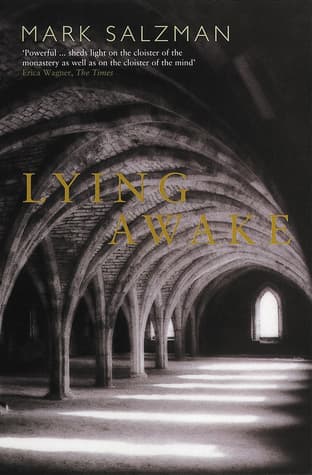
Mark Salzman (2001)
Genre
Spirituality
Reading Time
180 min
Key Themes
See below
Sign in to track this book
A Carmelite nun's divine visions are tied to her severe headaches, making her question if her spiritual ecstasy is a gift from God or a symptom of illness.
Sister John of the Cross lives a disciplined life in her Carmelite monastery near Los Angeles. Her days include prayer, work, and contemplation. Unlike other nuns, Sister John regularly has clear, divine visions, which appear as intense light, deep spiritual experiences, and messages she believes are from God. These visions set her apart; her community respects her as a spiritual teacher, and other sisters, even the Mother Superior, seek her advice. She believes these experiences are entirely divine grace, a direct connection to God and a key part of her spiritual identity.
Sister John has been having increasingly severe headaches, which often happen before or during her most powerful visions. At first, she sees them as a minor inconvenience, a small cost for the spiritual insights they bring. But the headaches become more intense and frequent, making her unable to perform her daily duties and prayer. The pain is so strong that she sometimes loses focus and struggles to stay composed during communal activities. Her fellow sisters notice her distress, though Sister John tries to hide the extent of her suffering.
Mother Superior becomes worried about Sister John's health, seeing her increasing paleness and discomfort. Despite Sister John's hesitation to draw attention to herself or seek outside help for what she considers a spiritual matter, Mother Superior insists she see a doctor. She feels responsible for the well-being of all the sisters, and Sister John's declining physical state is clear. Sister John, though reluctant, agrees to leave the cloister for a medical exam, which is unusual and unsettling for her.
Dr. Rayner, a neurologist, examines Sister John and performs tests, including an MRI. The diagnosis is a brain tumor. Dr. Rayner explains that the tumor likely presses on parts of her brain responsible for vision and other senses, causing both her headaches and her spiritual visions. He assures her the tumor is operable and treatable, and removing it would ease her pain and prevent further neurological damage. This medical explanation challenges Sister John's understanding of her spiritual experiences.
Dr. Rayner's diagnosis forces Sister John to make a difficult choice. On one hand, surgery offers relief from the headaches and the promise of a longer, healthier life. On the other hand, the doctor states that removing the tumor would almost certainly remove the physiological cause of her visions. For Sister John, these visions are not just hallucinations but direct messages from God, the foundation of her spiritual life and her identity in the community. She fears that a 'cure' would end her illuminations, leaving her feeling spiritually empty and cut off from her cherished divine connection.
Distraught by the medical findings and her choice, Sister John confides in Mother Superior. She explains Dr. Rayner's diagnosis and the medical explanation for her visions, expressing her fear that treating the tumor would mean losing her spiritual gifts. Mother Superior listens, offering comfort and spiritual advice. While acknowledging the seriousness of Sister John's situation, she reminds her that true faith does not depend on extraordinary experiences and that God's grace can appear in many ways, even without visions. She encourages Sister John to seek God's will through prayer and discernment.
Sister John retreats into intense prayer and self-reflection. She struggles with what the diagnosis means: were her deepest spiritual experiences simply a symptom of a physical illness? This question shakes the core of her self-perception and her understanding of divine grace. She fears that without her visions, she will lose her special connection to God and her unique place in the monastery. The idea of being 'cured' of grace is deeply unsettling, and she questions what her spiritual life would be without these encounters. Her internal conflict is a battle between her physical health and her spiritual identity.
Seeking more guidance, Sister John talks to Father Michael, a priest who visits the monastery for confessions and spiritual direction. She tells him about her dilemma, explaining the medical facts and her spiritual pain. Father Michael offers a perspective that emphasizes the humility of accepting physical limitations and the idea that God is present even without miraculous experiences. He suggests that true faith might involve serving God even when the comfort of visions is absent, and that accepting medical treatment could be an act of trust in God's larger plan for her.
After much prayer, contemplation, and advice, Sister John makes her decision. Despite her deep fear of losing her visions, she chooses to have the surgery. Her decision is not easy but comes from a deep trust in God's will, even if that means a different spiritual path for her. She reasons that if her visions truly came from God, then God would still be with her, even without them. She also recognizes the importance of easing her suffering and accepting available medical care, seeing it as another form of grace.
Sister John goes to the hospital, where Dr. Rayner successfully performs the brain surgery. The tumor is removed without problems. The recovery is slow and difficult, both physically and emotionally. She experiences the usual post-operative discomfort and weakness. More importantly, as she recovers, her visions do not return. The intense headaches, however, are gone. The absence of visions confirms Dr. Rayner's prognosis and forces Sister John to adjust to a new spiritual reality.
Back at the monastery, Sister John begins a new spiritual path. The absence of her visions leaves a void, but it also opens her to a different, perhaps deeper, understanding of faith. She learns to find God's presence not in extraordinary illuminations but in the everyday details of life, in the quiet routines of the monastery, in the faces of her sisters, and in simple prayer. Her faith becomes less about direct messages and more about quiet, lasting trust and love. She realizes that grace is not limited to dramatic spiritual experiences but is present in every moment.
Sister John's place in the Carmelite community subtly changes. While still respected, her aura as a 'visionary' fades. She is no longer the sole channel for divine messages, nor does she suffer from debilitating headaches. This change allows her to connect with her sisters more personally, sharing in their ordinary struggles and joys without the perceived barrier of her extraordinary gifts. She finds a different kind of peace and fulfillment in her service, discovering that true spiritual mastery is not in visions, but in humility, compassion, and steady devotion, even without dramatic signs.
The Protagonist
Sister John evolves from a nun reliant on extraordinary spiritual experiences to one who finds profound faith and God's presence in the ordinary, embracing humility and trust.
The Supporting
Mother Superior remains a steadfast guide, demonstrating consistent wisdom and compassion as she helps Sister John navigate her crisis.
The Supporting
Dr. Rayner's role is primarily functional; he delivers the critical medical diagnosis that drives the plot, without a significant personal arc.
The Supporting
Father Michael provides consistent theological insight, helping Sister John to re-evaluate the nature of her faith.
The Supporting
The community's perception of Sister John shifts as she moves from a visionary to a more relatable spiritual figure.
This theme explores whether true faith depends on extraordinary experiences or can be found without them. Sister John's visions are first seen as divine grace, but when medically explained, she must consider if her connection to God is real without them. The book suggests that genuine faith is deeper than ecstatic experiences, existing in trust, humility, and quiet daily devotion. This is clear when Sister John, after surgery, finds God's presence in everyday tasks, showing her spiritual understanding has matured, as Mother Superior predicted.
“Perhaps grace is not always what we expect, or what makes us feel most exalted. Perhaps it is simply God's presence, in whatever form it takes.”
The novel directly addresses the conflict between scientific explanation and spiritual belief. Dr. Rayner's diagnosis gives a purely physiological reason for Sister John's visions, challenging her belief that they are divinely inspired. This forces Sister John to reconcile these two seemingly opposing views within herself. The book does not dismiss either, but instead shows how a person navigates their intersection, suggesting that science can explain 'how' without necessarily disproving 'what' in a spiritual sense. Sister John's decision to have surgery shows her attempt to bridge this gap.
“Could grace be merely an illness? Could God's voice be nothing more than the pressure of a tumor?”
Sister John's identity is closely tied to her role as a visionary. Her visions define her spiritual standing in the monastery and her personal connection to God. The medical diagnosis threatens to remove this core part of her identity, making her question who she is without these extraordinary gifts. Her journey is about redefining herself, moving from an identity based on external spiritual manifestations to one rooted in an internal, more fundamental sense of faith and purpose. This is clear in her struggle to imagine a 'soul dry and searching' without her visions.
“If my visions were to vanish, would I still be Sister John of the Cross, or merely a woman with a corrected brain?”
The theme of suffering is explored through Sister John's headaches and spiritual pain. Initially, she sees her physical pain as a form of suffering for God, perhaps even part of her spiritual journey. However, the novel considers whether all suffering is redemptive or if some suffering, like that from a treatable illness, should be eased. Her decision to have surgery, and the subsequent loss of her visions, represents a different kind of suffering—the loss of a cherished spiritual connection—which ultimately leads to a deeper, more grounded form of spiritual understanding and redemption.
“Pain, I had always thought, was a path to holiness. Now it felt like a cage.”
A medical condition that provides a scientific explanation for spiritual phenomena.
The brain tumor serves as the central plot device, creating the core conflict of the novel. It is the catalyst that forces Sister John to confront the physical origins of her spiritual visions, directly challenging her understanding of divine grace. Its existence introduces the tension between science and spirituality, forcing Sister John to make an impossible choice between physical health and what she perceives as her spiritual identity. The tumor's removal ultimately reshapes her entire spiritual journey, leading to a profound transformation.
The story is told from Sister John's intimate perspective.
The novel is narrated in the first person by Sister John of the Cross. This narrative choice allows for deep immersion into her internal struggles, spiritual reflections, and emotional turmoil. The reader experiences her visions, her pain, and her profound existential crisis directly through her own thoughts and perceptions, making her spiritual journey intensely personal and relatable. This perspective is crucial for understanding the nuanced conflict between her faith and the scientific diagnosis.
A secluded, spiritual environment that contrasts with the intrusion of modern medicine.
The Carmelite monastery acts as a powerful setting, symbolizing spiritual devotion, seclusion, and a life dedicated to God, largely untouched by the outside world. Its tranquil, disciplined environment provides a stark contrast to the modern, scientific intervention represented by Dr. Rayner and the hospital. The monastery accentuates Sister John's spiritual identity and the profound disruption caused by a medical diagnosis, highlighting her isolation and the challenge of integrating worldly knowledge into a cloistered, faith-centered existence.
Used to represent spiritual illumination versus the uncertainty of a 'dry' soul.
Light and darkness are used symbolically throughout the novel. Sister John's visions are consistently described in terms of intense light, symbolizing divine illumination, clarity, and God's presence. Conversely, the fear of losing her visions is often framed as a fear of a 'dry' soul or spiritual darkness, representing uncertainty, absence of divine connection, and a loss of purpose. This dichotomy underscores her internal struggle and the profound shift in her spiritual experience after the surgery, as she learns to find light in a different way.
“The greatest gift you can give another person is the gift of your attention.”
— Sister John's advice on true presence and compassion.
“True faith isn't about believing in something you can't see; it's about seeing something you can't believe.”
— A reflection on the nature of spiritual experience and paradox.
“Pain is inevitable. Suffering is optional.”
— A common spiritual adage, applied to Sister John's physical and existential struggles.
“Sometimes the only way to find your way is to get utterly lost.”
— Sister John's journey through spiritual dryness and uncertainty.
“God speaks to us in whispers, not shouts. We just have to learn to listen.”
— Emphasizing the subtle nature of divine communication.
“Humility is not thinking less of yourself, but thinking of yourself less.”
— A teaching on genuine humility, moving beyond self-preoccupation.
“The world is full of miracles, if only we have eyes to see them.”
— Sister John's renewed appreciation for the mundane after her spiritual experiences.
“Doubt is not the opposite of faith; it is an element of faith.”
— Exploring the role of doubt in a mature spiritual life.
“To truly love another, you must first love yourself, flaws and all.”
— A lesson on self-acceptance as a prerequisite for genuine connection.
“Silence is not empty. It is full of answers.”
— Sister John's practice of contemplative prayer and finding solace in quiet.
“Every burden is a blessing in disguise, if you look closely enough.”
— Finding meaning and growth through challenges and difficulties.
“The spiritual life is not a straight path, but a spiral, returning again and again to the same lessons, but from a higher vantage point.”
— Describing the non-linear progression of spiritual development.
“It's not about what you do, but who you become in the doing.”
— Emphasizing the transformative aspect of actions and intentions.
“The greatest mysteries are not out there, but within us.”
— Highlighting the inward journey of self-discovery and spiritual exploration.
“Mercy is not something you earn; it is something you receive, freely given.”
— Reflecting on the nature of grace and divine compassion.
Ready to see how well you understood this book? Take our interactive quiz with 10 questions.

Kay Lynn Mangum
4.3
Stormie Omartian
4.3

Jerry Bridges
4.3

Walter Brueggemann
4.3

Rhonda Byrne
4.3
Brother Lawrence
4.3

Joseph Campbell
4.3

Unknown
4.3