BookBrief
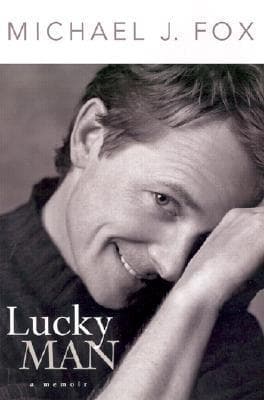
Lucky Man cover
Archivist's Choice

Lucky Man

Michael J. Fox (1998)

Genre

Biography / Memoir

Reading Time

5-6 hours

Key Themes

See below

Track Your Reading

Sign in to track this book

Michael J. Fox’s memoir, "Lucky Man," covers his seven-year private struggle with Parkinson's disease before he went public, showing how acceptance helped him turn his fight into a campaign for a cure and a deeper appreciation for life.

Core Idea

Michael J. Fox's 'Lucky Man' explores how accepting a Parkinson's diagnosis is not giving up, but the first step to taking control and finding purpose. Fox believes true 'luck' is not avoiding hardship but finding meaning, humor, and connection within it, using personal struggles to become a public advocate. The book highlights the importance of strong support and living in the present, showing that a good life can be built even with chronic illness and challenges.
Reading time
5-6 hours
Difficulty
Easy
✓ Read this if...
You are seeking inspiration on how to embrace profound life changes, understand the power of vulnerability, or find humor and purpose amidst adversity.
✗ Skip this if...
You prefer a purely objective medical account of Parkinson's or are looking for a detailed, chronological autobiography covering his entire acting career.

Core idea

The central argument and framework that powers the entire book.

Michael J. Fox's 'Lucky Man' explores how accepting a Parkinson's diagnosis is not giving up, but the first step to taking control and finding purpose. Fox believes true 'luck' is not avoiding hardship but finding meaning, humor, and connection within it, using personal struggles to become a public advocate. The book highlights the importance of strong support and living in the present, showing that a good life can be built even with chronic illness and challenges.

At a glance

Reading time

5-6 hours

Difficulty

Easy

Read this if...

You are seeking inspiration on how to embrace profound life changes, understand the power of vulnerability, or find humor and purpose amidst adversity.

Skip this if...

You prefer a purely objective medical account of Parkinson's or are looking for a detailed, chronological autobiography covering his entire acting career.

Key Takeaways

1

Acceptance as the First Step to Agency

Embracing a difficult diagnosis transforms victimhood into proactive engagement.

Quote

By the time the public started grieving for him, he had stopped grieving for himself.

Fox first reacted to his Parkinson's diagnosis with denial and self-pity, leading to a period of private struggle. A key change happened when he moved from fighting the reality to accepting it. This acceptance was not giving up, but a deep understanding that he could not change the disease itself, only his reaction to it. This mental shift allowed him to regain control over his life and focus on what he could manage: his attitude, his actions, and his public story. This shows that true strength often comes not from overcoming an obsta...

Supporting evidence

Fox's seven years of secret struggle versus his public announcement, which came only after he had personally processed and accepted his condition, allowing him to face the world with a sense of purpose rather than despair.

Apply this

When faced with an unchangeable life circumstance, consciously shift from 'why me?' to 'what now?' Focus energy on adaptation, learning, and finding new meaning within the new reality, rather than expending effort on resisting the inevitable.


acceptanceagencyresilience
2

The Power of Public Vulnerability

Sharing personal struggles openly can transform individual pain into collective purpose.

Quote

He talks about what Parkinson's has given him: the chance to appreciate a wonderful life and career, and the opportunity to help search for a cure, and spread public awareness of the disease.

After years of secrecy, Fox's decision to reveal his Parkinson's diagnosis was a major act of vulnerability with many positive results. Instead of letting his illness define him in private, he chose to define it publicly on his own terms. This not only eased his personal burden of hiding it but also boosted public awareness and fundraising for Parkinson's research. His fame amplified his message, turning a personal health crisis into a global platform for advocacy. This highlights how sharing one's struggles can inspire others, build ...

Supporting evidence

The 'staggering' worldwide response to his announcement and his subsequent establishment of the Michael J. Fox Foundation for Parkinson's Research, which became a leading voice in the search for a cure.

Apply this

Consider how personal experiences, even difficult ones, can be shared thoughtfully to build connection, raise awareness, or inspire action in others. Authenticity, even in vulnerability, often resonates more deeply than curated perfection.

vulnerabilityadvocacypublic-awareness
3

Redefining 'Luck' in Adversity

Adversity can reveal new forms of fortune and appreciation for life.

Quote

He is a very lucky man, indeed.

The book's title, 'Lucky Man,' is ironic but also deeply sincere. Fox acknowledges his great professional success and loving family as forms of luck, but he also redefines 'luck' through his illness. He suggests that Parkinson's, though devastating, surprisingly helped him appreciate his life, relationships, and the chance to make a significant impact beyond acting. This is not romanticizing suffering, but recognizing that difficult situations can remove superficial concerns and highlight what truly matters, leading to a richer, more ...

Supporting evidence

Fox explicitly stating that Parkinson's gave him 'the chance to appreciate a wonderful life and career, and the opportunity to help search for a cure.'

Apply this

When facing setbacks, actively look for the hidden opportunities or shifts in perspective they might offer. Reflect on what new strengths, relationships, or purposes emerge when familiar comforts or paths are removed.

gratitudeperspectivemeaning-making
4

The Indispensable Role of Support Systems

Strong personal relationships are the bedrock for navigating chronic illness.

Quote

—with the unswerving support of his wife, family, and friends — he has dealt with his illness.

Fox consistently points to the 'unswerving support' of his wife, family, and friends as essential for coping with Parkinson's. This support goes beyond emotional comfort; it includes the practical, psychological, and spiritual framework that allows someone to endure a long-term, degenerative condition. His wife's steady presence, his children's understanding, and his friends' loyalty provided a stable base amid his unstable health. This emphasizes that while personal resilience is important, it is often strengthened and maintained by ...

Supporting evidence

Repeated references throughout the memoir to the direct and indirect support from his immediate family and close circle, particularly during his initial struggles and subsequent public advocacy.

Apply this

Actively cultivate and appreciate your support network. For those facing challenges, don't hesitate to lean on loved ones; for those supporting others, understand the profound impact of your consistent presence and practical help.

social-supportfamilycommunity
5

Humor as a Coping Mechanism

Ironic sensibility and a keen sense of the absurd can disarm pain and maintain dignity.

Quote

Combining his trademark ironic sensibility, and keen sense of the absurd, he recounts his life...

Throughout his memoir, Fox uses his typical humor and irony, even when discussing the hardest parts of his illness. This is not just for entertainment; it is a powerful way to cope. Humor allows him to distance himself from the overwhelming nature of Parkinson's, to lessen its power, and to keep a sense of self beyond the disease. By finding the absurd or darkly funny in his situation, he refuses to let the illness consume his spirit. This shows that humor is not a denial of pain, but a sophisticated way of processing it, offering psy...

Supporting evidence

The memoir's tone itself, which is described as having 'trademark ironic sensibility, and keen sense of the absurd,' even when detailing his struggles with Parkinson's.

Apply this

In difficult situations, consciously seek out opportunities for humor or lightheartedness. Use self-deprecating jokes or observations of the absurd to gain perspective and alleviate tension, both for yourself and those around you.

humorcoping-mechanismsresilience
6

The Unpredictability of Success and Life

Life's trajectory is rarely linear, marked by both meteoric highs and unforeseen challenges.

Quote

—from his childhood in a small town in western Canada, to his meteoric rise in film and television which made him a worldwide celebrity.

Fox's life story shows the unpredictable nature of both success and adversity. His 'meteoric rise' from humble beginnings to global stardom illustrates how quickly fortunes can change for the better. Yet, this peak of professional achievement coincided with the hidden onset of a debilitating illness. This sharp contrast highlights that life's journey is rarely a smooth path; it is a series of unexpected turns, triumphs, and trials. The story emphasizes that neither success nor hardship fully defines a person, but rather how one naviga...

Supporting evidence

The juxtaposition of his rapid ascent to fame with the quiet, internal battle against Parkinson's that began at the height of his career.

Apply this

Cultivate adaptability and a long-term perspective. Appreciate success without complacency, and face challenges with the understanding that they are part of a larger, evolving life story. Avoid defining yourself solely by current circumstances.

adaptabilitylife-journeyunpredictability
7

Purpose Beyond Personal Gain

Transforming personal struggle into a broader mission creates profound meaning.

Quote

—the opportunity to help search for a cure, and spread public awareness of the disease.

One of the most impactful takeaways is Fox's decision to turn his personal struggle into a public campaign for a cure and greater awareness. This shift from self-preservation to the collective good gave his life a new, deep purpose beyond his acting career. By dedicating himself to advocacy and fundraising, he not only found meaning in his own suffering but also empowered countless others affected by Parkinson's. This illustrates how personal adversity, when rethought, can become a strong force for altruism and a legacy far greater th...

Supporting evidence

His active involvement and leadership in the campaign to find a cure for Parkinson's, and his efforts to spread public awareness of the disease.

Apply this

Consider how your unique experiences, especially difficult ones, might inform or inspire a mission that extends beyond yourself. Seek opportunities to contribute to a cause larger than your individual concerns.

purposealtruismlegacy
8

The Ongoing Nature of Acceptance

Acceptance is not a one-time event but a continuous practice, especially with chronic conditions.

Quote

Fortunately, he had accepted the diagnosis, and by the time the public started grieving for him, he had stopped grieving for himself.

While Fox's initial acceptance of his diagnosis was a turning point, the memoir suggests that accepting a progressive disease like Parkinson's is an ongoing process, not a single event. As his symptoms change and new challenges appear, he continually re-engages with the reality of his condition. This nuanced understanding of acceptance acknowledges that grief, frustration, and adaptation are cyclical. It is about repeatedly choosing to face the present reality, rather than holding onto a past that no longer exists or a future that may...

Supporting evidence

The progression of Parkinson's is inherently dynamic, meaning Fox continually faces new symptoms and limitations, requiring ongoing adaptation and re-acceptance of his changing reality.

Apply this

For chronic challenges, recognize that acceptance is a daily practice. Be kind to yourself on days when you struggle, and gently guide yourself back to acknowledging the present reality without judgment, focusing on what you can manage today.

ongoing-acceptancemindfulnessadaptation
9

Embracing the Present Moment

Focusing on 'what is' rather than 'what was' or 'what might be' fosters peace.

Quote

He talks about what Parkinson's has given him: the chance to appreciate a wonderful life and career...

A subtle but deep theme in Fox's story is his growing appreciation for the present moment. Living with a degenerative disease naturally forces one to confront the impermanence of physical abilities and the uncertainty of the future. By moving past the initial grief for his past self and worries about future decline, Fox developed a deeper gratitude for his 'wonderful life and career' as it is. This focus on appreciating the 'now' — the relationships, the small joys, the chances to make an impact — is a powerful lesson in mindfulness. ...

Supporting evidence

His reflection on Parkinson's 'giving' him the chance to appreciate his life, indicating a shift from lamenting what was lost to valuing what remains and what is present.

Apply this

Practice daily mindfulness. Take moments to consciously appreciate sensory details, current relationships, and small victories. When anxieties about the past or future arise, gently redirect your focus to the opportunities and realities of the present moment.

mindfulnessgratitudepresent-moment

Critical analysis

Notable Quotes

My happiness grows in direct proportion to my acceptance, and in inverse proportion to my expectations.

Reflecting on his journey with Parkinson's and finding peace.

It's not what you're dealt, it's how you play the hand.

A recurring theme about dealing with life's challenges, especially his diagnosis.

Optimism is a choice. You can choose to be an optimist or a pessimist. I choose to be an optimist.

Discussing his general outlook on life despite his health struggles.

The only way to get through is to get through.

Describing the simple, yet profound, approach to enduring difficult times.

I often say that I'm a lucky man. And I mean it. I'm lucky to have the family I have, to have the career I had, and to have the life I've lived.

Explaining the title of the book and his overall gratitude.

The greatest lesson I've learned is that it's okay to ask for help.

Reflecting on the importance of support systems and vulnerability.

Parkinson's is a gift. It's a terrible gift, but it is a gift.

Paradoxically describing how his illness, while devastating, brought new perspectives and purpose.

Embrace what you have. Don't chase what you don't.

A distillation of his philosophy on contentment and living in the present.

Laughter is the best medicine, and I've had a lot of doses.

Highlighting the role of humor in coping with his condition and life in general.

You can't control what happens to you, but you can control your response to it.

A fundamental belief that guided his approach to his diagnosis and subsequent life.

I'm not a victim. I'm a survivor.

Emphasizing his active role in living with Parkinson's rather than succumbing to it.

My life is a series of adjustments. And I'm pretty good at adjusting.

Describing the continuous process of adapting to the progression of his disease.

The future is whatever you make it, so make it a good one.

A nod to his iconic 'Back to the Future' line, infused with his personal philosophy.

There are no small parts, only small actors. And I was never a small actor.

Reflecting on his early career aspirations and confidence, even before major fame.

When you choose to look at things differently, you often find a different outcome.

Underlining the power of perspective in navigating challenges and finding positive results.

Quiz

Test Your Knowledge

Ready to see how well you understood this book? Take our interactive quiz with 10 questions.

10
Questions
~5
Minutes
?
Best Score

Key Questions (FAQ)

'Lucky Man' is Michael J. Fox's memoir detailing his life, career, and his secret battle with Parkinson's disease for seven years before publicly announcing his diagnosis in 1998. It covers his journey from childhood to global stardom and his subsequent advocacy for Parkinson's research.

About the author