BookBrief
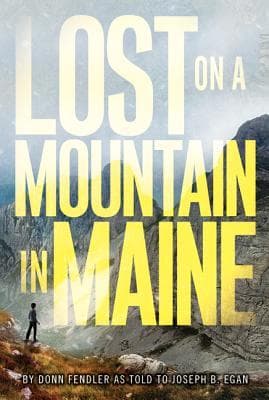
Lost on a Mountain in Maine cover
Archivist's Choice

Lost on a Mountain in Maine

Donn Fendler (1939)

Genre

Biography / Memoir / Children's

Reading Time

90 min

Key Themes

See below

Track Your Reading

Sign in to track this book

Twelve-year-old Donn Fendler endures a terrifying two-week ordeal, battling starvation, delusion, and the unforgiving Maine wilderness after a momentary lapse separates him from his Boy Scout troop on Mount Katahdin.

Core Idea

Donn Fendler's "Lost on a Mountain in Maine" is a first-person account of a twelve-year-old boy's nine-day struggle for survival after getting separated from his family while hiking Mount Katahdin. The book shows the immediate and devastating consequences of a momentary lapse in judgment, putting a child into a test against the elements, hunger, and isolation. Fendler's narrative shows the resilience of the human spirit, the power of instinct, and the resourcefulness that emerges under extreme duress, all while confronting the indifferent yet awe-inspiring beauty of the wilderness.
Reading time
90 min
Difficulty
Easy
✓ Read this if...
You enjoy true survival stories, want to understand the psychological impact of being lost, or appreciate a straightforward narrative about overcoming adversity.
✗ Skip this if...
You prefer complex narratives with deep philosophical exploration, or find detailed accounts of a child's suffering too difficult to read.

Core idea

The central argument and framework that powers the entire book.

Donn Fendler's "Lost on a Mountain in Maine" is a first-person account of a twelve-year-old boy's nine-day struggle for survival after getting separated from his family while hiking Mount Katahdin. The book shows the immediate and devastating consequences of a momentary lapse in judgment, putting a child into a test against the elements, hunger, and isolation. Fendler's narrative shows the resilience of the human spirit, the power of instinct, and the resourcefulness that emerges under extreme duress, all while confronting the indifferent yet awe-inspiring beauty of the wilderness.

At a glance

Reading time

90 min

Difficulty

Easy

Read this if...

You enjoy true survival stories, want to understand the psychological impact of being lost, or appreciate a straightforward narrative about overcoming adversity.

Skip this if...

You prefer complex narratives with deep philosophical exploration, or find detailed accounts of a child's suffering too difficult to read.

Key Takeaways

1

The Perilous Power of a Moment's Lapse

How a brief distraction can lead to monumental consequences in nature.

Quote

I knew it was foolish to leave the trail, but I just wanted to see what was around the bend. That's all it took.

Donn Fendler's ordeal shows the small margin between safety and peril in the wilderness. His decision to momentarily stray from his Boy Scout troop on Mount Katahdin, driven by a boy's natural curiosity, was the start of a nine-day survival epic. This initial, seemingly small misstep shows how quickly one can become disoriented in dense fog and unfamiliar terrain, emphasizing the importance of situational awareness and strict adherence to safety protocols in any outdoor environment. It is a reminder that even experienced individuals o...

Supporting evidence

Donn's account of leaving the trail to 'see what was around the bend' and the subsequent rapid onset of dense fog that disoriented him almost immediately.

Apply this

Always maintain strict group cohesion and trail discipline when hiking, especially in unpredictable weather conditions. Before any deviation, communicate intentions clearly and assess potential risks, even for what seems like a minor detour.


wilderness-safetysituational-awarenessgroup-cohesion
2

Resourcefulness Born of Desperation

Survival instincts sharpen when basic needs become paramount.

Quote

My hunger was so great that I started to eat anything I thought might be edible. Berries, roots, even the inner bark of trees.

Donn's journey shows the resourcefulness that emerges under extreme duress. Without modern conveniences and even basic supplies, he had to innovate to meet his needs for food, water, and shelter. From identifying edible plants, often through trial and error, to constructing rudimentary shelters from natural materials, his actions demonstrate the human capacity to adapt and use the environment for survival. This speaks to an intrinsic problem-solving ability that lies dormant until activated by life-threatening circumstances, showing t...

Supporting evidence

Donn's consumption of wild berries, the inner bark of trees, and his attempts to find safe drinking water, coupled with his efforts to build makeshift shelters against the elements.

Apply this

Develop a foundational knowledge of wilderness survival skills, including plant identification, basic shelter construction, and water purification techniques, before venturing into remote areas. Practice these skills to build confidence and practical experience.

survival-skillswilderness-resourcefulnessprimitive-living
3

The Psychological Gauntlet of Isolation

Loneliness and fear are as formidable as physical threats in survival.

Quote

The hardest part wasn't the hunger or the cold; it was the feeling of being utterly alone, knowing no one knew where I was.

Beyond the physical challenges of starvation, exposure, and navigating treacherous terrain, Donn's narrative conveys the psychological toll of being lost and isolated. The terror of being alone, the fear of never being found, and the hallucinations brought on by exhaustion and hunger were as significant a threat to his survival as any physical danger. This shows how mental fortitude, the ability to maintain hope, and the will to live are critical components of enduring prolonged survival situations. The book is a reminder that the hum...

Supporting evidence

Donn's descriptions of talking to himself, seeing imaginary figures, and the overwhelming despair he felt, especially during the long, cold nights.

Apply this

In any challenging situation, cultivate mental resilience through positive self-talk, visualization of rescue or success, and by focusing on small, achievable goals (e.g., finding water, walking a certain distance) to combat feelings of hopelessness.

mental-resiliencepsychological-survivalcoping-mechanisms
4

Nature's Indifference and Beauty

The wilderness is both a brutal adversary and a source of awe.

Quote

The mountains were beautiful, but they didn't care if I lived or died. They just were.

Donn's experience with the Maine wilderness is a dualistic one: a place of natural beauty and an unyielding, indifferent force. While the mountains provided some resources, they also presented challenges, torrential rain, dense fog, treacherous terrain, and the constant threat of wild animals. This duality shows a fundamental truth about nature: it operates by its own rules, without malice or benevolence towards human endeavors. Understanding this indifference is important for anyone venturing into the wild, encouraging both respect f...

Supporting evidence

Donn's descriptions of the beautiful vistas he occasionally saw, contrasted with the relentless rainstorms, cold nights, and encounters with black bears.

Apply this

Approach the wilderness with a deep respect for its power and unpredictability. Never take its beauty for granted, but always prioritize safety and preparedness, understanding that nature will not adapt to your plans.

nature-awewilderness-dangerenvironmental-respect
5

The Sustaining Power of Hope

Even in dire circumstances, the belief in rescue can fuel endurance.

Quote

I kept telling myself that someone was looking for me, that I just had to keep going.

Throughout his nine-day ordeal, Donn's hope for rescue was a critical psychological lifeline. Despite increasing physical debilitation, hallucinations, and moments of despair, the belief that his family and search parties were actively looking for him provided the impetus to keep moving forward. This shows the impact of hope as a survival mechanism, transforming what might otherwise be insurmountable odds into a series of challenges that can be overcome. It is an example of the human spirit's capacity to cling to a future, even when t...

Supporting evidence

Donn's internal monologue, where he repeatedly reassured himself that he would be found and imagined his family searching for him, even as his physical condition deteriorated.

Apply this

Cultivate a mindset of persistent hope in challenging situations. Break down large, daunting goals into smaller, manageable steps, and celebrate each minor achievement to reinforce the belief in eventual success.

hope-psychologyperseverancesurvival-mindset
6

The Unseen Network of Search and Rescue

Community and organized efforts are vital in wilderness emergencies.

Quote

I didn't know it then, but hundreds of people were looking for me. That thought kept me going.

While Donn was lost and isolated, an extensive search and rescue operation was underway, involving family, local volunteers, wardens, and even the military. This unseen network shows the role of organized efforts and community support in wilderness emergencies. It shows that survival in such situations is not solely dependent on the lost individual's actions but also on the dedication and coordination of those working tirelessly to find them. The book implicitly supports the service of search and rescue teams, reminding us of the coll...

Supporting evidence

The historical context provided in the book (or implied by its retelling) of the massive search effort involving hundreds of people, planes, and dogs, though Donn was unaware of its full scale at the time.

Apply this

Support and appreciate local search and rescue organizations. If venturing into the wilderness, always inform someone of your itinerary and expected return time, providing a crucial starting point for any potential search.

search-and-rescuecommunity-supportemergency-response
7

The Primitive Power of Instinct

When logic fails, primal urges guide survival.

Quote

My mind was foggy, but my body just kept moving. It was like something inside me wouldn't let me stop.

As Donn's physical and mental state deteriorated, his actions became less about conscious decision-making and more about raw, primitive instinct. The urge to find water, to keep moving, to seek shelter, and to avoid perceived threats took over. This demonstrates how deep-seated survival instincts can kick in when higher cognitive functions are impaired by exhaustion, hunger, and fear. It is a look at the fundamental drives that govern life, suggesting that beneath our civilized veneer lies a powerful, ancient programming designed to k...

Supporting evidence

Donn's descriptions of his body moving almost autonomously, his relentless search for water even when delirious, and his instinctive reactions to sounds or shadows in the forest.

Apply this

While knowledge is key, trust your gut instincts in survival situations. Pay attention to your body's signals and primitive urges, as they can sometimes guide you when rational thought is overwhelmed.

survival-instinctsprimitive-driveshuman-endurance
8

The Unforgettable Scars of Experience

Traumatic events leave lasting imprints, shaping identity.

Quote

I was never the same after that mountain. Part of me stayed lost up there.

Donn Fendler's survival story is not just about the nine days he was lost, but about the lasting impact this traumatic experience had on his life. The ordeal undoubtedly left him with physical scars, but more significantly, it shaped his psychological state. Such an intense brush with death and isolation often leads to a re-evaluation of life, a deeper appreciation for simple comforts, and sometimes, lingering anxieties or a changed perspective on risk. This takeaway emphasizes that survival is not merely about enduring the event itse...

Supporting evidence

The very existence of the memoir, written many years later, indicates the lasting significance of the event. While not explicitly detailed in the summary, the long-term recounting implies a deep personal impact.

Apply this

After any significant challenging experience, take time for reflection and processing. Seek support if needed to integrate the lessons learned and cope with any lasting emotional or psychological effects, fostering growth rather than lingering trauma.

post-traumatic-growthidentity-formationresilience-after-trauma
9

The Simplicity of What Truly Matters

Extreme deprivation clarifies life's essential values.

Quote

All I wanted was a glass of water, a warm bed, and to see my mother's face.

Without everything, Donn's desires narrowed to the most fundamental human needs: sustenance, safety, and connection. This simplification of wants shows how easily we can become entangled in the complexities and superficialities of modern life. His experience shows that in the face of true adversity, the basic comforts we often take for granted, clean water, food, shelter, and the presence of loved ones, become the ultimate treasures. It is a lesson in gratitude and a reminder to regularly re-evaluate priorities, focusing on the core e...

Supporting evidence

Donn's recurring thoughts about simple comforts like a glass of water, a warm bed, and his family, especially his mother, during his most desperate moments.

Apply this

Practice daily gratitude for basic comforts and relationships. Periodically 'declutter' your life, both physically and mentally, to focus on what genuinely contributes to your well-being and sense of purpose.

gratitudeminimalismcore-values

Critical analysis

Notable Quotes

I was lost, but I wasn't alone. I had my wits, and I had my will.

Donn reflects on his mindset after realizing he was separated from his family on Mount Katahdin.

The mountain doesn't care if you're a boy or a man. It treats everyone the same.

Donn describes the impartial and harsh nature of the wilderness during his ordeal.

Fear is a fire that can either warm you or burn you. I chose to let it warm me.

Donn explains how he managed his fear to stay focused on survival.

Every step forward was a victory, no matter how small.

Donn emphasizes the importance of perseverance during his nine-day trek.

I talked to the trees and the rocks. They became my friends in that lonely place.

Donn shares how he coped with isolation by personifying elements of nature.

Hunger is a teacher. It taught me what I could live without.

Donn reflects on the lessons learned from enduring extreme hunger.

The night was my enemy, but the stars were my guides.

Donn describes using the stars for navigation during dark, cold nights.

I learned that the body can endure much more than the mind believes.

Donn realizes his physical and mental limits were stretched beyond expectation.

A boy's prayer on a mountain can be heard farther than you think.

Donn mentions relying on faith and prayer for strength and hope.

The river was both a curse and a blessing—it nearly drowned me, but it led me to help.

Donn recounts a dangerous river crossing that ultimately guided him toward rescue.

In the wilderness, you find out who you really are.

Donn reflects on the self-discovery that came from facing such a harrowing experience.

I didn't conquer the mountain; it let me go.

Donn expresses humility and respect for Mount Katahdin after his rescue.

Memories of home were the fuel that kept my feet moving.

Donn describes how thoughts of his family motivated him to keep going.

Sometimes, the hardest part is not the falling, but the getting up again.

Donn talks about the repeated challenges and setbacks during his journey.

Quiz

Test Your Knowledge

Ready to see how well you understood this book? Take our interactive quiz with 10 questions.

10
Questions
~5
Minutes
?
Best Score

Key Questions (FAQ)

Yes, it is based on the true account of 12-year-old Donn Fendler, who got lost in the Katahdin Mountains of Maine in 1939 and survived for nearly two weeks in the wilderness. The book is a first-person memoir of his harrowing experience.

About the author

Donn Fendler

Donn Fendler is the author of the acclaimed memoir "Lost on a Mountain in Maine." The book recounts his harrowing true story of survival after becoming lost in the Katahdin wilderness at the age of twelve. Fendler's vivid narrative details his resourcefulness and resilience during his nine-day ordeal, inspiring readers with his courage.