“When you want something, all the universe conspires in helping you to achieve it.”
— A central theme across Coelho's works, emphasizing the power of desire and destiny.

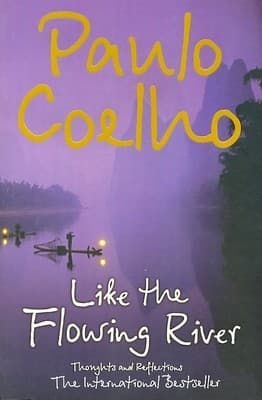
Paulo Coelho (2000)
Genre
Spirituality / Philosophy / Romance
Reading Time
245 min
Key Themes
See below
Sign in to track this book
Through fables, personal stories, and thoughts, Paulo Coelho guides readers through life, revealing universal truths in everyday and extraordinary moments.
An old woman gives her grandson a pencil and explains five important qualities it has, which he should try to follow in life. She tells him that the pencil allows for corrections, that what is inside is more important than the outside, and that it always leaves a mark, reminding him of his impact. She notes that the pencil must be sharpened, which means pain is needed for growth, and that a hand always guides it, representing a higher power or purpose. This short story sets a basic tone for the collection, introducing the idea that deep wisdom can be found in simple, everyday objects and experiences, and encouraging self-reflection and self-improvement.
Coelho discusses the philosophy of archery, comparing the archer's focus to pursuing one's dreams. He talks about the target, the bow, and the arrow, but mainly focuses on the archer's inner state—concentration, patience, and the ability to let go. He explains that true mastery in archery is not just about hitting the bullseye, but about the process, the connection with oneself, and the journey of self-discovery. This reflection highlights finding joy and meaning in the effort, not just the outcome, a repeated idea in his books.
This fable tells the story of Genghis Khan, who, while hunting, relies on his falcon to find water. After a long search, the falcon finds a small spring. However, each time Genghis Khan tries to drink, the falcon knocks the cup away. Angry, he kills the falcon, only to then find a poisonous snake dead in the spring, realizing the falcon was protecting him. Overwhelmed by regret, Genghis Khan learns a harsh lesson about the destructive power of uncontrolled anger and the importance of patience and understanding before acting.
Coelho shares a story about a talented pianist who, despite challenges and temptations to do other things, stays committed to his music. The pianist's life shows how to find and fulfill one's destiny. Through his steady commitment to his art, he not only finds personal satisfaction but also inspires others. This story shows that passion and persistence are important for reaching one's potential and that true happiness often comes from aligning one's actions with one's deepest purpose, even when it is difficult.
Coelho tells a personal story where he tries to help a man he finds lying on the street, seemingly in trouble. During this interaction, he learns three important lessons. First, he realizes the importance of real human connection and not judging others by how they look. Second, he understands that sometimes help is not what is expected or even wanted. Third, he thinks about giving and receiving, recognizing that true charity is often more complex than just offering money. This incident highlights the unexpected wisdom found in everyday encounters and the complexities of human compassion.
Coelho stresses the power of travel, not just for seeing new places, but as a journey of self-discovery. He suggests that by leaving one's comfort zone and experiencing different cultures and environments, people can gain new perspectives, question their old ideas, and better understand themselves. Travel, for Coelho, is a metaphor for life's journey, encouraging readers to accept the unknown, adapt to change, and collect experiences that enrich the soul, leading to personal growth and a deeper appreciation for the world.
Coelho explores the idea of elegance, arguing that it is more than just fashion or outer beauty. He believes that true elegance is an inner quality, a grace of spirit and a way of behaving that shows kindness, honesty, and self-awareness. It is about how one interacts with the world, the respect one shows to others, and the quiet dignity with which one lives. This reflection challenges surface perceptions, encouraging readers to develop inner virtues that shine outward, showing that true beauty comes from within.
Coelho looks into the complex nature of good and evil, suggesting that these are not outside forces but parts of the human spirit. He discusses how people constantly face choices that decide which part they strengthen and express. He emphasizes that even in the darkest moments, there is always potential for light, and vice versa. This reflection encourages self-examination and responsibility for one's actions, highlighting the continuous struggle and the importance of conscious choices in shaping one's character and contributing to the world.
This section uses the hard task of climbing a mountain as a strong metaphor for pursuing one's dreams and overcoming life's problems. Coelho describes the need for preparation, persistence, and the ability to adapt to changing conditions. He emphasizes that the journey itself, with its struggles and small wins, is as important as reaching the top. The view from the top means achieving a goal, but the lessons learned and the strength gained during the climb are very valuable. This metaphor inspires readers to accept challenges and trust in their own abilities.
Coelho explores the many sides of love, going beyond romantic love to include universal compassion, self-love, and love for life itself. He discusses love as a powerful, changing force that needs courage, openness, and a willingness to accept both joy and pain. He suggests that true love involves acceptance, freedom, and the ability to grow with another. These reflections encourage readers to open their hearts, develop empathy, and recognize love as a basic part of human existence and spiritual growth, essential for a fulfilling life.
Coelho points out the often-underestimated importance of truly listening, not just hearing. He explains that active listening is a deep act of respect and connection, allowing one to understand others' perspectives, emotions, and unspoken needs. He also extends this to listening to one's inner voice, intuition, and the subtle messages from the universe. This reflection encourages readers to slow down, be present, and develop a deeper awareness, recognizing that much wisdom can be gained through quiet observation and genuine attention to the world around them and within themselves.
Coelho addresses the human tendency to resist change and the freedom that comes from accepting it. He uses the metaphor of a flowing river, which gives the book its title, to show that life is always moving, and trying to hold onto the past or static situations is pointless. He encourages readers to see change not as a threat, but as a chance for growth, renewal, and new beginnings. This reflection emphasizes resilience, adaptability, and the wisdom of letting go, allowing oneself to flow with life's currents rather than fighting against them.
The Protagonist/Narrator
Though a collection of reflections, Coelho's arc shows a continuous journey of learning and sharing, refining his understanding of universal truths through personal experience and observation.
The Supporting/Mentor
She remains a static symbol of wisdom, her purpose being to impart lessons rather than undergo personal change.
The Mentioned/Learner
Implied arc of learning and growth as he internalizes the lessons.
The Protagonist (within fable)
Undergoes a significant realization and remorse after his tragic mistake, learning a hard lesson about anger.
The Supporting/Symbolic
Static, serves as a catalyst for Genghis Khan's learning.
The Protagonist (within anecdote)
Maintains his dedication through life's challenges, finding fulfillment in his chosen path.
The Supporting/Catalyst
Static, his role is to provoke insight in the narrator.
The Symbolic Figure
Symbolizes the ongoing journey of self-improvement and focused effort.
A main theme is the constant search for understanding oneself and one's place in the world. Coelho consistently encourages self-reflection and pursuing individual destiny. This appears in the story of the pianist, who finds fulfillment by committing to his art despite problems, and in the thoughts on travel, which are presented as chances for inner growth and wider perspectives. The book suggests that life's true meaning is found not in outside achievements but in the inner journey of becoming who one is meant to be.
“A man is never lost, as long as he knows his own destination.”
Coelho repeatedly shows that deep lessons can be learned from the most ordinary objects, events, and encounters. The pencil fable, where an old woman finds five life lessons from a simple writing tool, is a clear example. Similarly, the author's meeting with the man in the street offers unexpected insights into compassion and judgment. This theme encourages readers to be mindful and observant, suggesting that life itself is a great teacher if one is open to its subtle lessons, turning the ordinary into the meaningful.
“Life has lessons for us in the greatest, smallest and most unusual of experiences.”
Many reflections show that people build their own lives through the choices they make. The story of Genghis Khan and the falcon clearly shows the destructive results of uncontrolled anger and quick decisions, highlighting the importance of patience and understanding before acting. Coelho's discussions on good and evil further support this, suggesting that these are not outside forces but inner battles where one's choices decide the outcome. This theme empowers readers to take responsibility for their actions and their impact on their own lives and the world.
“We are responsible for everything that happens in our lives.”
The title 'Like the Flowing River' captures this main theme: the need and beauty of accepting life's constant movement. Coelho supports adaptability and resilience, encouraging readers to let go of strict expectations and to move with changes rather than fighting them. This is clear in the general tone of the book, which flows from one reflection to another, mirroring life's unpredictable nature. This theme offers comfort and guidance in dealing with uncertainty, suggesting that true peace comes from surrendering to life's natural rhythm and finding strength in flexibility.
“A river is not afraid of obstacles, it simply flows around them.”
Love, in its various forms—romantic, universal, and self-love—is presented as a basic force for human connection and spiritual growth. Coelho's reflections often touch on the courage needed to love, the vulnerability it involves, and its power to change. The encounter with the man in the street, for instance, subtly explores the complexities of compassionate connection. This theme emphasizes that real connection with others and with oneself is essential for a fulfilling life, encouraging empathy, understanding, and opening one's heart to the world.
“Love is an act of faith, not an exchange.”
Short, didactic stories that convey moral or spiritual lessons.
Coelho frequently employs fables, such as 'The Pencil's Lesson' and 'Genghis Khan and the Falcon,' to illustrate complex philosophical and spiritual concepts in an accessible and memorable way. These short narratives use simple characters and situations to deliver profound truths about human nature, ethics, and the path to self-discovery. By presenting lessons through storytelling, Coelho makes his messages resonate more deeply and allows readers to infer meaning rather than being explicitly told, fostering a more engaging and reflective experience.
Figurative language used to draw comparisons and deepen understanding.
The book is rich with metaphors and similes that transform abstract ideas into concrete images. The entire title, 'Like the Flowing River,' is a central metaphor for life's ever-changing nature and the need for adaptability. The act of 'climbing a mountain' serves as a metaphor for pursuing dreams and overcoming obstacles, while the 'pencil' in the opening fable is a detailed simile for human qualities. These devices help to clarify complex spiritual and philosophical concepts, making them more tangible and relatable for the reader, and adding poetic depth to Coelho's reflections.
First-person accounts of the author's own experiences and observations.
Coelho often incorporates personal anecdotes, such as his encounter with the man in the street or his reflections on travel, to ground his philosophical insights in real-world experiences. These personal stories lend authenticity and relatability to his teachings, showing how universal truths manifest in everyday life. By sharing his own struggles, realizations, and moments of learning, Coelho establishes a direct connection with the reader, making his role as a guide more intimate and trustworthy, and demonstrating that the path to wisdom is a continuous, lived experience.
Questions posed for effect or to provoke thought rather than elicit an answer.
Coelho frequently uses rhetorical questions throughout his reflections to directly engage the reader and encourage introspection. These questions are not meant to be answered directly but serve to prompt the reader to consider their own beliefs, actions, and perspectives on the topics being discussed. For example, when discussing love or purpose, he might ask questions that challenge assumptions, thereby guiding the reader towards deeper self-examination and personal discovery, transforming the reading experience into a more interactive and meditative one.
“When you want something, all the universe conspires in helping you to achieve it.”
— A central theme across Coelho's works, emphasizing the power of desire and destiny.
“The secret of life, though, is to fall seven times and to get up eight times.”
— A reflection on resilience and perseverance in the face of setbacks.
“A man who does not dream is a man who does not live.”
— Highlighting the importance of dreams and aspirations for a fulfilling life.
“Love is not to be found in someone else, but in ourselves; we simply awaken it.”
— A perspective on the internal nature of love, rather than an external search.
“People are capable, at any time in their lives, of doing what they dream of.”
— Encouraging the pursuit of dreams regardless of age or circumstance.
“Don't allow your mind to tell your heart what to do. The mind gives up easily.”
— Emphasizing the importance of following one's heart and intuition over rational thought.
“Life has many ways of testing a person's will, either by having nothing happen at all or by having everything happen all at once.”
— Reflecting on the varied challenges and phases of life.
“The two hardest things to say in life are hello for the first time and goodbye for the last.”
— A poignant observation on the emotional weight of beginnings and endings in relationships.
“When we love, we always strive to become better than we are.”
— Highlighting the transformative power of love as a catalyst for personal growth.
“The greatest wisdom consists of seeing the world as it is and loving it anyway.”
— Advocating for acceptance and love of the world despite its imperfections.
“If you want to be successful, you must respect one rule: never lie to yourself.”
— Emphasizing self-honesty as a fundamental principle for success.
“It is always important to know when something has reached its end. Closing circles, shutting doors, finishing chapters, it doesn't matter what we call it; what matters is to leave in the past those moments of life that are over.”
— A reflection on the importance of letting go and moving on from past experiences.
“There is only one way to learn. It's through action.”
— Stressing the importance of practical experience and taking action over mere contemplation.
“We are travelers on a cosmic journey, stardust, swirling and dancing in the eddies and whirlpools of infinity. Life is eternal. We have stopped for a moment to encounter each other, to meet, to love, to share. This is a precious moment.”
— A poetic and spiritual perspective on the fleeting yet profound nature of human connection.
Ready to see how well you understood this book? Take our interactive quiz with 10 questions.

Paulo Coelho de Souza is a Brazilian lyricist and novelist and a member of the Brazilian Academy of Letters since 2002. His novel The Alchemist became an international best-seller and he has published 30 more books since then.

Kay Lynn Mangum
4.3
Stormie Omartian
4.3
Jerry Bridges
4.3
Walter Brueggemann
4.3
Rhonda Byrne
4.3
Brother Lawrence
4.3

Joseph Campbell
4.3
Unknown
4.3