BookBrief
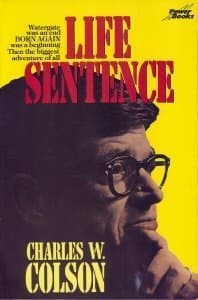
Life Sentence cover
Archivist's Choice

Life Sentence

Charles W. Colson (1978)

Genre

Biography / Memoir / Spirituality

Reading Time

300 min

Key Themes

See below

Track Your Reading

Sign in to track this book

After Watergate and prison, Charles Colson finds a difficult path to redemption, fighting skepticism and his past to build a ministry for prisoners.

Core Idea

Charles W. Colson's "Life Sentence" tells of his change from a powerful White House figure under President Nixon to a convicted felon, and then to a strong supporter of prison reform and Christian ministry for inmates. The book argues that real freedom comes not from worldly power but from a deep Christian faith. This faith pushes people to fight injustice and help those on the margins, especially prisoners. Colson shows how his own time in prison, combined with a spiritual awakening, revealed the problems and suffering in the penal system. This led him to spend his life bringing hope and help to prisoners, while also urging society to rethink how it handles crime and punishment.
Reading time
300 min
Difficulty
Medium
✓ Read this if...
You are interested in true stories of radical personal transformation, the intersection of faith and social justice, or a firsthand account of the challenges and redemptive possibilities within the American prison system. Also, if you appreciate memoirs from influential political figures who undergo significant moral and spiritual shifts.
✗ Skip this if...
You are averse to narratives with strong Christian evangelical themes or are looking for a purely political analysis of the Nixon era without a significant focus on personal spiritual journey and prison ministry.

Core idea

The central argument and framework that powers the entire book.

Charles W. Colson's "Life Sentence" tells of his change from a powerful White House figure under President Nixon to a convicted felon, and then to a strong supporter of prison reform and Christian ministry for inmates. The book argues that real freedom comes not from worldly power but from a deep Christian faith. This faith pushes people to fight injustice and help those on the margins, especially prisoners. Colson shows how his own time in prison, combined with a spiritual awakening, revealed the problems and suffering in the penal system. This led him to spend his life bringing hope and help to prisoners, while also urging society to rethink how it handles crime and punishment.

At a glance

Reading time

300 min

Difficulty

Medium

Read this if...

You are interested in true stories of radical personal transformation, the intersection of faith and social justice, or a firsthand account of the challenges and redemptive possibilities within the American prison system. Also, if you appreciate memoirs from influential political figures who undergo significant moral and spiritual shifts.

Skip this if...

You are averse to narratives with strong Christian evangelical themes or are looking for a purely political analysis of the Nixon era without a significant focus on personal spiritual journey and prison ministry.

Key Takeaways

1

From Power Broker to Prisoner's Advocate

Colson's radical shift from political strategist to champion for the incarcerated.

Quote

I had been a lawyer, a politician, a White House aide. Now I was a prisoner, and soon I would be a voice for those whom society had forgotten.

Charles Colson's change, which started in 'Born Again,' becomes solid in 'Life Sentence' as he deals with the aftermath of Watergate and his own imprisonment. This time was not just about personal redemption; it shaped his new calling. Without his former power, Colson found a deep sense of purpose in helping prisoners, a group he had previously ignored. His prison experiences, especially the harsh realities and spiritual despair he saw, sparked a desire to not only minister to inmates but to change the justice system. This shows a key...

Supporting evidence

Colson's detailed accounts of his time in Maxwell Federal Prison Camp, his interactions with fellow inmates, and the systemic issues he observed firsthand, which profoundly impacted his understanding of the justice system and the spiritual needs within it.

Apply this

Reflect on personal adversity not as an end, but as a potential catalyst for discovering a new, unexpected, and profoundly meaningful purpose, especially in service to others.


redemptionprison-reformadvocacy
2

The Burden of a New Calling

Starting a ministry from scratch while still under the shadow of scandal.

Quote

The hardest part wasn't going to prison; it was trying to start a ministry when everyone still saw me as a criminal.

'Life Sentence' vividly shows the huge challenges Colson faced in starting Prison Fellowship. It was not an easy path; he met skepticism, financial problems, and the lasting stigma of his past. People questioned his motives, and potential supporters were hesitant to work with a former Watergate conspirator. This period was about grit, perseverance, and a firm belief that his calling was divine. The book highlights the often-overlooked difficulties of starting something new, especially one based on deep personal change, against public ...

Supporting evidence

Colson's candid descriptions of fundraising struggles, initial rejections from churches and organizations, and the constant battle to overcome the public's perception of him as 'Nixon's hatchet man' rather than a born-again Christian minister.

Apply this

When pursuing a new, purpose-driven path, anticipate and prepare for significant resistance and skepticism, especially if your past is controversial. Focus on the mission and build a core group of believers.

ministry-developmentovercoming-stigmaperseverance
3

Faith in the Face of Skepticism

How Colson's authenticity slowly won over doubters and built trust.

Quote

My credibility wasn't in my past achievements, but in my present brokenness and my future commitment to Christ.

A main idea in 'Life Sentence' is Colson's effort to rebuild trust, not with big statements, but through consistent, humble actions. Many, understandably, saw his conversion as a ploy to reduce his sentence or improve his image. Colson did not hide his past; instead, he used it as proof of God's power to change lives. His willingness to speak openly about his failures, along with his strong dedication to helping prisoners, slowly broke down the skepticism. This process shows the power of real change over mere talk. It demonstrates tha...

Supporting evidence

His willingness to speak at churches, prisons, and public forums, often facing hostile questions, and his consistent message of personal accountability and God's grace. The slow but steady growth of Prison Fellowship's volunteer base and financial support.

Apply this

To overcome skepticism, especially after past mistakes, focus on consistent, humble service and transparent communication. Let actions, not just words, demonstrate your sincerity and commitment.

authenticitytrust-buildingspiritual-growth
4

The Spiritual Desolation of Incarceration

Beyond physical confinement, the deep emotional and spiritual wounds of prison life.

Quote

The greatest prison isn't the one with bars, but the one in the human heart, trapped by despair and hopelessness.

Colson's direct experience in prison revealed a truth often missed by society: incarceration causes deep spiritual and emotional harm, often worse than physical deprivation. He saw men stripped of their dignity, falling into despair, bitterness, and a sense of worthlessness. This insight became a core of his ministry, stressing that true rehabilitation must address the spiritual void in inmates. 'Life Sentence' argues that a justice system focused only on punishment, without offering ways for spiritual renewal and personal change, con...

Supporting evidence

Colson's detailed observations of the psychological impact of prison on inmates, their expressions of hopelessness, and the pervasive sense of abandonment. He recounts specific stories of men whose spirits were broken, even after their sentences were served.

Apply this

When addressing societal problems, look beyond the surface-level issues to understand and address the underlying spiritual and emotional needs of individuals. Advocate for solutions that offer hope and holistic restoration.

prison-ministryspiritual-healingrehabilitation
5

The Power of Lay Ministry

Ordinary people making an extraordinary difference in the lives of prisoners.

Quote

It wasn't just me; it was the ordinary men and women, driven by Christ's love, who were willing to step inside those walls.

A key part of Prison Fellowship's success, as detailed in 'Life Sentence,' was its use of lay volunteers. Colson understood that the large number of prisoners needed more than just a few dedicated leaders. He mobilized thousands of ordinary Christians — homemakers, businesspeople, retirees — to enter prisons, build relationships with inmates, and offer spiritual guidance and practical support. This showed the immense power of decentralized, grassroots ministry. It confirmed that one does not need formal theological training or officia...

Supporting evidence

The rapid expansion of Prison Fellowship chapters across the U.S., driven by volunteers who dedicated their time to visiting prisons, leading Bible studies, and mentoring inmates, often with little initial guidance beyond Colson's vision.

Apply this

Recognize and empower the potential for impact within your community. Don't wait for 'experts'; equip and mobilize passionate individuals to address needs where they see them.

volunteerismcommunity-engagementchristian-service
6

From 'Doing Time' to 'Redeeming Time'

Transforming prison from a place of waste to a place of spiritual growth.

Quote

Prison can be a place where life is wasted, or it can be a crucible where character is forged and souls are reborn. The choice is ours, and God's grace is always available.

Colson's ministry aimed to change the experience of incarceration. Instead of just serving their sentences, inmates were encouraged to use their time in prison for spiritual reflection, learning, and personal growth. Prison Fellowship programs offered Bible studies, counseling, and chances for inmates to develop a sense of purpose and community. This was not about excusing past crimes but about creating an environment where repentance and change could happen. 'Life Sentence' illustrates how even in the most restrictive settings, peopl...

Supporting evidence

Examples of inmates who, through Prison Fellowship programs, committed their lives to Christ, pursued education, reconciled with families, and emerged from prison with a renewed sense of purpose, actively seeking to live productive, law-abiding lives.

Apply this

In any challenging or restrictive situation, seek opportunities for personal and spiritual growth. Don't just endure; actively look for ways to learn, reflect, and transform your circumstances into a period of positive development.

spiritual-transformationpersonal-growthhope-in-adversity
7

The Imperative of Reconciliation

Bridging the gap between prisoners, victims, and society.

Quote

True justice is not just about punishment; it is about restoring what was broken, beginning with the human heart.

Beyond helping inmates, 'Life Sentence' quietly sets the stage for a broader idea of restorative justice. Colson saw that the cycle of crime and punishment often leaves victims unhealed and offenders unrehabilitated. While not explicitly detailing restorative justice programs as they exist today, his story emphasizes addressing the brokenness on all sides. His work implicitly argued for a process where offenders take responsibility, seek forgiveness, and make amends, and where society, including victims, can find ways to healing and r...

Supporting evidence

Colson's constant emphasis on personal responsibility and repentance for inmates, and his efforts to educate the public about the needs of both prisoners and their families, implicitly bridging the gap that often alienates these groups from society.

Apply this

In conflict or broken relationships, prioritize reconciliation and restoration over mere blame or punishment. Seek ways to involve all parties in a process of healing and making amends.

restorative-justiceforgivenesscommunity-healing
8

The Ongoing Battle for Justice

Colson's realization that prison reform is a continuous, uphill struggle.

Quote

The work would never be finished. The problems of crime and justice were too deeply rooted, too complex for any quick fix.

'Life Sentence' is not a story of immediate victory but of the difficult start of a lifelong mission. Colson quickly understood that changing the justice system and rehabilitating prisoners was not a one-time event but an ongoing, generational struggle. The book conveys a sense of realism about the deep problems within the penal system, from overcrowding and repeat offenses to the spiritual indifference he observed. This emphasizes the importance of sustained commitment and long-term vision in tackling complex social problems. It is a...

Supporting evidence

His descriptions of the systemic challenges he encountered in prisons, the slow pace of change, and the ongoing need for advocacy and education to shift public perception and policy regarding crime and punishment.

Apply this

When engaging in long-term social or systemic change, adopt a mindset of sustained effort and patience. Celebrate small victories, but prepare for a continuous struggle, understanding that deep-seated problems require persistent commitment.

systemic-changesocial-justicelong-term-commitment
9

The Paradox of Freedom in Confinement

Finding true liberation through spiritual surrender, even behind bars.

Quote

I lost my freedom, but I found true liberty. It was in the surrender of my will that I discovered the purpose I had always sought.

Perhaps the most important personal lesson Colson shares in 'Life Sentence' is the surprising nature of his freedom. While physically confined, he found a spiritual liberation far greater than any he knew during his days of political power. His time in prison, without worldly comforts and status, forced him to face his own spiritual emptiness and fully surrender to God. This surrender, he argues, brought a sense of peace and purpose that had escaped him during his outwardly successful career. This challenges the common idea of freedom...

Supporting evidence

Colson's personal reflections on his changing priorities and values during and after prison, contrasting his former ambition-driven life with the peace and fulfillment he found in serving God and others, despite his ongoing challenges.

Apply this

Seek inner freedom and purpose through spiritual reflection and surrender, regardless of external circumstances. Recognize that true liberation often comes from letting go of control and aligning with a greater calling.

spiritual-liberationinner-peacepurpose-driven-life

Critical analysis

Notable Quotes

Being released from prison is not freedom. Freedom is knowing Christ.

Colson reflecting on his post-prison life and spiritual journey.

We are not just called to believe, but to live out our belief.

Discussing the practical application of Christian faith.

The greatest prison is not behind bars, but in the human heart enslaved by sin.

A central theme of the book, contrasting physical and spiritual imprisonment.

Grace is not opposed to effort, it is opposed to earning. Earning is an attitude. Grace is a heart attitude.

Explaining the theological concept of grace in simple terms.

God uses broken people. He doesn't need perfect people; He needs surrendered people.

Colson's self-reflection on his past and God's use of him.

True justice is not merely punitive, but restorative.

Colson's developing views on prison reform and the justice system.

My greatest fear was not prison itself, but that I would lose my faith in prison.

Reflecting on his initial anxieties upon entering federal prison.

The gospel is not just good news for individuals; it is good news for society.

Discussing the broader societal implications of the Christian message.

Suffering is not the absence of God, but often the very presence of God drawing us closer to Him.

Colson's perspective on the role of suffering in spiritual growth.

The greatest joy in life is to be used by God for His purposes.

His reflections on the purpose of his life after his conversion.

Humility is not thinking less of yourself, but thinking of yourself less.

A common definition of humility that Colson often shared.

Watergate was God's instrument to bring me to my knees.

Colson's direct acknowledgment of how his political downfall led to his spiritual conversion.

The church must be the church, not merely a social club or a political action committee.

Colson's critique of contemporary Christianity and call for authenticity.

It is not enough to simply avoid evil; we must actively pursue good.

A call to proactive Christian living beyond mere abstinence from sin.

Quiz

Test Your Knowledge

Ready to see how well you understood this book? Take our interactive quiz with 10 questions.

10
Questions
~5
Minutes
?
Best Score

Key Questions (FAQ)

'Life Sentence' by Charles W. Colson is the sequel to his best-selling memoir 'Born Again'. It details his journey after his release from prison, his struggles to establish a new life, and the challenging beginnings of his influential ministry.

About the author

Charles W. Colson

Charles W. Colson was a prominent evangelical author and public speaker, best known for his autobiographical work "Born Again." A former special counsel to President Richard Nixon, Colson's own experiences with faith and redemption deeply informed his writing, which focused on Christian living and social justice. His other notable book, "Life Sentence," explored themes of forgiveness and second chances.