BookBrief
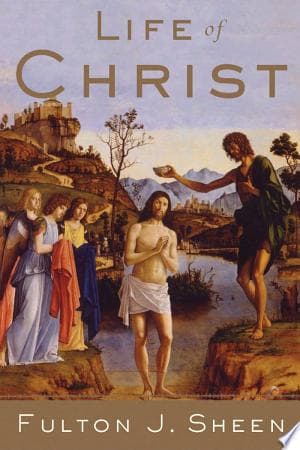
Life of Christ cover
Archivist's Choice

Life of Christ

Fulton Sheen (2019)

Genre

Spirituality

Reading Time

600 min

Key Themes

See below

Track Your Reading

Sign in to track this book

Archbishop Sheen's 'Life of Christ' explores Jesus' Incarnation, public ministry, Passion, and Resurrection, revealing the divine love story at the heart of human existence.

Core Idea

Fulton Sheen's 'Life of Christ' offers a theological and devotional look at Jesus's life, death, and resurrection. Sheen explains these events not just as history, but as the central, transforming act in human history. He argues that Christ's Incarnation changed humanity's relationship with God, setting a new moral order through the Beatitudes, showing divine power in humility, and offering salvation through the Paschal Mystery. The book stresses Christ's presence through the Eucharist and the Church, calling readers to active discipleship and a deeper understanding of God's mercy and wisdom, even in times of seeming divine silence.
Reading time
600 min
Difficulty
Medium
✓ Read this if...
You are seeking a deeply spiritual, theological, and devotional understanding of the life of Jesus Christ from a Catholic perspective, and appreciate eloquent, reflective prose that connects historical events to timeless spiritual truths.
✗ Skip this if...
You are looking for a purely academic, historical-critical analysis of the Gospels, or prefer a minimalist, secular approach to spirituality. This book is rich in Catholic doctrine and spiritual reflection.

Core idea

The central argument and framework that powers the entire book.

Fulton Sheen's 'Life of Christ' offers a theological and devotional look at Jesus's life, death, and resurrection. Sheen explains these events not just as history, but as the central, transforming act in human history. He argues that Christ's Incarnation changed humanity's relationship with God, setting a new moral order through the Beatitudes, showing divine power in humility, and offering salvation through the Paschal Mystery. The book stresses Christ's presence through the Eucharist and the Church, calling readers to active discipleship and a deeper understanding of God's mercy and wisdom, even in times of seeming divine silence.

At a glance

Reading time

600 min

Difficulty

Medium

Read this if...

You are seeking a deeply spiritual, theological, and devotional understanding of the life of Jesus Christ from a Catholic perspective, and appreciate eloquent, reflective prose that connects historical events to timeless spiritual truths.

Skip this if...

You are looking for a purely academic, historical-critical analysis of the Gospels, or prefer a minimalist, secular approach to spirituality. This book is rich in Catholic doctrine and spiritual reflection.

Key Takeaways

1

The Incarnation as Cosmic Interruption

Christ's birth was not merely an event, but the pivotal reorientation of human history and divine interaction.

Quote

The birth of Christ was the greatest event in human history, not because it was the beginning of a new religion, but because it was the beginning of a new humanity.

Sheen stresses that the Incarnation is more than a historical note; it is a radical act in existence itself. It is when the eternal enters time, the infinite becomes finite, and God takes on human form. This act changes humanity's relationship with the divine, offering a path to redemption and union not possible before. It is an act of humility and love, challenging our ideas of divine power and showing a God who wants closeness, not distant worship. This central mystery is key to understanding all Christian theology and practice, set...

Supporting evidence

Sheen contrasts the cyclical pagan view of history with the linear, teleological Christian view, where Christ's birth serves as the singular, unrepeatable turning point that gives history its ultimate meaning and direction.

Apply this

Reflect on how the Incarnation transforms your understanding of God's nature and humanity's potential. Consider how this profound humility challenges your own notions of power and worth.

incarnationtheology-of-christredemption
2

The Paradox of Christ's Kingship

His reign is not of earthly power or conquest, but of sacrificial love and service, culminating on the Cross.

Quote

He came not to be served but to serve, and to give His life as a ransom for many.

Sheen explains the radical nature of Christ's kingship, which defies all worldly expectations. Instead of a crown, He wears thorns; instead of a throne, a cross; instead of an army, a few disciples who mostly leave Him. His power shows not through force but through self-emptying love (kenosis), ending in His crucifixion. This paradox shows a God whose rule is expressed through vulnerability and suffering. It challenges human ideas of leadership and authority. It suggests that true power lies in selfless service and ultimate sacrifice,...

Supporting evidence

Sheen details the stark contrast between the crowds wanting to make Jesus an earthly king after the feeding of the five thousand, and His subsequent withdrawal, ultimately leading to His 'coronation' on Calvary.

Apply this

Examine areas in your life where you seek power or influence. How can you reorient these desires towards selfless service and sacrificial love, mirroring Christ's kingship?

kenosiskingship-of-christsuffering-servant
3

The Beatitudes: A Blueprint for a New Morality

Christ's sermon on the mount establishes an inverted moral code, valuing humility, mercy, and peacemaking over worldly success.

Quote

Blessed are the poor in spirit, for theirs is the kingdom of heaven.

Sheen presents the Beatitudes as a revolutionary guide for a changed humanity, not just a list of virtues. They reverse common wisdom, calling blessed those the world often sees as unfortunate or weak: the poor in spirit, the meek, the sorrowful, the persecuted. This moral framework challenges the pursuit of material wealth, worldly power, and ambition, guiding human desires toward spiritual poverty, mercy, purity of heart, and peacemaking. It is a call to inner change that comes before and allows outer action, creating a new kind of ...

Supporting evidence

Sheen contrasts the Beatitudes with the prevailing Roman and Jewish legalistic moral codes of the time, highlighting their radical departure and emphasis on interior disposition over external observance.

Apply this

Choose one Beatitude and intentionally practice its principle for a week. Observe how it shifts your perspective and interactions.

beatitudeschristian-ethicssermon-on-the-mount
4

The Paschal Mystery: Death as the Door to Life

Christ's passion, death, and resurrection are not a tragedy, but the ultimate act of love and victory over sin and death.

Quote

The Cross is the tree of life, not the tree of death. It is the victory of love over hatred, of life over death.

Sheen argues that the Paschal Mystery — Christ's suffering, death, and resurrection — is the central, most important event in salvation history. Far from a defeat, the crucifixion is Christ's ultimate act of obedience and love, a willing sacrifice that makes up for humanity's sins. The resurrection then confirms His divine identity and shows His victory over death, promising eternal life to all who believe. This turns suffering and death from ultimate evils into possible paths for grace and new life. It is a profound rethinking of hum...

Supporting evidence

Sheen details the prophecies of the Old Testament regarding the suffering Messiah and shows how Christ's passion fulfills them, demonstrating God's plan unfolding through seemingly tragic events.

Apply this

When facing personal suffering or loss, reflect on the Paschal Mystery. How can you find meaning, hope, or even new life in your own experiences of 'death' and 'resurrection'?

paschal-mysteryatonementresurrection
5

The Silence of God: A Divine Pedagogy

Christ's periods of silence and apparent inaction are as instructive as His words and miracles, revealing God's patient love.

Quote

God's silence is not absence; it is often a deeper presence, a call to listen with the heart.

Sheen explores the meaning of Christ's silences: His years in Nazareth, His quiet patience during His trial, His moments of prayer alone. These times are not empty but show God's nature and methods. They teach us about humility, patience, and the importance of inner life. In a world that wants constant talk and quick answers, Christ's silence shows a God who does not always intervene with loud miracles but often works quietly, inviting us to deeper trust and contemplative listening. It challenges our expectation of immediate divine ac...

Supporting evidence

Sheen points to Christ's thirty years of hidden life in Nazareth, His silence before Pilate, and His solitary prayer in Gethsemane as moments of profound teaching through non-action.

Apply this

Practice intentional silence for a set period each day. What do you notice about yourself, your thoughts, and your perception of God's presence?

contemplationdivine-providencetrust-in-god
6

The Call to Discipleship: More Than Admiration

Following Christ demands radical commitment, self-denial, and a willingness to carry one's own cross.

Quote

To follow Christ is not merely to admire Him, but to imitate Him, even unto the Cross.

Sheen makes it clear that being a disciple of Christ is more than just agreement or admiration; it is a full commitment that requires changing one's whole life. It involves active self-denial, taking up one's cross daily, and putting God's Kingdom above all earthly ties. This is not an easy path, as shown by Christ's demands on His followers. It takes courage, endurance, and a willingness to accept suffering for the Gospel. Sheen emphasizes that true discipleship changes us from viewers into active participants in Christ's mission, de...

Supporting evidence

Sheen cites Christ's demanding statements like 'If anyone would come after me, let him deny himself and take up his cross daily and follow me' (Luke 9:23) and 'Unless you hate your father and mother...' (Luke 14:26) to illustrate the radical nature of the call.

Apply this

Identify one area in your life where you are holding back from full commitment to your faith. What is one concrete step you can take to embrace more radical discipleship?

discipleshipself-denialchristian-commitment
7

The Eucharist: The Continuing Presence

Christ's real presence in the Eucharist is the ongoing miracle, sustaining believers and uniting them to His sacrifice.

Quote

The Eucharist is not merely a symbol, but the very Body and Blood of Christ, the continuing miracle of His love among us.

For Sheen, the Eucharist is the center of Christian life, not just a ritual but the real presence of Christ, body, blood, soul, and divinity. He argues that this Sacrament is Christ's lasting gift, allowing believers to share in His sacrifice on Calvary and to receive spiritual food for their journey. It is the ultimate sign of His desire to stay with humanity, a tangible sign of His love and a source of grace that changes those who receive it worthily. This belief highlights the mystery and power of the Mass, making it the central ac...

Supporting evidence

Sheen refers to Christ's words at the Last Supper, 'This is my body' and 'This is my blood,' and the discourse on the Bread of Life in John 6, emphasizing their literal interpretation within Catholic tradition.

Apply this

Approach the Eucharist with renewed awe and reverence. Spend time in adoration or prayer before the Blessed Sacrament, reflecting on Christ's real presence.

eucharistreal-presencesacraments
8

The Divine Mercy: Beyond Human Justice

Christ's life reveals a God whose mercy transcends human understanding of justice, offering forgiveness and a path to reconciliation.

Quote

Mercy is not weakness; it is the strongest form of love, for it extends pardon where justice might demand retribution.

Sheen consistently highlights divine mercy throughout Christ's ministry. From His talks with sinners and outcasts to His parables of forgiveness, Christ shows a God who is 'rich in mercy,' always seeking to bring humanity back to Himself. This mercy is not a suspension of justice but a higher form of love that offers healing and restoration, even when human justice might ask for punishment. It challenges our own often-punitive idea of justice, inviting us to show mercy to others as we have received it. This divine trait is central to ...

Supporting evidence

Sheen recounts the parables of the Prodigal Son and the Good Samaritan, as well as Christ's forgiveness of the adulterous woman and the thief on the cross, as prime examples of boundless divine mercy.

Apply this

Reflect on someone you find it difficult to forgive. How can you extend a measure of Christ's mercy to them, even in a small way?

divine-mercyforgivenessreconciliation
9

The Church: Christ's Mystical Body

The Church is not merely an institution, but the living continuation of Christ's presence and mission in the world.

Quote

The Church is not something apart from Christ; it is Christ Himself, extended through time and space, His mystical Body on earth.

Sheen firmly states that the Church is not a human idea but a divine body, the 'Mystical Body of Christ.' Through the Church, Christ's redemptive work continues, His teachings are kept, and His grace is given through the sacraments. This view raises the Church beyond a social or religious group, stressing its divine origin and purpose. It implies a deep, organic unity between Christ and His followers, where each member plays a key role. This perspective asks for deep loyalty and participation, as rejecting the Church is, in a way, rej...

Supporting evidence

Sheen draws upon St. Paul's analogy of the Church as the Body of Christ (1 Corinthians 12) and Christ's commissioning of Peter and the apostles, establishing the hierarchical and sacramental nature of the Church.

Apply this

Deepen your engagement with your faith community. How can you more fully embody your role as a member of Christ's Mystical Body, serving others and participating in its mission?

mystical-body-of-christecclesiologysacraments
10

The Enduring Relevance: Christ's Timeless Message

Despite millennia, Christ's teachings remain profoundly relevant, offering answers to humanity's deepest questions and needs.

Quote

Christ is not a figure of the past; He is the living answer to the eternal questions of the human heart.

Sheen concludes by stressing Christ's timeless and universal appeal. He argues that while cultures and technology change, basic human questions about meaning, suffering, love, and death remain. Christ, through His life, teachings, and sacrifice, offers not just a philosophy but a living answer to these lasting questions. His message goes beyond history, speaking directly to the human condition across all ages. This lasting relevance asks us to keep engaging with the Gospel, finding new insights and guidance for today's challenges. It ...

Supporting evidence

Sheen implicitly makes this case throughout the book by connecting Christ's actions and words to universal human experiences and dilemmas, showing how His solutions are not bound by time.

Apply this

Identify a current personal or societal challenge. How might Christ's teachings or example offer guidance or a new perspective on this issue?

gospel-relevancechristian-philosophyspiritual-guidance

Critical analysis

Notable Quotes

The greatest love story of all time is not Romeo and Juliet, but God and man.

Sheen's overarching theme of divine love and humanity's place within it.

Unless there is a Good Friday in your life, there can be no Easter Sunday.

Reflecting on the necessity of suffering and sacrifice for spiritual resurrection.

The refusal to surrender to God is a surrender to chaos.

Discussing the human need for divine order and the consequences of rejecting it.

Love is not a feeling; it is an act of the will.

Explaining the nature of true Christian love as a deliberate choice, not merely an emotion.

Our Lord did not come to make us good, but to make us holy.

Distinguishing between mere moral goodness and the deeper call to sanctity in Christ.

The Cross is not a sign of defeat, but of victory.

Interpreting the crucifixion not as an end, but as the ultimate triumph over sin and death.

Humility is truth.

Emphasizing humility as an honest recognition of one's place before God.

He who loves the world more than God loves nothing at all.

Warning against attachment to worldly things over spiritual devotion.

Prayer is not asking for things; it is a union with God.

Redefining prayer beyond petition to a deeper, more intimate relationship.

The world is not saved by what it believes, but by Whom it believes.

Highlighting the personal relationship with Christ as central to salvation, not just abstract doctrines.

Every man has a vocation, and that vocation is to be a saint.

Stressing the universal call to holiness for all individuals.

Conscience is the voice of God in the soul.

Describing the role of conscience as a divine guide within each person.

The greatest tragedy is not to die, but to live without a purpose.

Urging readers to find and embrace their divine purpose in life.

The purpose of life is to know God, to love Him, and to serve Him.

Summarizing the fundamental aim of human existence according to Christian teaching.

Quiz

Test Your Knowledge

Ready to see how well you understood this book? Take our interactive quiz with 10 questions.

10
Questions
~5
Minutes
?
Best Score

Key Questions (FAQ)

Fulton Sheen's 'Life of Christ' stands out for its profound theological insights, psychological depth, and eloquent prose. Sheen masterfully weaves together biblical accounts with philosophical reflections, making the person of Christ accessible and compelling to a modern audience.

About the author

Fulton Sheen

Fulton John Sheen was an American bishop of the Catholic Church known for his preaching and especially his work on television and radio. Ordained a priest of the Diocese of Peoria in 1919, Sheen quickly became a renowned theologian, earning the Cardinal Mercier Prize for International Philosophy in 1923. He went on to teach theology and philosophy at the Catholic University of America and acted as a parish priest before he was appointed auxiliary bishop of the Archdiocese of New York in 1951. He held this position until 1966 when he was made the Bishop of Rochester. He resigned in 1969 as his 75th birthday approached, and was made archbishop of the titular see of Newport, Wales.