BookBrief
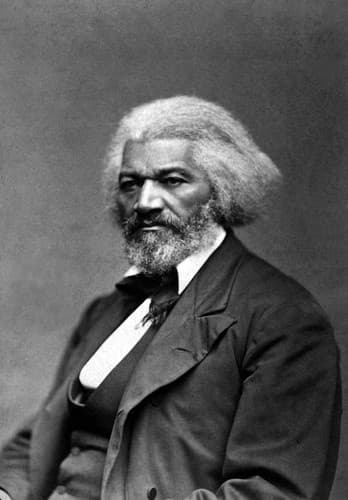
Life and Times of Frederick Douglass cover
Archivist's Choice

Life and Times of Frederick Douglass

Frederick Douglass (1881)

Genre

Biography / Memoir / History

Reading Time

400 min

Key Themes

See below

Track Your Reading

Sign in to track this book

Frederick Douglass's autobiography shows his journey from a Maryland plantation to becoming a key voice in the abolition movement, detailing his escape and fight against slavery and racial injustice.

Core Idea

Frederick Douglass's autobiography describes the harshness of slavery and how education and speaking up for oneself lead to freedom. Douglass tells his story of being enslaved and becoming a leading abolitionist. He explains how learning to read helped him understand his situation, plan resistance, and become free in mind and body. The book reveals the cruelty of the overseer system, the lasting damage to both enslaved people and slave owners, and how religious institutions supported these wrongs. Douglass argues that freedom means not only ending physical chains but also developing one's voice and working for justice.
Reading time
400 min
Difficulty
Medium
✓ Read this if...
You want a first-hand account of American slavery, its psychological and physical tolls, and the intellectual journey of one of history's most powerful advocates for human rights.
✗ Skip this if...
You are looking for a light read or prefer modern historical analysis over primary source narrative.

Core idea

The central argument and framework that powers the entire book.

Frederick Douglass's autobiography describes the harshness of slavery and how education and speaking up for oneself lead to freedom. Douglass tells his story of being enslaved and becoming a leading abolitionist. He explains how learning to read helped him understand his situation, plan resistance, and become free in mind and body. The book reveals the cruelty of the overseer system, the lasting damage to both enslaved people and slave owners, and how religious institutions supported these wrongs. Douglass argues that freedom means not only ending physical chains but also developing one's voice and working for justice.

At a glance

Reading time

400 min

Difficulty

Medium

Read this if...

You want a first-hand account of American slavery, its psychological and physical tolls, and the intellectual journey of one of history's most powerful advocates for human rights.

Skip this if...

You are looking for a light read or prefer modern historical analysis over primary source narrative.

Key Takeaways

1

Knowledge as Emancipation

Literacy was not just education, but a weapon against slavery.

Quote

“I would at times feel that learning to read had been a curse rather than a blessing. It had given me a view of my wretched condition, without the remedy. It opened my eyes to the horrible pit, but to no ladder upon which to get out.”

Douglass's path from a boy secretly learning the alphabet to a skilled speaker and writer shows the power of knowledge. He understood early that illiteracy was a main part of slavery, kept in place to keep enslaved people unaware of their rights and the world. His secret lessons, first from Mrs. Auld and then from white children, were acts of rebellion. Learning to read, though it first made him feel more pain by showing him the extent of his bondage, gave him the tools for his escape and his fight against slavery. It turned his despa...

Supporting evidence

Douglass recounts Mrs. Auld's initial kindness in teaching him the alphabet, which was abruptly stopped by her husband, Hugh Auld, who declared that 'learning would spoil the best n****r in the world.' This moment solidified Douglass's understanding that knowledge was inherently dangerous to the slave system.

Apply this

Actively seek knowledge and understanding, especially in areas where information is suppressed or distorted. Recognize that true liberation often begins with intellectual empowerment and the ability to articulate one's own narrative.
literacyemancipationresistanceself-education
2

Slavery's Corrupting Influence

The institution of slavery dehumanized not just the enslaved, but also the enslavers.

Quote

“Slavery proved as injurious to her as it did to me. When I went there, she was a pious, warm, and tender-hearted woman. The tender heart became stone, and the lamblike disposition gave way to one of tiger-like fierceness.”

Douglass shows how slavery was a moral poison, damaging the humanity of everyone it touched. His most striking example is Mrs. Auld, who at first was kind and taught him to read. But under the slave system and her husband's warnings, she became cruel and opposed his education. This shows that slavery was not just about money but an idea that twisted morals and stopped empathy, even in people who might have been decent. It made slave owners tyrants, taking away their own compassion and honesty.

Supporting evidence

The dramatic change in Mrs. Auld's character, from a woman who treated him 'as she would a white child' to one who became 'even more violent in her opposition' to his learning, serves as a stark example of slavery's corrupting power.

Apply this

Examine systems and ideologies for their potential to corrupt individuals, even those with good intentions. Resist participating in systems that demand the dehumanization of others, as they inevitably diminish one's own humanity.

dehumanizationmoral-corruptionsystemic-evilempathy-erosion
3

Resistance in Many Forms

From covert acts to open defiance, resistance was constant and varied.

Quote

“I was a slave — a slave for life. I might as well be killed by the sword as by starvation. I had made up my mind to get a blow in, if I could, against my oppressor.”

Douglass's story is full of examples of resistance, showing that enslaved people were not passive. His own journey started with secret learning, then grew to physical resistance against the 'slave-breaker' Covey. This fight was a key moment that brought back his sense of self and determination. Besides direct fights, resistance appeared in small ways: pretending to be sick, working slowly, keeping cultural practices, and, importantly, sharing information and planning escapes. These acts, big or small, weakened slavery and affirmed the...

Supporting evidence

His famous fight with Edward Covey, where Douglass 'resolved to fight,' resisting for nearly two hours, marked a turning point. He declared, 'I was a changed being after that fight. I was nothing before; I was a man now.' This act of self-defense broke Covey's power over him and instilled a renewed sense of self-worth.

Apply this

Recognize and support diverse forms of resistance against injustice, understanding that direct confrontation is not the only valid method. Find ways to assert agency and humanity even within oppressive structures.

resistanceagencyrebellionself-preservation
4

The Hypocrisy of Christianity

Many enslavers used religion to justify brutality, exposing a profound moral contradiction.

Quote

“I prayed for freedom for twenty years, but received no answer until I prayed with my legs.”

Douglass shows the great hypocrisy of slave owners who claimed to be Christian while doing terrible things. He separates the 'Christianity of the land' from the 'Christianity of Christ,' saying the first was used to support a bad system. Masters like Captain Auld, who became religious, often grew even more cruel, using the Bible to justify their harshness and denying enslaved people the spiritual comfort they claimed for themselves. This criticism of religious hypocrisy is strong, showing how deeply slavery was rooted, even twisting h...

Supporting evidence

Douglass notes that his master, Captain Auld, became 'more cruel and hateful in all his ways' after his conversion at a Methodist camp meeting. He would quote scripture to justify withholding food and inflicting punishment, often praying loudly while simultaneously starving and beating his enslaved people.

Apply this

Critically examine how religious or moral doctrines are used to justify power imbalances or oppression. Challenge interpretations that contradict fundamental principles of justice and human dignity.

religious-hypocrisymoral-relativismspiritual-abusefalse-piety
5

The Psychological Scars of Slavery

Beyond physical suffering, slavery inflicted deep and lasting psychological trauma.

Quote

“I was now, for the first time, a slave in fact. I was now to learn the bitter lesson, that I was not only a slave, but a chattel, an article of property, a thing, and not a person.”

Douglass clearly describes the psychological harm of slavery. He talks about the systematic breaking of spirit, the constant fear, families being split apart, and identity being taken away. Being treated as property, a 'thing' instead of a person, was very damaging. The fear of punishment, not knowing what would happen, and seeing cruel acts against others created an atmosphere of terror and sadness. Even after his escape, the psychological scars remained, showing as deep distrust and a constant awareness of the injustice he had lived...

Supporting evidence

Douglass recounts the deep emotional pain of being separated from his mother at a young age, and later witnessing the brutal whipping of his Aunt Hester, which left an indelible mark of terror and helplessness on his psyche.

Apply this

Recognize the long-term psychological impacts of trauma and systemic oppression. Support efforts for healing, reconciliation, and the creation of environments that foster dignity and mental well-being for all.

psychological-traumadehumanizationidentity-lossintergenerational-trauma
6

The Power of Narrative and Voice

Telling one's own story is a crucial act of self-determination and social change.

Quote

“I have been frequently asked how I felt when I found myself in a free State. I have never been able to answer the question with any satisfaction to myself. It was a moment of profound emotion, a moment for which I had longed and toiled, but it was also a moment of immense uncertainty.”

Douglass being an orator and author was a direct challenge to the slave system, which tried to silence and erase the voices of enslaved people. By carefully writing down his experiences, from the harsh reality of plantation life to the intellectual awakening that led to his escape, he provided clear proof against romanticized or dehumanizing stories of slavery. His skilled and clear voice, developed through self-education and abolitionist speeches, became a tool for social change. This autobiography is not just a personal story; it is...

Supporting evidence

His detailed descriptions of his experiences, such as the cruelty of Mr. Gore, the overseer who shot Demby for refusing to leave a creek, or the specific accounts of hunger and exposure, provided undeniable evidence to abolitionist audiences who often doubted the severity of slavery.

Apply this

Empower marginalized voices to tell their stories without mediation. Understand that personal narratives are essential for challenging dominant narratives and fostering empathy and understanding in society.

narrative-powerautobiographyvoicesocial-changeself-determination
7

The Nuance of Freedom

Escape to the North was a beginning, not an end, to the struggle for true liberty.

Quote

“I was now my own master. But I was not free; I had simply exchanged masters. I was a freeman, but I was not a citizen.”

Douglass's escape to the North was a great achievement, but he makes it clear that his troubles did not end there. He describes the worries of a person on the run, the constant fear of being caught, and the difficulty of finding work and making a new life in a society still full of racial bias. He faced discrimination, money problems, and the mental weight of living as a 'fugitive from injustice.' This detailed look at freedom shows that legal freedom was only one step; true liberty needed full civil rights, economic chances, and an e...

Supporting evidence

Upon arriving in New Bedford, Massachusetts, Douglass describes his struggle to find work, encountering prejudice even among white laborers who refused to work alongside him. He also details the persistent fear of being identified by former associates or bounty hunters.

Apply this

Recognize that achieving justice is often a multi-stage process. Support ongoing efforts to dismantle systemic barriers, even after initial legal or social reforms, to ensure true equity and freedom for all.

fugitive-liferacial-prejudicecivil-rightssystemic-barrierspost-emancipation-struggle
8

The Imperative of Abolitionism

Active participation in social movements is necessary to dismantle oppression.

Quote

“I have no words to describe the delight with which I beheld the movements of the anti-slavery movement, and to hear the eloquent appeals of its devoted advocates.”

Douglass's life became closely tied to the abolitionist movement. His personal story, told with strong words, became an important weapon in the fight against slavery. He went from a private fugitive to a public figure, understanding that his freedom was not complete without the freedom of all enslaved people. His choice to publish his autobiography, despite the big risk of revealing his identity, shows his strong commitment to the cause. He lectured, wrote, and organized, proving that individual experience, when used for group action,...

Supporting evidence

Douglass's early involvement with William Lloyd Garrison and the American Anti-Slavery Society, where he became a prominent speaker, despite initially being advised to 'stick to the facts' and not speak too 'learnedly,' lest people doubt he was ever enslaved.

Apply this

Identify injustices and actively participate in movements dedicated to their eradication. Leverage personal experiences and skills to contribute to collective efforts for social justice.

abolitionismsocial-justiceactivismcollective-actionmoral-imperative
9

The Brutality of the Overseer System

Overseers were agents of terror, enforcing slavery's cruelty with impunity.

Quote

“He was a cruel man, hardened by a long course of slaveholding. He would whip a slave for looking him in the eye, and for not looking him in the eye.”

Douglass gives disturbing insights into the overseer system, which was the most immediate and cruel part of slavery for most enslaved people. Men like Mr. Gore and Mr. Severe were not just supervisors; they were tools of terror, allowed to use extreme violence with little oversight. Douglass details their random cruelty, their mental manipulation, and their casual disregard for human life. The overseer system ensured constant watching and punishment, breaking the spirit and body of enslaved people, and creating a place where fear was ...

Supporting evidence

The harrowing account of Mr. Gore shooting Demby, an enslaved man, for stepping into a creek to cool himself after a whipping, and then calmly explaining his actions to Colonel Lloyd by stating it was necessary 'to prevent the slaves from taking liberties.'

Apply this

Examine the role of enforcers and intermediaries in oppressive systems. Understand how power structures delegate cruelty and maintain control through fear and violence, and challenge these mechanisms.

overseer-systembrutalityviolencefear-controlsystemic-violence
10

Family Separation as a Weapon

The deliberate breaking of family bonds was a core cruelty of slavery.

Quote

“I never saw my mother, to know her as such, more than four or five times in my life; and each of these times was a mere chance interview, in the night, by stealth, when she had walked the whole twelve miles from her own cabin to see me.”

Douglass's personal experience of being separated from his mother as a baby is a sad example of one of slavery's worst cruelties. This policy was meant to stop strong family bonds among enslaved people, making them less connected and more reliant on their owners. The story shows the great emotional pain caused by these separations, and the strength of those who tried to keep family ties despite huge problems. Douglass's telling of his brief, secret visits with his mother highlights the deep human need for family and the brutal nature ...

Supporting evidence

His early life, where he was taken from his mother as an infant and only saw her a few times, always at night, before her death. He notes that this practice was common, intended to stifle affection and sever natural ties.

Apply this

Advocate for policies that protect family unity and oppose any system that intentionally separates families or denies parental rights. Support initiatives that help families reconnect and heal from past separations.

family-separationemotional-traumahuman-bondsslavery's-crueltyparental-rights

Critical analysis

Notable Quotes

I would unite with anybody to do right and with nobody to do wrong.

Douglass expresses his moral philosophy and commitment to justice.

It is easier to build strong children than to repair broken men.

Reflecting on the importance of education and nurturing youth.

Power concedes nothing without a demand. It never did and it never will.

A famous statement on the necessity of struggle for rights.

The soul that is within me no man can degrade.

Asserting his inner dignity and humanity despite slavery.

I prefer to be true to myself, even at the hazard of incurring the ridicule of others, rather than to be false, and to incur my own abhorrence.

On personal integrity and self-respect.

Where justice is denied, where poverty is enforced, where ignorance prevails, and where any one class is made to feel that society is an organized conspiracy to oppress, rob and degrade them, neither persons nor property will be safe.

Warning about the dangers of social injustice and inequality.

The limits of tyrants are prescribed by the endurance of those whom they oppress.

Commenting on the dynamics of oppression and resistance.

A man's rights rest in three boxes: the ballot box, the jury box, and the cartridge box.

Discussing the means of securing and defending rights.

No man can put a chain about the ankle of his fellow man without at last finding the other end fastened about his own neck.

A metaphorical statement on the consequences of oppression.

The life of the nation is secure only while the nation is honest, truthful, and virtuous.

Emphasizing the importance of moral character in governance.

I prayed for twenty years but received no answer until I prayed with my legs.

Reflecting on the shift from passive hope to active struggle.

The white man's happiness cannot be purchased by the black man's misery.

Critiquing the idea that one group's prosperity depends on another's suffering.

If there is no struggle, there is no progress.

A well-known assertion on the necessity of conflict for advancement.

To make a contented slave, it is necessary to make a thoughtless one.

Analyzing how slavery relies on suppressing intellectual freedom.

Quiz

Test Your Knowledge

Ready to see how well you understood this book? Take our interactive quiz with 10 questions.

10
Questions
~5
Minutes
?
Best Score

Key Questions (FAQ)

It's Frederick Douglass's autobiography detailing his journey from plantation slave to prominent abolitionist, covering his early abuse, escape to freedom, and lifelong fight for African-American civil rights and equality.

About the author