BookBrief
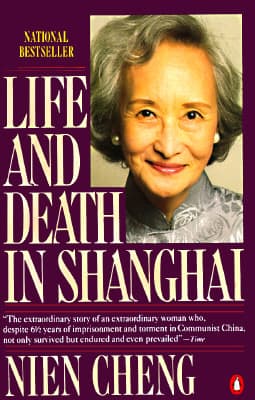
Life and Death in Shanghai cover
Archivist's Choice

Life and Death in Shanghai

Nien Cheng (1986)

Genre

Biography / Memoir / History

Reading Time

12-15 hours

Key Themes

See below

Track Your Reading

Sign in to track this book

Imprisoned for over six years during China's Cultural Revolution, Nien Cheng's memoir recounts her solitary confinement, resistance, and quest for justice amid national chaos and ideological fanaticism.

Core Idea

Nien Cheng's memoir, "Life and Death in Shanghai," offers a personal account of an intellectual's struggle for survival and dignity during China's Cultural Revolution. It details her six-and-a-half-year imprisonment, including physical and psychological torture, constant interrogations, and the destruction of her former life. The book shows that even under extreme totalitarian oppression, the human spirit, supported by intellect, memory, and a commitment to truth and justice, can resist dehumanization and maintain integrity. Cheng’s narrative highlights the resilience needed to confront an absurd and cruel system. It shows how individual courage and a moral compass can defy collective madness and the fear that enables ideological purges. It also shows the cost of totalitarianism on lives, relationships, and society, while celebrating the power of personal conviction against state power.
Reading time
12-15 hours
Difficulty
Medium
✓ Read this if...
You are interested in firsthand accounts of life under totalitarian regimes, the Cultural Revolution in China, or stories of incredible human resilience and the power of the individual spirit against overwhelming oppression.
✗ Skip this if...
You prefer light reading, are sensitive to detailed accounts of psychological and physical hardship, or are not interested in historical memoirs of political imprisonment.

Core idea

The central argument and framework that powers the entire book.

Nien Cheng's memoir, "Life and Death in Shanghai," offers a personal account of an intellectual's struggle for survival and dignity during China's Cultural Revolution. It details her six-and-a-half-year imprisonment, including physical and psychological torture, constant interrogations, and the destruction of her former life. The book shows that even under extreme totalitarian oppression, the human spirit, supported by intellect, memory, and a commitment to truth and justice, can resist dehumanization and maintain integrity. Cheng’s narrative highlights the resilience needed to confront an absurd and cruel system. It shows how individual courage and a moral compass can defy collective madness and the fear that enables ideological purges. It also shows the cost of totalitarianism on lives, relationships, and society, while celebrating the power of personal conviction against state power.

At a glance

Reading time

12-15 hours

Difficulty

Medium

Read this if...

You are interested in firsthand accounts of life under totalitarian regimes, the Cultural Revolution in China, or stories of incredible human resilience and the power of the individual spirit against overwhelming oppression.

Skip this if...

You prefer light reading, are sensitive to detailed accounts of psychological and physical hardship, or are not interested in historical memoirs of political imprisonment.

Key Takeaways

1

The Unbreakable Spirit of Intellectual Resistance

How Nien Cheng maintained her dignity and intellect against relentless psychological torture.

Quote

Though my body was imprisoned, my mind remained free. They could not touch the truth I held within.

Nien Cheng's memoir shows the strength of the human spirit to resist indoctrination and psychological warfare. Despite years of solitary confinement, sleep deprivation, constant interrogation, and the threat of execution, she refused to confess to made-up crimes. Her ability to keep her intellectual integrity and moral compass under such conditions is remarkable. She cataloged her interrogators' lies, analyzed their methods, and used her sharp mind to expose their contradictions. This shows that true freedom is in the mind, even when ...

Supporting evidence

Nien Cheng's detailed accounts of her interrogations, where she would logically dismantle the accusations of her captors, such as her refusal to admit she was a 'spy' for Shell Oil, or her articulate defense of her 'bourgeois' lifestyle as simply a result of her husband's legitimate career.

Apply this

In situations of pressure or injustice, cultivate an inner sanctuary of truth and logic. Practice critical thinking to dissect manipulative narratives, rather than passively accepting them. Recognize that personal integrity is a powerful, unassailable form of resistance.


psychological-resilienceintellectual-integritytotalitarianism
2

The Absurdity and Cruelty of Ideological Purges

The Cultural Revolution's irrational destruction of individuals and society.

Quote

The Cultural Revolution was a period when madness reigned, when reason was discarded, and when the most basic human decencies were trampled underfoot by fanatical zealots.

Cheng's story clearly shows the absurdity and cruelty of the Cultural Revolution. She describes how people were persecuted not for actual crimes, but for their class background, education, or connection to 'Western' influences. The 'crimes' were often minor – owning foreign books, having a maid, or enjoying 'bourgeois' comforts. This fanaticism led to the destruction of culture, the breakdown of social order, and the dehumanization of many citizens. The book is a reminder of how easily society can fall into chaos when reason is replac...

Supporting evidence

The ransacking of her home and the destruction of her cherished possessions, including antiques and foreign books, simply because they represented 'bourgeois' decadence. The arbitrary arrests and 'struggle sessions' endured by her friends and colleagues, often based on flimsy or fabricated evidence.

Apply this

Be vigilant against the rise of ideological extremism in any form. Question narratives that demonize groups of people based on arbitrary criteria. Advocate for due process, rule of law, and the protection of individual liberties against collective fanaticism.

cultural-revolutiontotalitarianismideological-extremism
3

The Pervasive Nature of Fear and Betrayal

How the Cultural Revolution fractured trust and pitted citizens against each other.

Quote

Fear was the invisible chain that bound everyone, making good people do terrible things, and turning neighbors into informers.

Nien Cheng's account illustrates how the Cultural Revolution created fear that damaged social bonds and led to betrayal. Friends denounced friends, family members turned on each other, and colleagues made up accusations to save themselves. This atmosphere of suspicion meant no one could be fully trusted. Cheng experienced betrayal from her former household staff and acquaintances, showing how effective the system was at using terror to control people. The book examines how fear can compromise morality and fragment society, making genu...

Supporting evidence

The initial ransacking of her home by her own servants, who had been incited by the Red Guards. The defection of her former loyal chauffeur, who later testified against her under duress. The general atmosphere where people avoided contact with 'class enemies' to protect themselves.

Apply this

In any community, prioritize fostering an environment of trust and open communication. Resist pressures that encourage denunciation or suspicion within groups. Understand that fear can be a powerful tool of manipulation, and actively work to build solidarity against it.

social-cohesionauthoritarianismfear-psychology
4

The Struggle for Justice and Vindication

Nien Cheng's relentless pursuit of truth and accountability after her release.

Quote

My fight was not just for my own innocence, but for the truth of what had happened, for my daughter, and for all those who suffered in silence.

After her release, Nien Cheng did not resign herself to forgetting the past. Instead, she sought justice and vindication, not only for herself but for her murdered daughter, Meiping. She gathered evidence, wrote petitions, and demanded official recognition of her innocence and accountability for those who had wronged her. This post-imprisonment struggle shows her commitment to truth and her refusal to let the injustices of the Cultural Revolution be ignored. Her fight was an act of love and a statement against historical revisionism, ...

Supporting evidence

Her persistent efforts to uncover the truth behind her daughter's death, despite official obfuscation and resistance. Her detailed written appeals to higher authorities, demanding apologies and compensation, even after her 'rehabilitation.'

Apply this

Never abandon the pursuit of truth and justice, even when facing powerful opposition. Document injustices meticulously. Understand that personal vindication can be a powerful catalyst for broader societal acknowledgment of wrongdoing.

post-traumatic-growthhistorical-justiceaccountability
5

The Power of Memory and Internal Monologue

How Nien Cheng used her mind to survive solitary confinement.

Quote

In the silence of my cell, my mind became my greatest companion, a vast library of memories and thoughts that no jailer could ever confiscate.

Nien Cheng survived solitary confinement largely due to her mental discipline. Without external stimulation, she created an internal world of memories, intellectual exercises, and philosophical reflections. She recited poetry, recalled her past life, planned meals, and practiced English. This mental engagement kept her from despair, boredom, or mental decline. Her ability to rebuild and live in her inner world shows the role of memory, imagination, and sustained intellectual activity in maintaining sanity and identity under extreme de...

Supporting evidence

Her detailed descriptions of recalling specific books, conversations, and events from her life before imprisonment. Her mental exercises, such as planning intricate menus or reviewing her English vocabulary, to keep her mind sharp.

Apply this

Cultivate a rich inner life through reading, reflection, and memory exercises. In challenging or monotonous situations, actively engage your mind with complex thoughts or memories to maintain mental agility and emotional resilience. Practice mindfulness to anchor yourself in the present while also drawing strength from your past.

mental-resiliencesolitary-confinementcognitive-coping
6

The Erosion of Human Rights under Totalitarianism

The systematic stripping of basic dignities and legal protections.

Quote

They stripped away everything that made me human, but they could not strip away my humanity itself.

The memoir offers a first-hand account of the complete loss of human rights under a totalitarian regime. Nien Cheng was denied legal representation, arbitrarily arrested, held without trial for years, and endured physical and psychological torture. Her basic needs for hygiene, adequate food, and medical care were often neglected or withheld as punishment. The systematic denial of these rights shows how totalitarian states operate by dismantling the rule of law and treating citizens as instruments of the state, not as individuals with ...

Supporting evidence

Her prolonged solitary confinement without charge, the constant threats of execution, the denial of proper medical treatment for her illnesses, and the deliberate deprivation of basic necessities like toilet paper and clean water.

Apply this

Actively support and defend human rights organizations and principles. Remain vigilant against any government or system that seeks to undermine due process, freedom of speech, or the right to a fair trial. Understand that the erosion of rights often begins subtly.

human-rightstotalitarianismdue-process
7

The Enduring Bonds of Love and Family

Nien Cheng's love for her daughter fueled her survival and quest for justice.

Quote

My love for my daughter was the anchor that held me through the storms of imprisonment, and the fire that drove me to seek justice after.

Central to Nien Cheng's resilience is her love for her daughter, Meiping. This bond motivated her throughout her ordeal. During imprisonment, thoughts of Meiping sustained her, giving her a reason to live and resist. After her release, Meiping's tragic death became the driving force behind Cheng's pursuit of truth and accountability. Her quest for justice for Meiping was not just personal grief but a broader criticism of the regime that destroyed her family. This part of the memoir shows how deep personal connections can provide stren...

Supporting evidence

Her constant worry about Meiping during her imprisonment and her desperate attempts to gain information about her. Her unwavering determination to investigate Meiping's death and clear her name, despite official resistance and personal danger.

Apply this

Recognize and nurture the deep connections in your life; they can be powerful sources of resilience. Understand that love can provide profound purpose and motivation, even in the darkest times. Honor the memory of loved ones by pursuing truth and justice.

grief-and-lossmaternal-bondresilience
8

The Dehumanizing Effects of Propaganda and Groupthink

How state-controlled narratives twisted reality and justified atrocities.

Quote

The Red Guards were not inherently evil; they were young people brainwashed by years of propaganda, intoxicated by a false sense of revolutionary righteousness.

Nien Cheng noticed how the Red Guards, often young, were manipulated by state propaganda into believing they were ridding society of 'enemies.' This indoctrination created groupthink, where critical thinking was suppressed, and conformity to the Party line was essential. The memoir shows how ordinary people, influenced by powerful narratives and peer pressure, could commit horrific acts, believing them to be good. This illustrates the danger of unchecked propaganda and how easily a population can be incited to violence and hatred when...

Supporting evidence

The Red Guards' unwavering belief in their 'revolutionary' mission as they ransacked homes and brutalized perceived enemies. The use of slogans and 'struggle sessions' to enforce ideological conformity and demonize 'class enemies.'

Apply this

Develop strong media literacy skills to critically evaluate information sources. Be wary of narratives that demonize entire groups of people. Cultivate independent thought and resist pressures to conform to group ideologies without critical examination.

propagandagroupthinkauthoritarianism
9

The Stark Contrast Between Ideology and Reality

The hypocrisy and corruption hidden beneath revolutionary rhetoric.

Quote

Behind the facade of revolutionary purity often lay personal ambition, corruption, and a profound disregard for human life.

Nien Cheng's memoir consistently shows the gap between the ideals of the Cultural Revolution and the brutal, corrupt reality. While 'revolution' and 'purity' were claimed, the system had personal vendettas, power struggles, and corruption. Her interrogators, supposedly dedicated to the proletariat, often showed petty cruelty and obsession with their own authority. The 'revolutionary' leaders lived comfortably while others suffered. This hypocrisy shows the cynical nature of many totalitarian movements, where ideological talk covers up...

Supporting evidence

The interrogators' shifting accusations, often based on personal biases or arbitrary directives, rather than justice. The eventual 'rehabilitation' of some officials who had perpetrated atrocities, revealing the political maneuvering behind the scenes. The special privileges enjoyed by Party officials compared to the suffering of ordinary citizens.

Apply this

Always scrutinize the actions of those in power, especially when their rhetoric is highly ideological. Look for discrepancies between stated values and actual behavior. Be skeptical of claims of absolute purity or infallibility from any leader or movement.

political-hypocrisytotalitarianismideological-critique

Critical analysis

Notable Quotes

When you are fighting for your life, you cannot afford to be sentimental.

Nien Cheng reflecting on the harsh realities of her imprisonment and the need to suppress emotion for survival.

The greatest danger for most of us is not that our aim is too high and we miss it, but that it is too low and we reach it.

A philosophical reflection on ambition and the human spirit, often attributed to Michelangelo but used by Nien Cheng to inspire her own resolve.

To be able to choose one's attitude in any given set of circumstances, to choose one's own way.

Nien Cheng's realization of the ultimate freedom that even her captors could not take away: the freedom to choose her internal response.

My only regret is that I didn't have enough time to love her more.

Nien Cheng's profound sorrow and regret after learning of her daughter Meiping's death, emphasizing the preciousness of lost time.

The human spirit is stronger than anything that can happen to it.

A recurring theme throughout her ordeal, highlighting her unwavering belief in the resilience of the human will despite immense suffering.

In a totalitarian society, it is not only the body but also the mind that is imprisoned.

Nien Cheng describing the psychological warfare waged by her interrogators, aiming to break her spirit as well as her physical health.

I had to protect my sanity, my memory, my identity. I had to continue to be Nien Cheng.

Her internal struggle to maintain her sense of self and integrity against constant pressure to confess and conform.

They could take away my freedom, but they could not take away my dignity.

A powerful statement reflecting her resolve to resist her captors' attempts to humiliate and break her spirit.

To live in constant fear is to live in a perpetual state of dying.

Nien Cheng's observation on the pervasive fear that gripped Chinese society during the Cultural Revolution, even outside of prison.

The greatest weapon against stress is our ability to choose one thought over another.

A practical insight into how she managed to maintain her mental fortitude and resist despair during her long imprisonment.

I learned to appreciate the smallest things, a ray of sunshine, a drop of water, the sound of a bird.

Reflecting on how extreme deprivation heightened her awareness and appreciation for simple, everyday elements of life.

The silence was the most terrible of all tortures. It forced one to confront oneself.

Her description of solitary confinement and the profound psychological impact of prolonged isolation.

Though my body was confined, my mind was free to roam.

Nien Cheng's use of her imagination and memory to escape the confines of her prison cell, a vital coping strategy.

Quiz

Test Your Knowledge

Ready to see how well you understood this book? Take our interactive quiz with 10 questions.

10
Questions
~5
Minutes
?
Best Score

Key Questions (FAQ)

'Life and Death in Shanghai' is a memoir by Nien Cheng, detailing her experiences during China's Cultural Revolution. It covers her unjust imprisonment for over six years, the harsh conditions she endured, and her unwavering refusal to confess to fabricated charges.

About the author