BookBrief
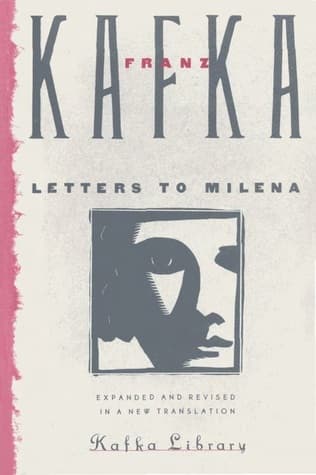
Letters to Milena cover
Archivist's Choice

Letters to Milena

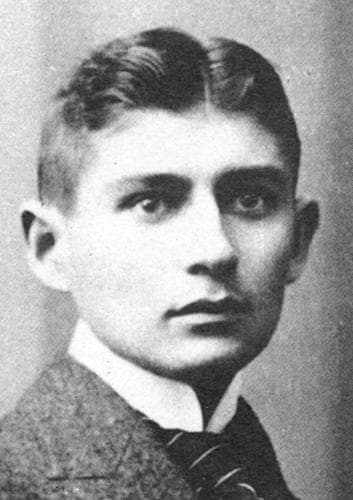
Franz Kafka (2018)

Genre

Biography / Memoir / Romance

Reading Time

360 min

Key Themes

See below

Track Your Reading

Sign in to track this book

In a collection of letters, Franz Kafka reveals his soul to his Czech translator, Milena Jesenská, turning a professional exchange into an intimate and ultimately doomed 'letter love' affair.

Core Idea

Franz Kafka's "Letters to Milena" is an intimate, raw, and often agonizing collection of letters that shows the author's complex inner world during a passionate, yet ultimately doomed, love affair. Through these letters, Kafka dissects his anxieties, his physical and mental suffering, his genius, and his unique view of love as both a consuming fire and an unbearable burden. The correspondence shows his struggle with self-worth, his dependency on Milena's understanding, and the paradox of seeking intimacy while also being repelled by its demands. This all happens while he deals with his demanding literary life and the weight of his own past. The book argues that love, for Kafka, intensified his existing torment, making him aware of his perceived inadequacies and the distance between himself and the object of his affection. It shows how Milena's intellectual and emotional presence became a mirror for his fears and desires, ultimately showing the destructive power of a mind consumed by self-doubt and the unattainable ideal of connection.
Reading time
360 min
Difficulty
Hard
✓ Read this if...
You are fascinated by the inner workings of a genius's mind, appreciate intense psychological introspection, or want to understand the profound anxieties that fueled Kafka's literary output through a deeply personal lens. Read this if you are interested in the complexities of an epistolary romance and the burden of character.
✗ Skip this if...
You prefer straightforward narratives, are looking for a light or uplifting read, or find prolonged expressions of anxiety and self-doubt emotionally draining. Skip this if you are not interested in dense, confessional writing.

Core idea

The central argument and framework that powers the entire book.

Franz Kafka's "Letters to Milena" is an intimate, raw, and often agonizing collection of letters that shows the author's complex inner world during a passionate, yet ultimately doomed, love affair. Through these letters, Kafka dissects his anxieties, his physical and mental suffering, his genius, and his unique view of love as both a consuming fire and an unbearable burden. The correspondence shows his struggle with self-worth, his dependency on Milena's understanding, and the paradox of seeking intimacy while also being repelled by its demands. This all happens while he deals with his demanding literary life and the weight of his own past.

The book argues that love, for Kafka, intensified his existing torment, making him aware of his perceived inadequacies and the distance between himself and the object of his affection. It shows how Milena's intellectual and emotional presence became a mirror for his fears and desires, ultimately showing the destructive power of a mind consumed by self-doubt and the unattainable ideal of connection.

At a glance

Reading time

360 min

Difficulty

Hard

Read this if...

You are fascinated by the inner workings of a genius's mind, appreciate intense psychological introspection, or want to understand the profound anxieties that fueled Kafka's literary output through a deeply personal lens. Read this if you are interested in the complexities of an epistolary romance and the burden of character.

Skip this if...

You prefer straightforward narratives, are looking for a light or uplifting read, or find prolonged expressions of anxiety and self-doubt emotionally draining. Skip this if you are not interested in dense, confessional writing.

Key Takeaways

1

The Epistolary Confessional

Letters as the ultimate medium for Kafka's self-revelation.

Quote

I have never written anything that has not been about myself.

Kafka, private and reclusive in his life, found in the letter a unique and direct channel for self-expression. Unlike his polished literary works, these letters to Milena are raw, unfiltered, and deeply personal. They strip away the layers of metaphor and allegory often found in his fiction, showing the anxieties, desires, and existential struggles that plagued him. This medium allowed him to articulate the complexities of his inner world, a task perhaps too daunting or too intimate for direct interpersonal interaction. The act of wri...

Supporting evidence

The entire collection serves as evidence, but specifically, the shift from initial business correspondence to intensely personal and introspective passages demonstrates this confessional aspect.

Apply this

Embrace written communication for deep self-reflection, especially when verbalizing complex emotions feels overwhelming. Keep a journal or write letters to a trusted confidant to process your thoughts.
epistolary-therapyself-revelationintrospective-writing
2

Love as a Living Fire

Kafka's intense, almost overwhelming, experience of love.

Quote

She was 'a living fire, such as I have never seen.'

For Kafka, love, particularly his love for Milena, was not a gentle affection but an all-consuming, almost painful blaze. He describes her as a 'living fire,' an image that conveys both her energy and the destructive intensity of his feelings. This love was intertwined with his characteristic anxiety and self-doubt, transforming it into a source of both joy and suffering. He grappled with the fear of inadequacy, the terror of loss, and the overwhelming nature of such a powerful emotion. This 'fire' exposed his vulnerabilities and his ...

Supporting evidence

Kafka's repeated expressions of Milena's vitality and his own overwhelming emotional response to her, often tinged with fear and longing, throughout the letters.

Apply this

Acknowledge the transformative, sometimes challenging, power of intense emotions. Instead of shying away from them, explore what they reveal about your own capacity for connection and vulnerability.

passionate-loveemotional-intensityvulnerability-in-love
3

The Burden of Genius and Character

Milena's unique understanding of Kafka's complex inner world.

Quote

She was uniquely able to recognize his complex genius and his even more complex character.

Milena Jesenská had an extraordinary capacity to perceive and articulate the layers of Kafka's personality and his literary brilliance. Unlike others who might have been intimidated or perplexed by his introspection and often dark themes, Milena saw through to the core of his being. This deep understanding was not merely intellectual; it was empathetic, allowing her to connect with his anxieties and his unique way of viewing the world. Her ability to grasp his 'complex genius' and 'even more complex character' made her an indispensabl...

Supporting evidence

The editor's description of Milena's unique understanding and the fact that Kafka entrusted her with his diaries, signifying his trust in her perception.

Apply this

Seek out relationships with individuals who genuinely strive to understand your complexities, not just your surface-level persona. Being truly seen can be profoundly validating and liberating.

empathetic-understandingintellectual-intimacyvalidation-in-relationships
4

Anxiety as a Constant Companion

Kafka's letters are saturated with his pervasive anxieties.

Quote

I am constantly trying to communicate something incommunicable, to explain something inexplicable.

Kafka's anxieties were not fleeting worries but a fundamental aspect of his existence, deeply woven into his being. These letters show the pervasive nature of his fears: fear of inadequacy, fear of commitment, fear of the world, and a paralyzing self-doubt. His anxiety was not just about his relationship with Milena; it extended to his health, his work, his family, and his very existence. He often felt a profound sense of isolation and a struggle to articulate the inexpressible nature of his inner turmoil. The letters show his constan...

Supporting evidence

Numerous passages where Kafka expresses his fears about his health, his ability to love, his work, and his general state of being.

Apply this

Acknowledge and explore the roots of your own anxieties. Writing or discussing these feelings can help externalize and process them, even if a full resolution isn't immediately possible.

existential-anxietyself-doubtemotional-struggle
5

The Paradox of Distance and Intimacy

The letter as a medium that both fosters and hinders true connection.

Quote

Letters are an excellent way of escaping into the distance.

While the letters allowed Kafka an unprecedented level of intimacy and self-disclosure, they also highlighted the distance between him and Milena. The written word offers a degree of control and reflection that face-to-face interaction does not. For Kafka, this distance might have been both a comfort and a curse. It allowed him to articulate profound truths without the immediate pressure of an emotional response, but it also perpetuated a relationship built on words rather than shared physical presence. This paradox shows a core theme...

Supporting evidence

The very existence of the letters as the primary mode of their relationship, despite their intense emotional connection, illustrates this paradox.

Apply this

Reflect on how different communication methods impact your relationships. While digital tools offer convenience, consider how they might create emotional distance, and consciously seek out more direct forms of connection when appropriate.

epistolary-relationshipsemotional-distancecommunication-barriers
6

Milena's Voice: A Crucial Counterpoint

The inclusion of Milena's writings enriches the narrative.

Quote

Also included for the first time are letters and essays by Milena Jesenská, herself a talented writer as well as the recipient of these documents.

The inclusion of Milena Jesenská's own letters and essays is an important addition to this edition. It transforms the collection from a one-sided outpouring into a more complete, albeit still fragmented, dialogue. Milena was not merely a passive recipient of Kafka's affections and anxieties; she was an intellect and a talented writer in her own right. Her responses provide essential context, offering glimpses into her perspective, her understanding of Kafka, and her own struggles. This counterpoint enriches our understanding of their ...

Supporting evidence

The editor's explicit mention of Milena's included writings and their significance.

Apply this

When evaluating any historical or personal narrative, actively seek out multiple perspectives. A single voice, however compelling, rarely tells the whole story.

multiple-perspectiveshistorical-contextreciprocal-relationships
7

The Weight of the Past and Future

Kafka's inability to escape his personal history and anticipate a future.

Quote

The past is never dead. It's not even past.

Kafka's letters reveal a man shaped by his past, particularly his difficult relationship with his father and his feelings of inadequacy. These historical burdens cast long shadows over his present and limited his ability to envision a future, especially one that involved conventional happiness or commitment with Milena. He constantly refers to his 'unworthiness' and his 'incapacity' for love and marriage, often attributing these to deep-seated personal flaws. This cyclical self-condemnation prevented him from fully embracing the poten...

Supporting evidence

Kafka's frequent self-deprecating remarks, his references to his familial issues, and his consistent expressions of inability to commit or be 'worthy' of Milena.

Apply this

Recognize how past experiences can unconsciously shape your present decisions and limit future possibilities. Engage in self-reflection or therapy to address unresolved issues that might be holding you back.

psychological-baggagepast-traumafuture-anxiety
8

Love as a Mirror

Milena reflected Kafka's deepest fears and desires back to him.

Quote

You are a mirror, you are an abyss.

Milena, through her insightful understanding and her own personality, was a powerful mirror for Kafka. She did not just receive his confessions; she reflected his essence back to him, forcing him to confront aspects of himself he might have otherwise avoided. This reflection was both illuminating and terrifying. She saw his genius, his vulnerability, his despair, and his capacity for love. But in seeing her, and in seeing himself through her eyes, he also saw his perceived flaws, his anxieties amplified, and the chasm between his desi...

Supporting evidence

Kafka's deep trust in Milena's perception and his constant self-analysis in the letters, often in response to her understanding of him.

Apply this

Be open to how others perceive you, as their perspective can offer invaluable insights into your own character, both positive and challenging. Use these reflections for personal growth.

self-perceptioninterpersonal-reflectionpersonal-growth
9

The Unattainable Ideal

Kafka's love was often for an idealized version, not the tangible reality.

Quote

I can only love what I imagine.

A recurring theme in Kafka's life and these letters is his tendency to idealize women and love, often finding solace in the imagined rather than the tangible. His love for Milena, while deeply felt, often existed more profoundly in the realm of letters and his own mind than in the practicalities of a shared life. The physical distance, while painful, might have allowed him to maintain this idealized vision, free from the imperfections and compromises of daily existence. This inclination towards the unattainable ideal speaks to a broad...

Supporting evidence

His repeated expressions of longing and despair over the impossibility of their relationship, often without concrete attempts to overcome the obstacles, suggests a comfort in the idealized state.

Apply this

Distinguish between genuine desire and idealized fantasy in your relationships and goals. While aspirations are important, ground them in realistic expectations to avoid perpetual disappointment.

idealized-loveromantic-fantasyunattainable-goals
10

Entrusting the Diaries: A Testament of Trust

Kafka's ultimate act of vulnerability and faith in Milena.

Quote

It was to her that, after the end of the affair, he entrusted the safekeeping of his diaries.

The act of entrusting his diaries to Milena after their affair ended is perhaps the most profound show of the depth of their connection and his trust in her. His diaries were his private sanctuary, containing the rawest, most unedited thoughts and feelings, far more intimate even than the letters. The fact that he chose her, despite the emotional wreckage of their separation, speaks volumes about his belief in her understanding, her discretion, and her appreciation for his inner world. It means that Milena, above all others, truly 'sa...

Supporting evidence

The editor's explicit mention of Kafka entrusting his diaries to Milena, a detail that holds immense significance given the private nature of his diaries.

Apply this

Identify the individuals in your life with whom you can share your deepest, most vulnerable thoughts without fear of judgment. Cultivating such trust is invaluable for emotional well-being.

ultimate-trustvulnerability-in-relationshipsspiritual-kinship

Critical analysis

Notable Quotes

I am constantly trying to communicate something incommunicable, to explain something inexplicable, to tell about something I only feel in my bones and which can only be experienced in those bones.

Kafka expresses the struggle of conveying deep, personal emotions in writing.

I am a memory come alive.

Kafka reflects on his own existence and the persistence of past experiences.

I write to you, that is the main thing. I write to you, I sit here and write to you. What else is there?

Emphasizing the importance and act of writing to Milena as a central purpose.

The fact that you exist is enough for me.

A simple yet profound declaration of love and acceptance towards Milena.

I am not a writer, I am someone who writes.

Kafka downplays his identity as a professional writer, focusing on the act itself.

You are the knife I turn inside myself; that is love. That, my dear, is love.

A metaphorical description of love as a painful yet intimate experience.

I am a cage, in search of a bird.

Kafka uses this metaphor to describe his sense of emptiness and longing.

The meaning of life is that it stops.

A philosophical reflection on mortality and the finitude of existence.

I am separated from all things by a hollow space, and I do not even reach to its boundaries.

Expressing feelings of isolation and disconnection from the world.

Writing is a form of prayer.

Kafka elevates the act of writing to a spiritual or sacred practice.

I have the true feeling of myself only when I am unbearably unhappy.

Acknowledging that deep self-awareness often comes through suffering.

You are the calm in the storm of my thoughts.

Describing Milena as a source of peace amidst his mental turmoil.

I am nothing but a bundle of nerves, exposed and quivering.

A raw admission of vulnerability and sensitivity.

To be a poet means to be strong in the face of weakness.

Reflecting on the resilience required in creative and emotional expression.

Quiz

Test Your Knowledge

Ready to see how well you understood this book? Take our interactive quiz with 10 questions.

10
Questions
~5
Minutes
?
Best Score

Key Questions (FAQ)

'Letters to Milena' is a collection of correspondence between Franz Kafka and Milena Jesenská, his Czech translator. It begins as a business relationship but evolves into an intense romantic and intellectual exchange, revealing Kafka's most intimate thoughts, anxieties, and vulnerabilities.

About the author

Franz Kafka

Franz Kafka was a German-speaking Bohemian novelist and short-story writer based in Prague, who is widely regarded as one of the major figures of 20th-century literature. His work fuses elements of realism and the fantastic. It typically features isolated protagonists facing bizarre or surrealistic predicaments and incomprehensible socio-bureaucratic powers. It has been interpreted as exploring themes of alienation, existential anxiety, guilt, and absurdity. His best known works include the novella The Metamorphosis and novels The Trial and The Castle. The term Kafkaesque has entered English to describe absurd situations like those depicted in his writing.