BookBrief
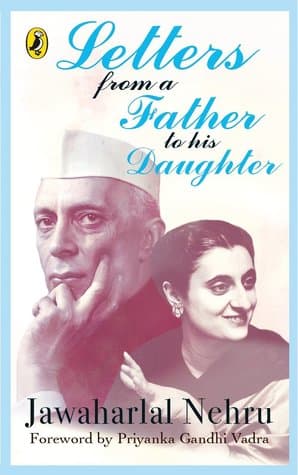
Letters from a Father to his Daughter cover
Archivist's Choice

Letters from a Father to his Daughter

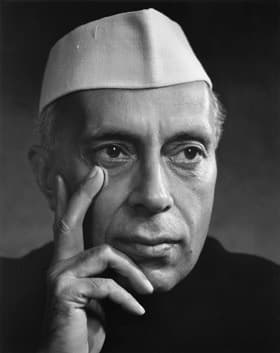
Jawaharlal Nehru (1930)

Genre

Biography / Memoir / History / Children's

Reading Time

150 min

Key Themes

See below

Track Your Reading

Sign in to track this book

In a series of personal letters, Jawaharlal Nehru explains Earth's history, humanity's beginnings, and civilization's growth to his ten-year-old daughter, Indira, turning global history into a captivating bedtime story.

Core Idea

Jawaharlal Nehru's 'Letters from a Father to His Daughter' simplifies complex historical, scientific, and philosophical ideas into an understandable, connected story for a young mind. The book shows that history is not just isolated facts but a large, developing story of human civilization and the natural world. It emphasizes how humanity, the environment, and the search for knowledge constantly interact. Through these letters, Nehru quietly promotes a view of the world based on scientific questioning, clear thinking, and a deep respect for how all life and cultures depend on each other. He encourages an independent mind that looks for truth through observation and imagination, not just rigid beliefs.
Reading time
150 min
Difficulty
Easy
✓ Read this if...
You are looking for an accessible, foundational introduction to world history, science, and philosophy, presented with a humanist perspective. Ideal for young adults or anyone seeking a broad, interconnected understanding of human civilization and the natural world.
✗ Skip this if...
You are seeking a detailed, academic historical analysis or a deep dive into specific scientific theories. This book offers a broad overview rather than specialized knowledge.

Core idea

The central argument and framework that powers the entire book.

Jawaharlal Nehru's 'Letters from a Father to His Daughter' simplifies complex historical, scientific, and philosophical ideas into an understandable, connected story for a young mind. The book shows that history is not just isolated facts but a large, developing story of human civilization and the natural world. It emphasizes how humanity, the environment, and the search for knowledge constantly interact. Through these letters, Nehru quietly promotes a view of the world based on scientific questioning, clear thinking, and a deep respect for how all life and cultures depend on each other. He encourages an independent mind that looks for truth through observation and imagination, not just rigid beliefs.

At a glance

Reading time

150 min

Difficulty

Easy

Read this if...

You are looking for an accessible, foundational introduction to world history, science, and philosophy, presented with a humanist perspective. Ideal for young adults or anyone seeking a broad, interconnected understanding of human civilization and the natural world.

Skip this if...

You are seeking a detailed, academic historical analysis or a deep dive into specific scientific theories. This book offers a broad overview rather than specialized knowledge.

Key Takeaways

1

History as a Grand, Interconnected Story

Embrace a holistic view of Earth and humanity's past, seeing connections across time and cultures.

Quote

But we have to remember that we are only a tiny part of this great world, and of the great story of the world.

Nehru skillfully shows history as an unfolding, connected story, not a dry list of dates and names. He starts with Earth's birth and the evolution of life, then moves smoothly to the rise of early human civilizations across different continents. This encourages a global view, questioning the often European-focused historical accounts common at the time. He stresses that all peoples, from ancient Egyptians to early Indian tribes and new European societies, played a part in the great human story, each adding to the progress and understa...

Supporting evidence

Nehru starts with geological time and the emergence of life, then discusses early humans, the development of agriculture, and the rise of ancient civilizations like Egypt, Mesopotamia, India, and China, often drawing parallels between their advancements.

Apply this

When learning about any historical event, seek out its broader context. Understand what was happening concurrently in other parts of the world and how earlier developments set the stage. Look for patterns and universal human experiences rather than isolated facts.
global-historyinterconnectednessholistic-perspective
2

The Humble Pursuit of Knowledge

Cultivate a lifelong curiosity and acknowledge the vastness of what remains unknown.

Quote

The world is a vast place, and there are many wonderful things in it which we do not yet know.

Nehru consistently shows intellectual humility, presenting knowledge as an ongoing journey rather than a final stop. He encourages his daughter to question, observe, and seek answers, while also acknowledging what we don't yet know. This is not about being timid, but about having a strong scientific mindset: understanding that theories change, new discoveries appear, and there is always more to learn. This view promotes a healthy doubt toward rigid beliefs and an open mind to new information. These are important for clear thinking and...

Supporting evidence

He frequently uses phrases like 'we do not know exactly,' 'scientists think,' or 'it is believed,' especially when discussing early geological formations, the origins of life, or prehistoric human behavior, showing an honest assessment of available knowledge.

Apply this

Approach new information with a blend of curiosity and critical evaluation. Don't be afraid to admit when you don't know something, and actively seek out diverse sources to deepen your understanding. Embrace the idea that learning is an endless process, always open to revision.

intellectual-humilitylifelong-learningcuriositycritical-thinking
3

The Power of Observation and Imagination

Develop your senses and mind to reconstruct the past and understand the present.

Quote

If you open your eyes and ears, you will learn a great deal.

Nehru repeatedly highlights the importance of careful observation and an active imagination for understanding the world. He encourages Indira to look at a pebble, a river, or an animal and figure out its story, connecting it to the larger story of Earth's history and evolution. This is not just about passively taking in information; it's about actively engaging with one's surroundings, using clues from the present to guess about the past, and imagining processes that happened over millions of years. This approach turns everyday experi...

Supporting evidence

He instructs Indira to look at a tiny pebble and imagine its journey from a mountain, or to observe a river and consider its role in shaping landscapes over vast periods of time, illustrating how small details hold big stories.

Apply this

Practice mindful observation in your daily life. When you see a natural object, a building, or even a piece of art, pause and ask yourself: 'What is its story? How did it come to be?' Use your imagination to reconstruct its past and understand its present significance.

observationimaginationdeductive-reasoningmindfulness
4

The Impermanence of Life and Civilizations

Recognize that change is constant, and even great empires rise and fall.

Quote

Nothing stays the same for long. The world is always changing.

A repeated idea in Nehru's letters is that existence, both biological and societal, changes. He shows how species evolve, adapt, and sometimes disappear, and how even the most powerful civilizations eventually fall, making way for new life forms and new societies. This view, though it might seem sad, is ultimately freeing. It teaches strength, flexibility, and the understanding that progress is not a straight line but a cycle, with times of growth, decline, and renewal. It gives us perspective, reminding us that our current challenges...

Supporting evidence

He discusses the extinction of dinosaurs, the rise and fall of ancient empires like Rome and Egypt, and the continuous geological changes to the Earth's surface, all as examples of constant change.

Apply this

When facing personal or societal changes, remember the vast sweep of history. Understand that flux is the natural state of things. Focus on adapting, learning, and contributing to positive evolution rather than clinging rigidly to the past.

impermanencechangeevolutionhistorical-cyclesresilience
5

The Interdependence of Humanity

Understand that our shared past and present bind us together as a single human family.

Quote

We are all brothers and sisters, and we should live as such.

Despite discussing various cultures and geographical distances, Nehru consistently brings humanity together. He stresses that early humans faced similar challenges, developed similar inventions (like fire or tools), and added to a shared human heritage. This view fights against divisive nationalisms or prejudices, creating a sense of universal kinship. By highlighting humanity's shared origins and common journey, he subtly sets the stage for a worldview where cooperation and mutual understanding are most important. This message is esp...

Supporting evidence

He discusses the universal development of early tools, the shared experience of early human migration, and the common human needs that led to similar societal structures across different continents.

Apply this

Actively seek to understand perspectives from different cultures and backgrounds. Recognize that despite superficial differences, all humans share fundamental needs, aspirations, and a common ancestry. Promote cooperation and empathy in your interactions.

human-unityglobal-citizenshipempathyinterdependenceanti-nationalism
6

The Scientific Method as a Path to Truth

Embrace rational inquiry, evidence-based reasoning, and the constant revision of knowledge.

Quote

We must try to understand things by observing them and by thinking about them, and not just by believing what others tell us.

Nehru quietly supports the scientific method throughout his letters. He explains natural events (like mountain formation or species evolution) through logical reasoning, observation, and gathering evidence, rather than relying on myths or rigid beliefs. He encourages his daughter to question, to seek explanations, and to understand that current knowledge often builds on earlier discoveries and can be improved with new evidence. This teaches a key lesson in critical thinking: to not accept information blindly but to examine it, fosteri...

Supporting evidence

His explanations of the Earth's formation, the process of evolution, and the scientific understanding of early human life are all presented using logical steps, references to geological processes, and the findings of 'scientists'.

Apply this

When presented with information, ask: 'What is the evidence for this claim? What are alternative explanations? How was this conclusion reached?' Cultivate a habit of research and verification rather than passive acceptance.

scientific-methodcritical-thinkingrational-inquiryevidence-basedskepticism
7

The Enduring Value of Learning from the Past

Study history not just for facts, but for the lessons it offers for present and future challenges.

Quote

The past helps us to understand the present and to shape the future.

Nehru's letters show that history is not a dead subject but a living guide. By looking at the rise and fall of civilizations, the reasons behind human actions, and the results of various choices, he subtly teaches lessons about governance, human nature, and societal progress. He implies that understanding past mistakes can help avoid repeating them, and recognizing past achievements can inspire future ones. This view raises history beyond mere academic exercise, making it an essential tool for informed decision-making and for developi...

Supporting evidence

While not always explicit, his discussions of the commonalities in early human struggles, the development of laws and societies, and the impact of geography on civilizations implicitly offer insights into human behavior and societal development that are relevant today.

Apply this

Before making important decisions, personal or collective, consider historical precedents. Ask: 'Has humanity faced a similar challenge before? What were the outcomes of different approaches? What can we learn from those experiences?'

historical-lessonswisdominformed-decision-makingsocietal-progresscivic-responsibility
8

The Earth as a Dynamic, Living Entity

Appreciate the constant geological and biological forces that shape our planet.

Quote

The earth is very, very old, and it has been changing all the time.

Nehru creates a strong sense of wonder for the Earth's changing nature. He describes the slow, powerful geological forces—volcanoes, earthquakes, erosion, and continental drift—that have shaped our landscapes over vast periods. He also details the incredible journey of biological evolution, from single-celled organisms to complex life forms. This view helps us understand that the world we live in is not static but a continuously changing system, subject to huge natural forces. It promotes an environmental awareness and a deeper respec...

Supporting evidence

He explains the formation of mountains, the processes of erosion by rivers, the evidence of ancient seas, and the gradual evolution of different animal and plant species over millions of years.

Apply this

When you encounter natural landscapes, consider the immense geological and biological forces that shaped them. Develop an appreciation for the vastness of Earth's history and the continuous, subtle changes occurring around us, fostering environmental mindfulness.

geologyevolutionearth-scienceenvironmental-awarenessdynamic-systems
9

The Narrative Power of Simplicity

Complex ideas can be conveyed effectively through clear, engaging, and age-appropriate language.

Quote

I hope you will like these stories, even though they are not about fairies and magic.

One of the most notable parts of Nehru's letters is his ability to simplify complex historical, scientific, and philosophical ideas into language a ten-year-old can understand. He uses comparisons, clear descriptions, and a conversational tone to make subjects like geological time, evolution, and the rise of civilizations not only understandable but also engaging. This shows that intellectual rigor does not need complicated language. It highlights the power of clear communication and empathetic teaching, proving that truly important i...

Supporting evidence

His entire writing style exemplifies this, using simple words to explain complex ideas, like describing the Earth as a 'big ball' or early humans as 'like wild animals,' making abstract concepts concrete for a child.

Apply this

When explaining complex topics, simplify your language without oversimplifying the core idea. Use relatable analogies and metaphors. Focus on clarity and engagement, tailoring your communication to your audience's understanding, whether in writing or conversation.

clear-communicationpedagogysimplicitynarrative-poweraccessible-knowledge
10

Cultivating an Independent Mind

Encourage self-reliance in thought, challenging conventional wisdom and forming one's own conclusions.

Quote

You must not take anything for granted. You must always question and think for yourself.

Beyond simply giving knowledge, Nehru's letters are a deep lesson in encouraging independent thought. He does not just present facts; he invites Indira to think about them, to form her own conclusions, and to question common stories. This approach is important for developing critical thinking skills and resisting the urge to blindly accept authority or popular opinion. It is about empowering the individual to engage with the world thoughtfully and to develop a strong inner guide for truth and understanding. This focus on independent t...

Supporting evidence

He often poses questions directly to Indira, encouraging her to consider 'what do you think happened next?' or 'how do you think they managed?' rather than simply providing answers, thus involving her in the intellectual process.

Apply this

Actively challenge your own assumptions and the assumptions of others. Seek out diverse viewpoints and engage in thoughtful debate. Prioritize understanding and forming your own well-reasoned opinions over simply agreeing with the majority or authority figures.

independent-thoughtcritical-autonomyself-reliancequestioning-authorityintellectual-freedom

Critical analysis

Notable Quotes

The past is gone, and the future is not yet. Only the present is ours, and we must make the most of it.

Reflecting on time and living in the moment for his daughter.

History, in a sense, is a record of the growth of man from the jungle to civilization.

Introducing the scope and purpose of history to Indira.

Ignorance is a terrible thing. It is the mother of many evils.

Emphasizing the importance of knowledge and education.

The world is a fascinating place, full of wonders and mysteries.

Encouraging curiosity and a sense of wonder about the world.

Great men and women have always been those who have dared to think and to act.

Inspiring his daughter to be bold and independent in thought and action.

Remember that there is nothing more beautiful than truth and justice.

Instilling moral values and the pursuit of truth.

We are all links in a great chain, and we must do our part to make the chain strong.

Discussing the interconnectedness of humanity and individual responsibility.

Science has opened up vast new fields of knowledge and has changed our lives in many ways.

Highlighting the impact and importance of scientific advancement.

It is not enough to be clever; one must also be good.

Balancing intellect with moral character.

The world changes, and we must change with it.

Emphasizing adaptability and openness to change.

Books are wonderful companions. They take us to distant lands and introduce us to new ideas.

Promoting reading and the value of literature.

Freedom is a precious thing, and we must always be ready to defend it.

Discussing the importance of liberty and its protection.

Every little thing you do has its consequences, good or bad.

Teaching about the ripple effect of actions and accountability.

To be truly happy, one must have a purpose in life.

Reflecting on the pursuit of happiness through having a clear goal.

Quiz

Test Your Knowledge

Ready to see how well you understood this book? Take our interactive quiz with 10 questions.

10
Questions
~5
Minutes
?
Best Score

Key Questions (FAQ)

The book serves as an educational and historical correspondence from Jawaharlal Nehru to his young daughter, Indira Gandhi. Nehru uses these letters to impart knowledge about the earth's formation, the evolution of life, and the development of human civilizations across the globe.

About the author