“I am Layla, and you are Majnun. We are two names for one love.”
— Layla reflecting on their intertwined destinies and shared passion.

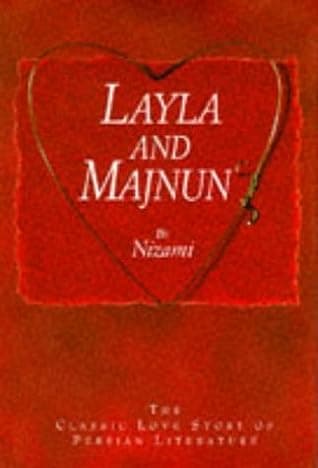
Nizami Ganjavi (1966)
Genre
Spirituality / Romance
Reading Time
250 min
Key Themes
See below
Sign in to track this book
Nizami Ganjavi's 12th-century poem 'Layla and Majnun' reworks the classic romantic fool, Majnun, into an ideal lover. His earthly love for Layla is an allegory for the soul's longing for God.
In the Arabian desert, two noble Bedouin tribes, the 'Amir and the Banu Thaqif, have children who will become legendary lovers. Qays, son of the 'Amir chieftain, is born with a special sensitivity and a poetic soul. Layla is born into the Banu Thaqif tribe, known for her beauty and grace. From their first days, they seem connected. They go to the same school where they meet, starting a pure, innocent love. This first connection is strong, setting the stage for a devotion that will define their lives and go beyond social rules. Their childhood affection grows into a powerful passion, clear to everyone who sees them.
As Qays and Layla grow up, their love becomes stronger than social customs. Qays cannot hide his feelings and starts to write and say passionate poems about Layla's beauty and his great devotion. He openly declares his love to anyone who will listen. His public displays and poems are seen as scandalous by tribal elders and bring shame to Layla's family. Qays's love becomes public, causing him to ignore his duties and lose himself in his adoration. His behavior leads to him being called 'Majnun' (meaning 'possessed by jinn' or 'madman') by his community, a name he later accepts as a sign of his unique devotion to Layla. This change marks his separation from normal society.
Wanting to make his love official, Majnun's father, a respected chieftain, asks Layla's father for his son's hand in marriage. He offers a generous dowry and wants to unite the two families. However, Layla's father, deeply ashamed by Majnun's strange behavior, his public statements, and the scandalous name he has earned, strongly rejects the proposal. He says he cannot give his daughter to a man known as a madman, whose actions have dishonored his family. This rejection crushes Majnun's hopes and makes him more sad, strengthening the social barrier between him and Layla.
The rejection of his marriage proposal pushes Majnun to the edge of sanity. Unable to bear the pain of separation and society's scorn, he leaves his home, family, and tribal duties. He takes off his fine clothes, puts on rags, and goes into the desolate wilderness, finding shelter among wild animals. In the desert, he finds a special friendship with gazelles, wolves, and other creatures, who seem to understand his sadness. He continues to write sad poetry, his verses now showing the loneliness and longing of his soul, sung to the wind and stars. His life becomes a sign of his strong, yet unfulfilled, love for Layla.
While Majnun wanders the desert, Layla stays confined within her tribe, suffering silently. Even though her heart belongs only to Majnun, her parents, wanting to protect their family's honor and her future, arrange her marriage to a rich and respected nobleman named Ibn Salam. Layla, unable to resist, is forced into a marriage she does not want. She endures the marriage physically, but her spirit remains untouched and dedicated to Majnun. She stays pure, refusing to consummate the marriage, her heart protecting her true love. This marriage further strengthens the barrier between the lovers.
News of Majnun's situation reaches many, including his father and friends, who try to bring him back to society and 'cure' him. His father goes into the desert, begging him to return, but Majnun is firm, seeing his madness as the only true way to Layla. Even the famous doctor, who tries to bleed him, finds no physical illness, only a heart full of love. Majnun meets different people, some who mock him, others who pity him, but none can change his path. He responds to every attempt with more passionate poetry, confirming his spiritual connection to Layla, which goes beyond physical presence.
One day, Layla, driven by a strong longing and the wish to see her beloved, manages to escape her watchful family and go into the wilderness, guided by stories of Majnun's location. She finds him in deep solitude, his body thin, surrounded by his animal friends. Their reunion is short and filled with the pain of their unfulfilled love. Majnun, recognizing her, is so consumed by his spiritual devotion that his interaction with her is almost otherworldly, a sign of his change. They share a moment of deep connection, a silent understanding of their shared fate, before Layla must return to her life, leaving Majnun to his spiritual communion.
Years pass, and Layla continues her life as Ibn Salam's wife, though only in name. Eventually, Ibn Salam gets sick and dies. His death frees Layla from the unhappy marriage, but it does not immediately free her to seek Majnun. By tribal custom, she must observe a period of intense mourning, keeping her at home and preventing her from leaving. This time of isolation, while outwardly a time of sadness for her husband, becomes for Layla a time of deeper thought and longing for Majnun, making her spiritual connection to him stronger even as social rules keep them apart.
The long suffering and unfulfilled love make Layla sick. Unable to bear the emotional pain any longer, she dies, her last thoughts about Majnun. News of Layla's death slowly reaches Majnun in the desert. The shock and grief are huge, yet in his deep spiritual state, it also marks the end of his earthly journey. He goes to Layla's grave, where he collapses, embracing the earth that holds her. He spends his remaining days at her tomb, speaking to her, reciting poetry, until he too dies from his grief and the power of his love, dying on her grave.
After Majnun's death on Layla's grave, their story becomes a legend, passed down. The story ends with the understanding that while their love was tragically unfulfilled on earth, their spirits are finally reunited in the afterlife. Their physical separation and suffering on earth are overcome, and they achieve a spiritual union that was always meant to be. Their tale is an eternal sign of the power of pure, strong love, and its ability to lift the human soul beyond the material world, finding its true fulfillment in a divine connection.
The Protagonist
From a sensitive young man, he transforms into an outcast 'madman' and then into a spiritual devotee whose love transcends earthly bounds, ultimately finding union in death.
The Protagonist
From an innocent girl in love, she becomes a suffering, confined woman who maintains her spiritual devotion despite societal constraints, ultimately dying of a broken heart.
The Supporting
Initially a hopeful father, he becomes a figure of sorrow and powerlessness, witnessing his son's irreversible transformation.
The Supporting
He remains steadfast in his adherence to tribal honor, inadvertently contributing to his daughter's suffering and the lovers' tragic fate.
The Supporting
He serves as a symbol of societal expectations and the barrier to true love, eventually dying without ever truly possessing Layla's heart.
The Supporting
He tries to bring his friend back from madness but eventually understands the futility of his efforts against Majnun's spiritual path.
The Supporting
He attempts to use force to unite the lovers but learns that such a profound love cannot be won through warfare.
The Supporting
She serves as a bridge between the separated lovers, facilitating their communication and understanding their unique bond.
The main theme is that Majnun's love for Layla is an allegory for the human soul's strong longing for God. Majnun's 'madness' is not earthly insanity but a divine feeling, a state of complete focus on the Beloved. His leaving worldly things, his solitude in the wilderness, and his strong devotion show the Sufi path of giving up and focusing only on the Divine. Layla, in this story, represents ultimate Truth or God, always desired but unreachable in the physical world. The lovers' suffering becomes a way to purify and grow spiritually, leading to final union in the spiritual realm.
“My love for Layla is a madness, but in that madness, I find my sanity.”
The story shows a love so deep and unconditional that it goes beyond social rules, physical separation, and even death. Majnun's love for Layla is everything; it defines who he is and his purpose. He accepts the name 'Majnun' because it means he completely gives himself to this love. Layla, in turn, stays spiritually devoted to Majnun despite her forced marriage and social limits. Their love is not about physical possession but about a deep, soul-level connection that lasts through all challenges, proving its eternal nature.
“I am Layla, and Layla is me; we are one spirit in two bodies.”
The story clearly contrasts the strict demands of Bedouin society (honor, tradition, arranged marriages) with the strong, individual desires of Qays and Layla. Layla's father's rejection of Majnun's proposal and Layla's forced marriage to Ibn Salam happen because of social pressure to keep family honor and status. Majnun's going into the wilderness is his final rejection of these limits, choosing the freedom of his love over what his community expects. This theme shows the tragic clash between being true to oneself and the strict rules of society.
“My family's honor is more important than my daughter's happiness.”
Majnun's 'madness' is a key theme, changing how we usually understand sanity. What society sees as madness — his obsessive love, his poetic statements, his leaving worldly life — is, for him, the only true way to understand and connect. His 'madness' lets him let go of the illusions of the material world and reach a higher state of spiritual awareness. In Sufi thought, 'madness' often means being overwhelmed by divine love, a state where the ego disappears, and the lover becomes a pure vessel for the Beloved.
“They call me mad, but only in this madness do I find true reason.”
A symbolic setting for spiritual transformation and escape from society.
The desert serves as a powerful symbolic setting in 'Layla and Majnun'. For Majnun, it is not merely a place of exile but a sanctuary where he can fully embrace his love and undergo a spiritual transformation. Stripped of societal expectations and material possessions, he finds a deeper connection with nature and, by extension, with the divine. The harshness and solitude of the desert mirror his internal suffering and purification, while also allowing him to develop a unique companionship with wild animals, symbolizing his transcendence of the human world. It is the crucible where his earthly love transmutes into divine longing.
Majnun's primary mode of expression and connection.
Poetry and song are central to Majnun's character and the narrative. Majnun expresses his boundless love, sorrow, and spiritual yearning through his verses, which are often sung aloud. These poetic declarations are initially what brand him as 'mad' but later become the means by which his legend spreads. His poems are not just expressions of emotion; they are prayers, meditations, and allegories that articulate the depth of his spiritual devotion. For Layla, hearing Majnun's poetry is a vital link to him, sustaining her spirit during their separation. The poetry itself becomes a living testament to their love, transcending their physical absence.
A label of societal scorn transformed into an identifier of spiritual devotion.
The name 'Majnun' (meaning 'possessed by jinn' or 'madman') is initially a label of societal scorn placed upon Qays due to his unconventional and public displays of love. However, Qays embraces this name, transforming it from an insult into an identity. For him, being 'mad' for Layla is the only sane response to such profound love. This epithet becomes a badge of honor, signifying his complete detachment from worldly reason and his singular devotion to his beloved, ultimately representing his spiritual intoxication and his unique path to truth. It distinguishes him from ordinary men and marks him as a chosen lover.
A symbol of pure, spiritual connection that transcends physical desire.
The unconsummated nature of Layla and Majnun's love, even during Layla's marriage to Ibn Salam, is a crucial plot device. It elevates their relationship beyond mere physical desire, making it a symbol of pure, spiritual connection. Layla's refusal to consummate her marriage, despite being legally bound, emphasizes her unwavering fidelity to Majnun's spirit. This lack of physical union reinforces the allegorical interpretation of their love, where the ultimate goal is not earthly gratification but a transcendent, divine reunion of souls. Their love remains pristine and untouched by the material world.
“I am Layla, and you are Majnun. We are two names for one love.”
— Layla reflecting on their intertwined destinies and shared passion.
“The heart has its own reasons, which reason knows nothing of.”
— A general observation on the irrationality of deep love, applicable to Majnun's devotion.
“True love is a madness that purifies the soul.”
— Describing Majnun's 'madness' as a spiritual journey rather than mere insanity.
“He who has not tasted love's fire knows not the true meaning of life.”
— A philosophical statement on the necessity of experiencing intense love.
“Better to live in the desert with Layla's name on my lips than in a palace without her.”
— Majnun expressing his absolute preference for love over worldly comforts.
“The pain of separation is a testament to the depth of connection.”
— Reflecting on the suffering caused by their forced separation.
“Love is a mirror that reflects your true self.”
— A deeper insight into how love reveals one's inner being.
“The world is but a fleeting shadow; only love endures.”
— A statement on the ephemeral nature of worldly things compared to eternal love.
“Every atom in my being cries out your name.”
— Majnun's intense and all-consuming obsession with Layla.
“To surrender to love is to find freedom.”
— Paradoxical nature of love's demands and its liberating effect.
“Even in absence, love weaves its invisible thread between two hearts.”
— Describing the enduring connection between Layla and Majnun despite physical separation.
“He became the desert, and the desert became him.”
— Describing Majnun's complete assimilation with his environment, driven by his love and madness.
“What is life without the beloved? A mere existence without purpose.”
— Majnun's perspective on life's meaning, entirely centered on Layla.
“The true lover sees the beloved in everything.”
— A spiritual realization of the omnipresence of the beloved through love.
Ready to see how well you understood this book? Take our interactive quiz with 10 questions.

Biography coming soon.

Kay Lynn Mangum
4.3
Stormie Omartian
4.3
Jerry Bridges
4.3
Walter Brueggemann
4.3

Rhonda Byrne
4.3
Brother Lawrence
4.3

Joseph Campbell
4.3
Unknown
4.3