BookBrief
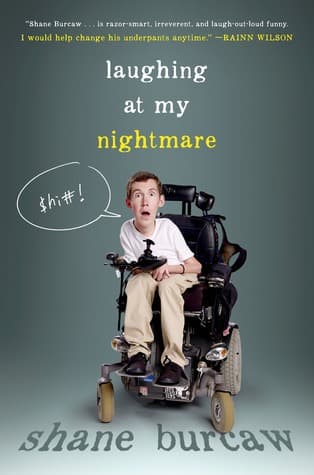
Laughing at My Nightmare cover
Archivist's Choice

Laughing at My Nightmare

Shane Burcaw (2014)

Genre

Biography / Memoir / Young Adult

Reading Time

5-6 hours

Key Themes

See below

Track Your Reading

Sign in to track this book

Shane Burcaw's memoir is an honest and funny look at living with spinal muscular atrophy, showing that even serious conditions can't stop a sharp mind and a 'you-only-live-once' attitude.

Core Idea

Shane Burcaw's memoir, "Laughing at My Nightmare," argues that humor helps people redefine life's difficulties and how society views disability. Diagnosed with spinal muscular atrophy, Burcaw believes that an irreverent and often self-deprecating comedic approach allows individuals to move past physical limits, handle awkward social interactions, and create their own fulfilling lives, free from outside expectations or pity. The book promotes the idea that a happy life is possible for anyone, regardless of their situation, if they have a strong mindset and the courage to laugh at challenges. The main point is that true strength comes from within. It is a choice to find light in darkness and to challenge what is considered 'normal.' Burcaw shows how this outlook not only improves one's own life but also teaches and inspires others to look beyond surface differences, encouraging a more accepting and understanding view of the human experience.
Reading time
5-6 hours
Difficulty
Easy
✓ Read this if...
You appreciate dark humor, are looking for an inspiring story about overcoming adversity with a positive attitude, or want to gain perspective on living with a disability.
✗ Skip this if...
You are easily offended by jokes about disability or sensitive topics, or prefer a purely academic or clinical discussion of health challenges.

Core idea

The central argument and framework that powers the entire book.

Shane Burcaw's memoir, "Laughing at My Nightmare," argues that humor helps people redefine life's difficulties and how society views disability. Diagnosed with spinal muscular atrophy, Burcaw believes that an irreverent and often self-deprecating comedic approach allows individuals to move past physical limits, handle awkward social interactions, and create their own fulfilling lives, free from outside expectations or pity. The book promotes the idea that a happy life is possible for anyone, regardless of their situation, if they have a strong mindset and the courage to laugh at challenges.

The main point is that true strength comes from within. It is a choice to find light in darkness and to challenge what is considered 'normal.' Burcaw shows how this outlook not only improves one's own life but also teaches and inspires others to look beyond surface differences, encouraging a more accepting and understanding view of the human experience.

At a glance

Reading time

5-6 hours

Difficulty

Easy

Read this if...

You appreciate dark humor, are looking for an inspiring story about overcoming adversity with a positive attitude, or want to gain perspective on living with a disability.

Skip this if...

You are easily offended by jokes about disability or sensitive topics, or prefer a purely academic or clinical discussion of health challenges.

Key Takeaways

1

Humor as a Coping Mechanism

Embracing laughter to navigate life's most challenging circumstances.

Quote

If I didn't laugh at my own life, I'd probably just cry all the time. And who wants to do that?

Burcaw shows that humor is not just a small distraction but an important coping method. Facing a progressive, life-threatening disease like spinal muscular atrophy (SMA), he chooses to find the humor in his daily struggles. This is not about ignoring pain or difficulty, but about seeing it differently, making it less scary and easier to handle. His wit helps him calm uncomfortable situations, connect with others, and keep a strong sense of purpose and hope. It is a way to fight despair, proving that even in the toughest parts of life,...

Supporting evidence

Shane recounts numerous anecdotes where his self-deprecating humor breaks tension, such as awkward social interactions, explaining his condition to strangers, or even discussing intimate details of his care.

Apply this

Cultivate a habit of finding humor in minor inconveniences or personal struggles. Practice self-deprecating jokes (when appropriate) to lighten moods and build rapport. View challenges not just as obstacles, but as potential material for future comedic reflection.


coping-mechanismshumor-therapyresilience
2

Redefining 'Normal'

Challenging societal norms and embracing a unique path.

Quote

My 'normal' might look different than yours, but it's still just my normal.

Burcaw's memoir shows that 'normal' is an idea often shaped by those without disabilities. He lives a life that goes against what people might expect for someone with his physical limits, from having a romantic relationship to traveling and building a career. He does not try to be 'normal' in the traditional sense. Instead, he creates a fulfilling life on his own terms. This encourages readers to question their own ideas of what a 'good' or 'successful' life looks like, emphasizing that individual happiness matters more than fitting i...

Supporting evidence

His relationship with his girlfriend, Anna, is a central theme, openly discussing the physical and emotional intricacies that challenge typical romantic narratives. His pursuit of higher education and professional aspirations also highlight this.

Apply this

Identify areas where you might be conforming to societal expectations rather than pursuing your true desires. Actively challenge your own biases about what others 'should' or 'can' do based on their circumstances. Celebrate individuality in yourself and others.

disability-rightssocial-inclusionidentity-formation
3

The Power of Perspective

Shifting your viewpoint can transform your reality.

Quote

It's all about how you look at it. You can either focus on what you can't do, or you can focus on what you can.

A main message of the book is how much perspective can change things. Burcaw could easily focus on the limits SMA puts on him, but he consciously chooses to focus on what he can do and the unique experiences his condition brings. This is not naive optimism, but a deliberate mental practice. By seeing challenges as chances or simply as parts of his unique journey, he stays positive and controls his emotional state. This teaches that while circumstances may be fixed, how we interpret and respond to them is always within our control, fun...

Supporting evidence

He often contrasts how he perceives his situation versus how others (strangers, doctors) sometimes react with pity, illustrating the stark difference in internal experience based on perspective.

Apply this

When facing a difficult situation, consciously list three things you can still do or three positive aspects of the situation. Practice gratitude for what you have, rather than lamenting what you lack. Seek out different viewpoints from others to broaden your own perspective.

cognitive-reframingmindfulnesspositive-psychology
4

Navigating Awkwardness with Grace

Turning uncomfortable social situations into opportunities for connection.

Quote

Awkward moments are inevitable, especially for me. The trick is to lean into them, not run away.

Burcaw's life is full of situations most people would find very awkward, from explaining his condition to new people to dealing with physical intimacy. Instead of avoiding these moments, he faces them directly, often using humor to ease tension. This approach not only makes interactions smoother but also teaches others and builds real connections. His willingness to be open about his experiences is a strong lesson in handling social discomfort, suggesting that honesty and humor work better than avoidance or pretense.

Supporting evidence

He humorously describes the 'limp handshake' dilemma and how he developed strategies to manage it, or the uncomfortable questions strangers sometimes ask, which he answers with wit rather than offense.

Apply this

When you encounter an awkward social situation, instead of panicking, try to acknowledge the elephant in the room with a lighthearted comment. Practice being more open about minor personal quirks or challenges to build deeper connections. Don't be afraid to ask clarifying questions if you're unsure how to proceed in an interaction.

social-intelligenceempathycommunication-skills
5

Living Life Without Regret

Embracing a 'YOLO' philosophy when facing an uncertain future.

Quote

When you know your time might be limited, you learn to make every moment count. No regrets, just living.

Given SMA's progressive nature, Burcaw is always aware of his mortality and the chance that his physical abilities will lessen. This awareness, instead of causing fear, drives a strong 'you-only-live-once' (YOLO) attitude. He prioritizes experiences, relationships, and pursuing his passions with an urgency many people without disabilities often lack. This is a powerful reminder to all readers to live fully, take calculated risks, and prioritize what truly matters, rather than delaying happiness or dreams because of fear or complacency...

Supporting evidence

His decision to travel, pursue a serious relationship, and commit to his writing career despite his physical challenges and the uncertainties of his health.

Apply this

Make a list of things you'd regret not doing if your time were limited and start taking steps to accomplish them. Say 'yes' to new experiences, even if they seem daunting. Regularly reflect on your priorities and ensure your actions align with your values.

existentialismcarpe-diemlife-purpose
6

The Unsung Heroes of Caregiving

Acknowledging the immense dedication and sacrifice of those who provide support.

Quote

My life is possible because of the people who literally help me live it, every single day.

While the memoir is mainly Shane's story, it shows the important role of his caregivers, especially his parents. Their tireless dedication, emotional strength, and practical help are the foundation for Shane's independence and adventures. This is a vital recognition of the often-unseen sacrifices made by family members and professional caregivers in supporting individuals with significant physical needs. It encourages readers to appreciate the unseen work and deep love involved in caregiving, building greater empathy for both the pers...

Supporting evidence

Shane frequently mentions the daily routines and assistance provided by his parents, from helping him eat and shower to driving him everywhere. He also touches on the challenges and humor involved in having personal care assistants.

Apply this

Express gratitude to the caregivers in your life, whether professional or familial. Offer practical support or respite to friends or family members who are caregivers. Educate yourself on the challenges faced by caregivers and advocate for better support systems for them.

caregiver-supportfamily-dynamicsempathy
7

Beyond Physical Limitations

True strength and identity reside in character, not physicality.

Quote

My body might be broken, but my spirit isn't. That's where the real me lives.

Burcaw's story powerfully challenges the societal tendency to link physical ability with worth or capability. Despite major physical limits, he shows great intelligence, emotional depth, and a lively personality. His story stresses that a person's true identity, strength, and potential come from their character, mind, and spirit, not from how their body functions. This encourages readers to look beyond surface appearances and physical traits when judging themselves and others, promoting a more inclusive and human-focused understanding...

Supporting evidence

His sharp wit, engaging writing style, and the depth of his reflections throughout the book are clear evidence of his intellectual and emotional strength, independent of his physical state.

Apply this

Challenge your own internal biases about people with disabilities. Focus on developing your intellectual curiosity, emotional intelligence, and character traits rather than solely on physical prowess. Seek out diverse voices and perspectives to broaden your understanding of human potential.

inner-strengthself-worthdisability-advocacy
8

The Importance of Self-Advocacy

Taking charge of your narrative and demanding respect.

Quote

If I don't speak up for myself, who will?

Throughout his memoir, Burcaw consistently advocates for himself, whether correcting misunderstandings, asserting his independence, or simply asking to be treated as a capable adult. He does not wait for others to understand his needs or respect his boundaries; he actively communicates them. This is an important lesson in personal empowerment, especially for people who might feel overlooked or misunderstood. Self-advocacy is not about being aggressive, but about clearly and confidently stating one's needs, desires, and rights. It is a...

Supporting evidence

His humorous but firm responses to intrusive questions from strangers, his clear communication with caregivers, and his determination to live independently as much as possible, all demonstrate self-advocacy.

Apply this

Practice clearly communicating your needs and boundaries in various situations. Learn to say 'no' when necessary. Research your rights and resources if you feel marginalized in any area of your life. Don't be afraid to correct misinformation about yourself or your community.

empowermentassertivenesscommunication

Critical analysis

Notable Quotes

I can’t walk. I can’t move my arms. I can’t even scratch my own nose. But I can laugh. And I can make other people laugh. And that, to me, is a superpower.

Reflecting on his physical limitations and finding strength in humor.

My disability is a part of me, but it doesn’t define me. My sense of humor, my intelligence, my kindness—those are the things that define me.

Emphasizing his identity beyond his physical condition.

Life isn't about waiting for the storm to pass. It's about learning to dance in the rain.

A common inspirational quote, but given personal weight by his circumstances.

Sometimes, the biggest challenges in life are also the biggest opportunities for growth.

Considering how his disability has shaped his perspective and life.

If you can find humor in the darkest moments, you can get through anything.

Highlighting the power of humor as a coping mechanism.

People often assume that because I'm in a wheelchair, I'm also deaf or mentally impaired. It's frustrating, but I try to use it as an opportunity to educate.

Discussing misconceptions people have about his disability.

My biggest fear isn't dying; it's living a life without meaning.

Reflecting on his purpose and desire for a meaningful existence.

Laughter is truly the best medicine. It's free, it has no side effects, and it works every time.

Advocating for the therapeutic benefits of humor.

Don't let anyone tell you what you can or cannot do. Only you know your own limits, and even those are often just self-imposed.

Encouraging self-belief and breaking down perceived barriers.

Being different isn't a curse; it's a superpower. It allows you to see the world from a unique perspective.

Embracing his uniqueness and the advantages it brings.

The greatest lesson my disability has taught me is empathy.

Explaining how his experiences have fostered a deeper understanding of others.

It's okay to be sad, angry, or frustrated. But don't let those feelings consume you. Find a way to move forward, even if it's just one small step at a time.

Acknowledging difficult emotions while promoting resilience.

My life isn't a tragedy. It's an adventure.

Challenging the common perception of his life due to his condition.

Quiz

Test Your Knowledge

Ready to see how well you understood this book? Take our interactive quiz with 10 questions.

10
Questions
~5
Minutes
?
Best Score

Key Questions (FAQ)

'Laughing at My Nightmare' is a memoir by Shane Burcaw, a young man living with spinal muscular atrophy. He uses acerbic wit and humor to describe the everyday challenges and unique experiences of his life, from relationships to navigating a world not always built for him.

About the author