“Sometimes the only way to find yourself is to get lost.”
— Mariah struggles to understand her daughter's visions and her own faith.

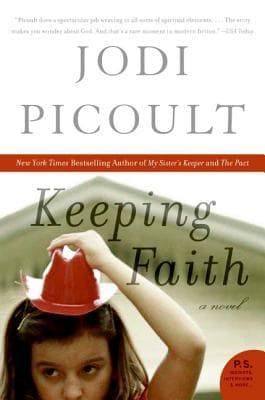
Jodi Picoult (1999)
Genre
Spirituality / Romance
Reading Time
10-12 hours
Key Themes
See below
Sign in to track this book
A skeptical lawyer's life is upended when her seven-year-old daughter begins to manifest stigmata and speak to an invisible 'angel,' forcing her to confront the blurred lines between faith, delusion, and the miraculous.
Mariah White, a recently divorced architect in New Hampshire, struggles with her personal life and a custody battle over her seven-year-old daughter, Faith. One day, while Mariah is distracted, Faith falls from a tree house. She floats down unharmed instead of hitting the ground. This impossible event, witnessed by Mariah and her ex-husband Colin, escalates quickly when Faith shows more inexplicable abilities. She heals a bird, speaks an ancient language, and exhibits stigmata. The media descends upon their small town, along with religious zealots and skeptics, turning Mariah's life upside down as some hail Faith as a modern-day messiah.
The Vatican learns of Faith's alleged miracles and sends Matt Royston, a former priest and now an investigator specializing in religious phenomena, to assess the events. Matt, a man of science and logic, approaches the case skeptically, meticulously documenting every detail. At the same time, Mariah, overwhelmed by public scrutiny and the growing demands on Faith, consults a lawyer, Jordan McAfee, to protect her daughter from exploitation. Jordan advises Mariah on the legal implications of Faith's public profile, especially regarding the separation of church and state, and the potential for a custody battle with Colin, who now sees Faith's abilities as a path to fame and fortune.
As Matt Royston conducts his investigation, Faith's extraordinary abilities continue to appear, challenging his scientific framework. She performs healing acts, speaks in tongues, and shows knowledge beyond her years, often relaying messages that seem to come from a divine source. Public fascination grows, with pilgrims flocking to Mariah's home seeking blessings and cures. Mariah tries to shield Faith from the overwhelming attention, but the child seems to embrace her role, though innocently. The local church, initially cautious, begins to see Faith as a potential sign of divine intervention, further complicating Mariah's efforts to maintain a normal life for her daughter.
Colin White, Faith's estranged father, sees his daughter's newfound celebrity as an opportunity. He files for full custody, arguing that Mariah is an unfit mother unable to nurture Faith's spiritual gifts. Colin, motivated by a mix of genuine belief and a desire for financial gain and fame, sees Faith as a path to a better life for himself. Mariah, with Jordan McAfee's help, prepares for a grueling custody battle, emphasizing Faith's need for a normal childhood away from the circus of religious fanatics and media. The court proceedings become a public spectacle, forcing Mariah to defend her parenting decisions and Faith's best interests against a backdrop of divine claims.
During his investigation, Matt Royston finds himself drawn to Mariah, admiring her strength and devotion to Faith. He also begins to question his own rigid skepticism and the reasons he left the priesthood. Spending time with Mariah and observing Faith's inexplicable abilities forces Matt to confront the limitations of his scientific understanding and the possibility of genuine miracles. He struggles with his professional duty to remain objective and his growing personal feelings for Mariah, which complicate his investigation and challenge his long-held beliefs about faith, reason, and the divine. Their shared concern for Faith creates a bond between them.
The custody trial for Faith becomes a battleground of science versus faith. Colin's lawyers present testimonies from religious leaders and individuals who claim to have witnessed Faith's miracles, portraying her as a divine child. Mariah's legal team, led by Jordan McAfee, brings in psychologists and medical experts who try to explain Faith's phenomena through psychological or physiological means, suggesting potential delusions or mass hysteria. Matt Royston is called to testify, providing his objective, yet increasingly conflicted, observations. The court struggles to reconcile the tangible evidence with the intangible claims of divinity, making a fair judgment incredibly difficult.
In a key moment during the trial, Faith herself explains her abilities. She reveals she is not God, but a vessel for an angel named Archangel Michael, who has taken refuge within her. This angel, Faith explains, was cast out of heaven and seeks redemption by performing good deeds through her. This revelation adds another layer of complexity to the already bewildering situation, challenging everyone's understanding of her powers and identity. The court, the media, and even Mariah are left to grapple with this extraordinary claim, which further blurs the lines between mental illness, divine intervention, and a child's imagination.
Mariah initially struggles deeply with Faith's claim of being possessed by an angel. Her rational mind resists such an unbelievable explanation, fearing it's a sign of mental distress or a coping mechanism for the immense pressure Faith is under. She desperately wants to protect her daughter from ridicule and potential harm. However, as she witnesses more inexplicable events and sees the genuine conviction in Faith's eyes, Mariah begins to question her own skepticism. Ultimately, driven by her unconditional love, Mariah chooses to believe and accept her daughter's extraordinary reality, whether it's truly divine or a profound psychological phenomenon.
The court delivers a complex verdict, attempting to navigate the unprecedented circumstances of Faith's case. Recognizing the potential for exploitation, but also the love Faith has for her mother, the judge grants Mariah custody, with strict conditions regarding Faith's public appearances and the involvement of religious groups. The verdict emphasizes Faith's right to a normal life and protection from undue influence. The decision brings temporary relief to Mariah, but the underlying questions about Faith's identity and abilities remain. The media frenzy slowly dissipates, but the family is left to rebuild their lives in the shadow of Faith's extraordinary past.
After the trial, Mariah, Faith, and Matt Royston try to build a new, quieter life together. Matt, having reconciled his faith and reason, decides to stay with Mariah, offering support and stability. They move to a secluded location, hoping to give Faith the normalcy she deserves. While the immediate pressure subsides, the mystery of Faith's abilities is never fully resolved. Occasional subtle signs suggest that the 'angel' or some extraordinary force may still be present within Faith, leaving Mariah and Matt to ponder the true nature of miracles, faith, and the impact Faith has had on their lives and beliefs. The ending offers peace but acknowledges that some questions may never have definitive answers.
The Protagonist
Mariah transforms from a skeptical, rationalist mother into one who, despite her lingering doubts, accepts and fiercely defends her daughter's extraordinary reality.
The Central Figure
Faith moves from an ordinary child to a controversial figure, seemingly embracing her divine role while retaining her childlike innocence.
The Supporting Character
Matt begins as a jaded skeptic and investigator, but his experiences with Faith and Mariah lead him to a renewed, more nuanced understanding of faith and love.
The Antagonist
Colin remains largely static, driven by self-interest and attempting to exploit Faith for personal gain throughout the story.
The Supporting Character
Jordan remains a steadfast and reliable legal advocate, guiding Mariah through the legal complexities without significant personal arc.
The Mentioned/Spiritual Entity
The angel's arc is internal, seeking redemption through Faith's actions, though its ultimate fate is left ambiguous.
This is the central conflict of the novel, explored through Mariah's skepticism and Matt's scientific investigation confronting Faith's undeniable miracles. Mariah, an architect, relies on logic and tangible evidence, initially dismissing Faith's abilities as psychological or coincidental. Matt, a former priest and Vatican investigator, uses scientific methods to authenticate or debunk miracles, yet finds his own beliefs challenged. The book forces characters and readers to question the line between the explainable and the miraculous, and whether belief requires proof or simply acceptance. For instance, Matt's internal struggle after witnessing Faith heal the bird directly confronts his scientific training.
“Maybe what we believe is all that matters. Not what's real.”
The novel explores what constitutes a miracle and whether divinity can appear in a modern, secular world. Faith's unexplained abilities — floating, healing, speaking ancient languages, and stigmata — are presented as undeniable phenomena, yet the characters offer various interpretations: divine intervention, psychological delusion, or even demonic possession. The story challenges traditional religious definitions, particularly when Faith claims she is merely a vessel for an exiled angel seeking redemption, rather than a direct manifestation of God. This theme is explored in the courtroom scenes where experts debate the source of Faith's powers.
“How can you be a miracle, when you're just a little girl?”
Mariah's strong determination to protect Faith from public scrutiny and exploitation is a driving force. She battles her ex-husband, Colin, who sees Faith's 'gifts' as a way to fame and fortune, and fights against religious groups eager to claim Faith as their own. The theme highlights the struggle of parents to safeguard their children's innocence and well-being when external forces, whether media, religion, or personal ambition, threaten to consume them. Mariah's efforts to provide Faith with a normal childhood amidst extraordinary circumstances are central to this theme, such as when she tries to limit Faith's public appearances.
“My job is to protect her, not to parade her.”
The theme of redemption is embodied by Archangel Michael, who, through Faith, seeks to atone for past transgressions and regain entry into heaven. This struggle for redemption extends to human characters as well. Matt Royston, a former priest, grapples with his own past and the reasons he left the church, finding a new form of faith and purpose through his relationship with Mariah and Faith. The novel suggests that redemption is not always about grand gestures but can be found in acts of love, protection, and personal growth, such as Matt finding peace in his new life with Mariah and Faith.
“To err is human. To forgive, divine.”
Many characters in the novel seek meaning, whether through religious belief, scientific understanding, or personal connection. Mariah, divorced and struggling, seeks to define her purpose as a mother. Matt, adrift after leaving the priesthood, searches for a new framework for his life. Even the crowds of people who flock to Faith are searching for hope, healing, or a sign of something greater than themselves. Faith, an embodiment of the inexplicable, makes everyone confront their deepest questions about life, death, and their place in the universe, ultimately finding a form of belonging in their shared humanity and love.
“We all want to believe in something that makes sense of the senseless.”
The true nature of Faith's abilities and the 'angel' is left open to interpretation.
While Faith claims to be a vessel for Archangel Michael, the narrative never definitively confirms this. Her 'revelation' could be interpreted as a child's coping mechanism, a deep psychological manifestation, or genuine divine intervention. This ambiguity forces the reader to engage with the central theme of faith vs. reason, mirroring the characters' struggles. It prevents the story from becoming a purely supernatural tale, allowing for multiple interpretations of the events and keeping the 'miracles' grounded in a realm of possible, albeit extraordinary, human experience.
The legal dispute over Faith mirrors the larger philosophical debate about her nature.
The legal custody battle between Mariah and Colin serves as a powerful metaphor for the larger societal and philosophical debate surrounding Faith's alleged divinity. The courtroom becomes an arena where science (Mariah's defense, Jordan McAfee's pragmatism) clashes with faith (Colin's claims, religious testimonies). The judge's struggle to render a decision reflects humanity's difficulty in reconciling the tangible with the intangible, the rational with the miraculous. It frames the central conflict in a concrete, high-stakes scenario, making the abstract questions profoundly personal.
A character whose initial skepticism is gradually eroded by undeniable evidence.
Matt Royston's character arc embodies the classic skeptic-turned-believer trope. As a former priest and Vatican investigator, he is initially the voice of reason and scientific inquiry. His meticulous documentation and logical approach are meant to debunk the miracles. However, by placing him in close proximity to Faith and allowing him to witness events firsthand, the narrative systematically challenges his rigid worldview. His transformation serves to validate the extraordinary nature of Faith's abilities for the reader, as if to say, 'If even this hardened skeptic is moved, there must be something real here.'
Specific religious symbols and phenomena used to authenticate Faith's claims.
The inclusion of specific, historically recognized religious phenomena like stigmata (spontaneous wounds mimicking Christ's crucifixion injuries) and xenoglossia (speaking in an ancient, unlearned language) serves as powerful plot devices. These aren't vague 'powers' but highly specific manifestations that resonate within a religious context. They lend a sense of authenticity and gravity to Faith's claims, making it harder for characters (and readers) to dismiss her abilities as mere tricks or delusions. These details anchor the story in a tradition of miraculous events, enhancing the central mystery.
“Sometimes the only way to find yourself is to get lost.”
— Mariah struggles to understand her daughter's visions and her own faith.
“Miracles are not contrary to nature, but only contrary to what we know about nature.”
— The lawyer, Mariah, contemplates the scientific and spiritual explanations for Faith's abilities.
“Faith is not about seeing to believe. It's about believing to see.”
— Mariah grapples with her skepticism versus the undeniable events surrounding her daughter.
“Love is not a feeling, it's a decision.”
— Mariah reflects on her complicated relationship with her ex-husband, Colin.
“How do you explain something that defies all explanation?”
— Mariah faces the challenge of defending Faith in court, where logic often trumps the miraculous.
“Perhaps the greatest miracles are the ones we don't even recognize.”
— The narrative suggests that divine intervention can be subtle and overlooked in everyday life.
“Grief is like the ocean; it comes in waves, ebbing and flowing. Sometimes the water is calm, and sometimes it is overwhelming. All we can do is learn to swim.”
— Mariah deals with the lingering pain of past losses and the emotional turmoil of the present.
“Sometimes the greatest act of faith is to let go.”
— Mariah considers surrendering control in her efforts to protect Faith.
“The hardest part of loving someone is knowing when to hold on, and when to let go.”
— Mariah navigates her feelings for both Colin and Ian, her current boyfriend.
“You can't choose what you believe, but you can choose how you act on it.”
— Characters are forced to make decisions based on their beliefs, even when those beliefs are challenged.
“What if God isn't a person, but a force, a feeling, a connection?”
— Mariah contemplates different interpretations of the divine, moving beyond traditional religious dogma.
“Every parent wants to protect their child, but sometimes the best protection is to allow them to be who they are.”
— Mariah struggles with whether to shield Faith from public scrutiny or embrace her unique gifts.
“Even the most ordinary life can hold extraordinary moments.”
— The story emphasizes that the miraculous can appear in the most unexpected places.
Ready to see how well you understood this book? Take our interactive quiz with 10 questions.
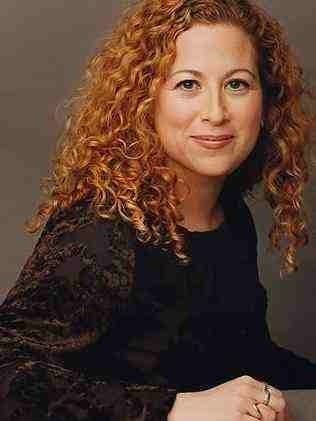
Biography coming soon.

Kay Lynn Mangum
4.3
Stormie Omartian
4.3
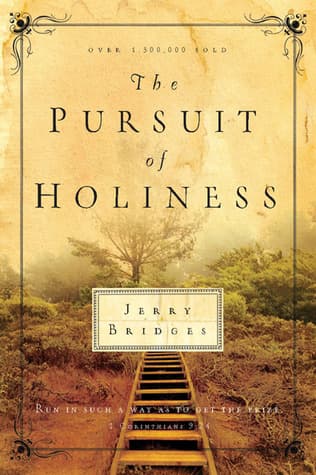
Jerry Bridges
4.3
Walter Brueggemann
4.3
Rhonda Byrne
4.3
Brother Lawrence
4.3

Joseph Campbell
4.3

Unknown
4.3