BookBrief
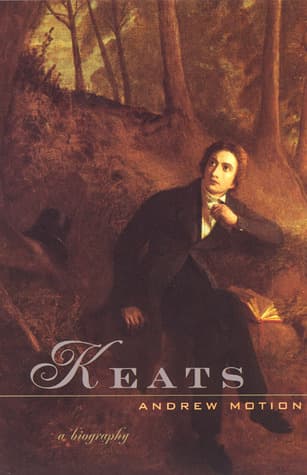
Keats cover
Archivist's Choice

Keats

Andrew Motion (1998)

Genre

Biography / History

Reading Time

12-15 hours (approx. 656 pages)

Key Themes

See below

Track Your Reading

Sign in to track this book

Andrew Motion's biography removes layers of myth to show a "skinned alive" Keats, a Romantic genius whose letters, like jazz, pulse with the "headlong charge" of a mind moving through the social and political worlds of his time.

Core Idea

Andrew Motion's "Keats" offers a full and personal look at John Keats's life, moving past the common image of a sickly poet. It shows a man of great intellect, political awareness, and passionate depth. The book argues that Keats was not just a sensitive person but a sharp observer of his society, a brilliant letter-writer whose prose was as spontaneous and insightful as his poetry. His short life was shaped by deep love, loss, and an awareness of his own death, which influenced his lasting poetry. Motion highlights how Keats, despite illness and criticism, pushed the limits of poetry with a mind that was anything but delicate, challenging the 'Cockney School' label and securing his place as a groundbreaking writer.
Reading time
12-15 hours (approx. 656 pages)
Difficulty
Medium
✓ Read this if...
You want a definitive, nuanced, and beautifully written biography of John Keats that delves into his intellectual, social, and emotional life, challenging common misconceptions and offering deep insights into his poetry and letters.
✗ Skip this if...
You are looking for a quick overview of Keats's life or a purely literary analysis of his poems without significant biographical context. This is a detailed, lengthy academic work.

Core idea

The central argument and framework that powers the entire book.

Andrew Motion's "Keats" offers a full and personal look at John Keats's life, moving past the common image of a sickly poet. It shows a man of great intellect, political awareness, and passionate depth. The book argues that Keats was not just a sensitive person but a sharp observer of his society, a brilliant letter-writer whose prose was as spontaneous and insightful as his poetry. His short life was shaped by deep love, loss, and an awareness of his own death, which influenced his lasting poetry. Motion highlights how Keats, despite illness and criticism, pushed the limits of poetry with a mind that was anything but delicate, challenging the 'Cockney School' label and securing his place as a groundbreaking writer.

At a glance

Reading time

12-15 hours (approx. 656 pages)

Difficulty

Medium

Read this if...

You want a definitive, nuanced, and beautifully written biography of John Keats that delves into his intellectual, social, and emotional life, challenging common misconceptions and offering deep insights into his poetry and letters.

Skip this if...

You are looking for a quick overview of Keats's life or a purely literary analysis of his poems without significant biographical context. This is a detailed, lengthy academic work.

Key Takeaways

1

A Poet 'Skinned Alive'

Keats's genius was deeply intertwined with his acute sensitivity to suffering and the harsh realities of his era.

Quote

This portrait, stripped of its layers of varnish and restored to glowing colours, should last us for another generation.

Motion's biography redefines Keats, moving past the image of a delicate poet to show a man deeply affected by his era's social and political unrest, as well as by personal tragedy and illness. This 'skinned alive' quality was not just a weakness but a forge for his art. His empathy, his strong reactions to the world, and his constant confrontation with death fueled the intensity and emotional depth of his poetry. Motion argues that understanding Keats's suffering — from losing family to tuberculosis and the harsh medical practices of ...

Supporting evidence

Motion meticulously details Keats's personal losses (parents, brother Tom) and his own battle with consumption, alongside the often barbaric medical treatments he endured. The biographer emphasizes how these experiences shaped the dark undertones and existential questions within his odes and longer poems.

Apply this

When engaging with art, particularly poetry, look beyond superficial beauty to understand the deeper biographical and historical contexts that shaped its creation. Recognize that profound sensitivity, though often painful, can be a wellspring of creative genius.

romanticismbiography-as-contextsuffering-and-creativity
2

The Social and Political Keats

Motion re-situates Keats within the turbulent social and political landscape of early 19th-century England, challenging previous purely aesthetic interpretations.

Quote

Unlike previous biographers, Motion pays close attention to the social and political worlds Keats inhabited.

A key part of Motion's work is its difference from earlier biographies that often put Keats in an artistic bubble. Motion firmly places Keats within the lively, often unstable, social and political currents of his time. This includes the worries of post-Napoleonic Britain, the growing radicalism, class differences, and literary feuds common in that period. Keats was not an isolated poet; he was aware of and, to varying degrees, involved in the intellectual and public discussions around him. Understanding these external pressures and i...

Supporting evidence

Motion explores Keats's connections to figures like Leigh Hunt and the 'Cockney School' of poets, who were politically charged and often targets of conservative critics. He also discusses the impact of events like the Peterloo Massacre on the consciousness of writers of the era, even if Keats didn't directly pen political verse.

Apply this

When analyzing historical figures, especially artists, avoid the temptation to view them in isolation. Actively seek to understand the broader societal, political, and cultural forces that shaped their lives and work. This adds depth and relevance to their contributions.

romantic-era-politicsliterary-criticismsocial-context
3

The Jazz-like Improvisation of Letters

Keats's inimitable letters offer a unique window into his 'headlong charge' of thought, revealing a mind in dynamic motion.

Quote

[Motion] listens for the 'freely associating inquiry and incomparable verve and dash,' the 'headlong charge,' of Keats's jazzlike improvisations, which give us, like no other writing in English, the actual rush of a man thinking, a mind hurtling forward unpredictably and sweeping us along.

Motion, along with critics like Dickstein, points out the unique quality of Keats's letters, calling them 'jazz-like improvisations.' Unlike formal essays or carefully written poems, these letters capture the raw, unedited flow of Keats's mind and feelings. They are not just factual accounts but dynamic explorations of ideas, feelings, and philosophical concepts, often expressed with breathless energy and quick shifts in thought. This 'headlong charge' offers unmatched insight into the poet's inner world, his intellectual growth, his ...

Supporting evidence

Motion frequently quotes from Keats's letters, demonstrating their 'freely associating inquiry' and how they often prefigure or elaborate on themes found in his poetry. The famous 'Negative Capability' letter is a prime example of this intellectual exploration.

Apply this

For writers and thinkers, embrace informal writing (journals, letters, freewriting) as a vital space for experimentation and the unfiltered development of ideas. Recognize that the most profound insights often emerge from unconstrained mental exploration, not just formal composition.

negative-capabilityepistolary-writingcreative-process
4

The Miracle of the 'Single Month'

Keats's most cherished poems emerged from an incredibly concentrated period of creative genius, defying his declining health.

Quote

a genius who wrote in a single month all the poems we cherish

One of the most surprising parts of Keats's career, detailed by Motion, is the very short time in which he wrote many of his most famous and lasting works. The spring of 1819, often called his 'great year,' saw the creation of the major odes ('Ode to a Nightingale,' 'Ode on a Grecian Urn,' 'To Autumn,' 'Ode on Melancholy,' 'Psyche,' 'Indolence') and parts of 'Lamia' and 'Hyperion.' This burst of creativity, happening while his health was already declining and his personal life was full of worry, is remarkable. Motion stresses that thi...

Supporting evidence

Motion provides a detailed chronological account of Keats's poetic output in 1819, demonstrating how these masterpieces were composed in rapid succession, often during periods of significant personal stress and financial worry.

Apply this

Recognize that creative breakthroughs can often occur in concentrated bursts after periods of sustained effort and preparation. Don't underestimate the power of focused, intense work, even when external circumstances are challenging.

poetic-outputcreative-burstromantic-odes
5

Love, Loss, and Fanny Brawne

Keats's passionate and often tormented relationship with Fanny Brawne was a central force in his later life and poetry.

Quote

His love for Fanny Brawne was a deep, consuming fire, intensified by the knowledge of his impending death.

Motion adds a touching depth to Keats's relationship with Fanny Brawne, moving past simple portrayals of her as either muse or obstacle. He shows their love as a complex, intense, and ultimately tragic affair, deeply tied to Keats's failing health and financial struggles. The letters to Fanny are some of his most raw and emotional, showing both his deep devotion and his agonizing fear of leaving her. This relationship was not just a romantic side story but a central drama of his final years, influencing his emotional state, his art, a...

Supporting evidence

Motion extensively quotes from Keats's letters to Fanny Brawne, which vividly convey his passionate love, his jealousy, his despair, and his longing. He also explores the societal pressures that prevented their immediate marriage.

Apply this

Understand that intense personal relationships, with all their joys and sorrows, are often profound wellsprings of human creativity and motivation. Acknowledge the complexity and multi-faceted nature of love in biographical contexts.

romantic-lovebiographical-influencetragedy
6

The Torment of Early Medicine

Keats's suffering was exacerbated by the primitive and often harmful medical practices of the 19th century.

Quote

a victim who was tormented by the best doctors of the age.

Motion clearly shows the harsh reality of 19th-century medicine, especially concerning tuberculosis, which Keats suffered from. Far from offering comfort, the available treatments often caused more pain. Bleeding, purging, mercury, and strict diets were common, yet ineffective, methods that further weakened the patient and caused great discomfort. Motion emphasizes that Keats's physical decline was due not only to the disease itself but also to the well-meaning but ultimately harmful attempts to cure him. This part of the biography hi...

Supporting evidence

Motion details the specific medical procedures and remedies prescribed to Keats by his various physicians, illustrating their ineffectiveness and the physical distress they caused, particularly during his final illness in Rome.

Apply this

When studying historical periods, consider the practical limitations and challenges of daily life, such as healthcare, to fully appreciate the context in which individuals lived and created. This provides a more realistic and empathetic understanding of their struggles.

19th-century-medicinetuberculosishistorical-context
7

A Sense of Impending Doom

Keats lived with a pervasive awareness of his own mortality, which profoundly shaped his artistic output and philosophical inquiries.

Quote

I have been in such a state of health that I have not been able to write, and I am afraid to write. I have a firm conviction that I shall die.

Motion carefully tracks Keats's growing awareness of his own death, especially after seeing his brother Tom die from tuberculosis. This was not a vague fear but a real, often weakening, feeling that filled his later poetry with a unique urgency and sad beauty. The 'vale of soul-making' and the exploration of beauty, truth, and impermanence in his odes gain deep meaning when understood as the thoughts of a young man acutely aware of his limited time. This sense of coming doom was not just a personal tragedy but a spark for his deep phi...

Supporting evidence

Motion cites numerous instances in Keats's letters where he expresses his fears of consumption and his conviction that he would die young, often linking these premonitions to his creative drive and his desire to leave a lasting poetic legacy.

Apply this

Reflect on how an awareness of mortality can sharpen one's focus and urgency in pursuing creative or meaningful endeavors. Consider how confronting existential realities can lead to deeper artistic or philosophical insights.

mortalityexistentialismpoetic-legacy
8

The Enduring Power of the 'New Keats'

Motion's biography offers a restored, vibrant portrait that will define Keats for a new generation of readers and scholars.

Quote

This portrait, stripped of its layers of varnish and restored to glowing colours, should last us for another generation.

The main impact of Motion's biography is its success in presenting a 'new Keats,' one that is both more human and more profound than previous versions. By carefully combining his personal struggles, his social context, and the raw energy of his letters, Motion removes decades of romanticized layers to reveal a poet of immense intellect, passionate feeling, and deep resilience. This renewed portrait is not just a scholarly achievement but an invitation for today's readers to connect with Keats on a deeper, more empathetic level. The bi...

Supporting evidence

The critical reception of Motion's book, as highlighted in the provided text, consistently praises its fresh perspective and its ability to make Keats feel immediate and alive, suggesting its long-lasting impact on Keats scholarship.

Apply this

When evaluating historical figures, seek out contemporary scholarship that offers fresh perspectives and challenges long-held assumptions. Be open to re-evaluating established narratives to gain a richer, more accurate understanding.

biographical-revisionismliterary-relevanceenduring-legacy
9

The Verve and Dash of a Thinking Mind

Keats's writing, particularly his letters, offers an unparalleled glimpse into the dynamic, 'hustling' process of human thought.

Quote

give us, like no other writing in English, the actual rush of a man thinking, a mind hurtling forward unpredictably and sweeping us along.

Motion stresses that Keats's writing, especially in his letters, is not just a record of thoughts but a display of thinking itself. Dickstein's description of 'the actual rush of a man thinking, a mind hurtling forward unpredictably' perfectly captures this. Keats's prose often shows 'verve and dash,' a quick linking of ideas, and a willingness to explore side topics without losing sight of the main question. This dynamic quality makes his letters so compelling and so valuable for understanding his poetic process. It reveals a mind co...

Supporting evidence

Motion's analysis of Keats's letter style, often quoting extended passages, demonstrates the 'freely associating inquiry' and conversational yet profound nature of his epistolary prose, particularly when discussing concepts like Negative Capability or his poetic theories.

Apply this

Appreciate writing that captures the spontaneity and organic flow of thought, recognizing that such direct access to a mind in motion can be profoundly illuminating. For personal creative work, allow for spontaneity and 'jazz-like' improvisation in early drafts.

stream-of-consciousnessintellectual-biographyepistolary-style
10

Beyond the 'Cockney School' Stereotype

Motion challenges the reductive labels placed upon Keats, revealing a poet who transcended class and critical prejudice.

Quote

He was labeled, dismissed, and ridiculed, yet his genius ultimately defied these narrow categorizations.

Keats, along with other writers like Leigh Hunt and William Hazlitt, was called part of the 'Cockney School' by conservative critics, a term meant to mock their perceived lack of classical education, their supposed lower-class origins, and their progressive political views. Motion carefully explains this critical bias, showing how it tried to lessen Keats's standing and hide his true talent. By focusing on Keats's intellectual rigor, his wide reading, and the sophistication of his poetry, Motion effectively breaks down this stereotype...

Supporting evidence

Motion details the specific critical attacks from publications like Blackwood's Magazine and The Quarterly Review, explaining the political and social motivations behind the 'Cockney School' label and how Keats responded, both personally and through his continued dedication to his art.

Apply this

Be critical of labels and categorizations in art and literature, especially those rooted in social or political prejudice. Seek to understand the individual artist's work on its own merits, rather than through the lens of reductive stereotypes.

literary-feudsclass-prejudicecritical-reception

Critical analysis

Notable Quotes

I think I shall be among the English Poets after my death.

From a letter to his brother George and sister-in-law Georgiana, anticipating his posthumous fame.

Beauty is truth, truth beauty,—that is all / Ye know on earth, and all ye need to know.

The concluding lines of 'Ode on a Grecian Urn', reflecting on art and eternal truths.

A thing of beauty is a joy for ever: / Its loveliness increases; it will never / Pass into nothingness.

The opening lines of 'Endymion', establishing the enduring power of beauty.

I have been half in love with easeful Death, / Call'd him soft names in many a mused rhyme.

From 'Ode to a Nightingale', expressing a longing for oblivion amidst suffering.

The only means of strengthening one's intellect is to make up one's mind about nothing—to let the mind be a thoroughfare for all thoughts.

From a letter, advocating for intellectual openness and receptivity.

O for a life of Sensations rather than of Thoughts!

From a letter, expressing a desire for visceral experience over abstract intellectualism.

Do you not see how necessary a World of Pains and troubles is to school an Intelligence and make it a Soul?

From a letter, discussing the transformative power of suffering, part of his 'Vale of Soul-making' concept.

I am certain of nothing but of the holiness of the Heart's affections and the truth of Imagination—What the imagination seizes as Beauty must be truth.

From a letter, emphasizing the primacy of emotion and imagination in discerning truth.

Here lies One whose Name was writ in Water.

His self-composed epitaph, reflecting his fear that his achievements would not endure.

Season of mists and mellow fruitfulness, / Close bosom-friend of the maturing sun.

The opening lines of 'To Autumn', celebrating the beauty and bounty of the season.

Fanatics have their dreams, wherewith they weave / A paradise for a sect.

From 'The Fall of Hyperion', reflecting on the dangers of narrow-minded belief systems.

Much have I travell'd in the realms of gold, / And many goodly states and kingdoms seen.

The opening lines of 'On First Looking into Chapman's Homer', describing the joy of literary discovery.

My heart aches, and a drowsy numbness pains / My sense, as though of hemlock I had drunk.

The opening lines of 'Ode to a Nightingale', immediately establishing a mood of melancholy and sensory experience.

To think of my Endymion, and my other slight works, as not being immortal.

From a letter to Fanny Brawne, expressing his anxiety about the lasting quality of his poetry.

Quiz

Test Your Knowledge

Ready to see how well you understood this book? Take our interactive quiz with 10 questions.

10
Questions
~5
Minutes
?
Best Score

Key Questions (FAQ)

Motion's biography distinguishes itself by paying close attention to the social and political contexts of Keats's life, a dimension often less emphasized by previous biographers. He also makes incisive use of Keats's personal letters to offer a fresh perspective.

About the author

Andrew Motion

Andrew Motion is a distinguished British poet and critic, serving as Poet Laureate from 1999 to 2009. His critically acclaimed biography, 'Keats,' offers a profound exploration of the Romantic poet's life and work. Motion's own poetry is known for its lyrical quality and engagement with historical and personal themes.