BookBrief
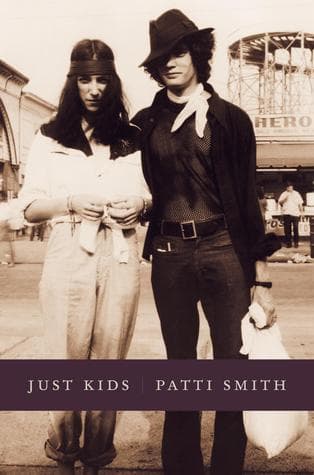
Just Kids cover
Archivist's Choice

Just Kids

Patti Smith (2010)

Genre

Biography / Memoir / Creativity

Reading Time

360 min

Key Themes

See below

Track Your Reading

Sign in to track this book

Patti Smith's 'Just Kids' tells the story of her early life and artistic journey with Robert Mapplethorpe in 1970s New York, centered around the Chelsea Hotel.

Core Idea

Patti Smith's "Just Kids" follows the lives of Smith and artist Robert Mapplethorpe. It tracks their early years in New York City from the late 1960s through the 1970s, exploring their shared path of artistic growth and self-discovery. Their journey was shaped by ambition, poverty, and dedication to their art. The book suggests their close relationship, built on emotional and creative reliance, helped both artists find their unique identities and voices, which shaped them into cultural figures.
Reading time
360 min
Difficulty
Medium
✓ Read this if...
You are fascinated by the bohemian art scene of 1970s New York, the intense dynamics of creative partnerships, or the struggle and triumph of aspiring artists. This book is for those who appreciate lyrical prose and a deep dive into the emotional and intellectual development of influential cultural figures.
✗ Skip this if...
You prefer plot-driven narratives over reflective memoirs, or if you are not interested in the personal lives and artistic journeys of poets and photographers in a specific historical context. If you seek practical advice or a fast-paced story, this might not be for you.

Core idea

The central argument and framework that powers the entire book.

Patti Smith's "Just Kids" follows the lives of Smith and artist Robert Mapplethorpe. It tracks their early years in New York City from the late 1960s through the 1970s, exploring their shared path of artistic growth and self-discovery. Their journey was shaped by ambition, poverty, and dedication to their art. The book suggests their close relationship, built on emotional and creative reliance, helped both artists find their unique identities and voices, which shaped them into cultural figures.

At a glance

Reading time

360 min

Difficulty

Medium

Read this if...

You are fascinated by the bohemian art scene of 1970s New York, the intense dynamics of creative partnerships, or the struggle and triumph of aspiring artists. This book is for those who appreciate lyrical prose and a deep dive into the emotional and intellectual development of influential cultural figures.

Skip this if...

You prefer plot-driven narratives over reflective memoirs, or if you are not interested in the personal lives and artistic journeys of poets and photographers in a specific historical context. If you seek practical advice or a fast-paced story, this might not be for you.

Key Takeaways

1

The Alchemy of Shared Poverty

Scarcity can forge an unbreakable bond and sharpen artistic focus.

Quote

We were together, and the world was our oyster, but we had no key to open it.

Patti Smith and Robert Mapplethorpe's early relationship was marked by extreme poverty. This shared struggle became a core part of their artistic growth and deep bond. Instead of being a problem, their lack of money made them resourceful, creative, and reliant on each other. This time of deprivation, with park benches for beds and scrounging for food, removed societal pressures. It allowed their raw artistic desires to emerge. Their shared poverty was not just a background; it helped strengthen their commitment to art and to each othe...

Supporting evidence

Smith details their early days in New York, living in squalor, sharing meager meals, and often resorting to petty theft or odd jobs to survive. Their first apartment, a tiny room with a shared bathroom, became a sanctuary for their dreams despite its physical limitations.

Apply this

Embrace periods of scarcity not as setbacks, but as opportunities for intense focus and creative problem-solving. Recognize how shared struggle can deepen relationships and clarify core values, fostering resilience and resourcefulness in pursuit of long-term goals.
artistic-frugalityshared-adversitycreative-constraint
2

Mentorship from the Margins

Unexpected figures can provide crucial guidance and validation.

Quote

The Chelsea Hotel was a doll's house in the Chelsea Hotel, and we were its strange, young tenants.

The Chelsea Hotel was more than just a place to live; it was a community of artists, unique people, and legends. These figures, sometimes subtly, shaped Patti and Robert's artistic identities. People like Harry Smith, the filmmaker, offered wisdom and a sense of belonging. Even chance meetings and overheard talks provided an informal education. These mentors were not always formal teachers; sometimes they were just other residents living openly, their lives serving as both inspiration and warnings. This environment supported their gro...

Supporting evidence

Smith recounts interactions with various Chelsea Hotel residents, including the elderly Harry Smith, who shared his esoteric knowledge and encouraged their artistic pursuits, and the bohemian crowd who frequented the hotel's lobby and hallways, offering a constant stream of artistic and intellectual stimulation.

Apply this

Seek out diverse environments and communities where unconventional wisdom and unexpected connections can flourish. Be open to mentorship in its many forms, understanding that guidance can come from peers, elders, or even the general atmosphere of a creative space, not just traditional teachers.

chelsea-hotelinformal-mentorshipbohemian-culture
3

The Symbiotic Muse

Creative partnerships can be a mirror and a catalyst for individual genius.

Quote

We were like two halves of a whole, each reflecting the other's potential.

Patti Smith and Robert Mapplethorpe's relationship was a deep artistic partnership. They were each other's main muse, critic, and supporter. Robert saw a future rock star in Patti, encouraging her poetry and stage presence. Patti recognized Robert's unique vision in photography, pushing him to improve his work. Their creative exchange was constant, often blurring the lines between their individual artistic pursuits. This mutual influence was not about one person dominating; it was about each helping the other's potential grow, creatin...

Supporting evidence

Smith details how Robert would style her for photoshoots and encourage her public readings, while she would often pose for his early photographic experiments and offer feedback on his compositions. Their shared sketchbooks and conversations about art were constant.

Apply this

Cultivate relationships that challenge and inspire your creative work. Seek out partners who see your potential and push you beyond your self-imposed limits, understanding that true collaboration often involves mutual vulnerability and a shared vision for excellence.

artistic-symbiosiscreative-partnershipmutual-inspiration
4

Art as a Sacred Trust

Dedication to one's craft transcends personal success or recognition.

Quote

We made a pact to take care of each other. But we also made a pact to take care of our work.

For Smith and Mapplethorpe, art was not just a career but a sacred calling, a spiritual pursuit. This belief shaped their lives, guiding their choices and helping them through hardships. Their dedication did not depend on commercial success or public praise, especially in their early years. Instead, it was an inner drive, a commitment to expressing an inner truth through their chosen art forms. This deep sense of purpose allowed them to overcome huge struggles, from poverty and rejection to the complexities of their changing relations...

Supporting evidence

Smith frequently describes their 'pact' to become artists, a solemn vow made in their youth. She recounts moments where they prioritized art over comfort, food, or stability, such as Robert sacrificing meals to buy film or Patti spending hours writing in unheated rooms.

Apply this

Identify the 'sacred' aspect of your own work or passion. Cultivate a sense of intrinsic purpose that can sustain you through challenges, rather than relying solely on external validation or material rewards. Prioritize the integrity and authenticity of your craft above all else.

artistic-integritycreative-devotioninner-calling
5

The Evolution of Identity

Self-discovery is an ongoing journey, often shaped by those closest to us.

Quote

He helped me to find the girl I was meant to be, and I, in turn, helped him to find the artist.

Patti Smith's memoir shows how identity is fluid and changes, especially during formative years. Both she and Robert changed significantly, not just as artists but as people, largely influenced by their intense relationship. Robert, who first explored drawing and painting, later found his true calling in photography, often with Patti as his subject. Patti, a poet and visual artist, was encouraged by Robert to embrace her musicality and stage presence. This mutual shaping of identity highlights how personal growth can be deeply tied to...

Supporting evidence

Smith details Robert's early artistic explorations beyond photography, and how his focus narrowed. Similarly, she describes her own journey from a shy poet to a commanding performer, a transition heavily influenced by Robert's belief in her stage presence and his encouragement to merge her poetry with music.

Apply this

Recognize that identity is not fixed; it evolves through experience and relationships. Be open to how others perceive your potential, and allow those insights to guide your self-discovery. Actively explore different facets of your talents, even if they seem outside your current comfort zone.

identity-formationpersonal-transformationmutual-influence
6

Grief as a Creative Wellspring

Profound loss can be channeled into enduring artistic expression.

Quote

I wrote 'Just Kids' for Robert because I promised him I would. It was a promise I kept, and it became a book for everyone.

The memoir, 'Just Kids,' itself is an act of turning grief into art. Written as a promise to Robert Mapplethorpe before his death, it shows how deep loss can become a lasting legacy and a source of creative inspiration. Smith does not avoid the pain of Mapplethorpe's death but uses it as the emotional core to rebuild their shared history. This act of remembering and honoring becomes a creative force, allowing her to revisit and reframe their story, not just for personal relief, but to create a work of art that connects with everyone. ...

Supporting evidence

The very existence of the book, explicitly stated by Smith as a promise made to Robert on his deathbed, serves as the primary evidence. The lyrical, often elegiac tone throughout the narrative underscores this transformation of personal grief into a public, artistic tribute.

Apply this

When experiencing loss, consider how creative expression might serve as a means of processing grief and honoring memory. Understand that art born from deep emotion often carries a unique power and resonance, offering both personal healing and a gift to others.

grief-and-artcreative-legacymemoir-as-tribute
7

The Price of Freedom

Unconventional lives often demand personal sacrifices and difficult choices.

Quote

We wanted to be free, and freedom, as it turned out, had a price.

Patti and Robert's pursuit of artistic freedom and an unconventional life came with significant costs. They gave up financial stability, traditional relationships, and often, personal comfort. Their story shows the tension between societal expectations and the desire for an authentic, artistically driven life. The freedom they wanted—freedom from routine jobs, from suburban norms, from artistic compromise—required them to endure poverty, uncertainty, and others' judgment. This theme emphasizes that true liberation, especially in creat...

Supporting evidence

Smith details their relentless struggles with rent, hunger, and societal disapproval. She recounts Robert's difficult relationship with his conservative family and the challenges of maintaining their intense, unconventional bond amidst external pressures and their own evolving identities.

Apply this

Evaluate the true costs and benefits of pursuing an unconventional path. Be prepared for the sacrifices required to maintain artistic or personal freedom, and understand that these choices often involve foregoing immediate comfort for long-term authenticity and fulfillment.

artistic-freedomunconventional-lifepersonal-sacrifice
8

The Power of the Promise

Commitments, even informal ones, can shape destinies and endure beyond life.

Quote

Robert had asked me to write our story. I promised him I would. And a promise is a promise.

A central idea in 'Just Kids' is the power of a promise. Patti Smith's commitment to Robert Mapplethorpe, made on his deathbed, to tell their story, drove the memoir. This simple, yet incredibly important, promise went beyond their personal relationship and became a sacred duty. It shows how a verbal agreement, born of love and trust, can guide actions and creative work years, even decades, later. Fulfilling this promise not only honored Robert's memory but also gave Smith a strong purpose and structure for her writing, showing that d...

Supporting evidence

Smith explicitly states at the beginning and end of the book that the memoir was written to fulfill a promise made to Robert Mapplethorpe before his death from AIDS. This promise frames the entire narrative and provides its ultimate motivation.

Apply this

Recognize the weight and potential of the promises you make, both to yourself and to others. Understand how deep commitments can become powerful motivators and guiding principles, providing direction and purpose, especially in creative or personal projects.

sacred-promiseenduring-commitmentnarrative-motivation
9

The Necessity of 'The Other'

A significant other can be the vital mirror for self-actualization.

Quote

He was the artist of my heart, and I was the canvas of his.

Patti Smith and Robert Mapplethorpe were each other's 'other' in a deep way, acting as key mirrors for their developing selves and art. Robert saw the rock star in Patti before she fully did, pushing her toward the stage. Patti saw the visionary photographer in Robert, encouraging his unique style. Their relationship was not just about companionship; it helped form their individual identities through mutual reflection and constant encouragement. This highlights how a significant 'other' can help with self-realization, providing the ex...

Supporting evidence

Smith consistently attributes her transformation into a performer and musician to Robert's unwavering belief and encouragement. Similarly, she details how her presence and their shared life fueled many of Robert's early photographic subjects and artistic explorations.

Apply this

Cultivate relationships with individuals who see your potential and challenge you to realize it. Value those who serve as a mirror, reflecting back strengths and possibilities you might not yet perceive in yourself, and be that mirror for others.

self-actualizationmutual-reflectionessential-other
10

Art's Enduring Dialogue

True art speaks across time, connecting generations and transcending individual lives.

Quote

We were artists, and our work was our legacy. It would speak for us long after we were gone.

The memoir is not just a personal story; it shows the lasting power of art itself. Patti and Robert's journey, from poor dreamers to famous figures, illustrates how art can live beyond its creators. Their work, now in museums, galleries, and record collections, continues to inspire new generations, creating a conversation that spans decades. This idea emphasizes that while creating art is very personal, its ultimate impact is often universal and timeless. 'Just Kids' places their individual stories within the larger, ongoing discussio...

Supporting evidence

Smith implicitly makes this point through the very act of writing the memoir, which preserves their story and contextualizes their work for future readers. The widespread recognition and continued relevance of both Smith's music and Mapplethorpe's photography decades later serve as empirical evidence.

Apply this

Approach your creative work with an awareness of its potential for longevity and its place within a larger artistic tradition. Strive for authenticity and depth, understanding that these qualities contribute to work that can resonate across generations and continue a meaningful dialogue.

artistic-legacytimeless-artcultural-impact

Critical analysis

Notable Quotes

I wondered if I would have to spend the rest of my life as a waitress. I really did not want to be a waitress. I really wanted to be an artist.

Patti's early struggles in New York City, working menial jobs while pursuing her artistic dreams.

I had not an inkling of what I was getting into. I was just a kid, and I was going to New York. I was going to be an artist.

Patti's arrival in New York City, full of youthful optimism and artistic aspirations.

We were a good team. We were just kids. But we were good.

Reflecting on her early bond and creative partnership with Robert Mapplethorpe.

I learned how to make a cup of coffee and how to take a photograph. I didn't learn how to make love.

Patti's early experiences in New York, focusing on creative pursuits over romantic ones.

He was the artist of my life.

Patti's profound statement about Robert Mapplethorpe's influence on her life and art.

We were not looking for money. We were looking for a place to be ourselves.

Describing their bohemian lifestyle and their quest for artistic freedom and authenticity.

Robert taught me how to see.

Patti acknowledging Robert Mapplethorpe's role in shaping her artistic perception.

I had a vision for myself, but I also had a vision for Robert. And it was a good vision. We would be artists. We would be great artists.

Patti's shared dreams and ambitions with Robert, envisioning a future where they both achieved artistic greatness.

I saw myself as an outsider. I saw myself as a poet. I saw myself as an artist. But I didn't see myself as a rock star. That just happened.

Patti's evolving identity, from poet and artist to an unexpected rock icon.

We never had any money. We never had any food. But we had each other. And we had our work. And that was enough.

Highlighting their enduring bond and dedication to art despite extreme poverty.

The artist is a servant of the unknown. He is a guide, a shaman, a medium, a conduit, a vessel.

Patti's philosophical view on the role and responsibility of an artist.

I was just a girl who loved to write. And he was just a boy who loved to draw. And together, we made something beautiful.

A simple yet profound summary of their fundamental artistic connection.

My generation was the first to be told that we had no future. But we didn't believe it. We made our own.

Patti reflecting on the resilience and agency of her generation in a time of uncertainty.

The world opens up to you when you have a good book, and you have a good friend.

Emphasizing the importance of literature and companionship in expanding one's horizons.

Quiz

Test Your Knowledge

Ready to see how well you understood this book? Take our interactive quiz with 10 questions.

10
Questions
~5
Minutes
?
Best Score

Key Questions (FAQ)

'Just Kids' is a memoir by Patti Smith that chronicles her profound relationship with artist Robert Mapplethorpe, from their first meeting in New York City in the late 1960s through their struggles and artistic development. It's a story of youth, friendship, art, and the bohemian scene of the era.

About the author