BookBrief
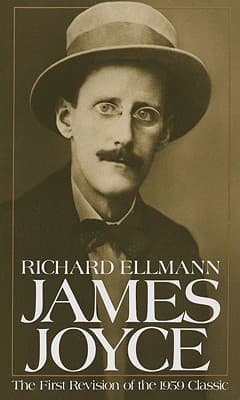
James Joyce cover
Archivist's Choice

James Joyce

Richard Ellmann

Genre

Biography / History

Reading Time

1500 min

Key Themes

See below

Track Your Reading

Sign in to track this book

Ellmann explores James Joyce's genius, showing his great intellect and human flaws, from writing 'Ulysses' to drunken stumbles and scandalous letters.

Core Idea

Richard Ellmann's "James Joyce" is the main biography of one of the 20th century's most important and challenging writers. It argues that Joyce's personal life, relationships, and the culture and politics of early 20th-century Ireland were not just background but core parts of his groundbreaking writing. Ellmann connects biographical details with critical analysis, showing how Joyce's genius came from his human weaknesses, his complex relationships, and his strong dedication to his art, which shaped modern literature. The book's main idea is that to understand Joyce's works—'Dubliners,' 'A Portrait of the Artist as a Young Man,' 'Ulysses,' and 'Finnegans Wake'—one must understand the man who wrote them, a man deeply involved in his world yet determined to go beyond it through language. Ellmann's work shows how thorough research of original sources, along with deep understanding and good writing, can explain the mystery of artistic genius and its impact on literary history.
Reading time
1500 min
Difficulty
Hard
✓ Read this if...
You are deeply interested in James Joyce, modernist literature, the craft of biography, or the intellectual history of early 20th-century Europe. You appreciate exhaustive research and a literary approach to non-fiction.
✗ Skip this if...
You are looking for a quick introduction to Joyce or modernist literature, prefer concise biographies, or are easily daunted by a long, dense book with extensive detail.

Core idea

The central argument and framework that powers the entire book.

Richard Ellmann's "James Joyce" is the main biography of one of the 20th century's most important and challenging writers. It argues that Joyce's personal life, relationships, and the culture and politics of early 20th-century Ireland were not just background but core parts of his groundbreaking writing. Ellmann connects biographical details with critical analysis, showing how Joyce's genius came from his human weaknesses, his complex relationships, and his strong dedication to his art, which shaped modern literature.

The book's main idea is that to understand Joyce's works—'Dubliners,' 'A Portrait of the Artist as a Young Man,' 'Ulysses,' and 'Finnegans Wake'—one must understand the man who wrote them, a man deeply involved in his world yet determined to go beyond it through language. Ellmann's work shows how thorough research of original sources, along with deep understanding and good writing, can explain the mystery of artistic genius and its impact on literary history.

At a glance

Reading time

1500 min

Difficulty

Hard

Read this if...

You are deeply interested in James Joyce, modernist literature, the craft of biography, or the intellectual history of early 20th-century Europe. You appreciate exhaustive research and a literary approach to non-fiction.

Skip this if...

You are looking for a quick introduction to Joyce or modernist literature, prefer concise biographies, or are easily daunted by a long, dense book with extensive detail.

Key Takeaways

1

The Irish Milieu as Muse

Joyce's inextricable link to his homeland's cultural and political landscape.

Quote

Ellmann's deep mastery of the Irish milieu is demonstrated not only in this volume but in his books on Yeats and Wilde.

James Joyce, even in exile, was deeply shaped by Ireland. Ellmann shows how the culture, politics, and religion of early 20th-century Ireland were not just background but an active part of Joyce's mind and art. His characters, themes, and language changes come from Dublin life, its sayings, its Catholicism, and its growing nationalism. This means more than just setting; it is about who he was and where his creativity came from. It shows that even when someone rejects their origins, those origins can be the strongest force.

Supporting evidence

Ellmann's extensive exploration of Joyce's early life in Dublin, his education, his family's struggles, and his observations of Irish society, all of which directly informed 'Dubliners' and 'Ulysses'.

Apply this

To understand any artist fully, one must delve into the specific cultural and historical context that shaped them, rather than viewing their work in a vacuum. For creators, recognize that your immediate environment, no matter how mundane, holds rich potential for observation and inspiration.

irish-modernismcultural-contextliterary-exile
2

Genius and Human Frailty

Ellmann's balanced portrayal of Joyce as both literary titan and flawed individual.

Quote

Ellmann's account always shows us a genius and a human being—a daunting enough task for a fiction writer, let alone the poor, fact-fettered biographer.

Ellmann's main success is showing Joyce not as an unreachable literary god, but as a complex, often conflicting person. He handles Joyce's intelligence and artistic discipline alongside his personal problems: his alcoholism, his money issues, his unusual relationships, and his sometimes difficult personality. This balanced view avoids idealizing him. Instead, it offers a richer, more understandable view of how great art can come from a life full of human flaws. It shows that genius is often messy, drawing from all parts of human exper...

Supporting evidence

The inclusion of details like Joyce 'falling down drunk in the streets of Trieste' and 'talking dirty to his future wife via the postal service,' juxtaposed with his meticulous literary output.

Apply this

When evaluating historical figures or contemporary leaders, strive for a holistic view that acknowledges both their contributions and their shortcomings. For personal growth, understand that perfection is not a prerequisite for significant achievement; embrace your full, complex self.

biographical-integrityartistic-temperamenthuman-condition
3

The Biographer's Empathy

Ellmann's 'bemused affection' as a key to understanding his subject.

Quote

Ellmann seems to have an uncanny grasp on Joyce's personality: his reverence for the Irishman's literary accomplishment is always balanced by a kind of bemused affection for his faults.

Beyond just facts, Ellmann's biography is strong because of his deep, almost family-like understanding of Joyce. This 'amused affection' lets him look into Joyce's reasons and quirks without judging them, giving insight instead of criticism. This is a key part that raises the work from a timeline to a deep look at his mind. This approach suggests that truly understanding a subject, especially a complex one, needs not just careful thought but also some kind of caring involvement. This allows the biographer to see the subject's inner lo...

Supporting evidence

The narrative tone throughout the book, which consistently displays a nuanced understanding and gentle humor regarding Joyce's more challenging traits, rather than condemnation.

Apply this

In any field requiring deep understanding of others, whether in leadership, teaching, or personal relationships, cultivate empathy and a willingness to understand motivations rather than simply judging actions. This fosters deeper insight and more effective engagement.

biographical-methodologyempathetic-analysispsychological-portrait
4

The Power of Primary Sources

Newly discovered materials deepen our understanding of a literary giant.

Quote

Richard Ellmann has revised and expanded his definitive work on Joyce's life to include newly discovered primary material, including details of a failed love affair, a limerick about Samuel Beckett, a dream notebook, previously unknown letters, and much more.

The ongoing updates and additions to Ellmann's biography, as new original materials are found, show how historical and biographical research changes. These additions—a failed love affair, a limerick, a dream notebook—are not just small notes; they offer new ways to see Joyce's inner world, his relationships, and his creative process. They show how even a 'main' work can be made richer and better. This reminds us that no historical account is ever truly finished, and new evidence can always change our views and deepen our understanding...

Supporting evidence

Specific examples cited: 'details of a failed love affair, a limerick about Samuel Beckett, a dream notebook, previously unknown letters.'

Apply this

For researchers and scholars, always remain open to new evidence and be prepared to revise your understanding. For readers, seek out updated editions of important works, as they often incorporate new discoveries that enhance the narrative and analysis. This also highlights the importance of archiving and preserving personal documents.

archival-researchhistorical-revisionismbiographical-evidence
5

Stylistic Prowess of the Biographer

Ellmann's graceful prose mirrors the brilliance of his subject.

Quote

He's also an admirable stylist himself—graceful, witty, and happily unintimidated by his brilliant subjects.

Ellmann's writing style is a big reason for the biography's lasting impact. His prose is not just informative but also elegant, witty, and interesting, making the 887-page book enjoyable to read. This skill in writing is important when dealing with a subject as complex in language as Joyce; it lets Ellmann explain complex ideas and subtle psychological points without becoming heavy. A biographer who can write with such clarity and grace, especially when discussing a literary giant, shows that how something is said is as important as w...

Supporting evidence

The general critical acclaim for Ellmann's writing, described as 'graceful, witty, and happily unintimidated,' which consistently elevates the narrative.

Apply this

For writers, recognize that clarity and elegance of prose are vital, especially when tackling complex subjects. For readers, appreciate biographies where the author's voice is as compelling as the subject's story, as this enhances comprehension and enjoyment.

literary-biographyprose-stylenarrative-craft
6

The Biographical Challenge

The inherent difficulty of capturing a complex life within factual constraints.

Quote

Ellmann's account always shows us a genius and a human being—a daunting enough task for a fiction writer, let alone the poor, fact-fettered biographer.

The summary points to the big challenge biographers face: to create an interesting, clear story of a person's life, with its inner conflicts and outer events, while sticking strictly to facts. Unlike a fiction writer, a biographer cannot invent or add details. Ellmann's success in showing Joyce's many sides—his genius along with his flaws—within these limits shows his skill. It suggests that a truly great biography goes beyond just collecting data. It turns facts into a living, breathing picture that connects with human experience, de...

Supporting evidence

The explicit statement that the task is 'daunting enough for a fiction writer, let alone the poor, fact-fettered biographer,' emphasizing the genre's inherent limitations and Ellmann's triumph over them.

Apply this

When consuming biographies, appreciate the immense effort involved in research, synthesis, and narrative construction. For aspiring biographers, understand that meticulous research combined with a strong narrative voice is essential to overcome the inherent limitations of the genre.

biographical-narrativehistorical-accuracynarrative-constraints
7

Relevance Beyond the Subject

Ellmann's work as a masterclass in biographical writing itself.

Quote

Although several biographers have thrown themselves into the breach since this magisterial book first appeared in 1959, none have come close to matching the late Richard Ellmann's achievement.

Ellmann's 'James Joyce' is not just the main account of Joyce's life; it sets a standard for biographical writing in general. Its 'masterful' status means it offers lessons not only about Joyce but about the art of biography itself. Ellmann's method—his deep research, his understanding, his good writing, and his ability to combine a lot of information into a clear and interesting story—provides a model for anyone wanting to tell a life story with depth, accuracy, and literary quality. It shows that a biography can be both scholarly an...

Supporting evidence

The critical consensus that no subsequent biographer has 'come close to matching' Ellmann's achievement, cementing its status as a definitive work and a masterclass.

Apply this

For aspiring writers and researchers, study Ellmann's methodology and narrative technique as a guide for constructing compelling non-fiction. For readers, recognize that truly great biographies offer insights into both the subject and the art of storytelling itself.

biographical-theoryliterary-craftsmanshipnon-fiction-writing
8

The Enduring Enigma of Genius

Despite comprehensive biography, aspects of Joyce's genius remain elusive.

Quote

Ellmann seems to have an uncanny grasp on Joyce's personality: his reverence for the Irishman's literary accomplishment is always balanced by a kind of bemused affection for his faults.

While Ellmann gives a very detailed and understanding picture of Joyce, the nature of genius often keeps some mystery. Even with access to 'dream notebooks' and personal letters, the jump from lived experience to creating works like 'Ulysses' or 'Finnegans Wake' remains a deep unknown. Ellmann's 'amused affection' quietly admits this; he understands Joyce as a man, but the exact magic of his artistic process, the spark of his unique vision, ultimately cannot be fully explained. The biography captures the man, but the ultimate source o...

Supporting evidence

The sheer scale and complexity of Joyce's literary output, which even the most thorough biographical details can only partially explain, pointing to an inherent mystery in the creative act.

Apply this

When studying creative individuals, understand that while context and personal history are crucial, the ultimate wellspring of their unique genius may always contain an irreducible mystery. This encourages appreciation rather than reductive explanation.

creative-processliterary-geniusartistic-mystery

Critical analysis

Notable Quotes

No man is an island, entire of itself; every man is a piece of the continent, a part of the main.

Ellmann frequently alludes to Joyce's sense of interconnectedness, and this quote, though from John Donne, reflects a theme Ellmann emphasizes in Joyce's work and life.

Silence, exile, and cunning.

Stephen Dedalus's declaration of his chosen weapons in 'A Portrait of the Artist as a Young Man,' which Ellmann presents as key to understanding Joyce's own artistic strategy.

Welcome, O life! I go to encounter for the millionth time the reality of experience and to forge in the smithy of my soul the uncreated conscience of my race.

The powerful closing lines of 'A Portrait of the Artist as a Young Man,' signifying Stephen's, and by extension Joyce's, ambitious artistic mission.

History, Stephen said, is a nightmare from which I am trying to awake.

A pivotal line from 'Ulysses,' reflecting Joyce's complex relationship with Irish history and his desire to transcend its burdens through art.

He was a man who lived by words, and died by words.

Ellmann's own summary of Joyce's existence, highlighting the centrality of language to every aspect of his life and art.

The artist, like the God of the creation, remains within or behind or beyond or above his handiwork, invisible, refined out of existence, indifferent, paring his fingernails.

Stephen Dedalus's aesthetic theory in 'A Portrait,' which Ellmann shows to be an important facet of Joyce's own artistic detachment and objectivity.

I am a product of the Jesuits.

Joyce's acknowledgment of the profound influence of his Jesuit education, despite his eventual rejection of Catholicism, as detailed by Ellmann.

Better pass boldly into that other world, in the full glory of some passion, than fade and wither dismally with age.

From 'The Dead,' a reflection on life, death, and passion that Ellmann presents as embodying Joyce's early thematic concerns.

His genius was not in being Irish, but in being universal.

Ellmann's argument that while Joyce's work is deeply rooted in Ireland, its ultimate power lies in its broader human relevance.

He was a man who could not be happy without being unhappy.

Ellmann's observation on Joyce's complex psychological makeup, suggesting a paradoxical relationship with contentment and suffering.

The object of the artist is to arrest the attention.

A concise statement of artistic purpose from Joyce, which Ellmann highlights as central to his innovative and often challenging literary style.

He wanted to write about Dublin so that if the city one day disappeared from the earth, it could be reconstructed out of his book.

Ellmann's vivid description of Joyce's meticulous attention to detail in depicting Dublin, particularly in 'Ulysses.'

I have been for the greater part of my life a poor man.

Joyce's own pragmatic reflection on his persistent financial struggles, which Ellmann documents extensively throughout his biography.

His mind, like a camera obscura, was capable of projecting images with extraordinary vividness.

Ellmann's metaphor for Joyce's imaginative and descriptive powers, emphasizing his ability to create detailed mental landscapes.

Quiz

Test Your Knowledge

Ready to see how well you understood this book? Take our interactive quiz with 10 questions.

10
Questions
~5
Minutes
?
Best Score

Key Questions (FAQ)

Richard Ellmann's 'James Joyce' is widely considered the definitive biography. First published in 1959 and later revised, it remains unmatched in its depth, mastery of the Irish context, and insightful portrayal of Joyce's life and work.

About the author