BookBrief
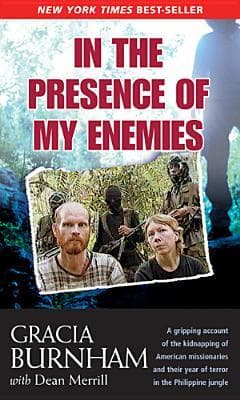
In the Presence of My Enemies cover
Archivist's Choice

In the Presence of My Enemies

Gracia Burnham (2003)

Genre

Biography / Memoir / History / Spirituality

Reading Time

9-11 hours

Key Themes

See below

Track Your Reading

Sign in to track this book

Missionary Gracia Burnham recounts her year-long captivity by Abu Sayyaf terrorists in the Philippine jungle, the loss of her husband in a rescue attempt, and the faith that sustained her.

Core Idea

Gracia Burnham's memoir tells of her and her husband Martin's 377-day abduction by the Abu Sayyaf group in the Philippine jungle. This ordeal tested their faith, marriage, and humanity. The book shows how spiritual belief can grow and endure amid terror, proving that even in brutal situations, people can find comfort, purpose, and a deeper connection to God. It shows the power of prayer and the interplay of hope and despair in survival.
Reading time
9-11 hours
Difficulty
Medium
✓ Read this if...
You are interested in true stories of survival, the intersection of faith and extreme adversity, or the psychological impact of kidnapping and trauma.
✗ Skip this if...
You prefer to avoid graphic descriptions of violence, intense psychological distress, or stories with a strong religious/missionary focus.

Core idea

The central argument and framework that powers the entire book.

Gracia Burnham's memoir tells of her and her husband Martin's 377-day abduction by the Abu Sayyaf group in the Philippine jungle. This ordeal tested their faith, marriage, and humanity. The book shows how spiritual belief can grow and endure amid terror, proving that even in brutal situations, people can find comfort, purpose, and a deeper connection to God. It shows the power of prayer and the interplay of hope and despair in survival.

At a glance

Reading time

9-11 hours

Difficulty

Medium

Read this if...

You are interested in true stories of survival, the intersection of faith and extreme adversity, or the psychological impact of kidnapping and trauma.

Skip this if...

You prefer to avoid graphic descriptions of violence, intense psychological distress, or stories with a strong religious/missionary focus.

Key Takeaways

1

Finding God in the Jungle

Spiritual resilience forged in the crucible of captivity.

Quote

We learned to trust Him in a way we never had before, because He was all we had.

Gracia Burnham's memoir shows how extreme difficulty can strengthen one's faith. With all earthly comforts, security, and control gone, Gracia and Martin had to rely deeply on God. Their daily lives showed how to find spiritual strength in the most desolate places. This was not a sudden conversion, but a slow process of choosing faith over despair, even when answers were unclear and suffering was constant. Their trust changed from a theological idea into a lived experience, proving that faith is not just for good times but often forms...

Supporting evidence

Gracia recounts specific instances of prayer, Bible reading (often from a smuggled, tiny New Testament), and singing hymns as their primary source of comfort and mental fortitude, even when the terrorists were nearby or threatening them. The daily routine of seeking God became their anchor.

Apply this

Cultivate daily spiritual disciplines, especially during times of peace, to build a foundation for when trials inevitably come. Remember that faith is a choice made repeatedly, not a one-time event, particularly when circumstances seem to contradict it.


spiritual-resiliencefaith-in-sufferingdivine-providence
2

The Banality of Terror

Terrorists are complex individuals, not monolithic villains.

Quote

They were just men, with their own fears, dreams, and frustrations. And they were just as human as we were.

Gracia Burnham describes her captors, the Abu Sayyaf Group, in a complex way. She shows them as a mix of hardened fighters, young recruits, and even people capable of small acts of kindness or relatable human flaws. They argued among themselves, worried about their families, and showed moments of surprising normalcy amid their brutality. This perspective humanizes the 'enemy,' making their actions more perplexing and disturbing, as it forces the reader to see that evil can come from seemingly ordinary people. Understanding this comple...

Supporting evidence

Gracia details interactions where terrorists shared food, discussed their personal lives, or even offered medical aid. She describes their internal power struggles, their superstitions, and their often-unorganized movements, contrasting sharply with the 'mastermind' image often portrayed in media.

Apply this

Challenge preconceived notions about 'enemies' or 'others.' Seek to understand the human elements, even within groups or individuals whose actions are reprehensible, as this understanding can inform more effective, long-term solutions to conflict.

humanizing-enemyterrorist-psychologyconflict-resolution
3

The Price of Hope and Despair

Maintaining hope is an active, exhausting choice in prolonged crisis.

Quote

Hope wasn't a feeling; it was a decision we had to make every single day, sometimes every single hour.

The Burnhams' year-long captivity highlights the severe psychological toll of long-term uncertainty and danger. Gracia details the emotional swings of brief hopes followed by crushing disappointments—false promises of release, failed rescue attempts, and the constant threat of violence. Her account shows that hope is not passive but an active, often tiring, choice. Giving in to despair would have been easier, but they fought against it, understanding its destructive power. This struggle to maintain hope, even when evidence suggested o...

Supporting evidence

Gracia recounts numerous instances of being told they would be released 'tomorrow' or 'next week,' only for these promises to be broken. She describes the emotional devastation after a failed rescue attempt where they were so close to freedom, and the subsequent effort to mentally regroup and choose to believe again.

Apply this

In any long-term challenge, acknowledge that hope is a discipline. Actively seek small reasons for optimism, create mental 'anchors' of positive expectation, and allow yourself to grieve setbacks without letting them consume your overall outlook.

psychological-resiliencecoping-mechanismsemotional-endurance
4

Government Bureaucracy vs. Human Lives

The frustrating disconnect between official protocols and urgent human need.

Quote

We were not just 'hostages' or 'negotiating chips' to our families; we were their son and daughter, husband and wife. But sometimes, it felt like the governments forgot that.

Gracia's story reveals the painful realities of government involvement in hostage situations. While acknowledging the difficulties, she shares the frustration and heartache caused by the slow, often conflicting, actions of both the U.S. and Philippine governments. Her account shows a system driven by protocols, political considerations, and national interests, often at odds with the immediate, desperate needs of the captives and their families. This tension between bureaucratic process and human urgency highlights the tragic limits of...

Supporting evidence

Gracia details the frustrating delays in ransom negotiations, the conflicting information received by their families, and the lack of decisive action or clear communication from authorities for extended periods. She also touches on the Philippine government's military operations that sometimes endangered them more than helped.

Apply this

When interacting with large institutions during personal crises, manage expectations regarding speed and personalized care. Advocate fiercely for individual needs, but also understand the systemic constraints that often govern responses.

government-responsehostage-negotiationbureaucratic-frustration
5

The Power of Prayer (and its Mystery)

Global prayer sustained them, even when its 'answers' were not what was hoped for.

Quote

We felt the prayers of thousands of people around the world. It was a tangible comfort, even when our circumstances didn't change.

Throughout their ordeal, Gracia and Martin knew about the global prayer effort for them. Gracia describes a tangible feeling of being supported, a mysterious strength that went beyond their physical suffering. This explores the impact of intercessory prayer, not as a magical solution that immediately changes circumstances, but as a source of spiritual endurance and peace amid chaos. It acknowledges why some prayers seem 'answered' and others do not, while still affirming the inherent power and comfort from knowing many people prayed f...

Supporting evidence

Gracia frequently mentions how she and Martin would discuss feeling the 'lift' of prayers during particularly difficult times. She later learned from her family about the vast networks of churches and individuals praying for them, confirming their internal sense of being supported.

Apply this

Engage in prayer, both for yourself and others, recognizing its power to bring inner strength and comfort regardless of immediate external outcomes. Trust in the long-term, often unseen, effects of spiritual communion.

intercessory-prayerspiritual-supportdivine-mystery
6

Marriage Under Duress

Captivity either destroys or strengthens the marital bond.

Quote

Being stripped of everything else showed us what we truly had in each other, and what we truly didn't.

The Burnhams' marriage was tested in extreme conditions. Gracia’s account is an honest portrayal of how long-term stress, fear, and deprivation can both expose weaknesses and build strong bonds within a relationship. They fought, they despaired, but ultimately, they relied on each other for emotional support, companionship, and shared faith. This emphasizes that crisis does not create new relational dynamics but amplifies existing ones. For the Burnhams, the shared ordeal deepened their commitment and showed the foundation of their pa...

Supporting evidence

Gracia details their arguments over trivial things (like food portions or complaints), their moments of silent understanding, their shared prayers, and their efforts to comfort each other through illness and fear. Martin’s protective instincts and Gracia’s steadfastness are recurring themes.

Apply this

Nurture strong communication and mutual support in relationships during peaceful times. Understand that shared adversity, while difficult, can be a crucible that refines and strengthens the core of a committed partnership.

marital-resiliencerelationship-under-stressshared-trauma
7

The Missionary Call Endures

A life of service, even with extreme costs, can profoundly shape purpose.

Quote

We went to the Philippines to serve God, and even in captivity, we believed we were still in His will.

The Burnhams were career missionaries, and their capture happened while they were serving. Gracia's memoir addresses the 'why'—why God would allow such suffering to those dedicated to His work. Her answer is not simple, but it consistently points to a strong belief in their calling and God's sovereignty. This explores the deep sense of purpose that can sustain individuals through horrific trials, suggesting that a deep commitment to a cause larger than oneself can provide meaning even in seemingly meaningless suffering. It challenges ...

Supporting evidence

Gracia reflects on their decision to be missionaries, their love for the Filipino people, and their continuous efforts to share their faith even with their captors, demonstrating their unwavering commitment to their calling despite their circumstances.

Apply this

Identify and commit to a purpose or calling that transcends personal comfort. Understand that true dedication may involve sacrifice and unforeseen challenges, but that this commitment can also be a source of profound strength and meaning.

missionary-lifepurpose-driven-liferadical-obedience
8

Processing Trauma: A Lifelong Journey

Survival is the beginning, not the end, of healing.

Quote

Coming home was a miracle, but it wasn't the end of the story. It was just the beginning of a different kind of fight.

Gracia's return home is not the end of her struggle, but the start of a new one: processing deep trauma and grief. Her memoir, written years after her release, shows the long, difficult journey of healing from such an experience. She carries physical scars, the immense loss of her husband, and the lasting psychological impact of a year in captivity. This highlights that 'survival' is often only the first step in a complex, lifelong process of recovery. It shows the importance of acknowledging and addressing the invisible wounds of tra...

Supporting evidence

Gracia's frank discussion of her bullet wound, the grief over Martin's death, and her decision to write the book years later to process her experiences, all point to the long-term impact of her ordeal.

Apply this

Recognize that trauma recovery is a process, not an event. Be patient and compassionate with yourself and others navigating significant loss or traumatic experiences, understanding that healing takes time, support, and often professional guidance.

trauma-recoverygrief-processpost-traumatic-growth
9

The Unpredictability of Violence

Life can change in an instant, demanding adaptation, not control.

Quote

One minute we were having breakfast, the next we were running for our lives. Nothing is guaranteed.

The Burnhams' story begins with a sudden, violent intrusion into their peaceful missionary lives. This immediate, jarring shift shows how unpredictable life is and how fragile security can be. Gracia's account forces readers to confront the reality that life can change forever in a single moment, regardless of plans or preparations. This emphasizes the futility of trying to control all aspects of life and instead highlights the importance of adaptability, mental strength, and relying on something beyond oneself when faced with sudden,...

Supporting evidence

The opening chapters vividly describe the raid on the Dos Palmas resort, the immediate terror, and the rapid descent into captivity, illustrating how quickly their entire world was upended.

Apply this

Cultivate mental and emotional flexibility. Practice letting go of the need for absolute control and develop contingency plans not just for practicalities, but for mental and spiritual resilience in the face of the unexpected.

life-uncertaintycrisis-managementadaptability

Critical analysis

Notable Quotes

I knew what I had to do. I had to forgive them. I had to let go of the anger and bitterness, or it would eat me alive.

Reflecting on her captors and the emotional toll of captivity.

God doesn't promise us an easy life, but He does promise to be with us through it all.

A recurring theme of faith amidst extreme hardship and uncertainty.

Fear is a choice. You can choose to let it paralyze you, or you can choose to trust God and move forward.

Gracia's internal struggle with fear during her abduction.

When you have nothing left but God, you realize God is enough.

A profound realization made in the depths of her suffering and loss.

I learned to pray like I'd never prayed before, not just for our rescue, but for strength, for peace, for forgiveness.

Describing the transformation of her prayer life during captivity.

Every day was a battle, not just for survival, but for my sanity, for my soul.

Highlighting the constant mental and spiritual struggle of her ordeal.

You can't control what happens to you, but you can control your response to it.

A key takeaway about personal agency in the face of uncontrollable circumstances.

Martin always said, 'We're here for a reason.' Even in the jungle, he believed God had a purpose for us.

Recalling her husband Martin's unwavering faith and perspective.

Grief is a tricky thing. It comes in waves, and sometimes you just have to let it wash over you.

Reflecting on her mourning process after Martin's death.

We were in the presence of our enemies, but God was in the presence of us.

The central theme of the book, emphasizing divine presence amidst danger.

Hope is not a feeling; it's a choice. It's choosing to believe that God is still good, even when life isn't.

Defining hope not as an emotion but as an act of will and faith.

Sometimes the greatest lessons are learned in the darkest valleys.

A reflective statement on the transformative power of suffering.

I had to learn to live one day at a time, sometimes one hour at a time, or I would have gone crazy.

Describing the coping mechanism she adopted to manage the overwhelming stress of captivity.

My freedom came at a great cost, but it was a freedom I had to fight for, not just physically, but spiritually.

Reflecting on her eventual rescue and the ongoing spiritual battle.

Quiz

Test Your Knowledge

Ready to see how well you understood this book? Take our interactive quiz with 10 questions.

10
Questions
~5
Minutes
?
Best Score

Key Questions (FAQ)

Martin and Gracia Burnham were American Christian missionaries who were taken hostage by the Abu Sayyaf group in the Philippines in May 2001. Their harrowing ordeal lasted over a year, drawing international attention.

About the author