“What would Jesus do?”
— The central question posed by Reverend Henry Maxwell to his congregation, challenging them to base their decisions on this principle.

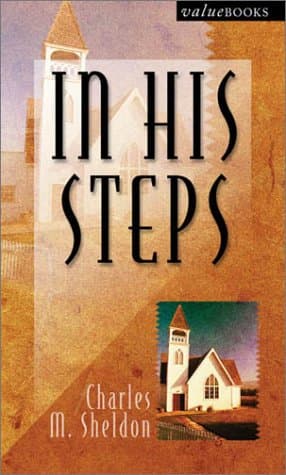
Charles M. Sheldon (2016)
Genre
Spirituality
Reading Time
120 min
Key Themes
See below
Sign in to track this book
When a pastor challenges his congregation to live for a year asking 'What Would Jesus Do?' before every decision, their small town is changed by the radical, often uncomfortable, implications of Christ-like living.
Reverend Henry Maxwell, pastor of the First Church of Raymond, prepares his Sunday sermon when a shabbily dressed, unemployed man appears at his study door. The man, a printer, explains he has been searching for work for months and is starving. Maxwell dismisses him, but the man reappears during the Sunday service, walking to the pulpit. He calmly asks the prosperous congregation what Jesus would do in their situation, noting their comfortable lives while he and others suffer. He then collapses and dies a few days later, affecting Maxwell and a few others. This incident leads Maxwell to propose a new idea to his congregation.
Reverend Maxwell, moved by the printer's death and his challenge, proposes an extraordinary vow to his congregation: for one year, no member of the church who takes the pledge will do anything without first asking, 'What would Jesus do?' He says this is not a legalistic rule but a sincere attempt to follow Christ's example in every decision. Initially, a few people accept the challenge, including Rachel Winslow, a talented singer; Alexander Powers, the railroad superintendent; Edward Norman, the editor of the Raymond Daily News; and Milton Wright, a wealthy businessman. This small group's commitment starts a series of changes within the community.
Edward Norman, the editor and owner of the Raymond Daily News, is one of the first to take Maxwell's pledge. His first 'What would Jesus do?' decision involves changing his newspaper. He removes all sensationalist articles, liquor advertisements, and morally questionable content, knowing it will affect circulation and advertising revenue. He begins to publish articles about social justice, community issues, and spiritual uplift, even though it means alienating profitable advertisers and subscribers. His staff is shocked, and many threaten to quit, but Norman remains firm, believing it is the only way to honor his vow.
Rachel Winslow, a young woman with a beautiful singing voice and opera aspirations, also takes the pledge. She is offered a lucrative contract to sing in the opera, a dream opportunity. However, after asking 'What would Jesus do?', she realizes that Jesus would use his gifts to serve others and spread a message of hope, not for personal fame or wealth. She rejects the opera offer, to the dismay of her friends and family, and instead begins to sing at local missions and for the poor, using her talent to uplift and inspire those in need. Her decision affects the struggling community of the Rectangle.
Alexander Powers, the superintendent of the local railroad, is another figure who takes the vow. His commitment leads him to confront ethical compromises within his industry. He begins to investigate safety hazards, unfair labor practices, and corruption he previously overlooked for efficiency and profit. Asking 'What would Jesus do?' leads him to make difficult decisions, such as firing a dishonest employee, refusing to overlook safety violations, and advocating for better wages and working conditions for his employees, even when it puts him at odds with the railroad company's board of directors and risks his own position.
Milton Wright, a successful and wealthy businessman in Raymond, also joins the 'What would Jesus do?' movement. His first challenge involves looking at his extensive investments and business dealings. He finds that some of his investments are in companies with questionable labor practices or that produce harmful products. He faces the difficult decision of selling these profitable but unethical ventures, even if it means a significant personal financial loss. Wright also looks at his own business operations, ensuring fair wages, safe conditions, and ethical conduct, showing that Christian principles can be applied even in business.
As more members of the First Church of Raymond take the vow, their actions affect the community, particularly in the impoverished district known as the Rectangle. Led by Reverend Maxwell and the dedicated group, the church's mission changes from internal comfort to external service. Rachel Winslow's singing, Milton Wright's financial support, and other members' direct involvement bring aid, hope, and spiritual guidance to the residents of the Rectangle. This outreach involves opening a mission, providing food and shelter, and engaging with the social problems of poverty, alcoholism, and crime, changing the church's role in the community.
Reverend Maxwell's commitment to the 'What would Jesus do?' principle extends beyond his local congregation. He is invited to speak at a national convention and, after prayer, decides to use the platform to challenge the broader Christian community. Instead of a typical theological address, he tells the experiences of his church members in Raymond and asks other Christians to apply the same question to their own lives and societal issues. His speech is controversial but impactful, starting a wider discussion about Christian responsibility in addressing social and economic injustices across the nation.
The commitment to 'What would Jesus do?' has challenges. Edward Norman's newspaper faces financial ruin, Alexander Powers faces resistance from his superiors, and Rachel Winslow gives up a career. The First Church of Raymond sees a decline in its wealthy membership as some parishioners find the new emphasis on social justice and personal sacrifice too demanding. However, the church also sees an influx of new members from the Rectangle and other working-class areas, drawn by its compassion and impact. The movement faces criticism and ridicule from those who believe it is impractical or too radical, forcing the adherents to continually examine their motives and faith.
As the year of the vow ends, the town of Raymond is changed. While not every problem is solved, and personal sacrifices have been made, the lives of those who took the pledge have changed, and the community, especially the Rectangle, has seen improvement. The First Church of Raymond is no longer a complacent institution but a force for good, actively engaging with the world's problems. The novel ends by suggesting that the spirit of 'What would Jesus do?' continues to inspire. It shows that applying Christ's example to daily life can lead to personal and societal transformation, leaving a legacy of faith in action.
The Protagonist
Transforms from a conventional pastor to a radical spiritual leader, inspiring a movement of practical Christian living.
The Supporting
Gives up personal ambition for a life of service, using her artistic talent to minister to the poor.
The Supporting
Transforms his newspaper from a profit-driven enterprise to a morally upright publication, facing financial hardship for his convictions.
The Supporting
Challenges systemic corruption and prioritizes ethical leadership and employee well-being within the railroad industry.
The Supporting
Realigns his financial and business practices with Christian ethics, prioritizing moral investments over pure profit.
The Supporting
Struggles to reconcile his artistic ambitions with Christian principles, eventually choosing to write for moral uplift.
The Supporting
Moves from social complacency to a life of service and spiritual commitment, taking the vow later in the story.
The Mentioned
Serves as the initial catalyst for the spiritual awakening in Raymond, though his personal arc is brief and tragic.
The Supporting
Transforms from a dissipated socialite to a dedicated follower of Christ, finding purpose in service.
The central theme is applying Christian faith to daily life and societal problems. The characters deal with how to live out Christ's teachings in their professions, personal decisions, and community engagement. The novel says that true faith demands action, especially in addressing poverty, inequality, and moral compromise. The church's shift from inward comfort to outward service in the Rectangle shows this theme, demonstrating a commitment to practical acts of love and justice rather than just following doctrine.
“What would Jesus do?”
Many characters make personal and professional sacrifices to follow the 'What would Jesus do?' vow. Rachel Winslow gives up an opera career, Edward Norman risks his newspaper's financial stability, and Milton Wright sells profitable but unethical investments. These sacrifices show the cost of discipleship and that following Christ often requires giving up personal gain, comfort, or ambition for higher moral and spiritual principles. The novel argues that Christian living involves a willingness to suffer for others and for truth.
“It is not a question of what is popular or what is profitable, but what is right.”
The novel shows how the actions of a few individuals can affect an entire community. Reverend Maxwell's challenge, taken up by a small group, creates a ripple effect that changes a church, a newspaper, a railroad, and a poor district. This theme shows the power of personal integrity and that moral courage in individuals can inspire collective change. It shows that even small decisions, when guided by a strong moral compass, can lead to widespread societal improvement.
“The kingdom of God is not coming by and by; it is here, and now, to be worked for and lived for.”
A part of the story explores how the 'What would Jesus do?' question applies to various professions: journalism (Edward Norman), railroad management (Alexander Powers), finance (Milton Wright), and art (Rachel Winslow, Jasper Chase). The characters deal with ethical dilemmas in their fields, such as prioritizing profit over truth, efficiency over safety, or ambition over moral content. The novel argues for Christian integrity in all aspects of life, challenging the separation of faith from professional conduct and advocating for business and career choices guided by ethical and spiritual principles.
“Is it possible for a railroad man to be a Christian?”
The central commitment to act only after asking 'What would Jesus do?'
The 'What would Jesus do?' vow is the primary plot device that drives the entire narrative. It serves as a moral compass and a decision-making framework for the characters. By committing to this pledge, characters are forced to confront their existing values, habits, and societal norms. It creates internal conflict for individuals and external conflict within the community, as their Christ-like actions often go against conventional wisdom or established practices. The vow is not merely a statement but a directive for radical transformation, allowing the author to explore the practical implications of Christian discipleship in various social and professional contexts.
A catalyst character whose brief appearance sparks the entire movement.
The unnamed unemployed printer functions as a pivotal catalyst character. His dramatic appearance, direct challenge to the congregation's hypocrisy, and subsequent death are the inciting incident for Reverend Maxwell's spiritual awakening and the initiation of the 'What would Jesus do?' vow. Though his role is brief, his suffering and question resonate throughout the novel, serving as a constant reminder of the social injustices the church is called to address. He embodies the marginalized and forgotten, forcing the comfortable congregation to confront their responsibilities.
A symbolic setting representing urban poverty and the target of the church's outreach.
The Rectangle is a specific, impoverished district within Raymond, characterized by poverty, alcoholism, and crime. It serves as a symbolic setting representing the neglected, suffering segment of society that the affluent First Church initially ignores. As the characters take the 'What would Jesus do?' vow, the Rectangle becomes the primary focus of their outreach and service. It provides a tangible arena for the practical application of Christian principles, allowing the characters to directly confront social problems and demonstrate the transformative power of their faith through concrete actions like establishing missions, providing aid, and offering spiritual guidance.
Each major character embodies a different societal role or profession, allowing for broad thematic exploration.
Sheldon deliberately introduces characters who represent distinct professions and social roles: a pastor (Maxwell), a singer (Rachel Winslow), a newspaper editor (Edward Norman), a railroad superintendent (Alexander Powers), and a wealthy businessman (Milton Wright). This allows the novel to explore the 'What would Jesus do?' question across various sectors of society. Each character's struggle to apply the vow within their specific context highlights the universal applicability of Christian ethics and the diverse challenges faced in different walks of life, making the moral lessons broadly relatable and impactful.
“What would Jesus do?”
— The central question posed by Reverend Henry Maxwell to his congregation, challenging them to base their decisions on this principle.
“The world is full of suffering and sin, and it is the duty of every Christian to do what he can to lessen it.”
— Spoken by a character reflecting on social responsibility and Christian duty.
“I am not my own; I am bought with a price.”
— A reminder of Christian belief in redemption and belonging to God, influencing characters' actions.
“It is not enough to be good; we must be good for something.”
— Emphasizing active faith over passive morality in addressing societal issues.
“The church is not a place to simply hear sermons, but a force to be used for the regeneration of the world.”
— Critique of passive church attendance and call for transformative action.
“We are here to represent the Master in every act of our lives.”
— Encouragement to live consistently as followers of Jesus in daily conduct.
“Money is a trust from God, and we are accountable for how we use it.”
— Discussion on wealth and stewardship, prompting characters to reconsider their finances.
“The greatest need of the world is not more churches, but more Christians living like Christ.”
— Comment on the gap between institutional religion and personal discipleship.
“If we are not willing to suffer for Christ, we are not worthy of Him.”
— Reflection on the cost of following Jesus, including personal sacrifice.
“Our business success should not come at the expense of our neighbors' welfare.”
— Ethical consideration in commerce, inspired by the 'What would Jesus do?' question.
“Prayer is not just asking for things; it is aligning our will with God's.”
— Insight into spiritual practice as a means of submission and guidance.
“The test of our religion is how we treat the poor and the outcast.”
— Challenge to measure faith by actions toward marginalized people.
“We must be willing to lose our lives in order to save them.”
— Paraphrase of biblical teaching on self-denial for spiritual gain.
“Every talent we have is a gift from God to be used for His glory.”
— Encouragement to use personal abilities in service to others and God.
Ready to see how well you understood this book? Take our interactive quiz with 10 questions.
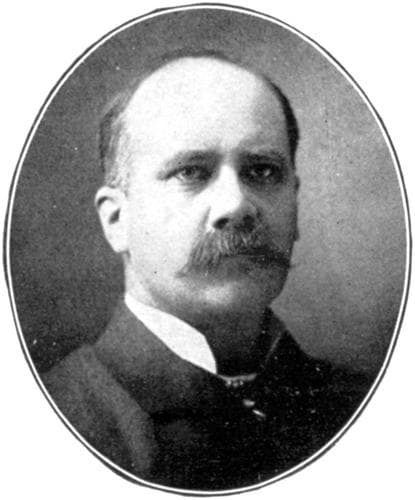
Charles M. Sheldon was a prominent American author best known for his 1896 novel "In His Steps." This influential work, which popularized the phrase "What would Jesus do?" (WWJD), sold millions of copies and had a significant impact on Christian culture and social reform movements. Sheldon's fiction often explored themes of faith, social justice, and the practical application of Christian principles in everyday life.
Kay Lynn Mangum
4.3
Stormie Omartian
4.3
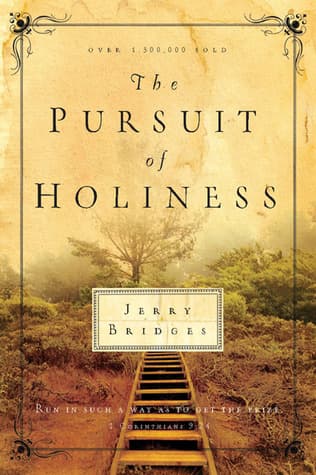
Jerry Bridges
4.3
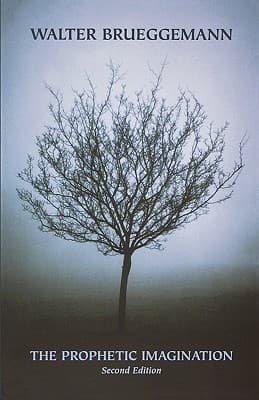
Walter Brueggemann
4.3
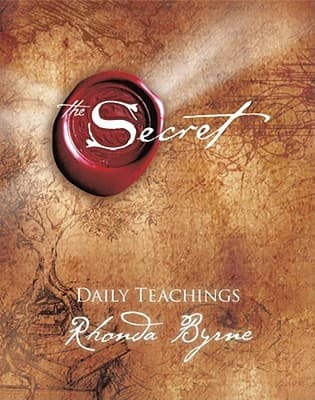
Rhonda Byrne
4.3
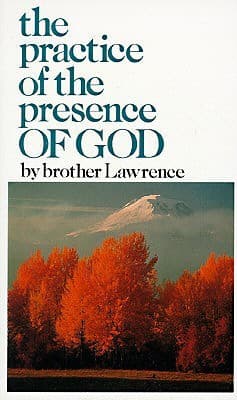
Brother Lawrence
4.3
Joseph Campbell
4.3
Unknown
4.3