BookBrief
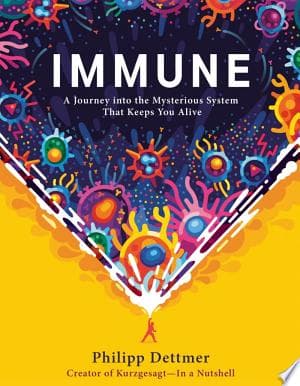
Immune cover
Archivist's Choice

Immune

Philipp Dettmer (2021)

Genre

Science

Reading Time

360 min

Key Themes

See below

Track Your Reading

Sign in to track this book

Explore the unseen war within your body, where your immune system constantly battles invaders to protect you, changing how you think about every sniffle and scratch.

Core Idea

Immune explains the human immune system, showing it as a complex, multi-layered defense constantly fighting pathogens, internal threats, and environmental factors. It describes the roles and interactions of innate and adaptive immunity, the precision of antibodies, the dual nature of inflammation, and the impact of the microbiome. The book corrects common misunderstandings about 'boosting' immunity. It argues that understanding these mechanisms is key to appreciating our biological resilience and handling health issues, emphasizing the balance needed to prevent both under- and over-reactions like autoimmunity and allergies.
Reading time
360 min
Difficulty
Medium
✓ Read this if...
You want a comprehensive, engaging, and scientifically accurate understanding of the human immune system, explained with clear analogies and a sense of wonder, without needing a biology degree.
✗ Skip this if...
You are looking for quick health tips or a diet plan to 'boost' your immune system, or if you prefer highly academic, dense textbooks over an accessible, narrative-driven explanation.

Core idea

The central argument and framework that powers the entire book.

Immune explains the human immune system, showing it as a complex, multi-layered defense constantly fighting pathogens, internal threats, and environmental factors. It describes the roles and interactions of innate and adaptive immunity, the precision of antibodies, the dual nature of inflammation, and the impact of the microbiome. The book corrects common misunderstandings about 'boosting' immunity. It argues that understanding these mechanisms is key to appreciating our biological resilience and handling health issues, emphasizing the balance needed to prevent both under- and over-reactions like autoimmunity and allergies.

At a glance

Reading time

360 min

Difficulty

Medium

Read this if...

You want a comprehensive, engaging, and scientifically accurate understanding of the human immune system, explained with clear analogies and a sense of wonder, without needing a biology degree.

Skip this if...

You are looking for quick health tips or a diet plan to 'boost' your immune system, or if you prefer highly academic, dense textbooks over an accessible, narrative-driven explanation.

Key Takeaways

1

The Constant War Within

Your body is a battlefield, perpetually fighting unseen threats.

Quote

You wake up and feel a tickle in your throat. Your head hurts. You’re mildly annoyed as you get the kids ready for school and dress for work yourself. Meanwhile, an epic war is being fought, just below your skin.

The immune system is an active, ongoing defense. Most of the time, we are unaware of the battles fought for us, from removing early cancer cells to fighting off countless bacteria and viruses. This constant watch allows us to function, often leading us to take for granted the biological effort needed to stay healthy. Understanding this continuous internal struggle changes one's view, seeing health as a constant win against many threats rather than illness as a rare event.

Supporting evidence

The book opens with the immediate, ongoing battle against a common cold, illustrating the sheer scale and complexity of the immune response happening even during minor discomfort.

Apply this

Cultivate a deeper appreciation for your body's silent defenders. Instead of merely complaining about minor symptoms, acknowledge the underlying biological heroism. This awareness can foster better self-care, recognizing that your body is always working to protect you.


immune-system-functionconstant-defensebiological-warfare
2

Innate vs. Adaptive Immunity

Two distinct yet collaborative defense strategies protect you.

Quote

The innate immune system is like the rapid response police force, always on patrol and ready to act immediately but without specific memory. The adaptive immune system is the specialized forces, slow to mobilize but incredibly precise and remembers its enemies.

The immune system has two main parts: innate and adaptive. Innate immunity provides immediate, general protection, acting as the first defense with cells like macrophages and natural killer cells. It recognizes common patterns on pathogens. Adaptive immunity is specific and develops over time, learning to recognize particular invaders and remembering them for future encounters, thanks to B and T cells. These two systems work together, with the innate system often showing threats to the adaptive system for a more specific response. Thi...

Supporting evidence

Dettmer explains the roles of phagocytes (innate) engulfing pathogens and lymphocytes (adaptive) creating antibodies and memory cells, illustrating how they work in concert during an infection.

Apply this

Understand why vaccines are effective: they 'train' your adaptive immune system without you having to suffer the full disease, creating memory cells. This knowledge can also help in appreciating why some infections clear quickly (innate response) while others lead to longer-lasting immunity (adaptive response).

innate-immunityadaptive-immunitylymphocytesphagocytes
3

Antibodies: Precision Guided Missiles

These specialized proteins neutralize threats with incredible accuracy.

Quote

Antibodies are the special forces of the immune system, highly specific molecules designed to perfectly fit and neutralize a particular threat, like a key fitting a very specific lock.

Antibodies, made by B cells, are Y-shaped proteins central to adaptive immunity. Each antibody is designed to recognize and attach to a specific antigen (a unique marker on a pathogen). This attachment can stop a virus from entering cells, mark bacteria for destruction by phagocytes, or start other immune responses. The body can produce a huge variety of antibodies, allowing it to fight an almost endless range of potential invaders. They show the immune system's precision, making sure the response is targeted and effective.

Supporting evidence

The book details how B cells undergo a process of 'somatic hypermutation' and 'affinity maturation' to produce increasingly effective antibodies against a specific pathogen, a process akin to biological trial and error.

Apply this

Vaccines work by stimulating the production of these specific antibodies and memory B cells. When considering booster shots or new vaccines, remember that you're enhancing your body's ability to quickly deploy these highly effective, targeted weapons.

antibodiesb-cellsantigensimmunoglobulins
4

Inflammation: A Necessary Evil

More than just pain, it's a critical part of healing and defense.

Quote

Inflammation is essentially a controlled explosion, a necessary chaos designed to bring help to the battlefield and clear out the debris.

While often uncomfortable, inflammation is a key immune response. When tissues are hurt or infected, immune cells release chemicals that cause blood vessels to widen and become more permeable. This lets more immune cells, fluid, and nutrients reach the site, causing the familiar symptoms of redness, swelling, heat, and pain. These symptoms are not just side effects; they are direct ways to contain the threat, clean up damaged tissue, and begin repair. However, chronic inflammation can be harmful, showing the fine balance the immune sy...

Supporting evidence

Dettmer describes the immediate cellular response to a splinter or wound, where mast cells release histamine, leading to localized swelling and increased blood flow to bring immune cells like neutrophils.

Apply this

Instead of immediately suppressing all inflammation, recognize its beneficial role in acute injuries. For chronic inflammation, however, consult medical professionals, as prolonged inflammatory responses can contribute to various diseases. Lifestyle choices, like diet, can also influence inflammatory levels.

inflammationcytokineshealingacute-response
5

Why 'Boosting' Your Immune System is Nonsense

A balanced immune system is effective, not an overactive one.

Quote

The idea of 'boosting' your immune system is fundamentally flawed, as a hyperactive immune system is often more dangerous than a weak one.

The idea of 'boosting' your immune system is a misunderstanding. A healthy immune system is not always 'on overdrive'; it is balanced, efficient, and appropriate in its responses. An overactive immune system can cause autoimmune diseases, where the body attacks its own tissues, or severe allergic reactions. The goal is not to make it generally stronger, but to support its best function. This means providing necessary nutrients through diet, enough sleep, and managing stress, allowing it to respond effectively when needed and stand dow...

Supporting evidence

The book explains autoimmune diseases like lupus or rheumatoid arthritis as examples of an immune system that is 'boosted' to the point of self-harm, attacking healthy cells and tissues.

Apply this

Focus on holistic health practices – balanced nutrition, regular exercise, sufficient sleep, and stress reduction – rather than chasing 'immune-boosting' supplements. These practices provide the foundational support your immune system truly needs to function optimally, not excessively.

immune-balanceautoimmune-diseaseholistic-healthimmune-supplements
6

The Danger of Autoimmunity

When the immune system turns against itself.

Quote

Imagine your body's elite soldiers suddenly losing the ability to distinguish friend from foe, attacking your own vital organs as if they were invaders.

One of the most concerning failures of the immune system is autoimmunity, where it mistakenly identifies the body's healthy cells and tissues as foreign and attacks them. This can lead to many chronic diseases, from type 1 diabetes (attacking pancreatic cells) to multiple sclerosis (attacking nerve sheaths). The immune system has complex mechanisms, like T cell 'education' in the thymus, to prevent this self-attack, but sometimes these fail. Understanding autoimmunity highlights the delicate balance needed for immune function and the ...

Supporting evidence

Dettmer details how T cells are 'tested' in the thymus to ensure they don't react to 'self' antigens, and how a failure in this process can lead to autoimmune conditions.

Apply this

Be aware of symptoms that might suggest an autoimmune condition and seek early medical consultation. Appreciate the complexity of immune regulation and why indiscriminate immune 'boosting' can be dangerous, potentially exacerbating or triggering autoimmune responses.

autoimmunityself-tolerancet-cellsimmune-disorders
7

Allergies: An Overzealous Response

When harmless substances trigger a disproportionate immune attack.

Quote

Allergies are essentially the immune system overreacting to something that isn't actually a threat, like calling in an airstrike on a squirrel.

Allergies are another case where the immune system's strong defenses are misdirected. Instead of targeting real pathogens, it attacks harmless substances like pollen, pet dander, or certain foods, called allergens. This involves making IgE antibodies and releasing histamine by mast cells, leading to symptoms from mild discomfort (sneezing, itching) to life-threatening anaphylaxis. The 'hygiene hypothesis' suggests that less early exposure to microbes might contribute to this misfiring, as the immune system, lacking real threats, becom...

Supporting evidence

The book explains the role of IgE antibodies binding to mast cells, which then release histamine upon subsequent exposure to an allergen, causing allergic symptoms.

Apply this

If you have allergies, understanding the underlying immune mechanism can help you manage them more effectively, whether through avoiding triggers or using antihistamines. It also highlights the importance of early-life exposure to a diverse microbial environment.

allergiesige-antibodieshistaminehygiene-hypothesis
8

The Gut Microbiome: Your Immune Ally

The trillions of microbes in your gut profoundly influence immune health.

Quote

Your gut is not just a digestive organ; it's a bustling metropolis of microbes, profoundly influencing the training and behavior of your immune system.

The large community of bacteria, viruses, and fungi in our intestines, known as the gut microbiome, plays a surprisingly important role in immune system development and function. These microbes help train immune cells, control inflammation, and even produce beneficial compounds. A varied and balanced microbiome is linked to a strong immune response, while an unbalanced one (dysbiosis) can contribute to various immune-related disorders, including allergies and autoimmune conditions. This relationship shows how our internal systems are ...

Supporting evidence

Dettmer discusses how a diverse gut microbiome in infancy is linked to a reduced risk of allergies and autoimmune diseases later in life, supporting the 'hygiene hypothesis'.

Apply this

Prioritize a diet rich in fiber, fermented foods, and diverse plant-based options to support a healthy gut microbiome. Consider probiotics or prebiotics under medical guidance. Recognize that gut health is integral to overall immune resilience.

gut-microbiomedysbiosisprobioticsprebioticsimmune-gut-axis
9

Cancer and Immune Evasion

Cancer cells are masters of disguise, often outsmarting immune defenses.

Quote

Cancer is not just a disease of uncontrolled growth; it's a battle of wits where rogue cells develop cunning strategies to hide from or even manipulate the immune system.

Our immune system constantly looks for abnormal cells, including early cancer cells, often removing them before they become a problem. However, cancer cells are very adaptable and develop ways to avoid immune detection and destruction. They can hide their identifying markers, release chemicals that suppress the immune system, or even use immune checkpoints to turn off attacking T cells. Understanding these evasion methods is important for developing new immunotherapies, which aim to re-educate or activate the immune system to fight ca...

Supporting evidence

The book touches on how cancer cells can downregulate MHC (Major Histocompatibility Complex) proteins, making them less visible to T cells, or express ligands that activate inhibitory receptors on T cells (e.g., PD-L1/PD-1 interaction).

Apply this

Appreciate the ongoing research into cancer immunotherapies. While lifestyle choices can reduce cancer risk, the immune system's role in detecting and fighting cancer is a complex, active area of study, offering hope for future treatments.

cancer-immunotherapyimmune-evasiont-cellstumor-microenvironment
10

The Future of Immunology

Unlocking the immune system's secrets promises revolutionary medical advances.

Quote

We are only just beginning to truly understand the vast and intricate universe within us. The next century of medicine will undoubtedly be defined by our increasing mastery over the immune system.

Immunology is a fast-growing field, with new discoveries always changing our understanding of health and disease. From personalized cancer immunotherapies that use a patient's own immune cells to fight tumors, to new ways to treat autoimmune diseases and develop universal vaccines, the potential for breakthroughs is huge. The immune system's complexity, second only to the brain, means many mysteries remain. This ongoing research promises to change medicine, offering hope for conditions once thought untreatable by strengthening our bod...

Supporting evidence

The book alludes to the success of checkpoint inhibitors in cancer treatment, which 'take the brakes off' T cells, allowing them to attack tumors, showcasing a major recent immunological breakthrough.

Apply this

Stay informed about immunological advancements, as they will increasingly impact public health and individual treatment options. Support scientific research, as continued investment in immunology will lead to better prevention and cures for a multitude of diseases.

immunotherapyvaccine-developmentpersonalized-medicinefuture-medicine

Critical analysis

Notable Quotes

The immune system is like a highly trained, specialized army that protects your body from invaders.

Introducing the complexity and function of the immune system.

Every cell in your body has a unique 'ID card' – the Major Histocompatibility Complex (MHC) – that tells immune cells whether it belongs or not.

Explaining how the immune system distinguishes 'self' from 'non-self'.

Inflammation is not just a symptom; it's a vital, coordinated response to injury or infection.

Highlighting the crucial role and nature of inflammation.

Vaccines don't just protect you; they protect your community by contributing to herd immunity.

Discussing the broader societal impact and mechanism of vaccines.

The innate immune system is your body's first line of defense, a rapid, non-specific response to any perceived threat.

Describing the characteristics and function of the innate immune system.

Adaptive immunity, however, is a highly specific, memory-based system that learns and remembers pathogens.

Contrasting adaptive immunity with innate immunity.

Antibodies are molecular 'keys' designed to lock onto specific parts of invaders, marking them for destruction.

Explaining the function and mechanism of antibodies.

Autoimmune diseases are tragic examples of the immune system mistakenly attacking the body's own healthy tissues.

Addressing the concept and danger of autoimmune disorders.

The gut microbiome plays an astonishingly large role in shaping and modulating our immune responses.

Emphasizing the connection between gut health and immunity.

Stress, sleep, and nutrition are not just lifestyle choices; they are fundamental pillars of a healthy immune system.

Highlighting practical factors influencing immune health.

Our immune system is constantly making trade-offs, balancing the need to fight invaders with the risk of self-damage.

Discussing the delicate balance and decision-making within the immune system.

The lymphatic system is the often-underappreciated highway for immune cells, transporting them throughout the body.

Shining a light on the crucial role of the lymphatic system.

Evolution has sculpted our immune system over millions of years, leading to its incredible complexity and effectiveness.

Placing the immune system in an evolutionary context.

Quiz

Test Your Knowledge

Ready to see how well you understood this book? Take our interactive quiz with 10 questions.

10
Questions
~5
Minutes
?
Best Score

Key Questions (FAQ)

The immune system is a highly complex network of cells, tissues, and organs that work together to protect the body from harmful invaders like bacteria, viruses, and other pathogens. Without it, the human body would be unable to fight off infections and would quickly succumb to disease.

About the author