BookBrief
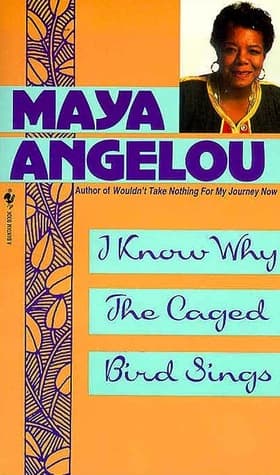
I Know Why the Caged Bird Sings cover
Archivist's Choice

I Know Why the Caged Bird Sings

Maya Angelou (1969)

Genre

Biography / Memoir

Reading Time

360 min

Key Themes

See below

Track Your Reading

Sign in to track this book

Maya Angelou's memoir shows her journey from trauma in the Jim Crow South to finding her voice through literature and self-love.

Core Idea

Maya Angelou's 'I Know Why the Caged Bird Sings' is a memoir about the effects of racism and trauma. It follows a young Black girl growing up in the American South in the 1930s and 40s. Angelou shows how literature, family, and mentors helped her find herself and overcome silence and injustice. The book highlights the power of voice, education, and the human spirit to find strength in difficulty, celebrating individuality and courage.
Reading time
360 min
Difficulty
Medium
✓ Read this if...
You are interested in a classic memoir about overcoming racial prejudice, sexual abuse, and the challenges of adolescence through the power of literature, family, and self-discovery. This book is for readers who appreciate lyrical prose and a deep exploration of the human spirit.
✗ Skip this if...
You prefer fast-paced narratives or are uncomfortable with vivid descriptions of racial discrimination, sexual assault, and the complexities of growing up in a segregated society. Readers seeking a purely chronological, action-driven plot might find the reflective style less engaging.

Core idea

The central argument and framework that powers the entire book.

Maya Angelou's 'I Know Why the Caged Bird Sings' is a memoir about the effects of racism and trauma. It follows a young Black girl growing up in the American South in the 1930s and 40s. Angelou shows how literature, family, and mentors helped her find herself and overcome silence and injustice. The book highlights the power of voice, education, and the human spirit to find strength in difficulty, celebrating individuality and courage.

At a glance

Reading time

360 min

Difficulty

Medium

Read this if...

You are interested in a classic memoir about overcoming racial prejudice, sexual abuse, and the challenges of adolescence through the power of literature, family, and self-discovery. This book is for readers who appreciate lyrical prose and a deep exploration of the human spirit.

Skip this if...

You prefer fast-paced narratives or are uncomfortable with vivid descriptions of racial discrimination, sexual assault, and the complexities of growing up in a segregated society. Readers seeking a purely chronological, action-driven plot might find the reflective style less engaging.

Key Takeaways

1

The Sanctuary of Literature

Books offer refuge and a path to self-discovery amidst trauma.

Quote

I met and fell in love with William Shakespeare.

Angelou's early life included abandonment, racial discrimination, and sexual assault. Literature was her most constant comfort. Reading, and later writing, helped her escape her harsh environment and process complex emotions. Through authors like Shakespeare, Dickens, and Dunbar, she found comfort and connection, realizing her painful experiences were part of a larger human story. This engagement with literature helped shape her identity, foster her intellectual growth, and empower her to find her voice.

Supporting evidence

Her profound connection with Mrs. Flowers, who introduced her to poetry and the beauty of language, and her self-education through reading classic literature, particularly during her period of self-imposed silence.

Apply this

Cultivate a personal library, whether physical or digital, of works that resonate with your experiences or offer new perspectives. Dedicate time daily to reading, treating it not just as entertainment but as a form of self-care and intellectual nourishment. Engage in reflective journaling about what you read to deepen understanding and personal connection.
power-of-readingtrauma-healingintellectual-growth
2

The Weight of Silence

Trauma can lead to a self-imposed muteness, but finding one's voice is liberation.

Quote

For a year or so, I was so ashamed, I couldn't bring myself to speak to anyone.

After her sexual assault, eight-year-old Maya became silent for almost five years. She believed her words had caused her abuser's death. This silence was a result of her trauma and an attempt to control a world that felt out of control. While it was a coping method, it also isolated her, stopping her from processing her pain and connecting with others. Her return to language, helped by Mrs. Flowers, was a moment of healing and reclaiming herself. It showed that silence, while sometimes a shield, can also be a prison, and that speaking...

Supporting evidence

Her sustained period of silence after the assault and her gradual return to speaking through Mrs. Flowers' encouragement and the recitation of poetry.

Apply this

If you find yourself struggling to articulate difficult experiences, seek out a trusted confidant, therapist, or support group. Practice expressing your feelings, even if initially uncomfortable, through journaling, creative writing, or verbal sharing. Recognize that your voice holds power and is essential to your well-being.

trauma-responsefinding-voiceself-expression
3

Resilience in the Face of Racism

Enduring blatant prejudice forged a deep understanding of human dignity and injustice.

Quote

The Black people in Stamps, Arkansas, knew their place.

Growing up in Stamps, Arkansas, Maya saw Jim Crow racism every day. From daily indignities to threats of violence, she saw the systemic dehumanization of Black people. Instead of giving in to sadness, she observed the quiet strength and dignity with which her community, especially her grandmother, handled these injustices. These experiences gave her a deep awareness of social injustice and a strong will to fight it. Her memoir shows that endurance is not just about recovering, but about keeping one's humanity and spirit in the face of...

Supporting evidence

The description of the segregated town of Stamps, the dental visit where the Black dentist refused to treat Maya, and the quiet strength of her grandmother, Momma, in the face of white prejudice.

Apply this

Actively educate yourself about historical and contemporary systemic injustices. Challenge discriminatory remarks or actions when you encounter them. Support organizations working towards racial equity and social justice. Cultivate empathy by listening to and amplifying marginalized voices.

jim-crowracial-injusticecommunity-resilience
4

The Unbreakable Bonds of Family

Despite abandonment and separation, family ties provide a foundational strength.

Quote

Momma was a formidable woman. I never doubted that she loved me.

Maya's early life involved moving between her parents, her grandmother, her mother again, and then living on her own. This instability could have led to a broken sense of self. However, the consistent, though sometimes strict, love and guidance from her grandmother, Momma, gave her a necessary anchor. Even her complex relationship with her mother, Vivian Baxter, though initially a source of abandonment, later became a bond of respect. These family relationships, with their flaws and challenges, contributed to Maya's endurance, teachin...

Supporting evidence

The unwavering presence and moral authority of Momma in Stamps, her brother Bailey's constant companionship and protection, and her eventual reconciliation and close relationship with her mother, Vivian.

Apply this

Invest time and effort in nurturing your family relationships, recognizing their unique strengths and challenges. Seek out and appreciate chosen family members or mentors who provide unwavering support. Understand that family structures can be diverse and that love and care are the most important elements.

family-dynamicsunconditional-lovechildhood-development
5

The Power of Mentorship

Guidance from compassionate adults can unlock potential and foster healing.

Quote

She was the first person I ever heard use the expression 'the good book.'

One of the most important relationships in Maya's youth was with Mrs. Bertha Flowers. She was a refined, educated woman in Stamps who saw past Maya's silence and recognized her potential. Mrs. Flowers gently drew Maya out of her muteness, introducing her to the beauty of spoken language, poetry, and the power of her own voice. She taught Maya that words were tools for connection, expression, and understanding. This mentorship was important for Maya's intellectual development and emotional healing. It provided a model of grace, dignity...

Supporting evidence

Mrs. Flowers's gentle encouragement, her reading of Dickens, and her explicit instruction to Maya on how to truly 'listen' to words, which eventually led Maya to speak again.

Apply this

Seek out mentors in areas where you wish to grow, whether professionally or personally. If you are in a position to mentor, offer your wisdom and guidance to those who could benefit. Be open to learning from individuals who possess qualities you admire, regardless of their formal title or age.

mentorship-impacthealing-through-connectionlanguage-development
6

The Search for Identity

Navigating diverse environments shapes a complex and evolving self-concept.

Quote

I was a Black girl, a St. Louis girl, a Stamps girl, a San Francisco girl.

Maya's journey from the rural, segregated South to the urban, more liberal North and West was a constant negotiation of identity. She dealt with what it meant to be a Black woman in different places, experiencing varying degrees of racism, opportunity, and cultural norms. Her self-concept was not fixed but changed, influenced by her surroundings, her experiences with different communities, and her evolving understanding of herself. This constant search and redefinition of identity, from feeling like an outsider to finding her place, i...

Supporting evidence

Her experiences living in Stamps, St. Louis, and San Francisco, and the contrasting social and racial landscapes of each city, which forced her to adapt and redefine herself.

Apply this

Embrace the evolving nature of your own identity; allow yourself to grow and change with new experiences. Reflect on how different environments and relationships have shaped who you are. Challenge rigid self-definitions and be open to discovering new facets of yourself.

identity-formationcultural-assimilationself-discovery
7

Finding Beauty in the Mundane

An artistic eye can transform ordinary moments into sources of wonder and strength.

Quote

The only thing a Negro woman could hope to be was a maid or a prostitute.

Despite the harsh realities of her childhood, Angelou's story shows a sharp eye and an ability to find beauty and poetry in everyday life. Whether describing life in Stamps, the people in her community, or the details of human interaction, her writing elevates the ordinary. This artistic sense was not just a literary device; it was a way to make a difficult existence meaningful and graceful. By focusing on the details, textures, and emotional impact of her experiences, she turns personal suffering into universal art, showing that even...

Supporting evidence

Her vivid descriptions of the general store, the Sunday church services, the 'powhitetrash' children, and the small, intimate moments of kindness and community.

Apply this

Practice mindfulness to notice and appreciate the small details of your daily life – a beautiful sky, a kind gesture, the taste of a meal. Engage in creative outlets like writing, photography, or art to express your unique perspective and find beauty in your surroundings.

aesthetic-appreciationmindfulnesscreative-expression
8

The Complexities of Race and Class

Race and class intersect to create distinct, often painful, social hierarchies.

Quote

They were dirty, but they were white.

Angelou describes the social layers within her Southern community. Race was the main divider, but class also mattered. She observes the 'powhitetrash' – poor white people who, despite their economic disadvantage, had a higher social standing than Black people just because of their race. This showed the absurdity and cruelty of racial hierarchy, demonstrating how whiteness, regardless of class, gave power and privilege. Her encounters with these white children show the psychological cost of racism, where even children are taught a syst...

Supporting evidence

Her interactions with the 'powhitetrash' children who taunt her, and the incident where the white dentist refuses to treat her, despite her grandmother having a substantial amount of money.

Apply this

Examine how race and class intersect in your own community and society. Challenge assumptions about meritocracy and recognize the systemic advantages and disadvantages people face. Advocate for policies that address both racial and economic inequality.

intersectionalitysocioeconomic-disparityracial-privilege
9

Embracing Individuality and Courage

Defying expectations and forging one's own path requires immense bravery.

Quote

If you don't like something, change it. If you can't change it, change your attitude.

Maya's life showed courage and a refusal to be limited by society. She became the first Black streetcar conductor in San Francisco and navigated early motherhood as a single, young woman. She consistently defied the restrictive roles for Black women of her time. Her willingness to go into new places, experience new cultures, and challenge norms, even when it meant facing judgment or hardship, shows a commitment to self-determination. This takeaway emphasizes that true freedom comes not from external circumstances, but from an internal...

Supporting evidence

Her decision to become a streetcar conductor, her independent spirit in navigating various jobs and living situations, and her eventual journey into the arts.

Apply this

Identify areas in your life where you feel constrained by external expectations. Take small, intentional steps to challenge those constraints and align your actions with your values. Cultivate an internal compass that guides your decisions, even when they diverge from popular opinion.

self-determinationcourage-to-changeunconventional-life

Critical analysis

Notable Quotes

The caged bird sings with a fearful trill, of things unknown but longed for still, and his tune is heard on the distant hill for the caged bird sings of freedom.

The central metaphor of the book, contrasting the free bird with the caged bird, representing the oppression and longing for freedom faced by Black people.

I was a mean child, and a lonesome child, and a child who wished she were a bird.

Maya's self-perception during her early years, reflecting her feelings of isolation and desire for escape.

It was the most important thing in my life to be loved, and I had never been loved.

Maya's deep yearning for affection, especially after experiencing abandonment and feeling unloved.

The fact that the adult world chose to ignore my existence didn't bother me. It was their loss, not mine.

Maya's resilience and a nascent sense of self-worth forming despite feeling overlooked by adults.

If you are for the right, then you have nothing to fear. If you are for the wrong, then you have everything to fear.

A moral lesson imparted to Maya, emphasizing the importance of integrity and justice.

Words mean more than what is set down on paper. It takes the human voice to infuse them with shades of deeper meaning.

Reflecting on the power of spoken language and the nuances of communication, especially important after her period of muteness.

The quality of strength is not in the muscles but in the mind.

A realization about true strength, moving beyond physical prowess to mental fortitude and resilience.

There is no greater agony than bearing an untold story inside you.

A profound statement on the burden of silence and the necessity of expression, particularly relevant to her own experience.

I was no longer a child who could be sent to bed and forgotten.

A moment of maturation and self-assertion, recognizing her growing independence and agency.

Prejudice is a burden that confuses the past, threatens the future and renders the present inaccessible.

A powerful commentary on the destructive nature of prejudice and its impact on individuals and society.

The world had to be a better place if she was in it.

Maya's admiration and love for her grandmother, Momma, who provided a stable and loving presence.

She was a warrior, and a healer, and a storyteller.

Describing the multifaceted strength and wisdom of her grandmother, Momma.

To be left alone was the best state for me to be in.

Maya's coping mechanism and preference for solitude during difficult periods of her childhood.

The children in the South were not just black or white. They were children.

A reflection on the innocence of childhood, which often transcends the racial divisions imposed by adults.

Quiz

Test Your Knowledge

Ready to see how well you understood this book? Take our interactive quiz with 10 questions.

10
Questions
~5
Minutes
?
Best Score

Key Questions (FAQ)

It is a powerful autobiographical memoir by Maya Angelou, detailing her early life experiences, including her childhood in the segregated South, the trauma of sexual assault, and her journey toward self-discovery and resilience. The book explores themes of racism, identity, and the transformative power of literature and self-love.

About the author