BookBrief
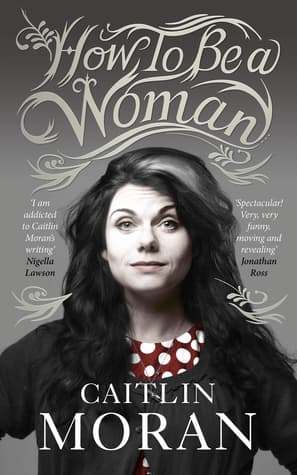
How to Be a Woman cover
Archivist's Choice

How to Be a Woman

Caitlin Moran (2011)

Genre

Biography / Memoir

Reading Time

360 min

Key Themes

See below

Track Your Reading

Sign in to track this book

Caitlin Moran humorously examines the difficult and often contradictory reality of being female, from puberty's awkwardness to modern womanhood's confusing demands.

Core Idea

Caitlin Moran's "How to Be a Woman" is a frank, funny, and personal look at modern womanhood. It explores the societal pressures, physical facts, and big questions women face today. Moran uses memoir and sharp cultural commentary to argue that female empowerment comes from accepting imperfection, questioning old norms, and taking charge of one's body, sexuality, and identity. She supports a practical, inclusive feminism that acknowledges the real experiences of women, from absurd beauty standards to the complex parts of motherhood and careers. Ultimately, she encourages women to find their voice and define womanhood for themselves.
Reading time
360 min
Difficulty
Easy
✓ Read this if...
You're a woman (or know one) who appreciates brutally honest, laugh-out-loud funny, and genuinely insightful commentary on the female experience, feminism, and societal expectations. Perfect for those who enjoy memoirs with a strong, opinionated voice.
✗ Skip this if...
You are easily offended by explicit language, frank discussions of sex and bodily functions, or a no-holds-barred, irreverent approach to sensitive topics. Not for readers seeking a traditional, academic, or overly polite take on gender issues.

Core idea

The central argument and framework that powers the entire book.

Caitlin Moran's "How to Be a Woman" is a frank, funny, and personal look at modern womanhood. It explores the societal pressures, physical facts, and big questions women face today. Moran uses memoir and sharp cultural commentary to argue that female empowerment comes from accepting imperfection, questioning old norms, and taking charge of one's body, sexuality, and identity. She supports a practical, inclusive feminism that acknowledges the real experiences of women, from absurd beauty standards to the complex parts of motherhood and careers. Ultimately, she encourages women to find their voice and define womanhood for themselves.

At a glance

Reading time

360 min

Difficulty

Easy

Read this if...

You're a woman (or know one) who appreciates brutally honest, laugh-out-loud funny, and genuinely insightful commentary on the female experience, feminism, and societal expectations. Perfect for those who enjoy memoirs with a strong, opinionated voice.

Skip this if...

You are easily offended by explicit language, frank discussions of sex and bodily functions, or a no-holds-barred, irreverent approach to sensitive topics. Not for readers seeking a traditional, academic, or overly polite take on gender issues.

Key Takeaways

1

The Bikini Line Industrial Complex

Unpacking the societal pressure for women to constantly groom and depilate.

Quote

The bikini line is the most important battleground of modern feminism.

Moran critiques the constant, often painful, and expensive pressure on women to remove body hair. She argues this is not about hygiene or choice, but a deep-seated expectation that women must always be hairless, smooth, and 'clean' in a way men are not. This constant grooming takes time and money, and it is a subtle way of control, redirecting women's energy from more important pursuits. The 'bikini line' becomes a symbol for the many small, annoying, and often contradictory rules women must follow to be seen as 'acceptable' by societ...

Supporting evidence

Moran recounts her own experiences with waxing, shaving, and epilating, highlighting the discomfort, cost, and time commitment involved, and contrasting it with the lack of similar expectations for men.

Apply this

Challenge personal grooming norms. Ask why certain practices are expected of women and not men. Consider embracing natural body hair as a small act of rebellion and reclaiming personal autonomy.

body-hair-politicspatriarchal-expectationsfeminist-resistance
2

The Uncomfortable Truth of Bras

A critical look at the physical and symbolic constraints of brassieres.

Quote

A bra is a cage for your tits. It's a tiny, uncomfortable, expensive cage.

Moran humorously but sharply examines how common and uncomfortable bras are. She sees them not just as restrictive clothes, but as symbols of society's control over women's bodies. From childhood, girls learn to 'contain' and 'shape' their breasts, often for others' comfort (like men's gaze) rather than their own. The constant adjusting, the digging wires, the high cost—all add to a daily, low-level irritation women are expected to simply put up with. This seemingly minor item serves as a daily reminder of the constant physical and me...

Supporting evidence

Moran describes the physical pain and awkwardness of wearing bras, especially ill-fitting ones, and the relief of taking them off at the end of the day, a universal female experience.

Apply this

Re-evaluate your relationship with bras. Prioritize comfort and personal well-being over societal pressure. Consider 'bra-free' days or alternative support options if comfortable, or simply acknowledge the absurdity of the expectation.

body-imagegendered-clothingcomfort-vs-conformity
3

Motherhood's Messy Reality

Dispelling romanticized notions of parenting and embracing its chaotic truth.

Quote

Motherhood is like a giant, messy, beautiful, exhausting, joyful, terrifying, hilarious, endless, sticky, warm, occasionally smelly, utterly overwhelming, completely brilliant hug.

Moran gives an honest and often funny account of motherhood, removing the perfect, clean version often presented to women. She does not avoid the exhaustion, the loss of personal identity, the sheer amount of bodily fluids, or the moments of extreme frustration. However, she balances this with insights into the intense love, unexpected joys, and life-changing power of raising children. Her story confirms the struggles of new mothers, assuring them that their less-than-perfect experiences are normal and shared, and that it is okay to f...

Supporting evidence

She vividly describes the realities of childbirth, sleep deprivation, breastfeeding challenges, and the constant demands of young children, alongside the profound emotional connection.

Apply this

For aspiring or new mothers, temper expectations with a healthy dose of realism. Seek out honest accounts of motherhood. Prioritize self-care and community support, and forgive yourself for not being a 'perfect' parent.

parenting-realismpostpartum-experiencematernal-identity
4

The Tyranny of 'Having It All'

Deconstructing the myth that women can flawlessly balance career, family, and personal life.

Quote

The phrase 'having it all' is a trap. It's designed to make women feel inadequate if they don't achieve an impossible standard.

Moran looks at the modern feminist idea of 'having it all'—a good career, a happy family, a fulfilling personal life, and a perfect appearance. She shows this is an unrealistic and often harmful expectation that sets women up for failure and guilt. Instead of empowering, it creates a constant feeling of not being good enough. Moran argues that true freedom comes not from trying for an impossible 'all,' but from deciding one's own priorities and accepting that trade-offs happen. The constant search for 'all' often leads to burnout and ...

Supporting evidence

She contrasts the societal pressure on women to juggle everything perfectly with the often less demanding expectations placed on men regarding domestic and childcare responsibilities.

Apply this

Reject the 'having it all' narrative. Define what 'enough' means for your own life. Prioritize consciously and be comfortable with making choices that don't fit a prescribed ideal.

work-life-balancegender-expectationsburnout-prevention
5

Reclaiming the Word 'Feminist'

Demystifying feminism and encouraging women to embrace the label.

Quote

What is a feminist? Someone who believes in equal rights for women. That's it. It's not a dirty word.

Moran argues for a simple and strong definition of feminism: the belief in equal rights for women. She breaks down the negative stereotypes and misunderstandings that often surround the term, showing how these wrong ideas discourage women from identifying with a movement that helps them. By sharing her own path to embracing feminism, she encourages readers to get past their doubts and see that advocating for equality is not extreme or aggressive, but basic to a fair society. She makes the case that if you believe women should have the...

Supporting evidence

Moran shares anecdotes of people shying away from the term 'feminist' and then breaking down the core principles to show how widely accepted they actually are.

Apply this

Don't shy away from the term 'feminist.' Educate yourself and others on its true meaning. Advocate for equal rights and opportunities for women in your daily life and conversations.

feminist-definitiongender-equalitysocial-justice-advocacy
6

The Power of Female Friendship

Celebrating the vital role of women supporting women.

Quote

Female friendship is a sacred, powerful bond. It's the sisterhood that gets you through.

Moran shows the important value of female friendships, seeing them as essential support in a world that often pits women against each other or ignores their experiences. She highlights the unique understanding, empathy, and practical help women can offer each other, from dealing with shared challenges like motherhood and career hurdles to simply providing a place for open talk and validation. These bonds are not just social niceties but essential networks of strength and joy, offering a break from traditional pressures and a source of...

Supporting evidence

Moran recounts specific instances where her female friends provided crucial emotional support, practical help, or simply a much-needed laugh during difficult times in her life.

Apply this

Actively cultivate and cherish your female friendships. Be a supportive friend to other women. Seek out communities and networks of women for mutual encouragement and understanding.

sisterhoodsocial-support-networksinterpersonal-relationships
7

The Awkwardness of Adolescence

Normalizing the often-painful and confusing journey of growing up female.

Quote

Thirteen is a terrible age to be a girl. Your body is betraying you, and no one tells you anything useful.

Moran's memories of her own teen years, especially her 'terrible 13th birthday,' offer a touching and relatable picture of the difficulties young girls face. She captures the physical awkwardness, the social worries, the emerging sexuality, and the deep confusion that often comes with puberty. By openly sharing her experiences with weight problems, social isolation, and early sexual encounters, she normalizes these often-secret struggles. Her story provides comfort to young women, assuring them that their 'terrible' teenage years are ...

Supporting evidence

She details her own physical changes, social ostracization ('boys throwing gravel at her'), and the lack of guidance she received during her teenage years.

Apply this

For young women, understand that awkwardness is a normal part of growing up. Seek out mentors or honest accounts that demystify puberty. For adults, be open and honest with young girls about the realities of adolescence.

pubertyteenage-identitybody-image-issues
8

Embracing Imperfection and Messiness

Rejecting the pressure to be perfectly polished and embracing life's chaos.

Quote

Life is messy. And if you're not making a mess, you're not really living.

Throughout the book, Moran supports the idea that women do not need to be perfectly styled, perfectly behaved, or perfectly organized to be valuable or happy. She enjoys the chaos of family life, the occasional clothing mistakes, and the general untidiness that often comes with a full and engaged life. This acceptance of imperfection directly opposes societal pressures that demand women keep an impossibly perfect image. By sharing her own 'messy' realities, she frees readers to let go of unrealistic standards and find joy and truth in...

Supporting evidence

Her descriptions of her home life, her fashion choices, and her approach to parenting all highlight a comfortable acceptance of disorder and a rejection of unattainable ideals.

Apply this

Consciously let go of perfectionism. Allow for messiness and imperfection in your home, appearance, and life. Prioritize authenticity and joy over striving for an unattainable ideal.

perfectionismauthenticityself-acceptance
9

The Economic Subtleties of Sexism

Highlighting how gender inequality manifests in financial and career disparities.

Quote

The gender pay gap isn't just about salaries; it's about the entire economic structure that undervalues women's work and time.

Moran, while often humorous, addresses the serious economic effects of being a woman. She touches on the gender pay gap, the undervaluing of traditionally 'female' work (like childcare or housework), and the financial sacrifices women often make in their careers. Her experiences moving from a working-class background to a successful journalist show how economic factors connect with gender. She demonstrates that 'feminism' is not just about abstract rights but about real economic independence and women's ability to control their own fi...

Supporting evidence

Moran discusses her own career trajectory and the financial realities of raising children, contrasting her own working life with traditional gender roles.

Apply this

Be aware of the gender pay gap and advocate for equal pay and opportunities in your workplace. Support policies that value women's labor and provide economic security for mothers and caregivers.

gender-pay-gapeconomic-equalitylabor-market-discrimination
10

The Importance of Voice and Storytelling

Emphasizing the power of women's narratives in shaping understanding and change.

Quote

Tell your story. It's the only way things change.

Moran's book itself shows the power of a woman's voice. By sharing her personal, often raw, and always honest experiences, she creates a space for other women to feel seen, heard, and understood. She implies that storytelling, especially from a female perspective, is a key tool for questioning norms, building empathy, and driving social change. Her willingness to discuss taboo subjects—from masturbation to abortion—breaks down barriers and encourages open discussion, showing that personal stories can be deeply political and transforma...

Supporting evidence

The entire memoir serves as evidence, particularly her candid discussions of sensitive topics that are often kept private by women.

Apply this

Find your voice and share your experiences, whether through writing, conversation, or activism. Support and amplify the voices of other women. Read diverse female authors and perspectives.

narrative-powerfemale-authorshipsocial-commentary

Critical analysis

Notable Quotes

We need to reclaim the word 'feminism'. We need to make it cool. We need to make it so that when a young girl says, 'I'm a feminist,' other young girls go, 'Yeah! Me too!'

Discussing the branding and perception of feminism.

The only way to be a woman is to be you. You're a woman, and however you are, that's what being a woman is.

Reflecting on the diverse nature of womanhood and rejecting prescriptive definitions.

You can tell a lot about a man by the way he treats a woman. You can tell a lot about a woman by the way she treats a man. But you can tell everything about a person by the way they treat someone they don't have to treat well.

General observation on character and human interaction.

When a woman says 'I have nothing to wear!' what she really means is, 'There's nothing here for who I'm supposed to be today!'

Humorous insight into the psychology behind women's wardrobe dilemmas.

Every time you feel yourself getting angry, just remember that the person who made you angry is probably a lot happier than you are, and that's the real reason you're angry.

A somewhat cynical but relatable take on managing anger.

If you're a woman, and you're not a feminist, then you're basically saying, 'I like my life the way it is, with all the inequality and oppression, because I'm doing fine.'

A provocative statement challenging women to embrace feminism.

Having children is like having a tattoo on your face. You'll never regret it, but you'll never be able to forget it.

Metaphorically describing the permanent and impactful nature of motherhood.

The sheer amount of effort it takes to keep a woman looking 'normal' is a feminist issue in itself.

Highlighting the societal pressures and labor involved in female beauty standards.

If you don't like your life, change it. If you can't change it, change your attitude. If you can't change your attitude, then you're probably just a miserable person.

A blunt piece of advice on taking responsibility for one's happiness.

Being a woman is like being a man, only you have to deal with periods, and men, and everyone telling you what to do with your body.

Succinctly summarizing the unique challenges faced by women.

The very act of reading a book by a woman is a feminist act. You are saying, 'I want to hear your voice.'

Encouraging the consumption of female authors as a form of feminist support.

It's a feminist issue because it’s about power: who has it, who doesn't, and what happens when you try to take it back.

Defining the core struggle of feminism in terms of power dynamics.

No one is going to give you power. You have to take it. And you have to keep it. And you have to use it. And you have to use it for good.

A call to action for women to seize and wield power responsibly.

Quiz

Test Your Knowledge

Ready to see how well you understood this book? Take our interactive quiz with 10 questions.

10
Questions
~5
Minutes
?
Best Score

Key Questions (FAQ)

'How to Be a Woman' is a humorous and honest memoir by Caitlin Moran, chronicling her journey from a challenging adolescence to adulthood, covering topics like body image, career, relationships, motherhood, and the everyday struggles and joys of being a woman in modern society. It's a personal exploration of feminism and female experience.

About the author

Caitlin Moran

Caitlin Moran is a British writer and broadcaster, best known for her bestselling book "How to Be a Woman." Her work often explores themes of feminism, modern womanhood, and social commentary with a humorous and accessible style. Moran has also written for The Times and presented several television shows.