BookBrief
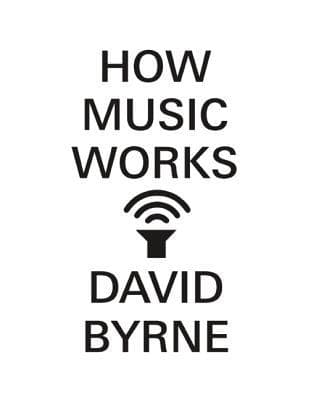
How Music Works cover
Archivist's Choice

How Music Works

David Byrne (2012)

Genre

Biography / Memoir / History / Creativity / Science

Reading Time

8-10 hours

Key Themes

See below

Track Your Reading

Sign in to track this book

David Byrne explores how context, technology, and culture have shaped music, revealing the surprising structure beneath every note and beat.

Core Idea

David Byrne's "How Music Works" argues that music is not an isolated art form but one shaped by its surroundings: technology, economics, cultural venues, and the human brain. Through history, personal stories, and science, Byrne shows how these outside forces dictate how music is made, consumed, and even what it sounds like. He believes understanding these connections helps us appreciate music's past and future.
Reading time
8-10 hours
Difficulty
Medium
✓ Read this if...
You are a musician, music enthusiast, or creative professional interested in the multifaceted forces that shape music, from its creation to its consumption, through historical, technological, and neurological lenses.
✗ Skip this if...
You are looking for a straightforward memoir, a technical guide to music theory, or a purely historical account of a specific genre.

Core idea

The central argument and framework that powers the entire book.

David Byrne's "How Music Works" argues that music is not an isolated art form but one shaped by its surroundings: technology, economics, cultural venues, and the human brain. Through history, personal stories, and science, Byrne shows how these outside forces dictate how music is made, consumed, and even what it sounds like. He believes understanding these connections helps us appreciate music's past and future.

At a glance

Reading time

8-10 hours

Difficulty

Medium

Read this if...

You are a musician, music enthusiast, or creative professional interested in the multifaceted forces that shape music, from its creation to its consumption, through historical, technological, and neurological lenses.

Skip this if...

You are looking for a straightforward memoir, a technical guide to music theory, or a purely historical account of a specific genre.

Key Takeaways

1

Context Shapes Content

Music isn't universal; it's a product of its environment, from the venue to the culture.

Quote

Music is never a universal language. It is profoundly shaped by the context in which it is made, performed, and heard.

Byrne argues that music is not an abstract, universal language, but a contextual phenomenon. The specific environment where music is made and heard dictates its form and use. Different cultures develop distinct musical systems suited to their social structures, available instruments, and performance spaces. A song for a grand cathedral will differ greatly from one for a punk club, not just in genre, but in its sound, harmony, and rhythm. This view challenges the idea of 'pure' music, suggesting that every note and rhythm is tied to it...

Supporting evidence

Byrne details how different musical forms evolved to suit specific venues: opera for grand halls, chamber music for intimate settings, and punk rock for small, loud clubs. He notes how African call-and-response traditions are intrinsically linked to community participation and outdoor performance spaces.

Apply this

When creating or experiencing music, consider its intended context. For musicians, this means consciously designing music for a specific performance space or listening environment. For listeners, understanding the historical and cultural context enriches the appreciation of the music.

contextual-musicarchitectural-acousticscultural-shaping
2

Technology's Transformative Ear

Recording technology didn't just capture music; it fundamentally changed how we create and perceive it.

Quote

The phonograph didn't just record music; it invented a new kind of listening.

Recording technology, from Edison's phonograph to digital audio workstations, did more than just document live performances; it caused a major shift in how music was made and heard. Before recording, music was temporary, existing only during live performances. Recording brought permanence, allowing for repeated, isolated listening. This change let musicians experiment with studio effects, multi-tracking, and editing, creating sounds and arrangements impossible to do live. It also made music more accessible, moving it beyond concert ha...

Supporting evidence

Byrne discusses how the rise of the phonograph led to the 'pop song' format (shorter, more concise) and how multi-track recording allowed artists like The Beatles to create complex, layered soundscapes impossible to perform live, blurring the lines between composition and production.

Apply this

Musicians should embrace technology as a creative tool, not just a recording device, exploring its full potential for sound design and arrangement. Listeners can appreciate how production choices are integral to a song's artistry, rather than merely a reproduction of a live sound.

recording-revolutionstudio-as-instrumentdigital-audio-impact
3

The Artist's Financial Labyrinth

The music industry's economic models are perpetually in flux, often leaving artists at a disadvantage.

Quote

The business of music is a complicated, often unfair, and constantly changing landscape.

Byrne gives a frank, often discouraging, look at the economics of the music industry, revealing its complex and often unfair structures. He explains how artists, especially those not at the top, struggle to make a living amid changing revenue streams, unclear royalty systems, and the dominance of labels and streaming platforms. From the days of record sales to the current streaming era, the artist's share often remains small. He highlights the difficult balance between artistic integrity and commercial success, and the constant need f...

Supporting evidence

Byrne provides detailed breakdowns of how little artists earn from streaming services compared to labels, and how touring, while grueling, often becomes the primary income source for many musicians. He shares personal anecdotes about navigating publishing deals and record contracts.

Apply this

Emerging artists need to be highly informed about legal and financial aspects of the industry, seeking transparent deals and diversifying income streams. Audiences can support artists more directly through platforms like Bandcamp or by attending live shows, rather than solely relying on major streaming services.

music-economicsartist-royaltiesstreaming-dilemma
4

Amateurism's Enduring Power

The DIY spirit and amateur music-making are vital counterpoints to the commercial industry.

Quote

Amateur music-making is not merely a precursor to professional music, but a crucial, vibrant ecosystem in itself.

Byrne supports the often-overlooked world of amateur music-making, arguing that it is not just a training ground for future professionals, but a vital, self-sustaining system with its own value. Garage bands, community choirs, folk musicians, and bedroom producers all add to a rich variety of musical expression untouched by commercial pressure. This 'amateur' spirit often sparks true innovation, free from marketability or genre limits. It builds community, allows for personal expression, and creates a direct relationship with sound. I...

Supporting evidence

Byrne recounts his own origins in the nascent CBGB's punk scene, which was largely driven by amateur musicians creating music outside the mainstream. He highlights the importance of local scenes and community music projects.

Apply this

Encourage and participate in local music scenes, community groups, or simply make music for personal enjoyment. Don't be deterred by a lack of 'professional' skills; the act of creation itself holds immense value.

diy-musiccommunity-musicgrassroots-creativity
5

The Brain's Musical Wiring

Music isn't just entertainment; it's deeply wired into our biology and cognition.

Quote

Our brains are hardwired for music, processing it in complex ways that are still being discovered.

Byrne explores the neuroscience of music, looking at how our brains are uniquely made to perceive, process, and respond to sound. He discusses how music activates multiple brain regions at once—those involved in emotion, memory, motor control, and language—suggesting its deep evolutionary importance. The human ability to find patterns, anticipate rhythms, and get emotional meaning from abstract sounds points to an innate musicality. This is not just about listening; it is about how music affects our mood, coordination, and even social...

Supporting evidence

Byrne references scientific studies on how music affects brain activity, including the release of dopamine, its role in memory recall, and how different cultures share fundamental responses to consonance and dissonance. He notes how music is used therapeutically for conditions like Parkinson's disease.

Apply this

Be mindful of music's impact on your mood and productivity, using it intentionally to enhance focus, relaxation, or emotional states. Explore diverse genres to stimulate different neural pathways and broaden your cognitive horizons.

neuroscience-of-musicmusic-cognitionevolutionary-music
6

The Performer's Paradox

Live performance is a unique, ephemeral communion, distinct from recorded music.

Quote

Live performance is a shared experience, a unique communion between performers and audience that can never be fully captured on record.

Byrne explains the unique magic and paradox of live performance. Unlike recorded music, which offers perfection and permanence, live music thrives on imperfection, spontaneity, and the energy between artists and audience. It is a temporary, unrepeatable event, a shared moment of presence and vulnerability. He describes the heightened sensory experience, the collective emotional connection, and the excitement of seeing creation in real-time. This point emphasizes that despite how common recorded music is, the live show remains an irrep...

Supporting evidence

Byrne shares personal experiences from his extensive touring career, describing the unique challenges and rewards of performing live, the immediate feedback from the crowd, and how different venues influence the performance itself. He contrasts the energy of a Talking Heads concert with a sterile studio session.

Apply this

Seek out and attend live music performances, appreciating them as unique, unrepeatable events. As a performer, embrace the spontaneity and vulnerability of the live setting, fostering genuine connection with your audience.

live-music-experienceperformance-artaudience-engagement
7

Collaboration's Creative Catalyst

Music often flourishes through the synergy of diverse creative minds.

Quote

Collaboration isn't just about sharing work; it's about creating something new that none of the individuals could have achieved alone.

Byrne praises collaboration as a strong driver for musical innovation and growth. He argues that true collaboration goes beyond simply dividing labor, creating a synergistic environment where individual ideas combine into something greater than their parts. The interaction of different perspectives, skills, and feelings can spark new directions, challenge old habits, and lead to truly original creations. Whether in a band, with producers, or across different art forms, working together forces artists to listen, compromise, and expand ...

Supporting evidence

Byrne frequently discusses the dynamics within Talking Heads, his collaborations with Brian Eno, and other artists, illustrating how these partnerships pushed his own musical boundaries and led to iconic works. He details how different personalities and skills contributed to the band's unique sound.

Apply this

Actively seek out opportunities for collaboration, embracing the exchange of ideas and the challenge of working with different creative approaches. Be open to letting go of individual control for the sake of a greater collective vision.

musical-collaborationcreative-synergyband-dynamics
8

The Evolution of Music's Purpose

Music's role in society has constantly shifted, reflecting cultural and technological changes.

Quote

The purpose of music is not static; it evolves with our societies, our technologies, and our understanding of ourselves.

Byrne traces the history of music's purpose, showing that its role in human societies is not fixed. From its ancient roots in ritual and communal bonding, through its development as court entertainment, religious expression, and eventually a commercial product, music has always adapted to the prevailing culture. He shows how the rise of literacy, print, recording, and digital distribution each dramatically changed not just how music was made and consumed, but why it existed in the first place. This historical view reveals that music i...

Supporting evidence

Byrne details music's role in ancient rituals, the development of notation in medieval Europe, its function in classical court society, and its transformation into a mass-market commodity with the advent of radio and records. He discusses how different cultures use music for work, celebration, or spiritual purposes.

Apply this

Consider the historical and cultural context of any music you encounter, understanding its original purpose and how that might have evolved. Recognize that music today serves multiple, often conflicting, purposes, from personal escapism to political protest.

music-historycultural-evolutionsociology-of-music
9

Beyond Western Scales

The Western equal temperament is just one of countless valid musical systems.

Quote

Our Western musical system, with its twelve equal semitones, is a beautiful and powerful invention, but it is not the only way to organize sound.

Byrne challenges the view that Western equal temperament is the default or best musical system. He highlights the wide variety of musical scales, tunings, and rhythmic structures found across different cultures and historical periods. From microtonal music to non-Western modal systems, there are countless ways to organize pitch and time, each with its own aesthetic and emotional logic. This point encourages an open-minded exploration of global music, revealing the arbitrary nature of our familiar twelve-tone system and the rich expres...

Supporting evidence

Byrne discusses various non-Western musical traditions, such as Javanese Gamelan with its distinct tuning systems, African polyrhythms, and Indian ragas, which utilize microtones and complex melodic structures not found in Western classical music.

Apply this

Actively listen to and explore music from diverse global cultures. Challenge your own assumptions about what constitutes 'good' or 'correct' music, and cultivate an appreciation for different sonic aesthetics and organizational principles.

ethnomusicologymicrotonal-musicglobal-music-systems
10

The Joy of Obsession

True creative mastery often stems from an intense, almost obsessive, dedication to a craft.

Quote

To truly excel, or even just to make something truly original, often requires an almost obsessive focus.

Beneath all the technical analysis and industry critique, Byrne subtly shows the important role of passionate obsession in artistic creation. His own journey, and the stories of other musicians he admires, reveal that mastery and innovation rarely come from casual interest. Instead, they demand a deep, almost singular, dedication to one's craft—a willingness to explore deeply, experiment constantly, and endure many failures. This is not about blind ambition, but an intrinsic drive to understand, explore, and push the limits of sound. ...

Supporting evidence

Byrne's entire career with Talking Heads, his solo work, and his various projects are a testament to his own relentless experimentation and deep dive into diverse musical forms and technologies. He alludes to the painstaking process of songwriting and arrangement that defined his band's sound.

Apply this

Identify areas of genuine passion in your own creative pursuits and allow yourself to delve deeply into them, even to the point of 'obsession.' Embrace the process of continuous learning, experimentation, and refinement in your chosen craft.

creative-obsessionartistic-masterydedicated-practice

Critical analysis

Notable Quotes

Music is a mirror of what's going on in the world, and it's also a way to change what's going on in the world.

Discussing music's dual role as reflection and catalyst for change.

The context in which music is experienced is as important as the music itself.

Emphasizing the impact of environment and presentation on musical perception.

When we make music, we are not just making sounds. We are making places.

Exploring how music creates immersive environments and shared spaces.

What makes something original? Often it is just a slight shift of context.

Reflecting on the nature of originality and how small changes can redefine art.

The physical space of a performance venue shapes the kind of music that gets made and heard within it.

Detailing how architectural and acoustic properties influence musical genres and performance styles.

Digital technology has democratized music making, but it has also created a glut of music.

Examining the double-edged sword of technological advancements in music production.

Collaboration is not about compromise; it’s about finding a third thing that neither party would have found on their own.

Offering a nuanced view on the dynamics and benefits of musical collaboration.

Music is a language, but it's a language that speaks to the emotions and the body, not just the intellect.

Distinguishing music from verbal language and highlighting its unique communicative power.

The value of a song is not inherent in the song itself, but in the way it connects with people.

Discussing the subjective and relational nature of musical value and meaning.

Live performance is a ritual, a shared experience that transcends the individual.

Describing the communal and almost spiritual aspect of live music events.

The business of music has always been intertwined with the art of music, sometimes for better, sometimes for worse.

Acknowledging the inseparable relationship between the creative and commercial aspects of music.

Every new technology creates new possibilities and also new limitations for music.

Exploring the ongoing cycle of technological innovation and its impact on musical expression.

Listening is a creative act. The listener completes the circuit, bringing meaning to the sounds.

Empowering the listener by emphasizing their active role in the musical experience.

Music can be a form of social glue, binding people together through shared experience and emotion.

Highlighting music's powerful role in fostering social cohesion and collective identity.

Quiz

Test Your Knowledge

Ready to see how well you understood this book? Take our interactive quiz with 10 questions.

10
Questions
~5
Minutes
?
Best Score

Key Questions (FAQ)

'How Music Works' is David Byrne's exploration of the multifaceted world of music, delving into its history, the influence of technology, the evolution of the music industry, and the creative process. Drawing on his extensive experience, Byrne offers unique insights into how music is made, perceived, and distributed across different eras and cultures.

About the author

David Byrne

David Byrne is a musician, songwriter, record producer, and artist, best known as the co-founder and lead singer of the new wave band Talking Heads. His book "How Music Works" explores the creative process and the evolution of music. Byrne's work often blends diverse musical styles with insightful commentary on culture and society.