BookBrief
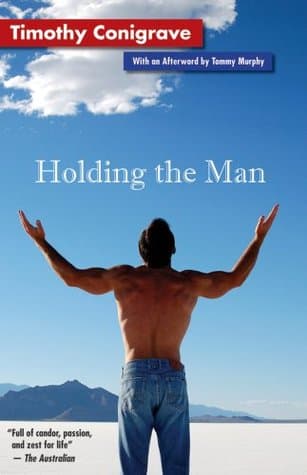
Holding the Man cover
Archivist's Choice

Holding the Man

Timothy Conigrave (1995)

Genre

Biography / Memoir / Romance

Reading Time

300 min

Key Themes

See below

Track Your Reading

Sign in to track this book

In 1970s Australia, a flamboyant drama student and the stoic football team captain begin a tumultuous, decades-long love affair that defies societal norms and grapples with life's ultimate challenges.

Core Idea

Timothy Conigrave's memoir, "Holding the Man," is a raw account of his enduring love affair with John Caleo. It spans over fifteen years, from their high school romance in 1970s Australia to Caleo's death from AIDS in the early 1990s. The book explores unconditional love, navigating societal pressures, infidelities, and the devastating impact of the AIDS epidemic. It argues that love, even when messy, can be a revolutionary force, demanding honesty, forgiveness, and acceptance of another's true self. It also acts as a powerful remembrance and legacy.
Reading time
300 min
Difficulty
Medium
✓ Read this if...
You are seeking a deeply emotional and honest exploration of long-term same-sex love, infidelity, grief, and the profound impact of the AIDS crisis, told with brutal sincerity and a literary flair.
✗ Skip this if...
You prefer a straightforward romance narrative without the complexities of infidelity, or find explicit discussions of sexuality and illness too confronting.

Core idea

The central argument and framework that powers the entire book.

Timothy Conigrave's memoir, "Holding the Man," is a raw account of his enduring love affair with John Caleo. It spans over fifteen years, from their high school romance in 1970s Australia to Caleo's death from AIDS in the early 1990s. The book explores unconditional love, navigating societal pressures, infidelities, and the devastating impact of the AIDS epidemic. It argues that love, even when messy, can be a revolutionary force, demanding honesty, forgiveness, and acceptance of another's true self. It also acts as a powerful remembrance and legacy.

At a glance

Reading time

300 min

Difficulty

Medium

Read this if...

You are seeking a deeply emotional and honest exploration of long-term same-sex love, infidelity, grief, and the profound impact of the AIDS crisis, told with brutal sincerity and a literary flair.

Skip this if...

You prefer a straightforward romance narrative without the complexities of infidelity, or find explicit discussions of sexuality and illness too confronting.

Key Takeaways

1

Unconditional Love Amidst Turmoil

The enduring power of a bond tested by societal norms and personal struggles.

Quote

The memory of him is like a haunting melody, always present, always beautiful, always tinged with the sadness of what we endured.

Timothy and John's relationship, from its innocent high school beginnings to its tragic end, shows a deep, almost fated connection. Their love story is not just about two men in love; it is about the resilience of the human heart in the face of immense external and internal pressures. They navigated a world that largely disapproved of their union, battling societal prejudice, familial disapproval, and the personal challenges of John's struggle with his sexuality and Timothy's infidelities. Despite these obstacles, their bond persisted...

Supporting evidence

Their initial secret courtship in a conservative Catholic high school, the repeated breakups and reconciliations throughout their university years and adult lives, and their eventual decision to live together despite John's earlier attempts at heterosexual relationships.

Apply this

Embrace the complexities and imperfections within your most significant relationships. True commitment often means navigating difficult periods and personal flaws, rather than seeking a flawless ideal. Recognize that love can manifest in various forms and endure through significant challenges if the underlying connection is strong.

enduring-loverelationship-resiliencesocietal-prejudice
2

The Weight of Secrecy and Identity

How societal expectations force individuals to conceal their true selves, leading to internal conflict.

Quote

Living a lie, even a small one, corrodes the soul. John knew this more than anyone.

John Caleo's journey is a poignant exploration of the psychological burden of living in the closet. As the captain of the football team, he embodied a masculine ideal, making his attraction to Timothy a deep internal conflict. This societal pressure to conform to heteronormative expectations forced John into periods of denial, attempting to live a 'normal' heterosexual life, which only brought him more pain and confusion. His struggle shows the devastating impact of a society that does not readily accept diverse sexualities, leading t...

Supporting evidence

John's initial reluctance to publicly acknowledge his relationship with Timothy, his attempts to date women and even become engaged, and the internal anguish he experienced trying to reconcile his true desires with his public persona.

Apply this

Cultivate environments that foster authenticity and acceptance, both for yourself and others. Recognize the psychological toll of suppressing one's true identity and advocate for spaces where individuals feel safe to express who they are without fear of judgment or reprisal.

closeted-identitysocietal-pressureself-acceptance
3

Infidelity as a Coping Mechanism

Exploring the complex motivations behind straying in committed relationships.

Quote

My own wanderings were a desperate attempt to fill a void, to prove something, to escape the intensity of what John and I shared.

Timothy's repeated infidelities, though painful for John and a source of conflict in their relationship, are presented not merely as betrayals but as complex manifestations of his own emotional state. They seem to stem from a blend of insecurity, a desire for external validation, and perhaps a struggle with the intensity and perceived confinement of his bond with John. In a time when openly gay relationships were marginalized, Timothy's seeking of casual encounters could also be interpreted as a form of rebellion or an attempt to asse...

Supporting evidence

Timothy's detailed accounts of his various sexual encounters outside of his relationship with John, often occurring during periods of separation or emotional distance, and his later reflections on the reasons behind these actions.

Apply this

Examine the root causes of destructive patterns in relationships, rather than just addressing the symptoms. Open communication about insecurities, desires, and unmet needs can be crucial in preventing or understanding infidelity, fostering a more empathetic approach to relational challenges.

infidelity-psychologyemotional-voidrelationship-challenges
4

The Shadow of AIDS

How the AIDS epidemic devastated a generation and redefined love and loss.

Quote

AIDS didn't just take lives; it stole futures, shattered dreams, and forced a generation to confront mortality with brutal intimacy.

The arrival of the AIDS epidemic casts a long, devastating shadow over the latter half of Timothy and John's story. It transforms it into a powerful historical document of a generation's struggle. The book vividly portrays the fear, stigma, and grief associated with the disease, particularly within the gay community. It details the agonizing decline of both John and Timothy, highlighting the lack of effective treatments at the time and the immense physical and emotional toll on those afflicted and their caregivers. This aspect of the ...

Supporting evidence

The detailed accounts of John's deteriorating health, the emotional and physical burden on Timothy as his primary caregiver, and Timothy's own subsequent diagnosis and eventual death from AIDS-related complications.

Apply this

Cultivate empathy and understanding for those affected by health crises, past and present. Support public health initiatives and research, and remember the human stories behind statistics, ensuring that the lessons learned from past epidemics are not forgotten.

aids-epidemicgay-historygrief-loss
5

The Power of Forgiveness and Reconciliation

Finding peace and understanding even after deep wounds and betrayals.

Quote

In the face of death, all the petty grievances and past hurts faded, leaving only the profound, undeniable truth of our love.

Despite the challenges, infidelities, and periods of separation, Timothy and John repeatedly found their way back to each other, culminating in a reconciliation in the face of John's terminal illness. This journey highlights the power of forgiveness—both self-forgiveness and forgiveness of a partner—in sustaining a deep connection. Their ability to let go of past hurts and focus on their enduring love during John's final years shows the transformative potential of empathy and understanding. It suggests that true love is not about neve...

Supporting evidence

Their decision to move in together again as John's health declined, the intimate care Timothy provided, and the shared moments of peace and acceptance they found in his final days, despite their tumultuous past.

Apply this

Practice forgiveness in your own relationships, recognizing that holding onto grudges often hurts you more than the other person. Seek reconciliation and understanding, especially in significant relationships, as it can lead to profound emotional healing and strengthen bonds.

forgivenessreconciliationemotional-healing
6

Memoir as a Legacy and Act of Love

Writing as a means to process grief, honor a life, and leave a lasting testament.

Quote

This book is not just my story; it is our story, a monument to a love that defied the odds and the silence.

Timothy Conigrave's act of writing 'Holding the Man' is itself a powerful takeaway. It is a raw, honest, and deeply personal eulogy for John, but also for himself and a generation lost to AIDS. By documenting their shared life, their struggles, and their unwavering love, Timothy transforms his immense grief into a tangible legacy. The memoir becomes an act of defiant remembrance, ensuring that John's life, and their relationship, would not be forgotten or silenced by societal prejudice or the oblivion of disease. It shows the catharti...

Supporting evidence

The existence of the book itself, written by Timothy in the final stages of his own illness, clearly intended as a tribute and a record of their life together.

Apply this

Consider journaling or creative expression as a way to process significant life events, grief, or personal experiences. Recognize the importance of personal narratives in shaping collective memory and understanding, and support the voices of those who share their stories.

memoir-writinggrief-processingstorytelling-power
7

The Interplay of Love, Sex, and Identity

Navigating the complex and often conflicting elements of self and relationship.

Quote

We were a tapestry of contradictions, weaving together passion, pain, loyalty, and betrayal, all in the name of love.

The memoir dissects the often messy relationship between love, sex, and personal identity. For both Timothy and John, their sexual identities were deeply intertwined with their love for each other, yet also a source of external conflict and internal struggle. John's difficulty in reconciling his public image with his private desires, and Timothy's own exploration of sexuality through multiple partners, illustrate how these elements are not always harmonious. The book challenges the simplistic notion that love alone is sufficient for a...

Supporting evidence

John's attempts at heterosexual relationships while still deeply loving Timothy, Timothy's infidelities, and the ongoing conversations and arguments they had about their sexual experiences and commitment.

Apply this

Engage in honest self-reflection about your own needs and desires within relationships, and communicate them openly with your partner. Understand that identity, love, and sexual expression are dynamic and can evolve, requiring ongoing dialogue and mutual understanding.

sexual-identityrelationship-dynamicsself-exploration
8

The Long Arc of Acceptance

The gradual, often painful, journey towards self-acceptance and societal understanding.

Quote

It took years, decades even, for us to truly own who we were, and for the world around us to slowly, grudgingly, begin to see us.

Timothy and John's story spans several decades, offering a powerful look at the evolving acceptance of LGBTQ+ people, both personally and societally. From the secretive high school romance to the later years where they could live more openly, the memoir illustrates a slow, arduous journey towards self-acceptance for both men. John's internal battle with his sexuality is particularly representative of this struggle, showing how deeply internalized homophobia can be. Simultaneously, the book implicitly charts the gradual, though still i...

Supporting evidence

The contrast between their furtive early relationship and their later decision to live openly together, as well as the initial reactions of family and friends versus later, more accepting stances.

Apply this

Recognize that personal growth and societal change are often long-term processes. Practice patience and persistence in your own journey of self-acceptance and contribute to creating a more inclusive and understanding world for all identities.

lgbtq-acceptancepersonal-growthsocietal-change
9

The Unapologetic Honesty of Grief

Confronting the raw, unfiltered emotions of loss without embellishment.

Quote

Grief is a landscape you must walk through, not around. And it is ugly, beautiful, and utterly inescapable.

The 'unapologetic honesty' lauded by the playwright who adapted the book is most evident in Timothy's portrayal of grief. He does not shy away from the messy, often contradictory emotions that accompany profound loss—the anger, the despair, the moments of dark humor, and the sheer physical pain of missing someone. His narrative avoids sentimental clichés, instead offering a visceral account of watching a loved one succumb to illness and then grappling with the aftermath. This raw depiction is a vital counter-narrative to sanitized ver...

Supporting evidence

Timothy's detailed descriptions of John's physical decline, his own emotional breakdowns, his struggles with depression and anger after John's death, and his candid reflections on the intensity of his sorrow.

Apply this

Allow yourself and others to experience grief in its authentic form, without judgment or pressure to 'get over it' quickly. Create space for honest emotional expression during times of loss, understanding that healing is not linear or always pleasant.

grief-honestybereavementemotional-processing
10

Love as a Revolutionary Act

How personal connection can defy and challenge oppressive norms.

Quote

Our love was a quiet revolution, waged in bedrooms and whispered conversations, against a world that told us we shouldn't exist.

At its core, Timothy and John's love story is a revolutionary act. In a deeply conservative society that offered no framework for their relationship, their decision to love each other, repeatedly and fiercely, was a profound act of defiance. Their bond challenged not only societal homophobia but also the narrow definitions of family, commitment, and masculinity prevalent at the time. By simply existing and loving, they pushed against the boundaries of what was considered acceptable, paving the way for greater visibility and understand...

Supporting evidence

The initial secrecy of their relationship, the disapproval from some family members, and their eventual choice to live openly together despite the prevailing social climate, culminating in Timothy's decision to write their story.

Apply this

Recognize the inherent power of authentic relationships to challenge norms and foster acceptance. Support and celebrate diverse forms of love and partnership, understanding that every visible, loving relationship contributes to a more inclusive world.

revolutionary-lovelgbtq-rightssocial-change

Critical analysis

Notable Quotes

I never felt a need to explain or justify my love for John. It was just there, like breathing.

Reflecting on the naturalness and depth of his love for John.

It's hard to imagine life without him, and I don't want to. He's my anchor.

Expressing his profound dependence and connection to John.

We were just two boys, trying to figure out who we were, and who we were to each other.

Describing the early stages of his relationship with John.

Love isn't always neat and tidy. Sometimes it's messy and complicated, but it's still love.

Acknowledging the complexities and challenges within their long-term relationship.

The hardest part wasn't the dying, it was the waiting.

Reflecting on the agonizing period of anticipating death due to AIDS.

He taught me that love isn't just about grand gestures, but about the small, everyday kindnesses.

Recognizing the subtle yet profound ways John expressed his love.

We lived a lifetime in those few years, a lifetime of joy and sorrow, laughter and tears.

Summarizing the intense and condensed experience of their relationship.

The world outside didn't always understand us, but inside our bubble, we were everything.

Highlighting their shared intimacy and self-sufficiency despite external judgment.

Grief is a strange beast. It claws at you when you least expect it, and sometimes, it brings unexpected comfort.

Musing on the unpredictable nature of grief after loss.

Holding the man. It was what I always wanted to do, and what I eventually had to let go of.

Connecting to the title of the book and the ultimate act of releasing his love.

Our love wasn't a fairy tale, but it was real. And real love, even with its flaws, is the most beautiful kind.

Contrasting their imperfect but genuine love with idealized romance.

He never stopped fighting, not until the very end. And I never stopped loving him.

Describing John's resilience in the face of illness and his own enduring affection.

Sometimes, the greatest act of love is simply being there, through thick and thin.

Emphasizing the importance of presence and unwavering support in a relationship.

We built a life together, piece by piece, even when the world tried to pull us apart.

Reflecting on their persistent effort to maintain their relationship despite external pressures.

Quiz

Test Your Knowledge

Ready to see how well you understood this book? Take our interactive quiz with 10 questions.

10
Questions
~5
Minutes
?
Best Score

Key Questions (FAQ)

'Holding the Man' is a poignant memoir by Timothy Conigrave, chronicling his enduring love story with John Caleo, whom he met in high school. It follows their relationship over many years, through societal challenges, personal struggles, and the devastating impact of the AIDS epidemic in Australia.

About the author