“I'm a walking, talking, breathing example of the American dream.”
— Claude Bukowski reflecting on his life and identity within American society.

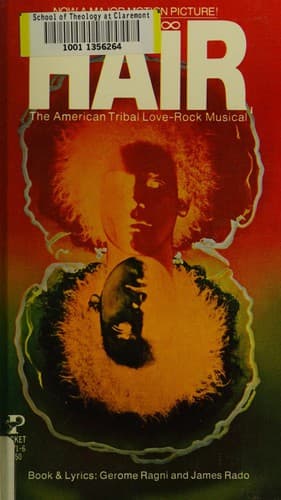
Gerome Ragni (2015)
Genre
Creativity
Reading Time
N/A (musical, not a book)
Key Themes
See below
Sign in to track this book
Hair shows the raw energy of youth, rebellion, and a search for freedom in the 1960s counterculture, all set to a rock score that changed Broadway.
The musical starts with the 'tribe' – a group of free-spirited, anti-establishment hippies – in Central Park, celebrating their shared life and the start of the Age of Aquarius. Claude Bukowski, a young man from Oklahoma, has just arrived in New York City after being drafted into the Vietnam War. He watches the tribe with interest and some worry. Berger, the lively leader, immediately likes Claude, inviting him into their world of love, peace, and protest. Sheila Franklin, a student activist, and Jeanie, a pregnant tribe member, are also introduced, setting up the group's main relationships and beliefs.
The tribe performs 'Hair,' a song celebrating their long, messy hair as a clear rejection of social rules and a symbol of their freedom. This scene shows the clash between older generations' expectations and young people's desire for self-expression. Claude, still dealing with his draft and family expectations, feels drawn to their ideas but is slow to fully join. He shows the inner conflict many young men faced, torn between duty and the growing counter-culture. Berger and the others try to get Claude to let go and embrace their life, including their protest against the war.
The tribe protests the Vietnam War in several ways, including a symbolic draft card burning. Berger tries to get Claude to burn his own draft card, seeing it as the ultimate act of defiance and loyalty to their cause. Claude is clearly torn, afraid of legal trouble but also feeling more sympathy for the tribe's anti-war stance. This moment is a key turning point, showing the intense pressure on young men to pick a side. While some tribe members have already burned theirs, Claude's hesitation highlights how serious such a decision is and its personal cost.
During a drug-induced 'trip,' the tribe confronts and makes fun of the authority figures and social expectations they reject. Parents, politicians, and military leaders appear as exaggerated characters, showing the conservative values and pro-war ideas the youth are rebelling against. This strange scene uses humor and absurdity to show the generation gap and the tribe's deep distrust of the establishment. Claude watches these visions, further taking in the tribe's criticisms of society, though his personal struggle with fitting in stays central. The scene comments strongly on the perceived hypocrisy of the adult world.
The tribe openly embraces free love and sexual liberation, challenging old ideas about relationships and sex. Songs like 'Sodomy' and 'Black Boys/White Boys' celebrate different sexualities and a rejection of prudishness. Sheila, Berger, and Claude navigate a complex love triangle, showing how relationships are fluid within the tribe. Sheila is drawn to Claude's honesty but also to Berger's rebellious spirit. This part of their lifestyle is presented as another form of freedom and a break from their parents' restrictive norms, stressing their search for real connection over traditional structures.
Claude's inner struggle grows as his draft date gets closer. He wants the freedom and friendship of the tribe but is also haunted by a sense of duty and the fear of breaking the law. He expresses his worries and doubts in songs like 'Manchester, England' and 'I Got Life,' showing his desire for a meaningful life beyond the war. Berger and Sheila try to convince him to resist the draft, offering him a sense of belonging and a cause, but the weight of his decision is his alone. His journey shows the moral problem many young men faced during the Vietnam era.
The tribe plans and takes part in a large 'be-in' and protest against the Vietnam War, drawing a bigger crowd of like-minded people. This scene shows their collective strength and their strong commitment to peace and social change. They chant, sing, and take symbolic actions to show their anger and demand an end to the conflict. The energy of the protest is clear, highlighting the collective voice of the anti-war movement. Claude is there, seeing the tribe's passion and belief, but still on the edge, his personal decision heavy on his mind amid the excitement.
Despite the tribe's efforts and his own deep doubts, Claude makes the difficult decision to report for army induction. He says a quiet goodbye to his friends, knowing his path, for now, is different from theirs. This moment is marked by a deep sadness, as Claude chooses to follow social expectations rather than fully embracing the counter-culture. His departure reflects the personal sacrifices and hard choices made during wartime, showing the individual cost of the conflict and the limits of rebellion for some.
In a strong, symbolic act of defiance, Berger burns what he thinks is Claude's draft card. He does this with conviction, meaning to protect his friend and further their anti-war cause. However, the audience knows Claude has already reported for duty, making Berger's action pointless for Claude's immediate fate. This dramatic irony shows the sad gap between the tribe's hopes and the harsh facts of war and conscription, highlighting the futility of some protests and the individual paths people take.
The tribe continues their life of protest and shared living, but the war's shadow hangs over them. News eventually reaches them that Claude has been killed in Vietnam. This devastating news breaks the tribe's hopeful spirit, bringing the harsh reality of the war directly into their lives. The earlier optimism is replaced by deep loss and grief. The final scenes show the tribe mourning Claude, their lively energy subdued by the weight of his sacrifice, showing the terrible human cost of the conflict they so strongly opposed. They gather in memory, their future uncertain.
After Claude's death, the tribe performs a moving requiem, a strong and emotional tribute to their lost friend. The song 'Let the Sunshine In' becomes a song of lasting hope and strength, even amid deep sorrow. While Claude's death is a clear reminder of the war's brutality, the tribe's continued singing and shared spirit suggest their ideals of peace, love, and freedom will last. The ending is bittersweet, acknowledging the tragedy but also confirming the power of their movement and their shared belief in a better future, even as they face an uncertain world without Claude.
The Protagonist
Claude transforms from a hesitant observer to a conflicted participant, ultimately choosing duty over defiance, leading to his tragic death in Vietnam.
The Supporting Character / Co-Protagonist
Berger remains steadfast in his anti-establishment ideals, experiencing personal loss but never wavering in his commitment to peace and freedom.
The Supporting Character
Sheila evolves from a passionate activist to someone who experiences profound grief, yet remains a beacon of hope and resilience for the tribe.
The Supporting Character
Jeanie's arc is largely static, representing the enduring hope for a new generation within the tribe.
The Supporting Character
Woof remains a consistent figure of sexual liberation and defiance throughout the narrative.
The Supporting Character
Hud remains a strong voice for racial equality and anti-war sentiment throughout the story.
The Supporting Character
Dionne's arc is less about personal transformation and more about embodying the collective voice of the tribe.
The Supporting/Mentioned
Collectively, they endure personal loss but maintain their commitment to their ideals.
The Vietnam War is the main background, forcing young men like Claude into unwanted military service. The tribe's whole life is a protest against this war, shown in draft card burnings, be-ins, and songs that question authority and the war's morality. The war's terrible impact is finally shown through Claude's tragic death, turning abstract political arguments into a very personal loss for the tribe. Scenes like the draft card burning and the final song for Claude directly address the human cost of the conflict and the deep disappointment it caused.
“What is the reason for this war? Do you know? Do you know why?”
Claude's inner struggle shows this theme. The tribe lives for ultimate freedom – freedom of expression (long hair), sexual freedom (free love), and political freedom (anti-establishment). Claude, however, is caught between this liberating life and the social pressure to conform, especially regarding his draft notice. His decision to report for duty, despite his growing connection to the tribe, shows how hard it is to choose freedom over perceived safety or duty, leading to his death. The contrast between Claude's initial appearance and the tribe's radical style visually highlights this theme.
“I got life, mother, I got laughs, father, I got good times, brother, and I ain't nothin' but free.”
The musical celebrates finding and showing individual and group identity, especially through hair. For the tribe, long hair is not just a style; it is a political statement, a rejection of conservative norms, and a symbol of their unique identity. The characters explore their identities through their sexuality (Woof), their racial pride (Hud), and their collective voice in protest. Claude's journey is about finding his own identity, whether as a 'soldier' or a 'hippie,' and the pain of not fully being able to bring these competing selves together. The opening 'Aquarius' number and the song 'Hair' directly show this theme.
“Give me a head with hair, long beautiful hair. Shining, gleaming, streaming, flaxen, waxen.”
The tribe shows an ideal of shared love and support, forming an alternative family based on shared values rather than old structures. They practice free love, challenging traditional monogamy and social taboos. This sense of community gives comfort and strength against the outside pressures of war and conservative society. This contrasts sharply with the 'straight' world, showing the big generation gap between the youth's progressive ideas and their parents' more traditional values. The love triangle between Claude, Berger, and Sheila, and Jeanie's pregnancy within the tribe, all show different parts of love and community.
“Let the sunshine, let the sunshine in, the sunshine in.”
The entire story is filled with rebellion against the establishment, shown in various ways: political protest against the war, rejection of consumerism, challenging sexual norms, and embracing alternative lifestyles. The tribe's actions are driven by a desire for social change, pushing for peace, equality, and a more caring world. While their methods are often unusual, their goal is to change society. Berger's leadership and the tribe's collective actions, like the be-in, directly show this rebellious drive for change.
“We are the youth of the world.”
Long hair as a visual and ideological symbol of rebellion and freedom.
The long, unkempt hair of the tribe members is not merely a stylistic choice; it's a potent symbol. It represents a defiant rejection of conservative societal norms, military haircuts, and the 'straight' world's expectations. It signifies freedom, individuality, and a break from the past. The song 'Hair' explicitly celebrates this symbolism, making it a central motif. For Claude, the idea of growing his hair long is initially a step towards embracing the tribe's ideals, and its absence marks his conformity.
The audience's knowledge of events that characters are unaware of, particularly regarding Claude's fate.
Dramatic irony is powerfully used in the scene where Berger burns Claude's draft card. The audience knows that Claude has already reported for duty, rendering Berger's defiant act tragically futile in terms of Claude's personal situation. This creates a profound sense of pathos, highlighting the disconnect between the tribe's idealistic actions and the harsh realities of war. It underscores the ultimate powerlessness of individual acts of protest against a larger, unyielding system, making Claude's death even more impactful.
Surreal, drug-induced visions used to satirize society and explore characters' inner worlds.
The hallucinatory 'trip' sequence serves as a powerful theatrical device. It allows the musical to visually and audibly satirize figures of authority (parents, politicians, generals) and the societal values the tribe rejects. This surrealism breaks away from conventional narrative, immersing the audience in the subjective experience of the characters. It also provides a metaphorical space for Claude to confront his fears and the conflicting pressures he faces, revealing his subconscious anxieties and the tribe's collective disillusionment with the establishment in a highly stylized manner.
Large-scale communal gatherings and musical numbers that embody the spirit of the movement.
The 'be-in' scenes and many of the musical's large ensemble numbers function as a plot device by showcasing the collective power, unity, and expressive nature of the counter-culture movement. These moments are not just entertainment; they are acts of protest and community building. They immerse the audience in the energy of the era, demonstrating how music and communal gathering were central to the hippies' way of life and their fight against the war. They visually and audibly represent the tribe's strength in numbers and their shared ideology.
“I'm a walking, talking, breathing example of the American dream.”
— Claude Bukowski reflecting on his life and identity within American society.
“Let the sun shine in.”
— The cast singing during 'Let the Sunshine In' expressing hope and a desire for peace.
“Harmony and understanding, sympathy and trust abounding.”
— Part of the lyrics from 'Aquarius' setting the scene for a new age.
“I got my hair, I got my head, I got my brains, I got my ears, I got my eyes, I got my nose, I got my mouth, I got my smile, I got my tongue, I got my chin, I got my neck, I got my boobs, I got my ass, I got my arms, I got my hands, I got my fingers, I got my legs, I got my feet, I got my toes, I got my liver, I got my blood, I got life.”
— Berger's rapid-fire enumeration of body parts and attributes, celebrating the self.
“Why do I live, why do I die? What is the reason?”
— Claude's existential questioning about his purpose and mortality.
“We don't want to die. We just want to live.”
— A general sentiment of the tribe, emphasizing a desire for peace over war.
“How can people be so heartless? How can people be so cruel?”
— Part of the lyrics in 'Easy to Be Hard' reflecting on societal indifference.
“Gimme some truth.”
— A common plea from the characters for honesty and transparency.
“The mind is a beautiful thing to waste.”
— A counter-cultural idea suggesting that formal education might not be the only path.
“I believe in love, not war.”
— A core philosophy of the hippie movement and the characters in the play.
“I am a psychedelic, soul-searching, love-giving, free-wheeling freak!”
— A character embracing their identity within the counter-culture.
“This is the dawning of the Age of Aquarius.”
— The opening lines of the musical, setting the stage for a transformative era.
“My generation wants to change the world.”
— A bold statement of intent from the youth of the 1960s.
“I'm not a hippie, I'm just me.”
— A character asserting individuality beyond labels.
Ready to see how well you understood this book? Take our interactive quiz with 10 questions.