BookBrief
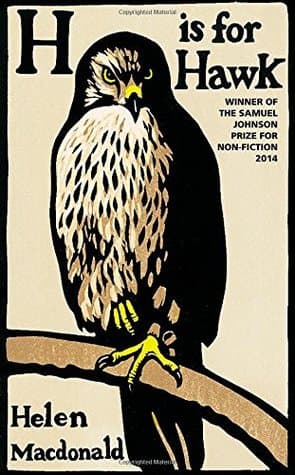
H is for Hawk cover
Archivist's Choice

H is for Hawk

Helen Macdonald (2014)

Genre

Biography / Memoir / Science

Reading Time

600 min

Key Themes

See below

Track Your Reading

Sign in to track this book

After her father dies, a falconer trains a wild goshawk, mirroring her struggle with loss and the bird's untamed spirit, while also dealing with another falconer's legacy.

Core Idea

Helen Macdonald's "H is for Hawk" explores grief after her father's sudden death, which she faces by training a Goshawk named Mabel. This intense process reflects her own sorrow, drawing parallels with T.H. White's similar attempt to escape suffering through falconry. The book shows that healing comes not from controlling grief, but from fully experiencing its wild nature, letting it change how one understands self, memory, and the connection between humans and the wild.
Reading time
600 min
Difficulty
Medium
✓ Read this if...
You are grappling with profound loss, fascinated by the natural world (especially birds of prey), or interested in a literary memoir that blurs the lines between personal trauma, natural history, and the human psyche.
✗ Skip this if...
You prefer straightforward narratives without extensive historical digressions or detailed descriptions of animal training, or if you are sensitive to graphic descriptions of hunting and predation.

Core idea

The central argument and framework that powers the entire book.

Helen Macdonald's "H is for Hawk" explores grief after her father's sudden death, which she faces by training a Goshawk named Mabel. This intense process reflects her own sorrow, drawing parallels with T.H. White's similar attempt to escape suffering through falconry. The book shows that healing comes not from controlling grief, but from fully experiencing its wild nature, letting it change how one understands self, memory, and the connection between humans and the wild.

At a glance

Reading time

600 min

Difficulty

Medium

Read this if...

You are grappling with profound loss, fascinated by the natural world (especially birds of prey), or interested in a literary memoir that blurs the lines between personal trauma, natural history, and the human psyche.

Skip this if...

You prefer straightforward narratives without extensive historical digressions or detailed descriptions of animal training, or if you are sensitive to graphic descriptions of hunting and predation.

Key Takeaways

1

Grief as a Wild Beast

Macdonald confronts her profound loss by embracing the untamed ferocity of a goshawk.

Quote

I was outside the human and the human world. I was a hawk.

Grief is often shown as a heavy weight or a slow pain, but Macdonald describes it as a primal, almost animalistic force. After her father's sudden death, she doesn't seek comfort in usual ways; instead, she enters the difficult, isolating world of training a goshawk, Mabel. This choice is symbolic: the goshawk, known for its fierce independence and predatory nature, reflects Macdonald's own untamed sorrow and rage. She doesn't just watch Mabel; she tries to inhabit the hawk's mind, a process that blurs the lines between human and anim...

Supporting evidence

Macdonald recounts how, in her deepest grief, she felt a profound disconnect from human society, describing herself as 'a hawk' and finding a strange kinship with Mabel's wildness. Her decision to train a goshawk, despite its notorious difficulty, directly follows her father's death.

Apply this

When facing overwhelming emotions, consider engaging in activities that allow you to channel or externalize those feelings in a tangible, even challenging, way. Instead of suppressing, find a 'wild' outlet that resonates with your internal state, allowing for a unique form of processing and connection.

grief-processingnature-therapyprimal-emotion
2

The Mirror of T.H. White

Macdonald finds a haunting parallel to her own obsession in the troubled life of T.H. White.

Quote

He was a man who tried to live like a hawk, and I was a woman trying to live like a hawk.

A key part of the memoir is Macdonald's deep look into T.H. White's own account of training a goshawk, 'The Goshawk.' White, author of 'The Once and Future King,' was a complex, isolated person who struggled with his own issues, including repressed homosexuality and a difficult childhood. Macdonald sees in White's obsessive, often brutal, and ultimately unsuccessful attempt to train a goshawk a reflection of her own growing madness and the consuming nature of her grief. White's book becomes both a guide and a warning, offering a histo...

Supporting evidence

Macdonald frequently quotes and analyzes passages from White's 'The Goshawk,' drawing direct comparisons between his emotional state and her own, particularly their shared desire to escape humanity through falconry. She details White's personal struggles as revealed in his journals and biographies.

Apply this

When navigating difficult personal journeys, seek out historical or literary figures who have faced similar challenges. Their experiences, successes, or failures can provide valuable context, comfort, and even warnings, offering a sense of shared humanity across time.

literary-analysishistorical-parallelobsessive-behavior
3

The Illusion of Control

Training a wild goshawk reveals the futility of absolute control over nature and grief.

Quote

You could not tame a goshawk. You could only make it want to stay.

Falconry, at its heart, aims for control: taming a wild creature to hunt on command. However, Macdonald quickly learns that with a goshawk, this control is an illusion. Mabel remains wild; her cooperation depends on careful negotiation and earned trust, not total submission. This lesson extends beyond the bird to her grief. Just as she cannot force Mabel to be fully compliant, she cannot simply 'tame' her sorrow. Instead, she must learn to live with it, understand its rhythms, and accept its untamed nature. The hawk becomes a powerful...

Supporting evidence

Macdonald's struggles with Mabel's unpredictable behavior, her refusal to be a 'pet,' and the constant battle of wills underscore this point. She details the immense patience and subtle cues required to work with Mabel, never truly owning her will.

Apply this

Recognize that some aspects of life, especially powerful emotions or wild forces, cannot be fully controlled. Instead of striving for absolute dominance, focus on understanding, adapting, and building a relationship based on respect and subtle influence. Embrace the 'wildness' within and around you.

nature-human-relationshipemotional-regulationacceptance-theory
4

Escapism vs. Immersion

Macdonald's deep dive into the hawk's world is both a refuge from and a confrontation with reality.

Quote

I wanted to be a hawk. I wanted to be free of the human world, its pain and its demands.

Training Mabel offers Macdonald a profound escape from the harsh reality of her father's death. She describes how the detailed, demanding routine of falconry—weighing, feeding, flying—provides a structured distraction, a world separate from her grief-filled home. Yet, this is not just escapism; it is also a radical form of immersion. By projecting herself into the hawk's mind, she confronts the raw, instinctual aspects of existence, which helps her process her own primal emotions of loss and survival. The hawk's wildness becomes a tes...

Supporting evidence

Macdonald vividly describes the hyper-focus and complete absorption required by falconry, often losing track of time and the human world. She explicitly states her desire to shed her humanity and become 'a hawk,' momentarily escaping the pain of her identity.

Apply this

When overwhelmed, consider engaging in an activity that demands complete immersion and focus. This can offer a temporary mental escape, but more importantly, it can provide a unique space for processing deep emotions by engaging with a different reality, whether it's nature, art, or a challenging skill.

mindfulness-practicepsychological-escapeself-transformation
5

The Wildness Within

Mabel serves as a conduit for Macdonald to reconnect with her own untamed instincts and emotions.

Quote

The hawk was a mirror in which I saw my own wildness reflected.

Macdonald's relationship with Mabel is not just about training a bird; it is about finding and accepting her own 'wildness.' Grief, for Macdonald, removes civility and exposes raw, primal emotions. Mabel, with her sharp talons, piercing gaze, and untamed spirit, becomes a physical representation of these internal forces. Through Mabel, Macdonald confronts her own predatory instincts, her capacity for fierce independence, and the untamed grief that threatens to consume her. This process is uncomfortable but ultimately freeing, allowing...

Supporting evidence

Macdonald frequently describes feeling 'feral' or 'animalistic' in her grief, identifying with Mabel's predatory nature. She notes how Mabel's untamed spirit resonates with her own internal chaos and strength during bereavement.

Apply this

Allow yourself to explore and acknowledge the less 'civilized' aspects of your own emotions, particularly during times of crisis. Instead of suppressing anger, fear, or intense sorrow, find safe ways to express or understand these 'wilder' parts of yourself, recognizing them as sources of strength and authenticity.

shadow-selfemotional-integrationprimal-instincts
6

Nature as a Living History

The landscape and its creatures carry the echoes of past lives and human narratives.

Quote

Every landscape has a history, and every creature in it is a living part of that history.

Macdonald, a historian, gives her nature writing a deep sense of historical context. The fields, woods, and skies where she flies Mabel are not just physical places; they are filled with the presence of past falconers, ancient myths, and the biological histories of the birds themselves. She seamlessly combines observations of Mabel's behavior with stories about medieval hawking, the writings of T.H. White, and changes in the English landscape. This approach enriches the story, turning a personal memoir into a reflection on humanity's ...

Supporting evidence

Macdonald frequently intersperses her personal narrative with historical accounts of falconry, specific details about the English landscape's historical uses, and the cultural significance of goshawks across different eras.

Apply this

When observing nature or even urban spaces, consider the layers of history embedded within them. Research the past uses of a landscape, the cultural significance of local flora and fauna, or the historical interactions between humans and the environment to deepen your appreciation and understanding.

environmental-historycultural-ecologypalimpsest-landscape
7

The Boundaries of Empathy

Macdonald explores the limits of human understanding when engaging with a non-human mind.

Quote

I was trying to get into her head, and in doing so, I was losing my own.

A central tension in the book is Macdonald's constant effort to understand Mabel's perspective, to truly 'get into her head.' This intense empathetic projection, while stemming from a desire for connection and understanding, also threatens her own sanity and sense of self. She struggles with the inherent unknowability of another species' consciousness, recognizing that while she can observe and interpret Mabel's actions, she can never truly become a hawk. This exploration highlights the profound, sometimes dangerous, limits of human e...

Supporting evidence

Macdonald repeatedly describes her attempts to imagine Mabel's thoughts and sensations, often feeling herself losing her own human identity in the process. She details moments of profound connection followed by stark realizations of Mabel's fundamental otherness.

Apply this

When engaging with others, especially those vastly different from you (people from different cultures, or even animals), strive for empathy but also acknowledge its limits. Respect the inherent 'otherness' and autonomy of their experience, rather than projecting your own assumptions or trying to entirely assimilate their perspective.

interspecies-communicationtheory-of-mindempathy-limitations
8

The Fragility of Life and Memory

The presence of death and the ephemeral nature of memory are woven throughout the narrative.

Quote

Memory is a hawk. It can fly away, or it can come back to haunt you.

Death is the trigger for the entire memoir—her father's sudden passing. This initial loss is present on every page, but Macdonald expands on it, exploring death's constant presence in nature (Mabel as a predator), in history (the short lives of historical figures like White), and in the act of remembering. Memories, like wild creatures, are elusive and can be distorted. Macdonald grapples with the reliability of her own recollections of her father and the past, acknowledging that grief can both sharpen and blur memories. This fragilit...

Supporting evidence

The entire book is framed by her father's death. Macdonald frequently reflects on the unreliability of memory, contrasting her own recollections with physical evidence or others' accounts. Mabel's hunting success and failures constantly bring death to the forefront.

Apply this

Consciously engage with the ephemeral nature of life and memory. Practice gratitude for present moments, and when recalling the past, acknowledge that memories are subjective and ever-evolving. Embrace the bittersweet reality that all things, including ourselves and our loved ones, are impermanent.

memento-morimemory-studiesexistentialism
9

The Healing Power of the Wild

Despite its harshness, the natural world offers profound solace and a path to healing.

Quote

The wild was not a place to escape to, but a place to return to. A place where I could be whole again.

While Macdonald's journey into the wild with Mabel is often challenging, isolating, and even frightening, it ultimately helps her heal. The demands of falconry, nature's raw beauty, and the intense connection with a non-human creature offer a unique kind of therapy. The wild, with its brutal honesty and indifferent grandeur, provides a space where grief can exist without judgment, where human emotions are mirrored by the ecosystem's complexities. It is not a gentle healing, but a fierce, elemental one that removes pretense and reconne...

Supporting evidence

Macdonald's gradual return to social interaction, her ability to write again, and her eventual acceptance of Mabel's wildness and her own grief, all point to the therapeutic effect of her immersion in nature and falconry.

Apply this

Seek out experiences in nature, particularly when grappling with difficult emotions. Allow the wildness of the environment to reflect and process your internal states. Engage with nature not just for relaxation, but as a profound space for confronting, understanding, and ultimately integrating your experiences.

ecotherapywilderness-therapypost-traumatic-growth

Critical analysis

Notable Quotes

All of us, in the end, are led to the particular by the general.

Reflecting on the nature of personal experience and broader truths.

The hawk was a small, compact, feathered thing, but it contained the power of a thunderbolt.

Describing her first impression of the goshawk, Mabel.

But the truth is, I’d been longing for something to happen to me. Something to take me out of myself.

Explaining her motivation for getting a hawk after her father's death.

You can't train a hawk with a book. You have to train it with your heart, with your hands, with your voice.

Highlighting the practical, visceral nature of falconry.

Grief is a landscape you have to walk through, not a problem to be solved.

Reflecting on the process of mourning and its enduring nature.

The world was a blur of detail and incident, and all I wanted was to simplify it, to reduce it to the essential.

Describing her desire for focus and clarity amidst personal turmoil.

To train a hawk is to become a hawk.

Exploring the deep empathy and transformation involved in falconry.

What I wanted from the hawk was not mastery, but wildness.

Clarifying her goal in training Mabel, seeking connection over control.

Every feather, every muscle, every bone was a testament to the fact that this creature was a perfect killing machine.

Observing the intricate design and predatory nature of the goshawk.

It was as if my father had left me a gift: the hawk, and the world of hawks.

Connecting her father's death to her pursuit of falconry.

There are no easy answers in nature, only complexities and contradictions.

Reflecting on the nuanced and often harsh realities of the natural world.

I was learning to see the world through the hawk's eyes, and it was a world of stark beauty and brutal efficiency.

Describing her evolving perception due to her bond with Mabel.

The hawk was a mirror, reflecting back to me the wild, untamed parts of myself.

Understanding the personal revelation brought by her relationship with Mabel.

Sometimes, the only way to endure is to become something else.

A reflection on transformation and adaptation in the face of adversity.

Quiz

Test Your Knowledge

Ready to see how well you understood this book? Take our interactive quiz with 10 questions.

10
Questions
~5
Minutes
?
Best Score

Key Questions (FAQ)

'H is for Hawk' is a memoir by Helen Macdonald that chronicles her journey of training a goshawk named Mabel in the wake of her father's sudden death. It blends nature writing, personal grief, and a parallel exploration of T.H. White's own struggles with falconry.

About the author