“The thing about art is that it’s not for everyone. Not everyone gets it. Not everyone wants it. But for the people who do, it’s everything.”
— Lucy reflecting on her passion for art and graffiti.

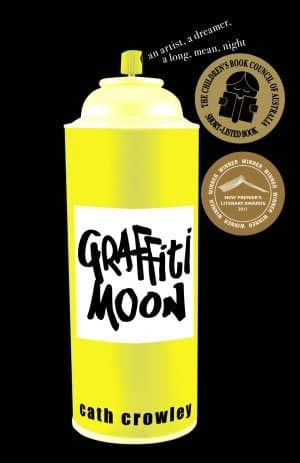
Cath Crowley (2010)
Genre
Creativity / Young Adult / Romance
Reading Time
240 min
Key Themes
See below
Sign in to track this book
On the eve of adulthood, four Australian teenagers navigate the messy, exhilarating, and often hilariously misguided turns of first love and self-discovery over one intense, graffiti-streaked night.
The story begins on the last night before the HSC exams, with Lucy, a budding artist, obsessed with finding the anonymous graffiti artist known as 'Shadow.' She believes Shadow's art speaks to her soul and embodies the kind of authentic creativity she longs for. Lucy goes out with her best friend, Daisy, and their male friends, Ed and Dylan. Ed, who has a complicated history with Lucy (she broke his nose in the past, a detail that constantly resurfaces), has arranged for them to 'go hunting' for Shadow's new work. Lucy is unaware that Ed is Shadow himself, a secret he guardedly keeps. The night is filled with anticipation, art, and the unspoken tensions between the group, setting the stage for a night of revelations.
As the group splits up, Lucy finds herself with Ed, searching for Shadow's art. They visit various locations, including a bridge where Shadow has left a new piece. Lucy is captivated by the art, expressing her admiration and deep connection to the anonymous artist, unwittingly praising Ed's work directly to him. Ed, meanwhile, is torn between wanting to reveal his true identity and fearing Lucy's reaction, especially given her past idealization of Shadow. They share intimate conversations about their aspirations and fears, with Ed subtly trying to gauge Lucy's feelings about Shadow as a person, rather than just an artist. The night has lighthearted banter and deeper, more vulnerable exchanges, drawing them closer.
While Lucy and Ed are on their quest, Daisy and Dylan navigate their own tumultuous relationship. Dylan has a clear crush on Daisy, but his attempts to show affection often backfire, like throwing eggs at her window. Daisy, though outwardly annoyed, secretly reciprocates his feelings, enjoying their playful arguments and the attention he gives her. Their dynamic is characterized by a push-and-pull, with both of them struggling to express their true emotions. Throughout the night, they engage in various escapades, including a memorable incident involving a public fountain, which further highlights their unique bond and the chaotic, yet endearing, nature of their affection for each other, leading to a moment of shared vulnerability.
Jazz, another aspiring artist and friend of the group, spends the night with Leo, a musician she has a quiet interest in. Unlike the more boisterous interactions of the other pairs, Jazz and Leo's connection is more subtle and artistic. They visit an art gallery, sharing their interpretations of the pieces and discussing their own creative processes. Jazz, who often feels overshadowed by Lucy's more outgoing personality, finds a sense of understanding and connection with Leo, who appreciates her unique artistic perspective. Their conversations revolve around art, music, and the challenges of pursuing creative passions. This quieter subplot explores the development of a different kind of romantic and artistic bond, built on mutual respect and shared inspiration.
As the night progresses and Lucy's admiration for Shadow deepens, Ed realizes he can no longer keep his secret. In a moment of vulnerability, he confesses to Lucy that he is Shadow. Lucy's reaction is a mixture of shock, betrayal, and disillusionment. She feels as though the idealized artist she admired has been replaced by the familiar, somewhat annoying, Ed. The revelation shatters her perception of Shadow and, by extension, her own artistic aspirations, as she had projected so much onto the anonymous persona. She is angry that he kept this from her, feeling foolish for her fervent praise and personal confessions directed at him, leading to a tense and emotional confrontation.
Following Ed's confession, Lucy grapples with the reality that her artistic idol is not some mysterious, unreachable figure, but someone she knows intimately. This forces her to confront her own insecurities about her art and her tendency to romanticize the creative process, rather than engaging with its raw, messy truth. She realizes she's been hiding behind her admiration for Shadow, using it as an excuse not to fully commit to her own work. The revelation pushes her to re-evaluate what art truly means to her and what kind of artist she wants to be, moving beyond the idolization of others towards cultivating her unique voice and style.
After the initial shock and anger, Lucy and Ed slowly begin to talk through the revelation. Ed explains his reasons for keeping his identity secret, including his fear of rejection and the desire to be appreciated for his art rather than his personality. Lucy, in turn, expresses her feelings of betrayal and the pressure she felt to live up to her own artistic ideals. Through their honest conversation, they start to bridge the gap created by the secret. Lucy begins to see Ed not just as Shadow, but as a complex individual, and Ed understands the depth of Lucy's artistic passion and her need for authenticity. This difficult conversation marks a turning point in their relationship, moving towards genuine understanding.
As the night gives way to dawn, the entire group reunites, each having undergone their own personal journey. Daisy and Dylan's playful antagonism gives way to a clear, if still slightly awkward, mutual affection. Jazz and Leo's quiet connection has solidified into a promising artistic and personal bond. Lucy and Ed, having confronted the truth about Shadow, stand on the precipice of a new kind of relationship, one built on honesty and shared passion for art. The rising sun symbolizes new beginnings, not just for their individual artistic paths but also for their relationships, as they prepare to face the HSC exams and the uncertainties of adulthood, now with a clearer sense of self and connection.
In a powerful final act, Lucy and Ed collaborate on a new graffiti piece. This joint creation symbolizes not only their reconciled relationship but also Lucy's acceptance of Ed as Shadow and her own embrace of her artistic voice. It's a moment of shared creativity where Lucy is no longer just an admirer but an active participant, contributing her own style and vision. The act of creating together signifies their willingness to move forward, both individually as artists and together as a couple, acknowledging the complexities and beauty of their shared journey. The piece itself becomes a symbol of their night of revelations and the promise of their future.
The Protagonist
She moves from idealizing an anonymous artist to embracing the messy reality of art and love, finding her own creative confidence.
The Protagonist/Love Interest
He moves from hiding his true identity and feelings to a courageous confession, seeking genuine connection.
The Supporting
She navigates her confusing feelings for Dylan, moving from playful antagonism to open affection.
The Supporting
He learns to express his affection more genuinely, moving past quirky antics to a more mature connection with Daisy.
The Supporting
She gains confidence in her artistic voice and finds a meaningful connection with Leo.
The Supporting
He forms a gentle, artistic connection with Jazz, validating her creative spirit.
The Mentioned/Symbolic
From an idealized, anonymous figure, Shadow transforms into a real, known person, challenging Lucy's perceptions.
The Supporting
Provides external wisdom to the protagonists.
The characters, particularly Lucy and Ed, are on the cusp of adulthood and are grappling with who they are and who they want to be. Lucy's quest for Shadow is ultimately a quest for her own artistic identity, and she learns that true art comes from within, not from idolizing others. Ed's secret identity as Shadow highlights his struggle with vulnerability and being accepted for his true self. The night's events force both to shed their masks and embrace their authentic selves, personally and artistically.
“Maybe that was it: to be a writer, you had to write. To be an artist, you had to make art. To be a person, you had to live.”
The novel explores various facets of art: graffiti as a form of expression, painting, music, and the act of creation itself. It examines the difference between romanticizing art and actively engaging in its personal process. Lucy learns that art isn't just about flawless technique or anonymous genius, but about honesty, vulnerability, and finding one's unique voice. The collaboration between Lucy and Ed at the end symbolizes the fusion of their individual artistic expressions and a more mature understanding of creativity.
“Sometimes art was like that. You just had to let go and let it be.”
The book examines different forms of love – romantic, platonic, and familial – and the complexities of forming genuine connections. Lucy and Ed's relationship is built on a foundation of shared artistic passion but complicated by secrets and idealization. Daisy and Dylan's dynamic shows love expressed through playful antagonism, while Jazz and Leo's connection is more subtle and intellectual. The narrative emphasizes the importance of honesty, vulnerability, and acceptance in forging meaningful bonds.
“He didn't just see the graffiti. He saw the heart behind it.”
A central theme is the tension between idealized perceptions and the often messier reality. Lucy's idealization of 'Shadow' as a mysterious, perfect artist is shattered when she discovers he is Ed, forcing her to reconcile the image with the person. This theme extends to her own artistic journey, as she moves from an idealized vision of herself as an artist to accepting the reality of her own creative process, flaws and all. The book suggests that true connection and creativity emerge when one embraces truth over romanticized notions.
“He was just a boy, not the mythical creature she'd invented.”
Set on the eve of HSC exams, the story captures the space between adolescence and adulthood. The characters are facing significant life changes, decisions about their futures, and deeper explorations of their identities and relationships. The intense 24-hour period acts as a microcosm for this broader transition, where secrets are revealed, connections are forged, and each character takes a step towards understanding their place in the world and the responsibilities that come with growing up.
“This was the last night of being kids, maybe. The last night before everything changed.”
A hidden identity that drives the plot and explores themes of art and authenticity.
The anonymous graffiti artist 'Shadow' serves as a crucial plot device. It creates mystery, fuels Lucy's obsession, and acts as a catalyst for her journey of self-discovery. Ed's decision to maintain this secret identity highlights themes of vulnerability, artistic integrity, and the fear of judgment. The eventual revelation of Shadow's true identity is the central turning point, forcing Lucy to confront her idealizations and pushing both characters towards genuine connection and a more honest understanding of art.
A compressed timeframe creating urgency and intensity.
The entire story unfolds over a single night, the last before the HSC exams. This compressed timeline creates a sense of urgency and heightened emotion, allowing for rapid character development and intense interactions. It mirrors the 'on the verge' feeling of the characters' lives, where significant revelations and decisions are made in a short, impactful period. The dawn breaking at the end symbolizes new beginnings and the culmination of their overnight transformations.
Art form used for expression, connection, and revelation.
Graffiti itself is a significant plot device. It's not just a backdrop but an active participant in the story. Shadow's graffiti pieces act as clues, messages, and reflections of the characters' inner worlds. It's a form of communication that transcends words, allowing characters like Lucy and Ed to connect on a deeper, more intuitive level. The act of creating graffiti, both individually and collaboratively, becomes a metaphor for self-expression, vulnerability, and forging connections.
A past event symbolizing misunderstanding and unresolved tension.
The detail of Lucy having broken Ed's nose in the past is a recurring motif and a subtle plot device. It symbolizes their initial misunderstanding, the physical manifestation of their complicated history, and the emotional barrier between them. It's a constant reminder of their past, adding layers of tension and awkwardness to their interactions, until it is ultimately overcome as they move towards genuine understanding and reconciliation.
“The thing about art is that it’s not for everyone. Not everyone gets it. Not everyone wants it. But for the people who do, it’s everything.”
— Lucy reflecting on her passion for art and graffiti.
“Sometimes you have to be a little bit crazy to make something beautiful.”
— Ed discussing the mindset behind creating impactful art.
“If you want to know what someone is really like, look at what they create.”
— Lucy's realization about the connection between art and identity.
“The city is a canvas. You just have to know how to see it.”
— Shadow (Ed) explaining his perspective on urban graffiti.
“It’s amazing how much you can say without saying a word, just with a line, a colour, a shape.”
— Lucy observing the power of visual art.
“Maybe the best stories are the ones that aren’t finished yet, the ones you’re still living.”
— Lucy pondering the ongoing nature of life and relationships.
“You don't just find art; you make it. You don't just find love; you build it.”
— A reflection on the active nature of creating both art and relationships.
“There are some things you just know, deep down, even if you can’t explain them.”
— Lucy's intuitive feelings about Ed and their connection.
“The moon is always there, even when you can’t see it. Just like some feelings.”
— A poetic comparison of the moon's presence to underlying emotions.
“Sometimes the best way to find what you're looking for is to stop looking so hard.”
— A piece of advice offered about pursuing goals, especially love and art.
“Art isn't about being perfect. It's about being real.”
— Ed's philosophy on authenticity in artistic expression.
“Every mark tells a story, every colour has a feeling.”
— Lucy appreciating the narrative and emotional depth in art.
“It’s a strange thing, falling for someone you only know through their art.”
— Lucy reflecting on her initial attraction to Shadow's work before knowing him.
“You can’t just wait for inspiration. You have to go out and find it, or make it.”
— A practical view on the active pursuit of creativity.
Ready to see how well you understood this book? Take our interactive quiz with 10 questions.