BookBrief
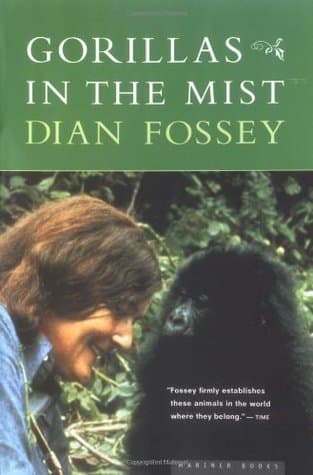
Gorillas in the Mist cover
Archivist's Choice

Gorillas in the Mist

Dian Fossey (1984)

Genre

Biography / Memoir / Science

Reading Time

8-10 hours

Key Themes

See below

Track Your Reading

Sign in to track this book

In the heart of an African rainforest, Dian Fossey dedicates thirteen years to unraveling the complex lives of mountain gorillas, transforming scientific understanding and sacrificing everything in her fight for their survival.

Core Idea

Dian Fossey's "Gorillas in the Mist" shows the impact of long-term observation in understanding wild animal behavior and protecting their survival. By living among the mountain gorillas of Rwanda for years, Fossey carefully documented their social structures, individual personalities, and daily lives. This showed that these creatures have rich emotional and intellectual lives. This deep, personal connection formed the basis of her strong conservation efforts, which often involved confrontation. It highlights the role of sustained presence and direct action in protecting endangered species from poaching and habitat destruction. The book argues that understanding wildlife requires passionate advocacy and a willingness to confront threats to their existence.
Reading time
8-10 hours
Difficulty
Medium
✓ Read this if...
You are fascinated by primatology, wildlife conservation, or the story of a determined individual who dedicated their life to a cause, even at great personal cost. It's also for those interested in the challenges and ethical dilemmas of field research and conservation in remote, politically complex regions.
✗ Skip this if...
You prefer a purely objective, dispassionate scientific text, or if you are sensitive to descriptions of animal cruelty and the often-grim realities of poaching and conservation struggles.

Core idea

The central argument and framework that powers the entire book.

Dian Fossey's "Gorillas in the Mist" shows the impact of long-term observation in understanding wild animal behavior and protecting their survival. By living among the mountain gorillas of Rwanda for years, Fossey carefully documented their social structures, individual personalities, and daily lives. This showed that these creatures have rich emotional and intellectual lives. This deep, personal connection formed the basis of her strong conservation efforts, which often involved confrontation. It highlights the role of sustained presence and direct action in protecting endangered species from poaching and habitat destruction. The book argues that understanding wildlife requires passionate advocacy and a willingness to confront threats to their existence.

At a glance

Reading time

8-10 hours

Difficulty

Medium

Read this if...

You are fascinated by primatology, wildlife conservation, or the story of a determined individual who dedicated their life to a cause, even at great personal cost. It's also for those interested in the challenges and ethical dilemmas of field research and conservation in remote, politically complex regions.

Skip this if...

You prefer a purely objective, dispassionate scientific text, or if you are sensitive to descriptions of animal cruelty and the often-grim realities of poaching and conservation struggles.

Key Takeaways

1

Immersion is Key to Understanding

True understanding of a species requires deep, long-term immersion in their natural habitat.

Quote

The gorillas' acceptance of my presence came slowly, but it was absolute. They allowed me into their world, and in doing so, they revealed theirs.

Fossey's work with mountain gorillas came from a thirteen-year commitment to living among them, enduring harsh conditions, and patiently habituating them. This deep immersion allowed her to gain a new level of trust and insight. She observed behaviors, social structures, and individual personalities never before documented, changing scientific understanding of these primates. Her method showed that sustained, empathetic presence is necessary over fleeting, detached study. It proved that understanding often requires becoming part of th...

Supporting evidence

Fossey recounts numerous instances where her prolonged presence led to gorillas accepting her, even touching her hand, a level of interaction previously deemed impossible. She details specific habituation techniques, like imitating their vocalizations and movements, over years.

Apply this

To truly understand complex systems, whether in nature, business, or human relationships, commit to deep, long-term engagement rather than superficial analysis. Spend significant time observing and participating rather than just reading reports.


field-researchethologyhabituation
2

Individuality Among Primates

Gorillas possess distinct personalities and complex social dynamics, challenging simplistic views of animal behavior.

Quote

Each gorilla has a distinct personality, just as humans do. They are not merely 'gorillas,' but individuals with their own quirks, fears, and loves.

Fossey's observations changed the idea of gorillas as aggressive animals. She documented the unique traits of individual gorillas, such as the gentle leadership of silverback Peanuts, the playful actions of juvenile Puck, or the protective nature of Digit. These individual stories show the complex social fabric of gorilla groups, revealing relationships, alliances, rivalries, and emotional depth. Her work showed that animal behavior is not purely instinctive but influenced by individual temperament and social learning, encouraging a m...

Supporting evidence

Fossey dedicates entire chapters to individual gorillas, detailing their life histories, interactions, and unique behaviors within their groups. Her narrative frequently refers to gorillas by name, emphasizing their individuality.

Apply this

When studying or interacting with any group, look beyond broad classifications to recognize and appreciate the unique characteristics and contributions of each individual. Avoid generalizations and seek to understand personal motivations and histories.

primate-behavioranimal-cognitionsocial-structure
3

Conservation Through Presence

Direct, on-the-ground presence is a powerful deterrent against poaching and habitat destruction.

Quote

The only way to save them was to be there, to be a constant, visible deterrent against those who sought to destroy them.

Fossey's 'active conservation' approach, often controversial, involved directly confronting poachers and removing their snares, instead of relying only on distant policy or education. She believed that her physical presence and the presence of her research camp protected the gorillas from immediate threats. While some criticized her methods, her commitment to being 'in the field' saved many gorillas and highlighted the urgent need for direct protection. Her work showed that conservation is not just about scientific study, but also abo...

Supporting evidence

Fossey recounts numerous instances of finding and destroying poacher snares, directly confronting poachers, and even using tactics like wearing masks to scare them away. Her camp's location was strategically chosen for its proximity to gorilla groups and its ability to deter illegal activity.

Apply this

When facing an immediate threat to a valuable resource or project, direct and visible intervention can be more effective than passive observation or remote management. Establish a strong, protective presence where it matters most.

anti-poachinghabitat-protectiondirect-action
4

The Emotional Toll of Conservation

Deep dedication to conservation can lead to profound emotional suffering and isolation.

Quote

There are times I wish I could trade places with the gorillas, to escape the crushing loneliness and the constant battle against human indifference.

Fossey's memoir is a scientific account and a personal one, showing the emotional burden of her work. Her attachment to the gorillas, especially Digit, meant that their deaths from poaching were devastating personal losses, not just scientific data points. This emotional depth, while fueling her passion, also led to loneliness, frustration with authorities, and a growing separation from the human world. Her story reminds us that dedicated conservationists often pay a psychological price for their commitment, battling external threats ...

Supporting evidence

Fossey's raw grief over the death of Digit, a silverback she had closely studied, is a central, poignant moment in the book. She describes her subsequent intensified anti-poaching efforts as a direct response to her emotional pain.

Apply this

Recognize that passionate commitment, especially to challenging causes, can lead to emotional burnout and isolation. Build support systems and practice self-care to sustain long-term engagement without succumbing to despair.

emotional-laborburnoutisolation
5

The Interconnectedness of Ecosystems

Protecting a single species requires safeguarding its entire habitat and understanding its role within the broader ecosystem.

Quote

To save the gorilla, one must save the forest. They are inseparable.

Fossey's focus on gorillas expanded to a broader understanding of their habitat, the Virunga Volcanoes rainforest. She realized that the survival of mountain gorillas was linked to the health of their forest home. Threats like deforestation for agriculture, illegal logging, and human activity directly affected the gorillas' food sources, shelter, and migratory routes. This holistic perspective, though perhaps not her initial focus, became a part of her conservation philosophy, emphasizing that species protection cannot be separate fro...

Supporting evidence

Fossey frequently details the destruction of the forest by local populations for farming and timber, and how these activities directly infringe on gorilla territories and food supplies. She notes the gorillas' reliance on specific plants found only in their unique habitat.

Apply this

When addressing a problem, consider its broader context and interconnected systems. Solutions focused narrowly on one component often fail if the surrounding environment and dependencies are neglected. Adopt a systems-thinking approach.

ecosystem-healthbiodiversityhabitat-loss
6

The Challenges of Indigenous Relations

Conservation efforts often clash with the immediate needs and cultural practices of local human populations.

Quote

The struggle was not just against poachers, but against the desperation of people trying to survive, often with little understanding of the long-term consequences.

Fossey's work brought her into direct, often difficult, contact with local communities whose livelihoods sometimes depended on activities harmful to gorilla conservation, such as cattle grazing in the park or poaching for bushmeat. Her memoir highlights the ethical issues in conservation, where wildlife protection must be balanced against the economic and social needs of human populations. This tension is an important aspect of conservation, showing that effective strategies must eventually include community involvement and sustainabl...

Supporting evidence

Fossey details her confrontations with local herdsmen whose cattle encroached on the park, and her efforts to educate local villagers about the importance of gorillas, often met with resistance or indifference due to their own struggles for survival.

Apply this

When implementing large-scale initiatives, especially in developing regions, anticipate and address potential conflicts with local communities. Seek to understand their perspectives and integrate their needs into sustainable solutions, rather than imposing external mandates.

community-conservationhuman-wildlife-conflictsustainable-development
7

Science as Advocacy

Rigorous scientific research can be a powerful tool for advocacy and generating public awareness.

Quote

My research was not merely for academic journals; it was a desperate plea for recognition, for understanding, for the very survival of these magnificent creatures.

Fossey's data collection, detailed ethograms, and photographic evidence proved the gorillas' intelligence, social complexity, and vulnerable existence. This scientific rigor gave credibility to her calls for conservation, making her personal effort a globally recognized cause. Her ability to translate scientific observations into compelling narratives and images (many in National Geographic) helped gain international support, showing that science is not just about discovery, but also about communicating its implications to inspire act...

Supporting evidence

Her numerous publications in scientific journals and especially her features in National Geographic brought the plight of the mountain gorillas to a global audience, directly influencing conservation efforts and funding.

Apply this

Leverage data and evidence-based insights to support your arguments and drive change. Present complex information in accessible, compelling ways to engage a broader audience and gain support for your cause.

science-communicationpublic-awarenessdata-driven-advocacy
8

The Fragility of Wildness

Even the most remote and powerful species are vulnerable to human impact.

Quote

The mist-shrouded peaks, once a sanctuary, were no longer impenetrable. The gorillas, once thought invincible, were now at our mercy.

Fossey's narrative shows the vulnerability of mountain gorillas, despite their size and remote habitat. She saw the effects of poaching, habitat destruction, and human diseases on populations that were already small and isolated. The book reminds us that no ecosystem or species is beyond human influence. The gorillas, living in what seemed like an untouched place, were constantly threatened, showing the universal fragility of wild places and the urgent need for human care.

Supporting evidence

Fossey details the decline in gorilla numbers during her tenure, attributing it directly to human activities. She recounts how a single disease outbreak, likely from human contact, could decimate a group.

Apply this

Recognize that all natural resources and ecosystems are finite and susceptible to human actions. Adopt practices that minimize your environmental footprint and advocate for policies that protect vulnerable natural spaces and species.

endangered-speciesanthropoceneenvironmental-impact

Critical analysis

Notable Quotes

The more you get to know them, the more you realize that they are individuals, each with their own personality, their own likes and dislikes, their own fears and joys.

Fossey reflecting on the unique personalities of individual gorillas.

When you realize the value of all life, you tend to feel more compassion, to feel more love, to feel more one with the universe.

A broad philosophical statement on the interconnectedness of life.

One of the saddest lessons from eighty years of conservation is that we are still trying to save species one by one, rather than saving whole ecosystems.

Fossey's critique of narrow conservation efforts.

I had to be certain that my work was not just a romantic dream, but a valid scientific study.

Fossey's commitment to scientific rigor despite personal attachment.

The gorillas gave me a reason for being.

Fossey expressing her deep personal connection and purpose found with the gorillas.

I felt a deep sense of belonging, as if I had found my true home among these magnificent creatures.

Describing her profound feeling of acceptance and belonging within the gorilla groups.

The greatest danger to the gorillas is not the poachers, but the apathy of man.

Highlighting human indifference as a major threat to gorilla survival.

I had come to Africa to study gorillas, but I had also come to find myself.

Reflecting on her personal journey of self-discovery alongside her scientific work.

The more I learned about the gorillas, the more I came to respect their intelligence, their social structure, and their gentle nature.

Fossey's growing admiration for gorilla characteristics.

My mind had been so conditioned to the popular Tarzan image of gorillas as being ferocious brutes that I was slow to re-educate it.

Describing her initial preconceived notions about gorillas and their debunking.

In the rainforest, every day is a battle for survival, not just for the gorillas, but for all living things.

Acknowledging the harsh realities of the rainforest environment.

The ultimate success of my work would not be measured by the number of scientific papers I published, but by the continued existence of the gorillas.

Fossey's ultimate goal for her life's work.

I knew that if I was to truly understand these animals, I had to live among them, to become a part of their world.

Explaining her immersive research methodology.

My solitude was often broken by the sounds of the forest, the calls of the birds, the rustling of leaves, and the distant cries of the gorillas.

Describing the sensory experience of living alone in the forest.

Quiz

Test Your Knowledge

Ready to see how well you understood this book? Take our interactive quiz with 10 questions.

10
Questions
~5
Minutes
?
Best Score

Key Questions (FAQ)

'Gorillas in the Mist' is Dian Fossey's personal account of her thirteen years living among and studying mountain gorillas in the remote Virunga Mountains of Rwanda. It chronicles her groundbreaking scientific observations, her deep personal connection with the gorillas, and her passionate efforts to protect them from poachers and habitat destruction.

About the author

Dian Fossey

Dian Fossey was a renowned primatologist and conservationist, best known for her groundbreaking research on mountain gorillas in Rwanda. Her vivid observations and dedication to protecting these animals were chronicled in her seminal work, "Gorillas in the Mist." Fossey's extensive fieldwork and passionate advocacy significantly advanced our understanding of gorilla behavior and conservation efforts.