BookBrief
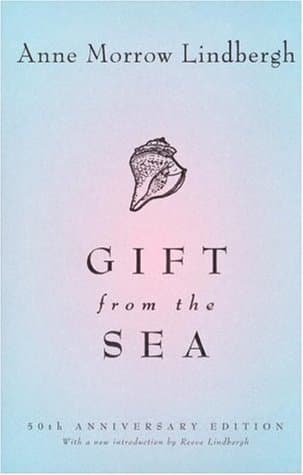
Gift from the Sea cover
Archivist's Choice

Gift from the Sea

Anne Morrow Lindbergh (1955)

Genre

Biography / Memoir / Spirituality / Philosophy

Reading Time

90 min

Key Themes

See below

Track Your Reading

Sign in to track this book

Anne Morrow Lindbergh's 'Gift from the Sea' uses the simple wisdom of seashells to reflect on finding balance, solitude, and the changing nature of love in a woman's modern life.

Core Idea

Anne Morrow Lindbergh's "Gift from the Sea" reflects on how women balance their inner lives with outside demands, using seashells as metaphors for life stages and aspects. It argues for solitude, simplicity, and self-awareness to build true relationships and find spiritual meaning in modern life. The book suggests letting go of non-essentials and embracing life's natural cycles to feel more connected to oneself.
Reading time
90 min
Difficulty
Easy
✓ Read this if...
You are a woman seeking philosophical guidance on balancing personal identity, relationships, and societal expectations, and appreciate poetic, reflective prose.
✗ Skip this if...
You prefer a fast-paced narrative, prescriptive self-help, or a book with a strong, linear argument rather than contemplative essays.

Core idea

The central argument and framework that powers the entire book.

Anne Morrow Lindbergh's "Gift from the Sea" reflects on how women balance their inner lives with outside demands, using seashells as metaphors for life stages and aspects. It argues for solitude, simplicity, and self-awareness to build true relationships and find spiritual meaning in modern life. The book suggests letting go of non-essentials and embracing life's natural cycles to feel more connected to oneself.

At a glance

Reading time

90 min

Difficulty

Easy

Read this if...

You are a woman seeking philosophical guidance on balancing personal identity, relationships, and societal expectations, and appreciate poetic, reflective prose.

Skip this if...

You prefer a fast-paced narrative, prescriptive self-help, or a book with a strong, linear argument rather than contemplative essays.

Key Takeaways

1

The Scallop: The Art of Solitude

Embracing periods of withdrawal for inner replenishment and creative growth.

Quote

The only real trip is the one within.

Lindbergh says solitude is not just being alone, but an active state of connecting with oneself. She compares it to the scallop shell, which opens and closes, suggesting that women often struggle to find this essential time due to societal expectations and family demands. She stresses that creativity and self-discovery come from these quiet times, letting one shed outside pressures and reconnect with one's core self. This withdrawal is not selfish, but a necessary act of self-preservation that improves relationships and contributions ...

Supporting evidence

Lindbergh's own retreat to the sea, away from her family and daily responsibilities, serves as the primary example of actively seeking and valuing solitude for introspection and writing.

Apply this

Schedule dedicated, uninterrupted time for solitude, even if it's just an hour a day or a weekend retreat. Use this time for reflection, creative pursuits, or simply being present without external demands. Guard this time fiercely.


solitudeself-careintroversionintrospection
2

The Whelk: Simplicity Amidst Complexity

Rejecting modern 'time-saving' devices that often complicate rather than simplify life.

Quote

One often makes the mistake of thinking that 'time-saving' devices get one more time. They do not. They just give one more things to do.

The whelk shell, with its simple but useful spiral, inspires Lindbergh's criticism of modern life's false promises of efficiency. She notes that the tools meant to save time often create more tasks, leading to constant busyness instead of freedom. This endless pursuit of external 'things to do' distracts us from our inner lives and simple pleasures. True simplicity, she suggests, comes from consciously reducing external demands and focusing on what truly nourishes the soul, rather than gathering more possessions or obligations.

Supporting evidence

Her reflection on the 'time-saving' devices of her era (e.g., dishwashers, washing machines) that, paradoxically, did not free women but instead raised expectations for domestic perfection and increased the volume of work.

Apply this

Audit your possessions and commitments. Identify 'time-saving' devices or activities that actually add complexity. Consciously choose to simplify, declutter, and say 'no' to non-essential obligations to reclaim mental and physical space.

minimalismsimplicitydigital-detoxmindful-living
3

The Oyster: The Pearl of Relationship

Embracing the friction and challenges within relationships as catalysts for growth and deeper connection.

Quote

The pearl is a wound that time and love have healed.

Lindbergh uses the oyster and its pearl to represent the changing nature of lasting relationships, especially marriage. Just as an oyster creates a pearl from an irritation, a long-term partnership gains depth and beauty by handling conflicts, compromises, and uncomfortable times. She argues that these 'irritations' are not failures, but key parts that, when accepted and worked through, lead to a richer, stronger bond. This view challenges the idea of effortless love, suggesting that true intimacy is built through shared experiences a...

Supporting evidence

Her reflections on the evolving nature of her own marriage, acknowledging periods of strain and adaptation necessary for growth, particularly as children grow and leave home.

Apply this

View conflicts or disagreements in relationships not as threats, but as opportunities for deeper understanding and growth. Practice active listening, empathy, and open communication to navigate these 'irritants' and strengthen your bonds.

relationship-dynamicsmarriageconflict-resolutionemotional-intelligence
4

The Argonauta: The Shifting Vessel of Self

Understanding the need for women to redefine themselves through different life stages.

Quote

The most exhausting thing in life, I have discovered, is being insincere.

The delicate Argonauta, or Paper Nautilus, which makes a temporary shell, symbolizes the changing roles and identities women take on throughout their lives. Lindbergh observes that a woman's identity often shifts dramatically—from young woman to wife, mother, and beyond—and holding rigidly to old definitions can lead to unhappiness. She supports letting go of outdated 'shells' and embracing new forms of self-expression and purpose as one grows. This process requires courage and self-awareness, especially for women whose identities are...

Supporting evidence

Lindbergh's personal experience as an acclaimed aviator who then transitioned into motherhood and writing, grappling with the demands and differing expectations of each role.

Apply this

Regularly reflect on your current life stage and identity. Be willing to let go of old roles or expectations that no longer serve you, and actively seek new ways to express your authentic self as you evolve. Embrace the fluidity of self.

identity-formationlife-stagesfemale-empowermentself-discovery
5

The Moon Shell: Cycles of Giving and Receiving

Recognizing the importance of balancing outward giving with inward replenishment.

Quote

One cannot give what one does not have.

The smooth, symmetrical moon shell, with its perfect form, represents the ideal balance between giving and receiving. Lindbergh states that women, particularly mothers, are often taught to prioritize giving, which leads to exhaustion if not balanced by enough self-care. She emphasizes that true generosity can only come from a full reserve; if one constantly gives without refilling, both the giver and receivers suffer. This message is a call for women to honor their own needs, to intentionally make time for renewal, and to understand t...

Supporting evidence

Her observation of mothers who are constantly giving to their children and families, often at the expense of their own creative and personal needs, leading to a sense of emptiness.

Apply this

Prioritize self-care rituals that genuinely replenish you. Learn to set boundaries and say 'no' when your capacity is low. Consciously seek activities that fill your cup, recognizing that this benefits everyone around you.

burnout-preventionboundariesself-compassionempathy
6

The Sea-worn Stone: The Beauty of Imperfection

Finding grace and wisdom in the natural aging process and life's inevitable wear.

Quote

The sea does not reward those who are too anxious, too greedy, or too impatient.

While not a shell, the sea-worn stone shows the beauty that comes from enduring time and challenges. Lindbergh reflects on accepting aging and the marks life leaves on us. She suggests that just as the sea smooths a stone, experiences, both happy and difficult, refine the human spirit. There is dignity in accepting imperfections and the natural process of wear, rather than striving for an impossible, youthful ideal. This view encourages a shift from fearing aging to appreciating the wisdom and character gained through lived experience...

Supporting evidence

Her own reflections on passing through different stages of life, from youth to middle age, and the changing perspectives and values that come with it.

Apply this

Cultivate self-acceptance regarding physical changes and life's challenges. Practice mindfulness to appreciate the present moment and the wisdom gained from past experiences, rather than dwelling on what is lost or imperfect.

aging-gracefullyself-acceptancemindfulnessresilience
7

The Beach: The Sacred Space of Contemplation

Creating mental and physical spaces for reflection and connection to nature.

Quote

One must be a sea, to receive a polluted stream without becoming impure.

The beach itself is a symbol for Lindbergh: a space between land and sea, where the constant rhythm of waves invites thought. It represents the need to find or create such 'beaches' in our own lives—physical or mental places where we can escape daily demands and reconnect with something larger than ourselves. This space allows for perspective, creativity, and spiritual renewal. Her entire book shows the power of such a deliberate retreat, highlighting how essential it is for maintaining inner clarity and purpose in a busy world.

Supporting evidence

The entire premise of the book, written during her solitary vacation by the sea, where the environment directly inspired her philosophical musings and observations.

Apply this

Identify or create a 'sacred space' for yourself, whether a quiet corner in your home, a park, or a regular walk in nature. Dedicate time to visit this space regularly for reflection, meditation, or simply being present.

meditationnature-therapyspiritual-practicemental-health
8

The Sea: The Universal Flow of Life

Accepting the ebb and flow of life, relationships, and personal energy.

Quote

The sea does not reward those who are too anxious, too greedy, or too impatient.

Beyond individual shells, the sea itself represents life's vast, cyclical nature. Lindbergh compares the ocean's tides and currents to the natural ups and downs in human life—in relationships, creative work, and personal energy. She advocates for acceptance and patience, rather than resisting these natural rhythms. Trying to force outcomes or maintain constant high energy is tiring. Instead, learning to 'float' and trust life's larger currents, understanding that periods of withdrawal and activity are equally important, leads to great...

Supporting evidence

Her repeated metaphor of the sea's constant movement and the lessons it teaches about patience and timing, especially in creative endeavors and personal growth.

Apply this

Observe your own energy cycles and the natural rhythms of your life. Practice patience and trust, especially during periods of stagnation or uncertainty. Avoid forcing outcomes and instead, align with the natural flow of events.

acceptanceflow-statepatiencespiritual-growth
9

The Double Whelk: The Intertwined Nature of Love

Understanding that true companionship allows for both unity and individual space.

Quote

For two people to live together in any union, there must be not only the attraction of the two but also the separation of the two.

Lindbergh observes two whelk shells sometimes washing ashore intertwined, yet separate. This image captures her view of lasting love and partnership. True intimacy, she argues, is not about merging into one, but about two distinct individuals keeping their unique identities while choosing deep connection. This requires a balance of closeness and space, allowing each person room to breathe, grow, and have their own solitude without threatening the bond. It is an understanding that interdependence is healthier than complete dependence, ...

Supporting evidence

Her reflections on the dynamics of her own long-term marriage, recognizing the importance of individual pursuits and separate identities within the shared life.

Apply this

In your relationships, consciously cultivate both shared experiences and individual pursuits. Encourage your partner's personal growth and maintain your own sense of self, understanding that this strengthens the overall bond.

interdependencehealthy-relationshipspersonal-spaceautonomy

Critical analysis

Notable Quotes

We are not meant to be perpetually happy. We are meant to grow.

Reflecting on the nature of human experience and personal development.

The only real security is not in owning or possessing, but in giving.

Discussing the true source of fulfillment and stability in life.

One cannot collect all the beautiful shells on the beach. One can only collect a few, and they are more beautiful if they are few.

Metaphor for the need to simplify and focus on what truly matters, rather than trying to have everything.

The most exhausting thing in life, I have discovered, is being insincere.

Highlighting the mental and emotional toll of living inauthentically.

Only when we are no longer afraid do we begin to live.

Emphasizing the liberation that comes with overcoming fear.

The sea does not reward those who are too anxious, too greedy, or too impatient. To achieve all that the sea has to offer, one must learn to be patient, to trust, to wait.

Using the metaphor of the sea to illustrate the virtues of patience and trust.

Good communication is as stimulating as black coffee, and just as hard to sleep after.

Reflecting on the invigorating and sometimes challenging nature of meaningful conversation.

A good relationship has a pattern like a dance and is built on some of the same rules. The partners do not need to hold on tightly, because they move in rhythm.

Describing the ideal balance of connection and independence in a healthy relationship.

By and large, mothers and housewives are the only remaining human beings who frequently stay at home. They are the last to be invaded in their privacy.

Observing the unique position of women in maintaining a private, domestic sphere.

When one is a child, one is at peace with the world. One can lie on the grass for hours, watching the clouds, listening to the birds, and feel utterly content.

Recalling the simple joys and natural peace of childhood.

To be a complete human being, one must be a complete woman or a complete man. And a complete woman or a complete man is not a human being who has never been alone.

Arguing for the necessity of solitude in developing a full sense of self.

The world is not a pleasant place to live in if one is not a good listener.

Highlighting the importance of active listening for harmonious interaction and understanding.

We must be willing to let go of the life we have planned, so as to have the life that is waiting for us.

Encouraging flexibility and openness to unexpected paths in life.

Women must be on guard against that most insidious of poisons, the desire to please.

Warning women against sacrificing their own needs and authenticity for the sake of others' approval.

Quiz

Test Your Knowledge

Ready to see how well you understood this book? Take our interactive quiz with 10 questions.

10
Questions
~5
Minutes
?
Best Score

Key Questions (FAQ)

Anne Morrow Lindbergh's 'Gift from the Sea' explores themes of solitude, personal fulfillment, the complexities of relationships, and finding simplicity amidst modern life's demands. It uses shells as metaphors to reflect on different stages and aspects of a woman's existence.

About the author

Anne Morrow Lindbergh

Anne Morrow Lindbergh was an American writer and aviator, best known for her reflective memoir 'Gift from the Sea.' Her work often explored themes of nature, spirituality, and the complexities of modern life. As a pioneering aviator alongside her husband Charles Lindbergh, she brought a unique perspective to her writing, blending personal experience with philosophical insight.