BookBrief
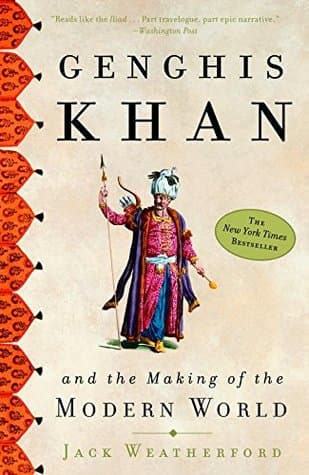
Genghis Khan and the Making of the Modern World cover
Archivist's Choice

Genghis Khan and the Making of the Modern World

Jack Weatherford (2004)

Genre

Biography / History

Reading Time

Approx. 10-12 hours (based on 352 pages at ~30 pages/hour)

Key Themes

See below

Track Your Reading

Sign in to track this book

Before 'globalization' was a buzzword, Genghis Khan created the largest contiguous empire in history, breaking old worlds and starting a new, interconnected one through brutal conquest and unexpected cultural growth.

Core Idea

Jack Weatherford's "Genghis Khan and the Making of the Modern World" re-examines Genghis Khan's historical impact, showing him not just as a barbarian conqueror, but as a key figure whose new ideas in government, trade, and war laid groundwork for the modern world. The book says Genghis Khan's focus on merit, global communication, religious tolerance, and legal codes led to a time of cultural exchange and economic connection across Eurasia. This unintentionally shaped institutions and ideas that later defined the Renaissance, the Age of Exploration, and the rise of nation-states. Weatherford challenges common Western stories by showing how Mongol policies, often seen as destructive, ironically helped spread technologies, ideas, and even diseases that moved Europe out of the Dark Ages and toward modernity. The book suggests that many parts of today's society, from international law to global commerce, carry the clear, though often unacknowledged, mark of Genghis Khan's large, mobile empire.
Reading time
Approx. 10-12 hours (based on 352 pages at ~30 pages/hour)
Difficulty
Medium
✓ Read this if...
You are interested in world history, empire building, or how seemingly disparate events can have long-lasting, transformative impacts on global development. Also recommended for those who enjoy challenging conventional historical narratives.
✗ Skip this if...
You prefer highly detailed military campaign analyses over broader historical impact assessments, or if you are looking for a purely chronological biography without extensive analysis of long-term global consequences.

Core idea

The central argument and framework that powers the entire book.

Jack Weatherford's "Genghis Khan and the Making of the Modern World" re-examines Genghis Khan's historical impact, showing him not just as a barbarian conqueror, but as a key figure whose new ideas in government, trade, and war laid groundwork for the modern world. The book says Genghis Khan's focus on merit, global communication, religious tolerance, and legal codes led to a time of cultural exchange and economic connection across Eurasia. This unintentionally shaped institutions and ideas that later defined the Renaissance, the Age of Exploration, and the rise of nation-states.

Weatherford challenges common Western stories by showing how Mongol policies, often seen as destructive, ironically helped spread technologies, ideas, and even diseases that moved Europe out of the Dark Ages and toward modernity. The book suggests that many parts of today's society, from international law to global commerce, carry the clear, though often unacknowledged, mark of Genghis Khan's large, mobile empire.

At a glance

Reading time

Approx. 10-12 hours (based on 352 pages at ~30 pages/hour)

Difficulty

Medium

Read this if...

You are interested in world history, empire building, or how seemingly disparate events can have long-lasting, transformative impacts on global development. Also recommended for those who enjoy challenging conventional historical narratives.

Skip this if...

You prefer highly detailed military campaign analyses over broader historical impact assessments, or if you are looking for a purely chronological biography without extensive analysis of long-term global consequences.

Key Takeaways

1

From Outcast to Emperor

Genghis Khan's early life of extreme hardship forged his unyielding will and strategic brilliance.

Quote

From the time that he was a small child, Genghis Khan had to fight to survive. He was a survivor in an age of survivors, and his ability to adapt and overcome adversity was unparalleled.

Genghis Khan's early life was very hard. Born Temüjin, he endured his father's murder, being left by his tribe, enslavement, and constant struggles for food and safety. These constant difficulties, instead of breaking him, gave him great resilience, a deep understanding of people, and a strategic mind sharpened by need. He learned to form alliances through loyalty, not just power, and to inspire dedication from those who had nothing to lose. His humble beginnings and close knowledge of suffering gave him a unique view that allowed him...

Supporting evidence

Weatherford details Temüjin's early life, including his father's poisoning, his family's ostracization, and his personal enslavement by the Taichuud, emphasizing how these experiences shaped his character and leadership style.

Apply this

Embrace challenges as opportunities for growth and learning. Adversity can build resilience and unique insights that are invaluable for leadership and problem-solving. Seek to understand and empathize with those from diverse backgrounds, leveraging their unique experiences.

resilienceleadership-developmentadversity
2

Meritocracy Over Bloodline

Genghis Khan revolutionized command structures by promoting based on skill and loyalty, not aristocratic birth.

Quote

He chose his commanders not by their birth, not by their wealth, but by their loyalty, their courage, and their ability.

Moving away from the established feudal systems of his time, Genghis Khan set up a new merit-based system in his military and administration. He got rid of the old tribal ranks that favored birth and replaced them with a system where promotion came from proven skill, bravery, and strong loyalty. This policy not only created great dedication among his forces but also ensured that the most capable people led, no matter their social standing. This new approach let him quickly bring in conquered people and use their skills, creating a ver...

Supporting evidence

Weatherford highlights the story of Jebe, a former enemy warrior who shot Genghis Khan's horse, but was later promoted to a top general due to his honesty and skill, becoming one of the 'Four Hounds' of the Mongol army.

Apply this

Prioritize talent and performance over seniority or connections in team building and promotions. Create clear pathways for advancement based on merit to foster a highly motivated and effective workforce. Actively seek out and empower skilled individuals from all backgrounds.

meritocracyorganizational-structureleadership-principles
3

Psychological Warfare Master

The Mongols systematically used fear and information to break enemy will before direct confrontation.

Quote

The Mongols did not merely defeat their enemies; they destroyed their will to resist.

Genghis Khan was skilled in psychological warfare, often winning battles before they started. His methods involved carefully gathering information, spreading exaggerated rumors of Mongol fierceness, and offering clear choices: surrender and live, or fight and face complete destruction. The planned destruction of cities that resisted served as terrifying examples, creating fear that often led later cities to surrender without a fight. This planned use of fear, combined with a reputation for quick and decisive victory, allowed the Mongo...

Supporting evidence

The author describes how Mongol scouts were not just for reconnaissance but also for spreading rumors and demonstrating overwhelming force. The destruction of cities like Samarkand and Bukhara served as chilling warnings to others.

Apply this

Understand the power of reputation and perception in any competitive environment. Strategically communicate your strengths and capabilities to influence outcomes. Be decisive in resolving conflicts, but also know when to offer terms for peaceful resolution.

psychological-warfarestrategic-communicationreputation-management
4

Global Trade and Innovation Catalyst

The Mongol Empire inadvertently fostered an unprecedented exchange of goods, ideas, and technologies.

Quote

The Mongol Empire was not merely a destructive force; it was also a conduit for the greatest cultural exchange in history.

While often seen only as conquerors, the Mongols, through their united empire, unintentionally created the largest free-trade zone in history. By securing the Silk Road and setting up a large communication network (the yam postal system), they enabled goods, people, and ideas to move across Eurasia like never before. This led to a huge mix of cultures, technologies, and knowledge. Chinese gunpowder and printing reached Europe, Persian astronomy and math influenced the East, and new crops and diseases traveled both ways. The Pax Mong...

Supporting evidence

Weatherford details the Mongol protection of trade routes, the *yam* postal system, and the transfer of technologies like gunpowder, printing, and the compass from China to the West, as well as the spread of diseases like the Black Death.

Apply this

Recognize that even disruptive forces can create new opportunities for connection and innovation. Actively seek to bridge divides and facilitate the exchange of ideas and resources. Understand the interconnectedness of global systems, for both good and ill.

globalizationcultural-exchangeinnovation-diffusionsilk-road
5

The Yassa: A Code for Empire

Genghis Khan's legal code established religious freedom, diplomatic immunity, and a common law for his diverse empire.

Quote

The Yassa was not a set of laws to be interpreted, but a way of life, a moral code by which all Mongols were expected to live.

Genghis Khan's Yassa, or Great Law, was a new legal and moral code that provided a common framework for his large, multi-ethnic empire. More than just simple rules, it included principles like religious freedom (a radical idea for its time), diplomatic protection for envoys, and strict punishments for theft and lying. It also required universal military service and set up a clear chain of command. This full code provided stability, built trust among diverse groups, and made governing across large distances easier, allowing the empire ...

Supporting evidence

The author discusses key tenets of the Yassa, including its provisions for religious tolerance, the protection of merchants and envoys, and the strict punishments for crimes like theft, which made Mongol-controlled areas remarkably safe for travel.

Apply this

Establish clear, foundational principles and codes of conduct within any organization or community. Prioritize fairness, transparency, and respect for diverse beliefs to foster cohesion and stability. Understand that strong, clear rules can enable greater freedom and trust.

rule-of-lawgovernancereligious-freedomlegal-framework
6

Master of Mobility and Logistics

The Mongol army's unmatched speed and self-sufficiency were key to its overwhelming military success.

Quote

The Mongol army was a living, breathing organism, capable of moving faster and living off the land more efficiently than any army before or since.

The Mongol army's tactical strength came not just from its fighting ability but from its unmatched mobility and smart logistics. Each warrior was self-sufficient, carrying their own supplies, spares, and often multiple horses, allowing for sustained, fast movement across vast areas. They could cover incredible ground, outmaneuvering and surprising slow, heavily-supplied armies. Their ability to live off the land, gather food, and even drink horse blood in emergencies meant they were not tied to long supply lines, giving them a clear a...

Supporting evidence

Weatherford describes the Mongol warrior's kit, including dried meat, fermented mare's milk, and multiple horses per rider, allowing for forced marches of over 100 miles a day. The use of the horse as a primary logistical tool is heavily emphasized.

Apply this

Prioritize agility and self-sufficiency in strategy and operations. Reduce reliance on fixed infrastructure and cumbersome processes. Empower individuals with the tools and training to operate independently and adapt quickly to changing circumstances.

logisticsmilitary-strategyagilityself-sufficiency
7

The Invisible Empire

Genghis Khan's enduring legacy lay in the institutional structures he created, not just his conquests.

Quote

He built an empire not of stone, but of law, of trade, and of ideas.

Unlike many conquerors who built monuments or left behind family power struggles, Genghis Khan's real genius was in creating a lasting, flexible, and notably modern administrative system. He made institutions that went beyond his personal rule: a universal legal code (the Yassa), a standard writing system, a strong postal service (yam), and a system of unified weights and measures. These structures allowed his empire to keep growing and working well long after his death, shaping global history for centuries. His focus was on creatin...

Supporting evidence

Weatherford details the establishment of the *yam* postal system, the adoption of the Uighur script for the Mongol language, and the creation of a universal currency and standardized weights and measures across the empire.

Apply this

Focus on building sustainable systems and institutions that can outlive your personal involvement. Document processes, empower successors, and create frameworks that allow for adaptation and growth. Ensure your legacy is systemic, not just personal.

institutional-designlegacy-buildingsystems-thinkinggovernance-models
8

Cultural Syncretism, Not Annihilation

While brutal in war, the Mongols often adopted and integrated aspects of conquered cultures.

Quote

The Mongols were not merely destroyers; they were also assimilators, eager to learn and adopt the best of what other cultures had to offer.

Despite their fearsome reputation for destruction during conquest, the Mongols were very practical and open to taking useful new ideas and cultural parts from the people they conquered. They often brought skilled artisans, engineers, scholars, and administrators into their own system. Chinese siege engineers, Persian astronomers, and Uighur scribes all found roles within the Mongol Empire, adding to its complexity and growth. This cultural blending, driven by a practical desire for efficiency and knowledge, allowed the empire to devel...

Supporting evidence

Weatherford highlights the Mongol's adoption of Chinese administrative techniques, siege technology, and the Uighur script. He also notes the patronage of scholars and artisans from conquered lands, relocating them to Karakorum or other imperial centers.

Apply this

Maintain an open mind to external ideas and practices, even from perceived competitors. Actively seek out and integrate diverse talents and perspectives to strengthen your own endeavors. Understand that true strength often comes from adaptation and synthesis, not just rigid adherence to your own ways.

cultural-integrationsyncretismknowledge-transferadaptive-strategy
9

The Unintended Architect of Modernity

Genghis Khan's empire inadvertently laid foundations for the modern world's interconnectedness.

Quote

The world that emerged from the Mongol cataclysm was in many ways the world we inhabit today.

Weatherford says that Genghis Khan, through the sheer size and impact of his empire, was an accidental builder of the modern world. By violently breaking down existing feudal barriers and connecting East and West, his actions started global processes that would define later centuries. The forced movement of people, the faster exchange of technologies (like gunpowder and printing), the spread of diseases (like the Black Death which changed European society), and the opening of new trade routes greatly altered population, economic, and ...

Supporting evidence

The book connects Mongol actions directly to the spread of the Black Death, the transfer of key Chinese technologies to Europe, and the subsequent European interest in exploration and trade routes that circumvented the Mongol-controlled Silk Road.

Apply this

Recognize that major historical shifts often have complex, multi-faceted causes and unintended consequences. Understand how past events, even seemingly destructive ones, can lay groundwork for future developments. Appreciate the deep historical roots of contemporary global interconnectedness.

globalization-historyworld-systems-theoryhistorical-impactunintended-consequences

Critical analysis

Notable Quotes

It was an imperial machine, not a cultural movement, and it was a machine built for war.

Describing the Mongol Empire's primary function and focus.

The Mongols did not merely conquer the world. They gave it an entirely new push in a new direction.

Highlighting the transformative impact of Mongol conquests beyond mere military victory.

Genghis Khan's life offers a vivid lesson in how much a single individual can achieve and how profoundly he can alter the course of history.

Reflecting on the extraordinary influence of Genghis Khan as an individual.

Genghis Khan was not a builder of monuments or cities, but of a new world system.

Contrasting Genghis Khan's legacy with that of other historical figures who focused on physical constructions.

The Mongols created the first free-trade zone from Europe to Asia.

Discussing the economic policies and effects of the Mongol Empire.

Never before had so much of the world been brought together under one administration.

Emphasizing the unprecedented scale of the Mongol Empire's unification.

Genghis Khan’s innovations were not in weapons but in organization.

Pointing out that Genghis Khan's genius lay more in strategy and structure than in technology.

The Mongols were not interested in converting their subjects to a new religion, but in ensuring their loyalty to the Great Khan.

Explaining the religious tolerance and political pragmatism of the Mongol rulers.

He offered commoners a future based on merit, not on birth.

Highlighting Genghis Khan's revolutionary meritocratic system.

His primary purpose was not to conquer the world but to unite the Mongol people.

Revealing Genghis Khan's initial and core motivation.

The Mongols spread ideas, technologies, and people across the largest land empire the world has ever seen.

Summarizing the cultural and technological exchange facilitated by the Mongol Empire.

The price of disobedience was utter destruction; the reward for loyalty was security and prosperity.

Describing the stark consequences of resistance versus submission under Mongol rule.

The very word 'Genghis' means 'oceanic' or 'universal ruler,' reflecting the scope of his ambition and achievement.

Explaining the meaning behind Genghis Khan's title and its significance.

The Mongol Empire was the precursor to the modern global economy.

Drawing a direct link between the Mongol system and contemporary global structures.

Quiz

Test Your Knowledge

Ready to see how well you understood this book? Take our interactive quiz with 10 questions.

10
Questions
~5
Minutes
?
Best Score

Key Questions (FAQ)

Jack Weatherford argues that Genghis Khan and the Mongol Empire, often portrayed as solely destructive barbarians, were in fact crucial catalysts for global modernization, facilitating unprecedented cultural exchange, technological advancement, and the establishment of international law and commerce.

About the author