BookBrief
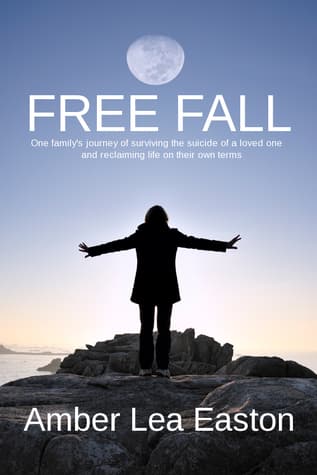
Free Fall cover
Archivist's Choice

Free Fall

Amber Lea Easton (2016)

Genre

Biography / Memoir

Reading Time

12 Minutes

Key Themes

See below

Track Your Reading

Sign in to track this book

After her husband's sudden suicide, a mother navigates the isolating and complex journey of grief, rebuilding her family's life while confronting stigma and finding unexpected peace.

Core Idea

Amber Lea Easton's "Free Fall" is a poignant memoir that delves into the author's deeply personal journey of navigating profound loss and grief following a sudden and catastrophic event. The book explores the immediate aftermath of her world being irrevocably altered, tracing her struggle to comprehend the inexplicable, to find meaning in despair, and to ultimately reconstruct a sense of self and purpose amidst the ruins of her former life. It's a raw and honest portrayal of resilience, vulnerability, and the arduous, non-linear path toward healing and acceptance when confronted with the ultimate test of human endurance.
Difficulty
Medium

Core idea

The central argument and framework that powers the entire book.

Amber Lea Easton's "Free Fall" is a poignant memoir that delves into the author's deeply personal journey of navigating profound loss and grief following a sudden and catastrophic event. The book explores the immediate aftermath of her world being irrevocably altered, tracing her struggle to comprehend the inexplicable, to find meaning in despair, and to ultimately reconstruct a sense of self and purpose amidst the ruins of her former life. It's a raw and honest portrayal of resilience, vulnerability, and the arduous, non-linear path toward healing and acceptance when confronted with the ultimate test of human endurance.

At a glance

Difficulty

Medium

Key Takeaways

1

The Shattering Instant

Suicide as an identity-stripping event, not just a loss.

Quote

In an instant my husband stripped away my identity as wife, stay-at-home mom, and best friend. With his suicide, our world changed forever.

The book shows the immediate, profound shift suicide causes, which is different from typical grief. Easton highlights losing her core identities—wife, stay-at-home mom, best friend—which were tied to her husband. This is not just a loss; it's an end to her old self, forcing a complete re-evaluation. This view helps us understand the unique pain of suicide survivorship, showing how the death changes a survivor's personal and social life. It makes rebuilding one's identity incredibly hard. This sudden loss of identity sets the stage for...

Supporting evidence

The opening lines of the memoir directly convey this immediate, identity-altering impact of her husband's suicide.

Apply this

For survivors, recognizing this identity-stripping can validate their experience of profound disorientation. For supporters, understanding this deeper layer of loss can inform more empathetic and targeted support beyond typical grief counseling.

2

The Stigma's Shadow

How 'suicide' complicates and isolates the grieving process.

Quote

Grief is a dark journey, one often tainted with judgment and false perceptions. Add the word 'suicide' to the mix and more complications arise.

Easton directly addresses the widespread shame linked to suicide, which adds to survivors' already immense suffering. Unlike other losses, suicide often brings judgment, whispers, and a deep lack of understanding from others, leading to isolation. This shame can appear as blaming the victim, awkward silences, or even abandonment, as some people struggle to process the death. The book powerfully shows how this societal discomfort forces survivors to be defensive, making open mourning difficult and blocking genuine comfort. This is one ...

Supporting evidence

Easton explicitly states the 'complications' that arise with the word 'suicide' and recounts 'surviving the fall out with friends and family who simply couldn't understand our healing process'.

Apply this

Advocating for open dialogue about suicide and its impact can help dismantle stigma. Survivors can seek out support groups specifically for suicide loss to find a community that understands their unique challenges.

3

Children's Silent Suffering

Navigating children's anxiety and trauma in the aftermath.

Quote

Free Fall is the journey of piecing our lives back together—overcoming children's anxiety as we traversed the brutal grief and trauma process...

A large part of Easton's memoir focuses on how her husband's suicide affected her children. She details their specific anxieties and traumas, showing how children process such a huge loss differently than adults. This includes managing their fears, explaining the unexplainable, and reassuring them of safety when their world has been shattered. The book explains the double burden of the surviving parent: grieving their own loss while also protecting and guiding their children through grief. This part is important because children's emo...

Supporting evidence

The author explicitly mentions 'overcoming children's anxiety' as a key part of their healing journey.

Apply this

Parents supporting children through suicide loss should seek professional help tailored to childhood trauma and grief, creating safe spaces for children to express their feelings without judgment.

4

Reclaiming Language

The struggle and eventual acceptance of new, painful labels.

Quote

...learning to say the words 'widow' and 'single mom' without cringing...

Easton's journey includes a difficult struggle with new labels forced on her by circumstance: 'widow' and 'single mom.' These terms, though true, carry huge emotional weight and signal the permanent loss of her old life. The 'cringing' she describes shows the deep discomfort and pain of accepting these new identities. It's an act of taking back her language and emotions, as she slowly moves from resistance to acceptance. This process is not just about words; it's about accepting a new reality and starting to build a new self from the ...

Supporting evidence

The phrase 'learning to say the words 'widow' and 'single mom' without cringing' directly illustrates this point.

Apply this

Survivors can practice self-compassion when grappling with new labels, understanding that it's a natural part of integrating a changed identity. For others, respecting these new identities without judgment is crucial.

5

The Imperfect Support System

Coping with friends and family who 'simply couldn't understand'.

Quote

...surviving the fall out with friends and family who simply couldn't understand our healing process...

The memoir openly discusses the painful truth that not all relationships survive the trauma of suicide. Easton talks about falling out with loved ones who, despite good intentions, could not understand or properly support her family's unique healing process. This lack of understanding often came from discomfort with suicide, different expectations of grief, or an inability to see such deep pain. This part of the book is insightful, showing that grief can be very isolating, even from those closest to you. It emphasizes the need to set ...

Supporting evidence

The author explicitly mentions 'surviving the fall out with friends and family who simply couldn't understand our healing process'.

Apply this

Survivors should seek out support networks that genuinely understand their specific grief, which may include professional therapy or suicide survivor groups, rather than relying solely on existing social circles.

6

Forgiveness as Liberation

The challenging journey to forgiving the unforgivable act.

Quote

...forgiving my husband, and finding peace after chaos.

Easton's path to forgiving her husband for his suicide is a crucial, though incredibly hard, step towards her own peace. This is not about excusing the act but releasing the grip of anger, blame, and resentment that can trap survivors in endless suffering. Forgiveness, here, is a deeply personal and often uneven process, essential for the survivor's own mental and emotional freedom. The book suggests that holding onto unforgiveness, though understandable, ultimately harms the person who holds it. This idea is important, as it challeng...

Supporting evidence

The author lists 'forgiving my husband' as a key triumph in her journey.

Apply this

Survivors can explore forgiveness through journaling, therapy, or meditation, understanding that it's a process for their own healing, not for the person who died.

7

The Myth of Closure

Grief as a journey of 'piecing lives back together,' not ending it.

Quote

Free Fall is the journey of piecing our lives back together—overcoming children's anxiety as we traversed the brutal grief and trauma process...

The memoir implicitly questions the societal expectation of 'closure' in grief. Instead of showing a final end to suffering, Easton describes 'piecing our lives back together,' suggesting an ongoing, rebuilding process. This view acknowledges that while sharp pain may lessen, the loss fundamentally changes one's life, requiring continuous adjustment and integration rather than a return to how things were before. This is a more realistic and understanding view of grief, especially for suicide survivors, who often carry complex question...

Supporting evidence

The book's description of 'piecing our lives back together' emphasizes rebuilding rather than achieving a final 'closure'.

Apply this

Survivors can reframe their expectations of grief, understanding it as an ongoing process of integration and adaptation, rather than striving for an elusive 'closure'.

8

Finding Peace After Chaos

The ultimate goal: not forgetting, but achieving tranquility.

Quote

...finding peace after chaos.

Easton's story ends with her finding 'peace after chaos.' This peace is not an absence of memory or occasional sadness, but a state of inner calm and acceptance despite the lasting mark of loss. It means she successfully navigated the 'free fall,' learning to live with her grief, trauma, and changed identity without being consumed by them. This is the main encouragement the memoir offers: that even after the most devastating experiences, a new kind of serenity is possible. It shows human resilience and the ability to grow even through...

Supporting evidence

The phrase 'finding peace after chaos' is presented as the culmination of her journey.

Apply this

Survivors can hold onto the hope that peace is attainable, even if it feels distant. Engaging in self-care, mindfulness, and seeking joy can contribute to this eventual state.

9

You Are Not Alone

The powerful message of shared experience and solidarity.

Quote

We're looking back and holding our hands out to you saying, 'hang in there, you're not alone, and you'll get here, too.'

The memoir's main goal is to offer help to others facing similar tragedies. Easton and her children, having gone through their own 'brutal grief and trauma process,' offer support and hope. This message of 'you're not alone' is very powerful for suicide survivors, who often feel isolated by their unique loss and the associated shame. By sharing her honest journey, Easton creates a space for validation and connection, assuring readers that while their path is difficult, it is ultimately survivable. This shared aspect is vital, turning ...

Supporting evidence

The concluding lines of the book directly convey this message of solidarity and hope.

Apply this

Survivors should actively seek out communities of shared experience, whether online forums, support groups, or memoirs, to combat feelings of isolation and find validation.

10

The Journey's Transformative Power

From victim to survivor to guide.

Quote

Free Fall is for those who may be facing their own tragedy and feeling alone, hopeless, confused, scared, and misunderstood. [...] We're there now. We're looking back and holding our hands out to you...

Easton's personal journey changes her from a victim to a strong survivor and, finally, a compassionate guide for others. The memoir itself is an act of change, showing how deep suffering, when faced with courage, can lead to wisdom and empathy. She doesn't just tell her story; she uses it to help others, embodying the Thich Nhat Hanh quote about compassion. This shift from personal pain to helping others shows the human spirit's ability to find meaning even in the deepest sorrow, offering a compelling example of growth after trauma.

Supporting evidence

The explicit intention stated in the memoir's description, 'intended for those who may be facing their own tragedy' and 'holding our hands out to you', demonstrates this transformation.

Apply this

Survivors, when ready, can consider how their experience might offer comfort or guidance to others, finding purpose in sharing their journey and contributing to broader understanding.

Critical analysis

Notable Quotes

Quiz

Test Your Knowledge

Ready to see how well you understood this book? Take our interactive quiz with 10 questions.

10
Questions
~5
Minutes
?
Best Score

Key Questions (FAQ)

'Free Fall' is a memoir by Amber Lea Easton detailing the profound impact of her husband's suicide. It explores the author's journey through grief, trauma, and the process of rebuilding her life and her children's lives after this sudden loss.

About the author

Amber Lea Easton is a fiction author known for her gripping thrillers, including "Reckless Endangerment," "Riptide," and "Free Fall." Her writing often explores themes of suspense and danger, drawing readers into high-stakes narratives. Easton's work has garnered a dedicated following within the thriller and suspense fiction community.