“It was as if she had been living in a house her whole life, and had just discovered a hidden room she never knew existed.”
— Jules's feeling of awakening and new discovery in Tel Aviv.

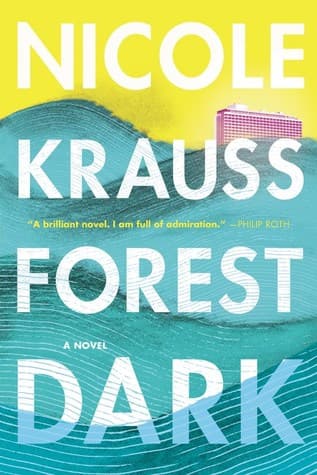
Nicole Krauss (2017)
Genre
Literary Fiction / Spirituality
Reading Time
300 min
Key Themes
See below
Sign in to track this book
A retired lawyer in Tel Aviv gives away his possessions to find his ancestral roots, while a novelist with writer's block explores self and story in a hotel. Both go on journeys that blur identity and reality.
Jules Epstein, a wealthy New York lawyer, changes after his parents die, his divorce, and retirement. He feels an urge to give away his possessions, systematically donating his art, furniture, and other valuables. His children, Miriam and Jacob, worry, and his estate executor, Asher, is confused. With the remaining money, Epstein travels to Israel, supposedly to honor his parents, though his plans are unclear. He arrives in Tel Aviv, looking for an undefined purpose or understanding after detaching himself from his old life.
A successful American novelist, unnamed but implied to be the author, arrives at the Tel Aviv Hilton, a place she has visited yearly since childhood. She has writer's block, feels uneasy, and her marriage to Michael is failing. She hopes the familiar hotel will offer new insights and restart her creativity. She spends her days exploring the city, observing, and thinking, trying to access a deeper reality or a lost part of herself she believes is linked to this place and her childhood memories there. She feels increasingly distant from her Brooklyn life and family.
In Tel Aviv, Jules Epstein meets Rabbi Menachem, a charismatic American rabbi. Rabbi Menachem believes he is organizing a reunion for King David's descendants and, after some questions, insists Epstein is a direct descendant. Epstein is initially skeptical but becomes drawn to the rabbi's strong belief and grand vision of reuniting the royal line. The rabbi's insistence appeals to Epstein's desire for meaning and connection, offering a new identity and purpose beyond his former life of material success.
Rabbi Menachem's daughter, Yael, a beautiful and mysterious filmmaker, further draws Epstein into their world. Yael works on an ambitious film about King David, shot in the Israeli desert. She convinces Epstein to get involved, seeing his seriousness and financial resources as helpful. Epstein, charmed by Yael and the romantic idea of contributing to a creative project that reimagines a biblical figure, agrees. This involvement is a big change from his previous life, pulling him deeper into a story that blurs history, myth, and personal identity.
At the Tel Aviv Hilton, the novelist meets Professor Eliezer Grossman, a retired literature professor who claims to know her work and family. Grossman, an intense and intelligent man, proposes an unusual project. He suggests she investigate the disappearance of a renowned Israeli writer, a figure he respects, implying her work and journey are linked to this mystery. The novelist, intrigued and seeing a possible way through her creative block, agrees. She starts a quest that promises to challenge her understanding of reality and authorship.
As Epstein becomes more involved in Yael's film project and the King David story, his change speeds up. He sheds his old identity, embracing a more spiritual, less materialistic life. He spends time in the desert, feeling a strong connection to the ancient land and its stories. His sense of self begins to disappear, and he becomes more detached from his past. Eventually, during filming, he disappears into the desert, leaving only his clothes. He seems to merge with the timeless story he helped create, becoming part of it rather than just an observer.
Following Professor Grossman's vague instructions, the novelist researches the vanished Israeli writer, whose life and work are mysterious. Her investigation through archives, interviews, and the writer's books reveals a complex person who also struggled with identity, memory, and the blurred lines between fiction and reality. She discovers that the writer, too, was fascinated by disappearing, by shedding one's self to become something else. This research starts to reflect her own struggles and her growing detachment from her established identity as a writer and a woman.
As the novelist continues her research, Professor Grossman reveals a surprising truth: the vanished Israeli writer she is investigating is Jules Epstein. Grossman explains that Epstein, after his disappearance, took on a new identity as a writer, having left his previous life as a New York lawyer. He explains that Epstein's transformation was not just a physical disappearance but a complete re-creation of self through writing and storytelling. This revelation deeply affects the novelist, making her rethink identity, authorship, and the stories we tell about ourselves and others.
The intertwining stories of Epstein's disappearance and her own creative and personal struggles lead the novelist to a deep identity crisis. She questions the truth of her own life, marriage, and literary career. The lines between fiction and reality, between her public self and inner truth, become blurred. Through her research and thoughts, she begins to understand that identity is fluid, a construct. She realizes that true self-discovery might involve shedding and re-creation, much like Epstein's. She feels a powerful urge to disappear, to rewrite her own story.
Professor Grossman eventually leads the novelist to a secluded kibbutz where Jules Epstein, now using a different name and living a simple, anonymous life, is found. He has become a writer, living quietly, having successfully transformed himself. The novelist watches him from a distance, understanding the freedom and self-possession he has achieved. This encounter, and the entire journey, prompts her own decision. She realizes that her personal and artistic freedom lies not in literally disappearing, but in the courage to redefine her own story, to embrace the 'forest dark' of the unknown within herself and her work, and to choose her own path forward, even if it means changing her life forever.
The Protagonist
Epstein transforms from a powerful, materialistic lawyer into a spiritual seeker who sheds his identity and disappears to live a new life as a writer.
The Protagonist
She begins as a blocked writer seeking external inspiration and ends by confronting her own identity, choosing to redefine her life and artistic path.
The Supporting
He remains a consistent figure, driving the King David narrative and influencing Epstein's journey.
The Supporting
She facilitates Epstein's immersion into the King David narrative and his eventual disappearance.
The Supporting
He begins as a mysterious figure and gradually reveals his knowledge, leading the novelist to her crucial discoveries.
The Supporting
He remains a static representation of the life the novelist is moving away from.
The Mentioned
Her role is to react to Epstein's transformation, highlighting its radical nature.
The Mentioned
His role is to react to Epstein's transformation, highlighting its radical nature.
The novel explores identity as a changing, adaptable idea, not a fixed one. Both Jules Epstein and the novelist try to shed their old selves. Epstein literally disappears, taking a new name and life, while the novelist struggles with her artistic and personal identity, considering a similar 'disappearance' through writing and self-redefinition. The book suggests that finding one's true self may mean letting go of past definitions and outside expectations. This is seen in Epstein's journey from a rich lawyer to an anonymous writer and the novelist's struggle to break free from her own story.
“Perhaps the only way to truly find yourself is to first lose yourself completely.”
Krauss blurs the lines between real and imagined. The stories of Epstein and the novelist are distinct but eventually connect, with Epstein becoming a character in the novelist's investigation. The novelist herself questions the truth of her life story, seeing it as something she has written. The film about King David, Epstein's new identity as a writer, and the novelist's creative process all show how stories shape perception and can become reality. This idea is central to Grossman's guidance, as he encourages the novelist to see how 'facts' can be fluid and subjective, and how telling a story can create a new truth.
“How do we know the difference between the story we tell and the life we live?”
Both main characters go on spiritual quests for meaning beyond material things. Epstein's giving away his wealth and embracing the King David story, guided by Rabbi Menachem, represents a search for spiritual lineage and purpose. The novelist's retreat to the Tel Aviv Hilton and her intellectual pursuit of Epstein's story are also driven by a desire for a deeper understanding of existence, a 'dimension of reality' that has been hidden. The Israeli landscape, especially the desert, serves as a strong spiritual background, symbolizing ancient history, solitude, and the possibility of deep change.
“There was a yearning for something beyond what was visible, beyond what could be held or explained.”
The novel looks at how memory, both personal and shared, shapes identity and legacy. Epstein's journey begins with his parents' deaths, leading him to honor their memory in an unusual way. The King David story is a deep exploration of historical legacy and family memory. The novelist's yearly returns to the Tel Aviv Hilton are an attempt to reconnect with childhood memories and her own history. Professor Grossman's project for the novelist investigates a writer's legacy and 'disappearance,' making her confront how people are remembered or forgotten, and how their stories are preserved or reinvented over time.
“What does it mean to be a descendant, not just of blood, but of a story?”
Two seemingly separate narratives that eventually converge.
The novel employs a dual narrative, alternating between Jules Epstein's story and the unnamed novelist's story. Initially, these narratives appear unrelated, but as the book progresses, subtle connections emerge, building suspense and thematic resonance. The convergence reveals that the novelist is investigating Epstein's disappearance, linking their existential journeys and highlighting the novel's themes of identity, storytelling, and the blurring of reality and fiction. This structure allows for parallel exploration of similar themes from different perspectives, enriching the overall meaning.
The novelist character's identity closely mirrors the author's, blurring the lines of narration.
The unnamed novelist character is implicitly understood to be Nicole Krauss herself, given her biographical details (successful writer, two children, similar age, annual visits to the Tel Aviv Hilton). This self-insertion creates a meta-fictional layer, challenging the reader to question the authenticity of the narrative and the boundaries between the author, the narrator, and the characters. It reinforces the novel's central theme of fiction and reality blurring, making the reader complicit in the interpretive act and deepening the exploration of identity and authorship.
A symbolic setting representing a liminal space for transformation.
The Tel Aviv Hilton functions as more than just a hotel; it is a symbolic liminal space. For the novelist, it is a place of childhood memories, a refuge, and a catalyst for introspection, representing both familiarity and the potential for new perspectives. For Epstein, it's a transient point before his radical transformation. Its unchanging nature amidst personal flux underscores the characters' internal journeys. The hotel, with its blend of the familiar and the foreign, the historical and the modern, becomes a microcosm for the characters' search for meaning and a 'dimension of reality' that exists beyond the surface.
A biblical myth used as a framework for identity and purpose.
The story of King David serves as a powerful mythical framework within the novel. For Jules Epstein, the idea of being a descendant of King David, coupled with Yael's film project, provides a new identity and purpose, allowing him to shed his materialistic past and embrace a more ancient, spiritual lineage. This device highlights the human need for grand narratives and the power of myth to shape individual lives. It connects personal transformation to a larger, historical, and spiritual context, suggesting that identity can be found or lost within the tapestry of collective stories.
“It was as if she had been living in a house her whole life, and had just discovered a hidden room she never knew existed.”
— Jules's feeling of awakening and new discovery in Tel Aviv.
“The past, he thought, was not a place to visit, but a place to leave.”
— Jules contemplating his own history and desire to move on.
“Maybe the point of it all wasn't to find an answer, but to learn how to live with the question.”
— A recurring theme about the nature of inquiry and uncertainty.
“Every life, she thought, was a series of disappearances.”
— Nicole reflecting on loss and the ephemeral nature of existence.
“He understood that what he was seeking was not a place, but a transformation.”
— Jules's realization about his quest in the desert.
“The world was full of stories, and sometimes, she thought, you just had to step into one.”
— Nicole considering the narratives that shape lives and her own participation.
“Memory, he knew, was a kind of fiction, constantly revised, constantly reimagined.”
— Jules reflecting on the unreliable nature of personal history.
“To be truly lost, she thought, was to be found in a way you never expected.”
— Nicole's experience of disorientation leading to unexpected insights.
“The desert was a place where things were revealed, not hidden.”
— Jules's perception of the stark clarity of the Israeli desert.
“We spend our lives trying to make sense of things that are not meant to be understood.”
— A philosophical musing on the limits of human comprehension.
“Sometimes, the only way to find your way back was to go further in.”
— A paradox explored by both protagonists in their respective journeys.
“He felt as if he were walking into a story that was already being written, and he was merely a character.”
— Jules's feeling of fate or predetermination in his experiences.
“The greatest freedom, she thought, was the freedom to disappear.”
— Nicole's contemplation of anonymity and escaping her established life.
“There was a kind of beauty in the brokenness, a truth that wholeness often obscured.”
— A reflection on imperfection and the insights gained from it.
Ready to see how well you understood this book? Take our interactive quiz with 10 questions.

Nicole Krauss is an American author best known for her four novels Man Walks into a Room (2002), The History of Love (2005), Great House (2010) and Forest Dark (2017), which have been translated into 35 languages. Her fiction has been published in The New Yorker, Harper's, Esquire, and Granta's Best American Novelists Under 40, and has been collected in Best American Short Stories 2003, Best American Short Stories 2008 and Best American Short Stories 2019. In 2011, Nicole Krauss won an award from the Anisfield-Wolf Book Awards for Great House. A collection of her short stories, To Be a Man, was published in 2020 and won the Wingate Literary Prize in 2022.
Stormie Omartian
4.3
Walter Brueggemann
4.3
Jerry Bridges
4.3
Brother Lawrence
4.3

Joseph Campbell
4.3
Unknown
4.3

Pat Conroy
4.2

Dante Alighieri
4.2