BookBrief
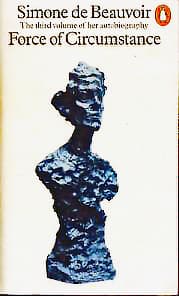
Force Of Circumstance cover
Archivist's Choice

Force Of Circumstance

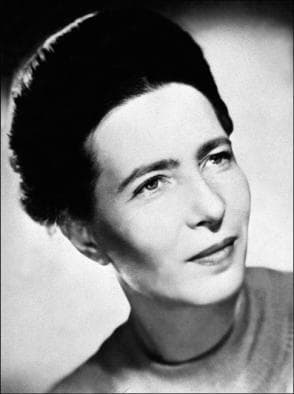
Simone de Beauvoir (1965)

Genre

Biography / Memoir / Philosophy

Reading Time

15-20 hours (given its length and density)

Key Themes

See below

Track Your Reading

Sign in to track this book

Simone de Beauvoir examines her life, her relationships with figures like Sartre and Camus, and the truths behind the legends, showing the 'force of circumstance' that shaped a pioneering feminist philosopher.

Core Idea

Simone de Beauvoir's 'Force of Circumstance' is a philosophical memoir. It covers the second half of her life (1944-1962), showing how individual freedom is shaped and limited by 'the force of circumstance'—the historical, social, political, and personal realities of existence. Through examining her intellectual and personal connection with Jean-Paul Sartre, her political changes, her relationships, and aging, Beauvoir shows that creating oneself is an ongoing, often difficult, process between an independent will and the outside world. The book reflects on life, exploring the joys and burdens of freedom and the weight of time.
Reading time
15-20 hours (given its length and density)
Difficulty
Hard
✓ Read this if...
You are a serious reader interested in the intersection of philosophy, feminism, and personal history, eager to delve into the mind of one of the 20th century's most significant intellectuals, and are prepared for a detailed, introspective, and often challenging account of a life lived with radical freedom and profound engagement.
✗ Skip this if...
You prefer light reading, are looking for a fast-paced narrative, or are not interested in dense philosophical inquiry, detailed personal reflection on aging and memory, or the intricacies of intellectual relationships within a specific historical context.

Core idea

The central argument and framework that powers the entire book.

Simone de Beauvoir's 'Force of Circumstance' is a philosophical memoir. It covers the second half of her life (1944-1962), showing how individual freedom is shaped and limited by 'the force of circumstance'—the historical, social, political, and personal realities of existence. Through examining her intellectual and personal connection with Jean-Paul Sartre, her political changes, her relationships, and aging, Beauvoir shows that creating oneself is an ongoing, often difficult, process between an independent will and the outside world. The book reflects on life, exploring the joys and burdens of freedom and the weight of time.

At a glance

Reading time

15-20 hours (given its length and density)

Difficulty

Hard

Read this if...

You are a serious reader interested in the intersection of philosophy, feminism, and personal history, eager to delve into the mind of one of the 20th century's most significant intellectuals, and are prepared for a detailed, introspective, and often challenging account of a life lived with radical freedom and profound engagement.

Skip this if...

You prefer light reading, are looking for a fast-paced narrative, or are not interested in dense philosophical inquiry, detailed personal reflection on aging and memory, or the intricacies of intellectual relationships within a specific historical context.

Key Takeaways

1

The Weight of Time: A Philosophical Reckoning

Beauvoir grapples with the relentless march of time and its existential implications on selfhood and purpose.

Quote

Я обнаружила, что время не просто течет, оно меняет меня, превращая в кого-то другого, кого я едва узнаю.

Beauvoir's 'Force of Circumstance' considers the passage of time, not just as a sequence, but as a changing power. She faces the idea that the self is not fixed but always changing, shaped by experiences and time. This awareness brings a sense of distance from past selves and a confrontation with death, a central idea of existential thought. Her struggle is with 'the force of circumstance'—the outside pressures and inside changes that direct one's path, often without conscious control. This theme highlights the human condition of seek...

Supporting evidence

Throughout the memoir, Beauvoir frequently reflects on her past, comparing her youthful ideals with her current realities, and expressing surprise or disillusionment at how she has changed. Her detailed accounts of aging and its impact on her perceptions and relationships serve as direct evidence.

Apply this

Embrace the fluid nature of identity. Rather than clinging to past versions of yourself, acknowledge and integrate the changes wrought by time and experience. Regularly reflect on your evolving values and goals, allowing for continuous self-reinvention rather than resisting it.
existentialismself-identitytemporal-consciousness
2

The Sartrean Pact: A Life of Intellectual and Personal Interdependence

The unique, lifelong relationship with Jean-Paul Sartre was the central axis of Beauvoir's intellectual and emotional world.

Quote

Наш пакт был не просто союзом; это была симбиотическая интеллектуальная и экзистенциальная связь, которая формировала наши жизни и наши идеи.

Beauvoir details her relationship with Jean-Paul Sartre, focusing on its non-traditional, open, and intellectual nature. This was a philosophical and personal agreement that defined much of her adult life. Their pact for transparency, intellectual rigor, and freedom from traditional marriage allowed them both to follow their individual paths while staying connected. This arrangement, often seen as scandalous, was for Beauvoir a source of both inspiration and occasional pain. It shows a radical way of living, pushing the boundaries of ...

Supporting evidence

Beauvoir dedicates significant portions of the book to recounting her daily life with Sartre, their intellectual debates, shared travels, and the intricacies of their 'secondary' relationships. Her candid discussions of their agreement and its practical implications are central.

Apply this

Consider the foundational agreements in your most significant relationships. Are they explicit or implicit? How do they serve (or hinder) individual growth and shared purpose? Challenge conventional relationship norms to define parameters that truly support mutual flourishing, even if unconventional.

open-relationshipintellectual-partnershipexistential-love
3

Navigating Freedom: The Burdens and Joys of Autonomy

Beauvoir's life exemplifies a constant striving for personal and intellectual freedom, with all its inherent challenges and rewards.

Quote

Я всегда выбирала путь свободы, даже если это означало одиночество или непонимание.

A repeated theme in 'Force of Circumstance' is Beauvoir's dedication to freedom—intellectual, personal, and sexual. She recounts her choices to reject societal expectations, especially those placed on women, for an independent existence. This freedom is not shown as easy. It comes with the weight of responsibility, the solitude of creating one's own path, and the constant negotiation with outside pressures and inner doubts. Her story shows the courage needed to live authentically, define one's own values, and accept the results of suc...

Supporting evidence

Beauvoir details her decision to never marry, to pursue an academic and literary career, and to engage in relationships outside of conventional monogamy. She also discusses the social ostracism and criticism she sometimes faced as a result of these choices.

Apply this

Actively identify areas in your life where you feel constrained by external expectations. Take small, deliberate steps to assert your autonomy, whether in career choices, personal relationships, or lifestyle. Understand that true freedom often involves discomfort and requires a strong sense of self-direction.

autonomyindividualismexistential-freedom
4

The Political Animal: Engagement and Disillusionment

Beauvoir's memoir charts her evolving political consciousness, from fervent engagement to a nuanced understanding of its complexities and limitations.

Quote

Мы верили, что можем изменить мир, и это убеждение давало нам силы жить и бороться. Но мир оказался гораздо более упрямым, чем мы думали.

Beauvoir's life was connected to the major political and social changes of the 20th century. Her memoir describes her involvement with post-war intellectual movements, the rise of communism, anti-colonial struggles, and the growing feminist movement. Initially, there is youthful idealism and a strong belief in the power of intellectual engagement to make change. However, as the story continues, a more realistic and sometimes disappointed view appears. She deals with the failures of political movements, the compromises of ideology, and...

Supporting evidence

Beauvoir describes her involvement with 'Les Temps Modernes,' her travels to China and Cuba, her observations of student protests, and her evolving views on socialism and communism, often expressing her initial hopes and later disappointments.

Apply this

Maintain a critical perspective on political engagement. While idealism is a powerful motivator, temper it with a realistic understanding of systemic challenges and the slow pace of change. Find ways to contribute meaningfully without succumbing to cynicism, acknowledging both victories and setbacks.

political-engagementpost-war-intellectualssocial-justice
5

The Burden of Memory: Reconstructing a Life

Writing her memoir forces Beauvoir to confront the fallibility of memory and the subjective nature of autobiography.

Quote

Перечитывая свои дневники, я обнаружила, что моя память лжет, или, по крайней мере, приукрашивает и искажает события. Правда всегда ускользает.

One of the most interesting parts of 'Force of Circumstance' is Beauvoir's comments on writing autobiography. She often questions the accuracy and completeness of her own memory, admitting that her recollections are influenced by present views and past emotions. This self-awareness keeps the memoir from being a simple retelling of events; instead, it explores how memory shapes identity and narrative. She deals with the impossibility of fully capturing a lived experience, highlighting the subjectivity in any attempt to reconstruct the ...

Supporting evidence

Beauvoir often contrasts her current recollections with entries from her past diaries or letters, pointing out discrepancies and admitting to forgetfulness or selective memory. She explicitly discusses the challenges of writing about a life that is still unfolding.

Apply this

Approach your own personal history with a critical eye. Recognize that your memories are not objective facts but constructed narratives. Periodically revisit past events from different perspectives, and be open to revising your understanding of your own story and its meaning.

autobiographymemory-studiessubjectivity
6

Friendship and Betrayal: The Intricacies of Human Connection

Beauvoir explores the profound impact of her friendships, marked by intense loyalty, intellectual exchange, and occasional heartbreak.

Quote

Мои друзья были зеркалами, в которых я видела себя, и опорами, на которых держалась моя жизнь. Но иногда эти зеркала разбивались, а опоры рушились.

Beyond her relationship with Sartre, Beauvoir's memoir details her many friendships, which were central to her emotional and intellectual life. These were deep, often intense, connections marked by shared ideals, debate, and mutual support. She recounts the joys of intellectual friendship, the comfort of shared experiences, and the pain of separation or betrayal. Her story shows the complexity of human bonds, where loyalty can exist with jealousy, misunderstanding, and the changes that time brings. These relationships, both fulfilling...

Supporting evidence

Beauvoir dedicates significant passages to her friendships with figures like Albert Camus, her students, and various intellectuals, describing their conversations, collaborations, and the eventual deterioration of some relationships.

Apply this

Invest in cultivating deep, meaningful friendships that challenge and support you. Be prepared for the complexities and potential heartbreaks that come with intimate human connection. Nurture open communication and mutual respect as foundations for enduring bonds.

camaraderieinterpersonal-relationshipsloyalty
7

The Writer's Struggle: Crafting a Legacy

Beauvoir offers an intimate glimpse into the arduous process of writing, revealing her dedication, doubts, and evolving artistic vision.

Quote

Каждая книга была битвой, каждое предложение – усилием. Но я знала, что только через это усилие я могла по-настоящему существовать.

As an author, Beauvoir discusses her writing process, offering insights into the daily discipline, intellectual challenges, and emotional cost of writing. She describes how her major works began, the research involved, the periods of focus, and the moments of self-doubt. Her account makes the idea of artistic inspiration seem less romantic, instead emphasizing the hard work and persistence required. This theme is relevant for anyone pursuing a creative or intellectual goal, as it highlights the dedication needed to turn complex ideas ...

Supporting evidence

Beauvoir discusses the origins and development of 'The Second Sex,' 'The Mandarins,' and other novels and essays, detailing her research, writing routines, and the critical reception of her work.

Apply this

Embrace the iterative and often challenging nature of creative work. Establish consistent routines, even when inspiration wanes. View self-doubt not as a sign of failure but as a natural part of the creative process, pushing you to refine and strengthen your ideas.

literary-processcreative-struggleauthorial-voice
8

Aging and the Body: A Woman's Perspective

Beauvoir confronts the physical and psychological realities of aging, particularly from a woman's perspective in a society often hostile to it.

Quote

Я чувствовала, как мое тело меняется, и с ним меняется мое место в мире, мое отношение к себе и к другим.

A raw aspect of 'Force of Circumstance' is Beauvoir's examination of aging. She records the physical changes, the decline of youthful energy, and the societal effects of growing older, especially for a woman whose identity was connected to her intellect and passions. This theme appears before her later work, 'Old Age,' but here it is personal and experiential. She deals with the loss of beauty, the decreasing energy, and the existential dread that comes with the physical signs of time's passage. This offers an honest view on a univers...

Supporting evidence

Beauvoir frequently describes her physical sensations, her changing appearance, her health concerns, and her emotional responses to these changes, particularly in the later sections of the book.

Apply this

Cultivate a mindful awareness of your body and its changes, embracing the natural process of aging rather than resisting it. Challenge societal narratives that devalue older individuals, especially women. Focus on maintaining intellectual curiosity and emotional vitality throughout your life.

aging-processbody-imagefeminist-perspective
9

The Public and Private Self: A Constant Negotiation

Beauvoir explores the tension between her public persona as a renowned intellectual and the complexities of her private emotional life.

Quote

Моя публичная жизнь была известна всем, но моя внутренняя жизнь, ее страсти и сомнения, оставались моими собственными.

Beauvoir lived under public scrutiny, especially because of her unconventional relationships and philosophical views. Her memoir shows the constant balance between her public image as 'the Beaver' and a leading intellectual, and her personal, often vulnerable, private self. She deals with how her public identity affected her personal relationships, the misunderstandings from rumors, and the pressure to meet certain expectations. This tension highlights the challenges faced by public figures, especially women, who seek authenticity whi...

Supporting evidence

Beauvoir recounts numerous instances where her public actions or relationships were misconstrued or sensationalized by the media and public, contrasting these with her own private experiences and motivations.

Apply this

Be aware of the distinction between your public and private selves. While transparency can be valuable, understand that not all aspects of your life need to be publicly shared or justified. Cultivate a strong internal compass that guides your actions, independent of external validation or criticism.

public-personaauthenticitycelebrity-culture
10

The Enduring Power of Reflection: A Life Examined

Ultimately, 'Force of Circumstance' is a testament to the value of relentless self-examination and intellectual honesty.

Quote

Я всегда считала, что неисследованная жизнь не стоит того, чтобы ее прожить. И я пыталась исследовать свою жизнь со всей возможной честностью.

Above all, Beauvoir's memoir is an act of reflection. She approaches her own life with the same intellectual rigor and philosophical inquiry she applied to her academic works. The book is an extended exercise in self-examination, where she dissects her motivations, analyzes her relationships, critiques her past beliefs, and confronts her fears. This honesty, even when painful, is the book's greatest strength. It shows the value of living an examined life, of constantly questioning, learning, and seeking greater self-understanding. Her...

Supporting evidence

The entire structure of the book, with its chronological recounting interspersed with deep philosophical digressions and self-critiques, serves as evidence for Beauvoir's commitment to reflection and self-examination.

Apply this

Integrate regular periods of self-reflection into your routine. Journal, meditate, or engage in deep conversations to process your experiences, values, and goals. Cultivate intellectual honesty in assessing your own actions and beliefs, even when it's uncomfortable.

self-reflectionintellectual-honestyexamined-life

Critical analysis

Notable Quotes

I am going to talk about myself. This is not out of vanity. I am telling my story for the sake of those who are curious about what it's like to be a woman who has lived a certain kind of life.

Opening lines, setting the stage for her autobiography.

One is not born, but rather becomes, a woman.

A foundational concept from 'The Second Sex' often reiterated and explored in her memoirs.

In France, a woman is supposed to be either a wife or a mistress; there is no third way.

Reflecting on societal expectations and limited roles for women in mid-20th century France.

I was born at a time when women were just beginning to claim their independence, but the path was still fraught with obstacles.

Discussing the historical context of her early life and the changing status of women.

The greatest scandal in our time is the existence of poverty and the indifference of the rich.

Expressing her political and social concerns, extending beyond personal narrative.

To be free is to be responsible. Not only for oneself, but for the world.

Connecting personal freedom with broader ethical and political responsibilities.

My life has been a long struggle against the limitations imposed by my gender and my class.

Summarizing the overarching themes of her life and work.

Love is not a gift, but a conquest. It must be continually renewed, or it withers.

Reflecting on the nature of love and relationships, likely in the context of her long-term partnership with Sartre.

Writing is not a profession but a vocation of unhappiness.

Describing the demanding and often challenging nature of her life as a writer.

One never knows oneself, but one can try to understand oneself through the eyes of others.

Exploring the complexities of self-knowledge and the role of external perspectives.

The past is never dead. It's not even past.

A reflection on the enduring influence of history and personal experiences.

Every human being is free, but this freedom is not given; it must be constantly achieved.

Elaborating on the active and continuous nature of achieving freedom, a core existentialist idea.

What is an adult? A child who has survived.

A poignant and somewhat cynical observation about the transition from childhood to adulthood.

To be truly moral means to be in perpetual revolt against injustice.

Connecting morality with active resistance against societal wrongs.

Quiz

Test Your Knowledge

Ready to see how well you understood this book? Take our interactive quiz with 10 questions.

10
Questions
~5
Minutes
?
Best Score

Key Questions (FAQ)

'Force of Circumstance' is an autobiographical work by Simone de Beauvoir, offering an intimate look into her life, relationships, philosophical development, and experiences within the intellectual circles of 20th-century France. It delves into her personal struggles, love affairs, and intellectual journey.

About the author

Simone de Beauvoir

Simone Lucie Ernestine Marie Bertrand de Beauvoir was a French existentialist philosopher, writer, social theorist, and feminist activist. Though she did not consider herself a philosopher, nor was she considered one at the time of her death, she had a significant influence on both feminist existentialism and feminist theory.