BookBrief
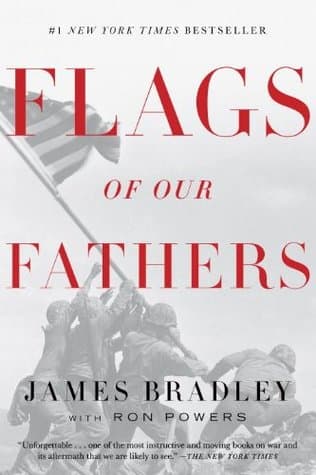
Flags of Our Fathers cover
Archivist's Choice

Flags of Our Fathers

James D. Bradley (2001)

Genre

Biography / History

Reading Time

12 Minutes

Key Themes

See below

Track Your Reading

Sign in to track this book

The son of a reluctant hero uncovers the harrowing truth behind the iconic Iwo Jima flag-raising, revealing the disconnect between myth and the devastating reality faced by soldiers and those who returned.

Core Idea

Flags of Our Fathers tells the true story behind the iconic photograph of the second flag-raising on Iwo Jima, revealing the lives and fates of the six Marines who hoisted it. Beyond the immediate heroism captured in a single frame, the book delves into their individual journeys before, during, and after the brutal battle, exploring themes of duty, sacrifice, the immense psychological toll of war, and the often-uncomfortable weight of unexpected fame. It aims to humanize the figures beneath the flags, contrasting the public's perception of heroes with the private realities of men forever marked by combat.
Difficulty
Medium

Core idea

The central argument and framework that powers the entire book.

Flags of Our Fathers tells the true story behind the iconic photograph of the second flag-raising on Iwo Jima, revealing the lives and fates of the six Marines who hoisted it. Beyond the immediate heroism captured in a single frame, the book delves into their individual journeys before, during, and after the brutal battle, exploring themes of duty, sacrifice, the immense psychological toll of war, and the often-uncomfortable weight of unexpected fame. It aims to humanize the figures beneath the flags, contrasting the public's perception of heroes with the private realities of men forever marked by combat.

At a glance

Difficulty

Medium

Key Takeaways

1

The Burden of Accidental Heroism

The flag-raisers were ordinary men thrust into an extraordinary, and often traumatic, spotlight.

Quote

The real heroes of Iwo Jima were the guys who didn't come back.

The book's strongest insight is the psychological toll sudden, unwanted fame took on the surviving flag-raisers. The iconic photograph turned them from Marines into national symbols, a role none sought or were ready for. Rene Gagnon, a messenger, struggled with the attention, became an alcoholic, and died young, haunted by public expectations and his inability to match the manufactured image. Ira Hayes, a Pima Indian, became an alcoholic and despaired, unable to reconcile the hero myth with the horrors he witnessed and the friends he ...

Supporting evidence

The detailed accounts of Rene Gagnon's and Ira Hayes' post-war lives, marked by alcoholism, poverty, and a profound sense of disillusionment, directly contrast with the public's celebratory perception of them. John Bradley's stoic silence and his famous quote encapsulate this sentiment.

Apply this

When celebrating public figures, especially those from military service, it's crucial to consider the human cost of their sudden fame and the potential for trauma, rather than just the idealized image. Support systems should extend beyond immediate post-event recognition.
2

Iwo Jima: A Hellish Microcosm of War

The battle for Iwo Jima was a brutal, no-quarter fight, unlike almost any other in the Pacific theater.

Quote

Every inch of the island was contested, every cave, every bunker, every rock.

Bradley details the horrifying conditions of the Iwo Jima campaign, showing a place turned into a fortress by 22,000 Japanese defenders sworn to fight to the last man. The volcanic land, full of tunnels and bunkers, meant traditional tactics often failed. Marines faced constant banzai charges, hidden snipers, and mortar fire. Nearly 7,000 Americans died and over 19,000 were wounded, which shows how fierce and important this small island was. This look into the battle's details helps readers understand the great sacrifice made.

Supporting evidence

The extensive descriptions of the Japanese defensive strategy, including the network of underground tunnels, the use of Mount Suribachi as an observation and firing post, and the Japanese refusal to surrender, are central to the book's portrayal of the battle's uniqueness. Casualty figures are consistently cited.

Apply this

Understanding the specific tactical and environmental challenges of battles like Iwo Jima helps to contextualize the immense bravery and resilience required of soldiers, moving beyond generic notions of 'war is hell' to specific, tangible horrors.

3

The Power and Peril of Propaganda

The flag-raising photograph was a crucial morale booster, but its narrative was carefully curated.

Quote

The picture was an answer to a prayer. It was a picture of triumph... a symbol of victory that the nation desperately needed.

Bradley explores how Joe Rosenthal's iconic photograph was immediately seen as having great propaganda value. At a time when the war in the Pacific was slow and costly, the image offered a much-needed symbol of American determination and eventual victory. But this immediate usefulness led to a simplified, mythical version of the event. The fact that it was the second flag-raising, a logistical decision rather than a spontaneous act of heroism, was largely left out of the public story. The focus shifted from the brutal reality of the...

Supporting evidence

The book details the immediate decision by military and government officials to bring the flag-raisers home for a bond tour, recognizing the photograph's ability to galvanize public support and fundraising. The distinction between the first and second flag-raisings is a critical piece of this argument.

Apply this

Be critical of powerful imagery, especially during times of conflict. Understand that while such images can inspire, they are often curated and may simplify or omit crucial details to serve a particular narrative purpose.

4

The Unsung Heroes: Those Who Didn't Return

The true heroes, according to the flag-raisers themselves, were the countless Marines who died on Iwo Jima.

Quote

They were the ones who truly gave their all, without recognition or reward.

This takeaway is central to the book's emotional core and aligns with John Bradley's own view. While the flag-raisers became famous, three of the six in the photograph died on the island, and countless others died anonymously. The book consistently reminds the reader of the thousands of Marines who fought and died, often in horrific circumstances, without ever having their names known or their faces seen by the public. This is a powerful contrast to the flag-raisers' celebrity, honoring the collective sacrifice that made any victory p...

Supporting evidence

The book frequently shifts focus from the flag-raisers to the broader context of the battle, detailing the experiences and deaths of many other Marines. John Bradley's consistent refusal to embrace his 'hero' status and his explicit statements about the 'real heroes' reinforce this theme.

Apply this

When commemorating military events, expand the focus beyond a few iconic figures to acknowledge the collective sacrifice of all who served and especially those who made the ultimate sacrifice without public recognition.

5

The Elusive Nature of Truth in War

Memory, perspective, and official narratives often obscure the full truth of wartime events.

Quote

The truth was often a casualty of the battle, and even more so, of the stories told afterward.

Bradley handles the differences between official reports, personal memories, and the evolving myth of the flag-raising well. He shows how memories fade, details get confused, and the desire for a clean, heroic story can overwrite the messy reality. For instance, the initial wrong identification of some flag-raisers and the long confusion about which flag-raising was shown highlight how easily historical truth can be twisted. The author's careful research, comparing many sources, tries to put together the most accurate account possible...

Supporting evidence

The persistent efforts to correctly identify the Marines in the photograph, even decades later, and the revelation that the famous image was of the second flag-raising, not the first, are key examples of how truth can be elusive and subject to revision.

Apply this

Approach historical accounts, especially those concerning emotionally charged events like war, with a critical eye, recognizing that 'truth' can be multifaceted and influenced by numerous factors, including memory, perspective, and political necessity.

6

The Enduring Bonds of Brotherhood

Despite the trauma, the shared experience of combat forged unbreakable connections among the Marines.

Quote

They were more than friends; they were brothers, bound by fire and blood in a way civilians could never understand.

Among the horrors of Iwo Jima, the book shows the deep sense of friendship and mutual reliance that grew among the Marines. This brotherhood was not chosen but necessary, as men depended entirely on each other to survive unimaginable danger. The loyalty and self-sacrifice shown on the battlefield—Marines risking their lives to save friends, sharing meager food, offering comfort in despair—were key parts of their experience. This bond, while sometimes isolating them from civilian life afterward, was also a source of strength and meanin...

Supporting evidence

Stories of Marines covering each other during advances, carrying wounded comrades under fire, and the deep, unspoken understanding between veterans years later, all illustrate this profound bond. The flag-raisers, despite their disparate backgrounds, were united by this shared ordeal.

Apply this

Recognize the unique and intense bonds formed in high-stress environments like combat, and how these relationships, while powerful, can also create a sense of otherness when re-integrating into society.

7

The Unspoken Scars of War

Many veterans carried invisible wounds, struggling to articulate or escape their wartime experiences.

Quote

The war never really ended for them. It lived inside, a silent, constant companion.

Beyond physical injuries, the book powerfully conveys the lasting psychological impact of war, especially on those who survived Iwo Jima. John Bradley's lifelong silence about his experiences, his refusal to display the iconic photograph, and his son's discovery of his hidden wartime items speak volumes. Rene Gagnon and Ira Hayes's tragic post-war lives, marked by alcoholism and an inability to cope with civilian life, are clear examples of what we now call PTSD. This highlights the challenge of recognizing and treating these invisibl...

Supporting evidence

The detailed biographical sections on the post-war struggles of Gagnon and Hayes, contrasted with John Bradley's quiet, internal processing of his trauma, provide compelling evidence for the varied manifestations of psychological scarring. The author's personal journey to understand his father's silence is key.

Apply this

Develop greater empathy and understanding for veterans, recognizing that their experiences can lead to complex and long-lasting psychological challenges. Advocate for comprehensive mental health support for service members and veterans.

8

The Personal Cost of Historical Inquiry

The author's journey to uncover his father's past was deeply personal and emotionally challenging.

Quote

In seeking my father's story, I found myself walking in his footsteps, not just on Iwo Jima, but through the landscape of his silence.

This book is not just history but also a son's search to understand his quiet father. James Bradley's personal involvement adds a unique emotional depth. His struggle to reconcile the public image of a hero with the quiet, often troubled man he knew, and his dedication to finding the truth about his father and the other flag-raisers, forms a compelling story. This personal effort shows that uncovering the past can be as much about personal healing and understanding as it is about facts.

Supporting evidence

The narrative frequently interweaves the author's own research journey, his interviews with surviving veterans and families, and his reflections on his father's character, particularly his post-war silence and the discovery of his hidden boxes of memorabilia.

Apply this

When engaging with historical narratives, especially those written by direct descendants or those personally affected, appreciate the emotional labor involved and how personal connection can enrich, but also complicate, the storytelling.

9

The Irony of the 'Second' Flag Raising

The iconic moment was a logistical decision, not the initial act of claiming Suribachi.

Quote

It was the second flag-raising, a decision made for practical reasons, yet it became the one etched into history.

One of the most surprising revelations for many readers is that the famous photograph shows the second flag-raising on Mount Suribachi. The first, smaller flag had been raised earlier that day by Marines who had reached the summit. However, a larger flag was needed for better visibility across the island and for symbolic reasons. This detail, often overlooked, highlights the role of practicality and symbolism in shaping historical stories. It does not lessen the men's bravery, but it reframes the iconic moment as less spontaneous an...

Supporting evidence

Bradley provides detailed accounts from various Marines present on Suribachi, explaining the decision to replace the smaller flag with a larger one. This logistical detail is crucial to understanding the context of Rosenthal's famous photograph.

Apply this

Question popular historical narratives and seek out the less-known details. Often, the full story, including logistical or less glamorous aspects, provides a richer and more accurate understanding of events.

Critical analysis

Notable Quotes

Quiz

Test Your Knowledge

Ready to see how well you understood this book? Take our interactive quiz with 10 questions.

10
Questions
~5
Minutes
?
Best Score

Key Questions (FAQ)

Flags of Our Fathers reveals the personal stories of the six men who raised the American flag on Mount Suribachi during the Battle of Iwo Jima. It delves into their lives before, during, and after the iconic event, contrasting the public myth with their individual realities.

About the author