BookBrief
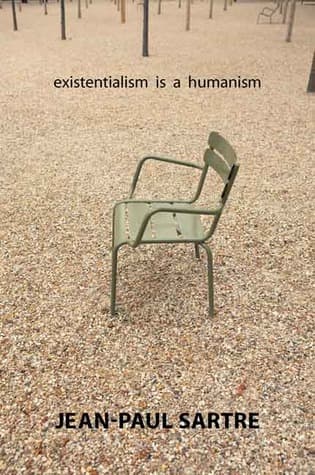
Existentialism is a Humanism cover
Archivist's Choice

Existentialism is a Humanism

Jean-Paul Sartre (2007)

Genre

Philosophy

Reading Time

90 min

Key Themes

See below

Track Your Reading

Sign in to track this book

Sartre's lecture changed how people saw existentialism, showing that in a godless world, humans are free and must create their own meaning, affecting everyone with each choice.

Core Idea

Sartre says 'existence precedes essence,' meaning people are born without a pre-set purpose or nature. Instead, they exist first, then create their own identity through choices and actions. This freedom carries great responsibility. People are 'condemned to be free,' facing anxiety from their choices, loneliness because there is no God or fixed values, and helplessness because their actions have limits. Still, Sartre promotes an optimistic view, saying that authentic choices and actions allow individuals to define themselves and create universal human values. He stresses that we are what we do.
Reading time
90 min
Difficulty
Medium
✓ Read this if...
You are curious about the foundational ideas of existentialism, want to understand Sartre's core arguments about freedom and responsibility, or are looking for a concise introduction to a major philosophical movement.
✗ Skip this if...
You prefer a less abstract or more empirical approach to understanding human nature, or you are already deeply familiar with Sartre's work and seeking new insights.

Core idea

The central argument and framework that powers the entire book.

Sartre says 'existence precedes essence,' meaning people are born without a pre-set purpose or nature. Instead, they exist first, then create their own identity through choices and actions. This freedom carries great responsibility. People are 'condemned to be free,' facing anxiety from their choices, loneliness because there is no God or fixed values, and helplessness because their actions have limits. Still, Sartre promotes an optimistic view, saying that authentic choices and actions allow individuals to define themselves and create universal human values. He stresses that we are what we do.

At a glance

Reading time

90 min

Difficulty

Medium

Read this if...

You are curious about the foundational ideas of existentialism, want to understand Sartre's core arguments about freedom and responsibility, or are looking for a concise introduction to a major philosophical movement.

Skip this if...

You prefer a less abstract or more empirical approach to understanding human nature, or you are already deeply familiar with Sartre's work and seeking new insights.

Key Takeaways

1

Existence Precedes Essence

You are defined by your actions, not by a predetermined nature.

Quote

What do we mean by saying that existence precedes essence? We mean that man first of all exists, encounters himself, surges up in the world—and that he defines himself afterwards.

Sartre states that there is no inherent human nature or purpose. Unlike a manufactured item, which has a design before it exists, humans are born without a defined identity. We are a blank slate, and our choices, actions, and goals create who we are. This means we are not tied to a 'soul,' a divine plan, or even our past. Every decision we make helps form who we become. This is an active, continuous process of self-creation. It places great responsibility on individuals to define their own meaning and values in a world without inheren...

Supporting evidence

Sartre's core argument against the 'essence precedes existence' view held by both religious creationism (God as a divine artisan) and determinist philosophical traditions. He uses the analogy of a paper-knife, which is conceived with an essence before it is made, contrasting it with human existence.

Apply this

Actively recognize that your identity is not fixed but is constantly being shaped by your choices. Instead of seeking a predefined purpose, commit to projects and actions that align with the person you wish to become. Embrace the freedom to redefine yourself through new commitments and experiences, rather than feeling constrained by past failures or societal expectations.

radical-freedomself-creationhuman-condition
2

Condemned to Be Free

Absolute freedom brings absolute responsibility.

Quote

Man is condemned to be free; because once thrown into the world, he is responsible for everything he does.

This statement captures the main idea of Sartre's existentialism. Without a God or a set nature to guide us, we are completely free to choose our path. This freedom is a burden, though, because it comes with the heavy weight of total responsibility. Every choice we make is ours alone. We cannot blame outside forces, genetics, or past events to justify our actions. This absolute freedom means we are the only ones who create our values and the meaning of our lives. This makes us accountable for every part of who we are and the world we ...

Supporting evidence

Sartre's logical deduction from the premise of 'existence precedes essence.' If there is no pre-existing essence, then there are no external dictates for human action, leaving humans entirely free and therefore entirely responsible.

Apply this

Stop making excuses or blaming external factors for your circumstances or choices. Own your decisions, even the difficult ones, and recognize that you always have the power to choose a different path. Embrace the weight of this responsibility as the true source of your agency and capacity for change.

radical-freedomresponsibilityanguish
3

Anguish, Forlornness, Despair

The emotional landscape of absolute freedom and responsibility.

Quote

These are the three notions which will enable us to understand better what we mean by saying that existence precedes essence.

Sartre identifies three basic emotional states that come from the human condition: anguish, forlornness, and despair. Anguish is the deep anxiety that comes from knowing the huge responsibility of choosing not only for oneself but, by extension, for all people. Forlornness (or 'abandonment') comes from realizing there is no God or outside moral law to justify our choices or give meaning. We are alone in creating our values. Despair comes from understanding that we can only rely on what we control – our actions – and that many outcomes...

Supporting evidence

Sartre uses the example of a military leader making a decision that will affect the lives of many soldiers. The leader experiences anguish because their choice establishes a value for all humanity. He also references Dostoevsky's 'if God does not exist, everything is permitted' to explain forlornness.

Apply this

Recognize these feelings not as weaknesses but as natural responses to your freedom and responsibility. Instead of avoiding them, use anguish as a motivator for careful, considered action. Embrace forlornness as an invitation to create your own values, and let despair guide you to focus your energy on what you can truly control.

anguishforlornnessdespairhuman-condition
4

The Universal Value of Choice

In choosing for ourselves, we choose for all humanity.

Quote

In choosing myself, I choose man. ... And in this way, I am responsible for myself and for everyone else. I am creating a certain image of man of my own choosing.

This is one of Sartre's most difficult and often misunderstood claims. He says that when we make a choice, we are not just deciding for ourselves; we are also suggesting that choice as a universal value. By choosing to act in a certain way, we are, in a sense, saying, 'This is how a person should act.' This means every personal decision carries a deep ethical weight, as it helps define what it means to be human. There is no escaping this responsibility; even choosing not to choose is a choice that defines you and, by extension, huma...

Supporting evidence

Sartre's example of a young man torn between caring for his mother and joining the Free French forces. Whatever he chooses, he is establishing a value not just for himself but suggesting a universal human response to such a dilemma.

Apply this

Before making significant decisions, consider the broader implications. Ask yourself: 'If everyone acted as I am about to act, would that be a world I endorse?' This thought experiment can help clarify your values and lead to more deliberate, ethically conscious choices, moving beyond purely self-interested motivations.

universal-ethicsresponsibilityintersubjectivity
5

Bad Faith and Self-Deception

Avoiding freedom and responsibility by pretending to be an object.

Quote

The man who takes refuge in the excuse of his passions, or by inventing some deterministic doctrine, is a man in bad faith.

Bad faith (mauvaise foi) is Sartre's term for self-deception. It happens when people deny their freedom and responsibility by pretending to be objects or by taking on pre-set roles. This might appear as claiming 'I had no choice,' 'that's just how I am,' or 'society made me do it.' It is an attempt to escape the anxiety of freedom by treating oneself as something determined by outside forces or an unchangeable nature. Sartre sees this as a basic dishonesty, a deliberate turning away from the truth of our complete freedom and the respo...

Supporting evidence

Sartre gives the example of a waiter who performs his role with excessive, almost mechanical precision, as if he *is* merely a waiter, rather than a free consciousness who *chooses* to be a waiter. This is a denial of his transcendence and freedom.

Apply this

Be vigilant for moments when you attempt to externalize blame or claim helplessness. Challenge thoughts like 'I can't' or 'it's just my nature.' Recognize these as potential acts of bad faith and consciously reaffirm your capacity to choose and act differently, even in difficult circumstances. Embrace the discomfort of responsibility over the false comfort of determinism.

authenticityself-deceptionfreedom
6

Humanism Without God

Man is the sole lawmaker of values and meaning.

Quote

There is no other universe than a human universe, the universe of human subjectivity.

Sartre redefines humanism, separating it from any divine source. For him, existential humanism says that humans are the ultimate source of value and meaning. Without a God to give commands or a pre-existing plan for humanity, we are fully responsible for creating our own moral code and purpose. This is not permission for negativity, but an empowering call to action. It means we have the dignity and burden of making our own values through our choices and commitments, building a human world based on human goals. It is a humanism of acti...

Supporting evidence

Sartre's direct refutation of criticisms that existentialism leads to quietism or moral relativism. He argues that by choosing, we are creating values, and thus, an ethics arises from human action, not from an external source.

Apply this

Instead of waiting for external validation or a 'higher purpose,' actively engage in creating meaning in your life through your projects, relationships, and contributions. Take ownership of your values and be prepared to articulate and defend them, knowing they are products of your own free commitments.

humanismatheismvalue-creationmeaning-making
7

Action Defines Being

You are nothing more than the sum of your actions.

Quote

Man is nothing else but what he purposes, he exists only in so far as he realizes himself, he is therefore nothing else but the sum of his actions, nothing else but what his life is.

Sartre stresses that our identity comes from our actions, not from our intentions, potential, or reputation. We are not defined by what we could be, or what others think we are, but by what we do. A coward acts cowardly, regardless of an inner wish to be brave. A hero performs heroic acts. This focus on action means that self-realization is an ongoing process of doing. True identity is always changing, shown through real engagement with the world. It is a strong call to move beyond just thinking or wishing and to show our values...

Supporting evidence

Sartre's critique of doctrines that define man by his 'passions' or 'potential.' He argues that 'there is no love apart from the deeds of love; no potentiality of love other than that which is manifested in loving.'

Apply this

Focus on consistent action rather than just intentions or declarations. If you want to be a kind person, perform acts of kindness. If you want to be a writer, write. Understand that your identity is forged daily through your tangible engagement with the world, not through internal musings or unfulfilled desires.

action-over-intentionself-realizationauthenticity
8

Intersubjectivity and the Other

Our freedom is intertwined with the freedom of others.

Quote

I can choose only in relation to a certain end, and when I propose that end, it is impossible for me not to propose as the end of all men.

While Sartre stresses individual freedom, he clarifies that this freedom is not isolated. Our choices naturally involve others. When we choose, we are not only choosing for ourselves but also suggesting a value that, by implication, we believe others should also choose. Also, our self-awareness and self-definition are deeply affected by the 'Other.' We become aware of ourselves in relation to how others see us. This means our freedom is not absolute when we are alone, but exists in a complex, often difficult relationship with everyo...

Supporting evidence

Sartre's argument that we only become aware of qualities like 'cowardice' or 'bravery' through the judgment of others, demonstrating that our being-for-itself is always also a being-for-others. He uses the example of the universal implication of any choice.

Apply this

Consider the impact of your choices on others and recognize that your freedom is not an isolated phenomenon. Strive to make choices that not only affirm your own freedom but also respect and enable the freedom of others. Engage in empathy and mutual recognition, understanding that a truly free world requires the freedom of all its inhabitants.

intersubjectivitythe-othermutual-recognitionethics
9

No Determinism, Only Choice

Neither passions nor circumstances negate our ultimate freedom.

Quote

There is no determinism, man is free, man is freedom.

Sartre strongly rejects all forms of determinism, whether from psychology, biology, or society. While he acknowledges that we are born into specific situations, with certain temperaments and influences, these factors do not decide our choices. We are always free to choose how we react to our circumstances. Even strong feelings or overwhelming emotions do not remove our responsibility; we choose to be swept away by them. This view is very empowering, stating that humans have a natural, constant ability to choose. This makes us the ul...

Supporting evidence

Sartre's example of the young man choosing between his mother and the resistance, where no pre-existing moral rule or emotional pull could make the decision for him; he had to invent the rule through his choice. He also discusses how we 'choose' our passions.

Apply this

When faced with difficult situations, resist the urge to feel powerless or to claim that you 'had no choice.' Actively seek out the choices available to you, even if they are uncomfortable or require significant effort. Embrace the understanding that your response to any circumstance is ultimately a reflection of your freedom.

anti-determinismradical-freedomchoice
10

Optimism of Action

Existentialism is a philosophy of hope through engagement.

Quote

There is no reality except in action. ... You are nothing else but your life.

Despite the serious themes of anxiety and responsibility, Sartre says existentialism is an optimistic idea. This optimism is not simple happiness but a strong belief in human potential and ability. It is an optimism of action, stating that because we are free and responsible, we have the power to create meaning, shape our lives, and affect the world through our choices and commitments. It rejects inaction and fate, calling people to active involvement, to 'make themselves' through their goals. The future is not set, and it is up to ea...

Supporting evidence

Sartre's direct rebuttal to criticisms that existentialism is a 'gloomy' philosophy, arguing that by making man the master of his fate, it is profoundly hopeful. His emphasis on the 'project' and self-making through action.

Apply this

Channel any feelings of existential dread into productive action. Identify a project or cause you care about and commit to it fully. Understand that by acting, you are not only defining yourself but also contributing to the creation of a meaningful world, embodying the active optimism that Sartre champions.

optimism-of-actionprojectengagementmeaning-making

Critical analysis

Notable Quotes

Existence precedes essence.

Sartre's foundational statement that humans first exist without predetermined nature, then define themselves through actions.

Man is condemned to be free.

Argues that freedom is an inescapable burden, as humans must constantly choose without external guidance.

Man is nothing else but what he makes of himself.

Emphasizes that individuals create their own identity through choices and actions, not innate traits.

We are left alone, without excuse.

Highlights the isolation and absolute responsibility humans face in a godless universe.

In choosing for himself he chooses for all men.

Sartre's claim that individual choices create universal values, imposing responsibility on humanity.

Man is a being who hurls himself toward a future.

Describes humans as inherently future-oriented, defined by projects and aspirations.

There is no human nature, because there is no God to have a conception of it.

Links the absence of God to the lack of a fixed human essence, reinforcing existential freedom.

Life has no meaning a priori... It is up to you to give it a meaning.

Asserts that meaning is not inherent but must be actively created by individuals.

I am my choices.

A concise summary of the idea that identity is solely the sum of one's decisions.

One is still what one is going to cease to be and already what one is going to become.

Explores the fluidity of human existence, caught between past and future states.

The coward makes himself cowardly, the hero makes himself heroic.

Illustrates how character traits are not innate but result from repeated choices.

Freedom is the foundation of all values.

Posits that without the freedom to choose, no ethical or personal values can exist.

There are no accidents in life.

Suggests that even seemingly random events are given meaning through human interpretation and response.

Quiz

Test Your Knowledge

Ready to see how well you understood this book? Take our interactive quiz with 10 questions.

10
Questions
~5
Minutes
?
Best Score

Key Questions (FAQ)

Sartre defines existentialism as a philosophy centered on human freedom and responsibility, where 'existence precedes essence.' This means humans are not born with a predetermined purpose but create their own essence through their choices and actions in a godless universe.

About the author

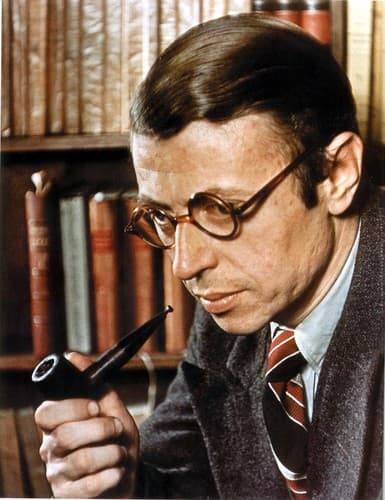
Jean-Paul Sartre

Jean-Paul Charles Aymard Sartre was a French philosopher, playwright, novelist, screenwriter, political activist, biographer, and literary critic, considered a leading figure in 20th-century French philosophy and Marxism. Sartre was one of the key figures in the philosophy of existentialism. His work has influenced sociology, critical theory, post-colonial theory, and literary studies, and continues to do so. He was awarded the 1964 Nobel Prize in Literature despite attempting to refuse it, saying that he always declined official honors and that "a writer should not allow himself to be turned into an institution."