“When I had nothing to lose, I had everything. When I stopped being who I am, I found myself.”
— Maria reflecting on her journey and transformation after leaving her small town to become a prostitute.

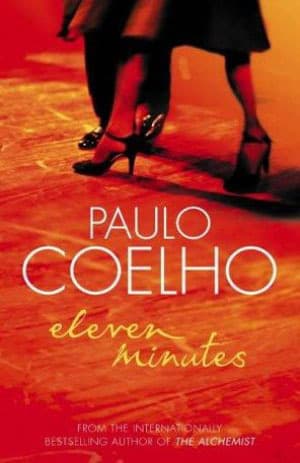
Paulo Coelho (2003)
Genre
Spirituality / Philosophy / Romance
Reading Time
360 min
Key Themes
See below
Sign in to track this book
Maria, a young woman disillusioned by love, travels from Brazil to Geneva and finds herself in prostitution, embarking on a spiritual journey through physical pleasure to discover the meaning of sacred sex and inner light.
Growing up in a small Brazilian village, Maria's early experiences with love are disappointing. At eleven, her first crush, Marcelo, rejects her, making her feel inadequate. A few years later, at seventeen, she falls for a fisherman who promises to marry her but then leaves her for an older, wealthier woman. These heartbreaks scar Maria, leading her to believe that love is a painful illusion. She develops a cynical, practical view, thinking emotional vulnerability only causes suffering, and that happiness comes from material security, not romance. This early trauma shapes her future choices and guarded approach to relationships.
Seeking a better life and an escape from her village, Maria moves to Rio de Janeiro. She finds work as a shop assistant, but life remains a struggle. One day, a Swiss businessman named Rolf offers her a contract to work as a dancer in a club in Geneva, Switzerland. Rolf describes a glamorous life of quick money and a new start in Europe. Despite initial hesitation and warnings from her parents, Maria, driven by her desire for financial independence and adventure, accepts the offer. She sees this as her chance to achieve wealth and escape her mundane existence.
Upon arriving in Geneva, Maria quickly discovers that Rolf's promises were false. The 'dancing' job he offered is actually prostitution at a club called the Copacabana. Initially shocked and dismayed, Maria feels trapped and betrayed. She considers returning home but realizes she cannot face her family as a failure. With no other immediate options and a growing sense of practicality, she decides to accept her new reality. She rationalizes that this is simply another transaction, a way to earn money and achieve her financial goals, separating her body from her emotions. This decision marks a turning point in her journey, as she deliberately enters a world she once would have avoided.
Maria quickly adapts to her new profession, adopting a pragmatic and detached approach. She sets strict rules for herself: no kissing clients, only engaging in sexual acts for a set period, and meticulously saving her earnings. She views her body as a tool for financial gain, a means to an end. She also begins to keep a diary, documenting her experiences and reflections on sex, love, and human nature. This diary becomes her confidante, a space to process her thoughts without judgment. She believes she has found a way to control her destiny and avoid emotional pain.
Working at the Copacabana, Maria encounters many men and has various sexual experiences. She observes the diverse motivations of her clients, from those seeking physical release to those yearning for connection or control. Through these experiences, she gains a deep, though often cynical, understanding of human sexuality. She learns about different fetishes, power dynamics, and the superficiality of pure physical pleasure. While she becomes skilled at her profession and even finds moments of curiosity, she realizes that these encounters, without emotional intimacy, leave her feeling empty. She begins to question if sex is more than just a physical act.
One day, Maria meets Ralf Hart, a young, sensitive Swiss painter, who becomes a regular client at the Copacabana. Unlike her other clients, Ralf is not solely interested in physical gratification. He is fascinated by Maria's spirit and depth. He introduces her to the concept of 'sacred sex' and 'inner light,' explaining that sex can be a profound, spiritual experience when infused with love and genuine connection. Ralf's gentle nature and philosophical insights begin to break down Maria's hardened exterior and cynical worldview. He sees beyond her profession, recognizing her true self, which both intrigues and frightens her, as it forces her to confront her beliefs about love and vulnerability.
As Maria spends more time with Ralf, she feels increasingly drawn to him. His kindness, understanding, and profound way of looking at life and love challenge everything she has come to believe. She experiences a deep internal conflict: her pragmatic, self-protective facade clashes with unfamiliar stirrings of genuine affection and vulnerability. She fears falling in love again, remembering past heartbreaks. Yet, Ralf's presence offers a glimmer of hope, a possibility that love might not always lead to suffering. She begins to question whether she can truly open herself to such a powerful emotion after deliberately shutting it off for so long.
Influenced by Ralf's discussions about 'inner light' and the spiritual dimension of existence, Maria begins a deep process of self-reflection. She uses her diary to explore her desires, fears, and the true meaning of happiness. She starts to look beyond the superficiality of her life, seeking a deeper connection with herself and the universe. This introspection is challenging, as it forces her to confront past traumas and the walls she has built around her heart. She realizes that true fulfillment comes not from material wealth or fleeting pleasure, but from understanding and embracing her authentic self, her spiritual core.
Ralf, who has fallen deeply in love with Maria, asks her to go to a lighthouse with him, a symbolic place for clarity and new beginnings. He explains that he wants to make love to her in a way that transcends the physical, a truly sacred act. This proposal forces Maria to make a crucial decision. She can continue on her path of emotional detachment and financial security, or she can risk everything for the possibility of true love and spiritual connection with Ralf. This moment is the culmination of her internal struggle, where she must choose between her past and the potential light of a future built on love and vulnerability. She chooses to go with him, signifying her willingness to embrace love.
At the lighthouse, Maria and Ralf have a deeply intimate and transformative sexual experience. This is not just a physical act but a profound merging of their bodies, minds, and spirits. Maria experiences sex in a way she never has before—it is filled with love, respect, and a sense of sacredness. This experience shatters her previous understanding of sex as purely transactional or physical. It is a moment of profound revelation, where she finally connects her sexuality with her emotions and spirituality, finding immense joy. This 'sacred sex' helps her understand the true potential of intimacy and vulnerability.
Following her transformative experience with Ralf, Maria decides to return to Brazil, but not as the cynical, heartbroken girl who left. She is a changed woman, having discovered her 'inner light' and the true meaning of love. She leaves behind her life as a prostitute, not with regret, but with a new understanding of herself and humanity. She takes with her the lessons learned, her diary filled with insights, and the deep love she shares with Ralf, who promises to follow her. Maria returns to her village with a renewed sense of purpose, ready to embrace life with authenticity and an open heart, no longer afraid of vulnerability or the possibility of true love.
The Protagonist
Maria transforms from a disillusioned young woman who views love as pain into someone who embraces vulnerability and discovers the spiritual dimensions of sex and love.
The Love Interest/Supporting
Ralf remains a steadfast and loving presence, acting as a catalyst for Maria's transformation without undergoing a significant personal arc himself.
The Supporting/Antagonist (initial)
Rolf's role is primarily instrumental in initiating Maria's journey; he does not undergo significant character development.
The Supporting
Heidi serves as a mentor figure for Maria, providing guidance and friendship without a significant personal arc.
The Mentioned/Supporting
Milan is a static character, serving as part of the setting and the system Maria operates within.
The Mentioned
Marcelo only appears in Maria's memories, serving as a foundational element of her emotional trauma.
The novel explores various facets of love, from superficial attraction to deep spiritual connection. Maria's journey begins with a cynical view of love as a source of pain, shaped by childhood rejections. Her experiences as a prostitute expose her to the transactional and purely physical aspects of sex. However, her encounter with Ralf Hart introduces her to 'sacred sex'—sex as a spiritual act of merging and deep intimacy, infused with love and respect. This theme challenges the conventional separation of physical pleasure and emotional connection, suggesting that true fulfillment lies in their integration. Maria's transformation is ultimately defined by her discovery that love, when embraced with vulnerability, can elevate sex to a sacred experience.
“Sex is a way of touching the Divine. When you make love, you are touching the consciousness of God. And so it is a sacred act.”
Maria's journey is one of self-discovery. Initially, she seeks external validation through wealth and escapes emotional pain through detachment. Her diary is a tool for introspection, allowing her to process experiences and question beliefs. Ralf's concept of 'inner light' encourages her to look inward for meaning and authenticity, rather than seeking it externally. The novel suggests that true fulfillment comes from understanding and embracing one's authentic self, confronting past traumas, and allowing one's spiritual essence to shine. Maria's return to Brazil signifies her acceptance of her 'inner light' and a commitment to living authentically.
“When I truly loved myself, I understood that I am always in the right place at the right time, and in the right place, I can relax. So I was able to stop worrying about what other people think.”
A central tension in the novel is Maria's struggle between protecting herself from emotional pain and allowing herself to be vulnerable. Her early heartbreaks lead her to build strong walls around her heart, adopting a pragmatic and detached approach to sex and relationships. She believes that emotional distance is the only way to avoid suffering. However, her growing affection for Ralf and his philosophy of love challenge this protective mechanism. The novel argues that true love and deep connection require vulnerability, the willingness to open oneself to both joy and potential pain. Maria's ultimate choice to embrace love with Ralf signifies her acceptance of vulnerability as a pathway to deeper fulfillment.
“The greatest prison people live in is the fear of what other people think.”
The novel portrays the commercialization of sex through Maria's experiences as a prostitute in Geneva. It depicts sex as a commodity, a transaction without emotional connection, where physical acts are exchanged for money. Maria initially adopts this view, detaching herself emotionally to survive. However, the narrative explores the emptiness of purely commercialized sex, showing how it leaves both the giver and receiver unfulfilled. Maria's journey is a quest to find meaning beyond this commercial aspect, to discover if sex can be more than just a physical exchange and instead a vehicle for deep human connection and spiritual growth.
“I was a prostitute, and I didn't regret it. I had discovered that sex was a way of connecting, but not the only way. And that it could be sacred, or not.”
A personal journal where Maria records her thoughts, observations, and reflections.
Maria's diary is a crucial plot device, serving as a window into her inner world. It allows the reader to access her unfiltered thoughts, fears, and evolving philosophies on love, sex, and life. The diary entries provide crucial exposition about her past traumas and her present struggles, revealing her intellectual and emotional growth. It acts as her confidante, a space where she can be truly vulnerable and process her experiences, ultimately becoming a record of her journey towards self-discovery and the articulation of her 'inner light'.
A symbolic location where Maria and Ralf share a transformative experience.
The lighthouse serves as a powerful symbol in the novel, representing clarity, guidance, and new beginnings. It is the chosen location for Maria and Ralf's pivotal encounter where they engage in 'sacred sex.' Lighthouses guide ships through darkness to safety, mirroring Maria's journey from a place of emotional darkness and confusion to one of clarity and spiritual enlightenment. The height and isolation of the lighthouse also suggest a transcendence of the mundane, creating a sacred space for their profound connection.
The nightclub in Geneva where Maria works as a prostitute.
The Copacabana Club is the primary setting for Maria's professional life in Geneva. It functions as a microcosm for the commercialization of sex and human desire. The club provides the backdrop for Maria's encounters with various clients, allowing the narrative to explore different facets of sexuality and human interaction within a transactional context. It represents the environment Maria initially believes she can control and detach from, highlighting the contrast between her external circumstances and her internal journey towards deeper meaning.
A philosophical idea introduced by Ralf, representing one's authentic, spiritual self.
The 'inner light' is a recurring philosophical concept, primarily introduced by Ralf Hart, which serves as a guiding principle for Maria's self-discovery. It refers to the authentic, spiritual essence within each individual, a source of truth, love, and fulfillment. This concept challenges Maria's external focus on material wealth and physical pleasure, urging her to look inward for genuine happiness. It acts as a metaphor for spiritual awakening and the realization that true value lies not in external circumstances but in one's connection to their true self.
“When I had nothing to lose, I had everything. When I stopped being who I am, I found myself.”
— Maria reflecting on her journey and transformation after leaving her small town to become a prostitute.
“Love is just a word until someone comes along and gives it meaning.”
— Maria pondering the abstract nature of love before meeting Ralf.
“The secret of life, though, is to fall seven times and to get up eight times.”
— Maria contemplating resilience in the face of her struggles and disappointments.
“Don't allow your mind to tell your heart what to do. The mind gives up easily.”
— Maria receiving advice about following her intuition and emotions over rational thought.
“Every day is a new day. It is a new beginning, a new chance to do things differently.”
— Maria's internal monologue about embracing change and new opportunities.
“We are all responsible for our own happiness.”
— Maria realizing that her well-being is her own responsibility, not dependent on others.
“The greatest love is the one that is not returned.”
— Maria's initial cynical view of love, contrasting with her later experiences.
“The only way to learn is by living.”
— Maria's philosophy on gaining knowledge and experience through direct involvement.
“Sometimes, we are so attached to our world that we don't want to see a different one.”
— Maria reflecting on people's resistance to stepping out of their comfort zones.
“When you want something, all the universe conspires in helping you to achieve it.”
— A philosophical idea Maria encounters, echoing themes from 'The Alchemist'.
“True love is an act of total surrender.”
— Maria's evolving understanding of what genuine love entails, particularly with Ralf.
“Physical love is the first step to spiritual love.”
— Maria's contemplation on the connection between physical intimacy and deeper spiritual connections.
“The strongest love is the love that can demonstrate its fragility.”
— Maria's realization about the strength found in vulnerability within relationships.
“We are not victims of our circumstances, we are products of our decisions.”
— Maria asserting her agency and responsibility for the choices she makes in her life.
Ready to see how well you understood this book? Take our interactive quiz with 10 questions.
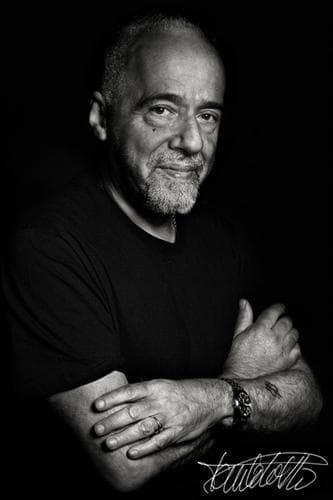
Paulo Coelho de Souza is a Brazilian lyricist and novelist and a member of the Brazilian Academy of Letters since 2002. His novel The Alchemist became an international best-seller and he has published 30 more books since then.

Kay Lynn Mangum
4.3
Stormie Omartian
4.3
Jerry Bridges
4.3
Walter Brueggemann
4.3
Rhonda Byrne
4.3
Brother Lawrence
4.3
Joseph Campbell
4.3
Unknown
4.3