BookBrief
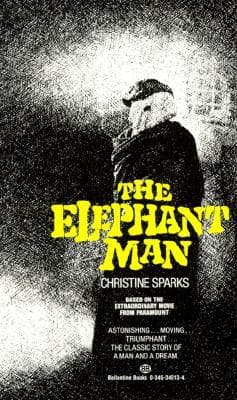
Elephant Man cover
Archivist's Choice

Elephant Man

Christine Sparks (1980)

Genre

Biography / History

Reading Time

360 min

Key Themes

See below

Track Your Reading

Sign in to track this book

The true story of John Merrick, the 'Elephant Man,' shows the soul and human needs beneath his deformed body, changing ideas about beauty and humanity.

Core Idea

Christine Sparks's "Elephant Man" goes beyond the shocking image of Joseph Merrick. It is a biography that looks at the social and medical rules around his life. The book says that Merrick, despite his severe physical deformities, was smart, sensitive, and strong. He lived in a world that used him and felt sorry for him. Sparks uses old records and medical facts to tell Merrick's story. It covers his early life in Victorian workhouses, his time as a 'freak show' act, and his later years with Dr. Frederick Treves at the London Hospital. The main idea is to understand identity, the right ways to care for others, and how kindness matters when people are very different.
Reading time
360 min
Difficulty
Medium
✓ Read this if...
You are interested in Victorian social history, medical ethics, disability studies, or a compassionate re-evaluation of a well-known historical figure.
✗ Skip this if...
You prefer a purely medical account of Merrick's condition without a focus on his personal life and societal context, or are looking for a light, quick read.

Core idea

The central argument and framework that powers the entire book.

Christine Sparks's "Elephant Man" goes beyond the shocking image of Joseph Merrick. It is a biography that looks at the social and medical rules around his life. The book says that Merrick, despite his severe physical deformities, was smart, sensitive, and strong. He lived in a world that used him and felt sorry for him. Sparks uses old records and medical facts to tell Merrick's story. It covers his early life in Victorian workhouses, his time as a 'freak show' act, and his later years with Dr. Frederick Treves at the London Hospital. The main idea is to understand identity, the right ways to care for others, and how kindness matters when people are very different.

At a glance

Reading time

360 min

Difficulty

Medium

Read this if...

You are interested in Victorian social history, medical ethics, disability studies, or a compassionate re-evaluation of a well-known historical figure.

Skip this if...

You prefer a purely medical account of Merrick's condition without a focus on his personal life and societal context, or are looking for a light, quick read.

Key Takeaways

1

Beyond the Monstrous Façade

True humanity lies beneath the surface of physical deformity.

Quote

Beneath that tragic exterior, within that enormous and deformed head, thrived the soul of a poet, the heart of a dreamer, the longings of a man.

The book says that John Merrick, despite his severe physical deformities that led to his public display as a 'freak,' had a rich inner life. He was smart, sensitive, and had deep feelings. His story questions quick judgments based on looks. It shows that human value and dignity come from within, not from the body's shape. Merrick went from being an object of curiosity to a respected person. This shows society's ability, and often failure, to look past what is visible and connect with the person inside. His acceptance by a few people, ...

Supporting evidence

Merrick's poetic expressions, his meticulous construction of a model cathedral, and his polite, articulate conversations once given the opportunity, all serve as evidence of his rich inner world, starkly contrasting with his outward appearance.

Apply this

Actively challenge your initial judgments of others based on their physical appearance or any perceived 'otherness.' Seek to understand their perspective, listen to their voice, and recognize their inherent dignity. Prioritize inner qualities over superficial traits in all interactions.

human-dignityempathyprejudice
2

The Burden of Appearance

Physical deformity can dictate a life of isolation and exploitation.

Quote

John Merrick had lived for more than twenty years imprisoned in a body that condemned him to a miserable life in the workhouse and to humiliation as a circus sideshow freak.

Merrick's life shows how extreme physical deformity, especially in the 19th century, could lead to a life of being cast out, put in institutions, and used. His condition meant he could not do normal work, forcing him into poverty in the workhouse, and then into the dehumanizing world of the sideshow. There, his body was a show, and his identity was lost in favor of his 'freakish' outside. That era's lack of medical knowledge and social help made his suffering worse. This shows how much a person's physical state can decide their social...

Supporting evidence

His initial years spent in the Leicester Union Workhouse and his subsequent career under various showmen who profited from his exhibition, often subjecting him to public degradation and harsh living conditions.

Apply this

Advocate for and support policies that ensure equitable treatment and opportunities for individuals with disabilities. Actively challenge the objectification of others, whether due to physical differences, social status, or any other characteristic. Recognize and resist systems that exploit vulnerability.

exploitationdisability-rightssocial-exclusion
3

The Ethics of Spectacle

The line between empathy and morbid curiosity is perilously thin.

Quote

The public's fascination with Merrick was a complex mix of horror, pity, and a deeply ingrained desire to witness the extraordinary, however grotesque.

The book looks at the troubling relationship between Merrick and the public. It shows the moral problems of 'freak shows.' Some viewers might have felt real pity, but the main reason to watch was a morbid curiosity that turned Merrick into an object, not a person. This show, while helping him survive, also took away his dignity and privacy. Even in his later refuge at the London Hospital, the many visitors, though allowed by Dr. Treves, make us wonder about the line between caring and continued display, even if in a more 'respectable'...

Supporting evidence

Merrick's initial exhibition by Bytes and other showmen, where he was presented as 'Half a Man and Half an Elephant,' and the subsequent 'viewings' by members of London society at the hospital, often orchestrated by Treves himself.

Apply this

Reflect on your own motivations when engaging with content that features individuals with unique physical or mental characteristics. Question whether your interest stems from genuine empathy and a desire for understanding, or from a more problematic curiosity. Support media that portrays individuals with differences respectfully and authentically.

medical-ethicsobjectificationpublic-perception
4

The Power of Compassion and Patronage

A single act of kindness can transform a life of despair.

Quote

It was through the intervention of Dr. Treves that Merrick was finally afforded a measure of peace, dignity, and acceptance previously unknown to him.

Dr. Frederick Treves's choice to help John Merrick leave his life as a sideshow act and give him shelter at the London Hospital was a key moment. It showed how much one person's kindness can do. Treves, at first interested in science, became a real helper and friend. His support gave Merrick a safe place and chances to learn and socialize. This let his true personality come out. This relationship shows how one person's willingness to look past the surface and truly care can change another person's life. It offers a strong opposite to ...

Supporting evidence

Dr. Treves's persistent efforts to secure Merrick a permanent place at the London Hospital, his daily visits, provision of books, and introduction of Merrick to influential members of society, including Queen Victoria's family.

Apply this

Seek opportunities to offer genuine support and kindness to those who are marginalized or overlooked. Use your position or influence to advocate for others, ensuring they receive the dignity and resources they deserve. Don't underestimate the ripple effect of a single, compassionate act.

benevolencementorshipsocial-responsibility
5

The Paradox of Freedom

Sanctuary can still come with its own form of confinement.

Quote

While no longer a 'freak' in a show, Merrick remained a captive of his condition, confined within the hospital walls, his freedom still limited by the very care that sustained him.

Even after finding safety at the London Hospital, Merrick's 'freedom' was strange. He was free from the direct use of the sideshow but stayed mostly confined inside the hospital. His movements were limited by his body and the need for constant care. While he gained dignity and mental stimulation, he never truly lived a normal, free life. This shows how, even with good intentions, severe disability can create its own kind of prison. Safety and care, while necessary, also limit personal freedom. His outings were rare and carefully manag...

Supporting evidence

Merrick's life at the hospital consisted of a dedicated room, limited excursions, and the constant presence of medical staff and visitors, illustrating his continued, albeit benevolent, confinement.

Apply this

When supporting individuals with disabilities, strive to balance necessary care with promoting as much autonomy and independence as possible. Consider how even well-intentioned interventions might inadvertently limit an individual's freedom or choices. Always prioritize their self-determination.

autonomydisability-studiesinstitutionalization
6

The Search for Normalcy

Despite profound differences, the desire for an ordinary life persists.

Quote

All he truly longed for was to be like other men, to walk without fear, to speak without impediment, to be accepted simply as John.

Underneath Merrick's unusual life was a normal human desire for a regular life. He wanted to be accepted, to move freely, to talk easily, and to be seen as a man, not a monster. This deep wish is clear in his efforts to talk, his joy in simple things like a walk in the park, and his appreciation for polite company. His story shows the common human need to belong and the pain of always being 'other.' It reminds us that even with the hardest challenges, the basic human wish for connection and some normal life stays strong and sad.

Supporting evidence

Merrick's careful articulation of words, his construction of a model church, his delight in receiving visitors, and his reported desire for a normal life, often expressed through his writings and conversations.

Apply this

Actively work to create inclusive environments where everyone, regardless of their differences, feels a sense of belonging and can participate fully. Recognize and validate the universal human desire for connection and acceptance. Avoid making assumptions about what others want based on their circumstances.

inclusionbelonginghuman-needs
7

Medical Progress and Ethical Responsibility

Advancements in medicine must be coupled with humane care.

Quote

The medical community’s initial response to Merrick was one of scientific curiosity, a drive to classify and understand, which sometimes overshadowed the individual's suffering.

Merrick's case shows how medicine's role in society changes. Dr. Treves's first interest was mostly scientific – to study and understand Merrick's rare condition. But his approach slowly changed to one of humane care. The book hints at criticism of a purely clinical view that can turn a patient into a 'case study' instead of a person. Merrick's story is a historical reminder that medical progress, while important, must always include ethical thoughts, kindness, and a full view of the patient's health. It asks how much observation is t...

Supporting evidence

Treves's initial detailed anatomical examinations and measurements of Merrick, contrasted with his later efforts to provide him comfort, education, and social interaction, showcasing a shift in approach.

Apply this

In any field, particularly in healthcare, always strive for a balance between scientific inquiry/professional duty and ethical, empathetic treatment of individuals. Prioritize patient dignity and well-being above purely academic or professional interests. Continuously reflect on the human impact of your work.

medical-humanitiespatient-advocacybioethics
8

The Enduring Mystery of Identity

How we are seen by others shapes, but does not define, who we are.

Quote

I am not an animal! I am a human being! I am a man!

Merrick's life is a deep look at identity. For years, he was called a 'freak,' an 'elephant man,' an object of fear. But despite these labels, his true self—a thoughtful, sensitive, and smart man—lasted and eventually shone. His desperate plea to be seen as a human shows the fight to keep one's inner self against strong outside views and being treated as less than human. The book says that while social labels can be very powerful and cause great suffering, they cannot completely destroy a person's inner dignity and self-awareness. His...

Supporting evidence

Merrick's own articulate expressions of his humanity, his gentle demeanor, his creativity with the model cathedral, and the profound impact he had on those who genuinely got to know him, all point to an identity far removed from his public persona.

Apply this

Be mindful of the labels you apply to others and yourself. Challenge and reject dehumanizing language or stereotypes. Actively seek to understand individuals beyond their most obvious characteristics, recognizing their complex and multifaceted identities. Affirm the humanity in everyone.

self-perceptiondehumanizationsocial-identity
9

The Weight of Difference

Living with extreme difference can lead to self-erasure and a longing for peace.

Quote

His sleep was a precarious balance, a constant threat, and ultimately, the very means of his escape.

Merrick's unique body caused him great pain and social exclusion. It also directly led to his early death. His large, heavy head meant he could not sleep lying down without risking suffocation, forcing him to sleep sitting up. His death, found lying down, suggests a deep wish for a 'normal' way to rest, even if it risked his life. This sad end powerfully shows the constant burden of his difference and the deep, almost unconscious, desire for a moment of ordinary peace, even at the highest cost. It speaks to the tiring reality of livin...

Supporting evidence

The medical details of his condition, particularly the weight of his head and the specific posture he had to maintain for sleep, and the circumstances of his death, found lying down in a position that would have caused asphyxiation.

Apply this

Cultivate deep empathy for those who live with chronic pain or debilitating conditions, understanding that their daily lives involve challenges unimaginable to others. Recognize that sometimes, the greatest human desire is simply for relief and peace, however it may be found. Support research and care that alleviate suffering.

chronic-illnesseuthanasiaquality-of-life
10

Legacy of the 'Elephant Man'

Merrick's story continues to challenge our perceptions of humanity and difference.

Quote

More than a century later, John Merrick's life remains a compelling and enduring testament to the human spirit's resilience against unimaginable adversity.

John Merrick's story is not just a historical detail. It has lasted through time to become a strong story that still makes people think and feel. It has been told in many ways, especially in the well-known film, keeping its importance. His life is a constant reminder to look past outer appearances, to question social norms, and to support the inner dignity of every person, no matter their body shape. The 'Elephant Man' is not just a biography; it is a story about kindness, being used, and the deep search for human connection in a worl...

Supporting evidence

The book itself, the motion picture it's based on, and the continued academic and public interest in John Merrick's life and the ethical questions it raises.

Apply this

Engage with stories that challenge your preconceptions and expand your understanding of human experience. Use historical narratives like Merrick's to inform contemporary discussions about disability rights, social inclusion, and ethical treatment. Be an advocate for compassionate understanding in your community and beyond.

cultural-impacthistorical-memorysocial-justice

Critical analysis

Notable Quotes

My life is one long winter's day.

A poignant reflection on his existence.

It is true that I am an outcast, but I am still a man.

A plea for recognition of his humanity despite his appearance.

I often think that if I were able to speak freely, I should have many things to say.

Reflecting on the limitations his condition placed on his communication.

My greatest wish is to be like other people.

Expressing his longing for normalcy.

The greatest tragedy is not being able to love or be loved.

A profound statement on the emotional void he experienced.

I am not a monster, I am a man.

A direct assertion of his identity against public perception.

I have found friendship where I least expected it.

Referring to the kindness shown by Dr. Treves and others.

My heart is not deformed, though my body may be.

Emphasizing his inner goodness despite his physical appearance.

I have learned to find beauty in unexpected places.

Reflecting on his ability to find solace despite his circumstances.

The world is a strange place, full of wonders and terrors.

A philosophical observation on life's complexities.

Sleep is my only escape from the pain.

Highlighting sleep as a temporary reprieve from his suffering.

Kindness is a language the deaf can hear and the blind can see.

A beautiful reflection on the universal power of kindness.

I have a soul, and it is as pure as any man's.

Asserting his spiritual equality.

Every man has a right to live and be treated with respect.

A fundamental statement on human rights.

Quiz

Test Your Knowledge

Ready to see how well you understood this book? Take our interactive quiz with 10 questions.

10
Questions
~5
Minutes
?
Best Score

Key Questions (FAQ)

John Merrick was an English man who lived in the 19th century and suffered from severe physical deformities. He became known as the 'Elephant Man' due to his appearance and endured a life of hardship, including time in a workhouse and as a circus sideshow attraction, before finding refuge and a measure of dignity later in his life.

About the author

Christine Sparks is a non-fiction author, best known for her work 'Elephant Man.' Her writing delves into compelling subjects, offering readers insightful and well-researched narratives. Sparks is recognized for her ability to bring complex topics to life with clarity and engaging prose.