BookBrief
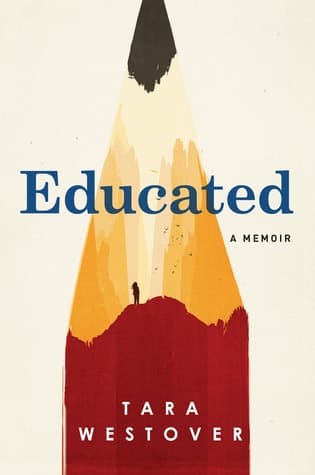
Educated cover
Archivist's Choice

Educated

Tara Westover (2018)

Genre

Biography / Memoir / Spirituality

Reading Time

7-9 hours

Key Themes

See below

Track Your Reading

Sign in to track this book

Raised in the Idaho mountains by fundamentalist survivalists, a young woman forges her own path to education, battling fierce family loyalty and personal demons to discover a world beyond her isolated upbringing.

Core Idea

Tara Westover's "Educated" explores how education changes a person and the high cost of becoming one's own self when it means breaking from strong family ties and a fundamentalist background. Westover argues that real education is more than learning facts; it is a process of critical thought, self-discovery, and the difficult rebuilding of one's worldview. This often means facing uncomfortable truths about the past and the stories one has been taught. The book details the psychological and emotional strain of cognitive dissonance, showing how holding onto a familiar, even harmful, reality can feel safer than embracing a new, freeing, but lonely truth. Westover says that while family can give love and identity, it can also be a trap, and the journey to intellectual and personal freedom often requires redefining self, home, and belonging.
Reading time
7-9 hours
Difficulty
Medium
✓ Read this if...
You are interested in powerful memoirs about overcoming adversity, the transformative nature of education, the complexities of family relationships, and the search for identity against an extreme fundamentalist background.
✗ Skip this if...
You prefer light-hearted reads or find detailed accounts of childhood trauma, abuse, and mental illness too difficult to engage with.

Core idea

The central argument and framework that powers the entire book.

Tara Westover's "Educated" explores how education changes a person and the high cost of becoming one's own self when it means breaking from strong family ties and a fundamentalist background. Westover argues that real education is more than learning facts; it is a process of critical thought, self-discovery, and the difficult rebuilding of one's worldview. This often means facing uncomfortable truths about the past and the stories one has been taught. The book details the psychological and emotional strain of cognitive dissonance, showing how holding onto a familiar, even harmful, reality can feel safer than embracing a new, freeing, but lonely truth. Westover says that while family can give love and identity, it can also be a trap, and the journey to intellectual and personal freedom often requires redefining self, home, and belonging.

At a glance

Reading time

7-9 hours

Difficulty

Medium

Read this if...

You are interested in powerful memoirs about overcoming adversity, the transformative nature of education, the complexities of family relationships, and the search for identity against an extreme fundamentalist background.

Skip this if...

You prefer light-hearted reads or find detailed accounts of childhood trauma, abuse, and mental illness too difficult to engage with.

Key Takeaways

1

The Double-Edged Sword of Family Loyalty

Family can be both a profound source of love and a powerful impediment to personal growth.

Quote

“I had to choose between my family and myself. And I chose myself.”

Westover's memoir shows the strong pull of family, especially one as isolated and unusual as hers. Her loyalty, coming from love, shared history, and a deep fear of being left alone, kept her tied to a dangerous and unfulfilling life for years. This loyalty shows up as an internal conflict, a constant struggle between her growing wish for an independent self and the ingrained duty to her family's views and demands. The book suggests that while family provides a basic identity, it can also become a trap, making self-definition a painfu...

Supporting evidence

Tara's repeated returns to her family home despite severe physical and emotional abuse, her attempts to reconcile with her brother Shawn, and her internal battle over whether to expose her family's dysfunction to outsiders.

Apply this

Reflect on the nature of loyalty in your own relationships. Identify instances where loyalty might be hindering your personal development or well-being. Practice setting healthy boundaries, even if it feels uncomfortable, recognizing that true love can exist alongside individual autonomy.

family-dynamicspersonal-autonomyboundary-setting
2

Education as Emancipation

Formal education is not merely about acquiring knowledge, but about gaining perspective, critical thinking, and the freedom to define oneself.

Quote

“Education is not a means to an end, but an end in itself. It is the journey of discovering who you are.”

Westover's journey from an isolated Idaho junkyard to Cambridge shows how education can change a life. For her, education is not just about facts or grades; it is an awakening. It gives her the words to explain her experiences, the historical context to understand her family's beliefs, and the critical tools to question the stories she grew up with. This intellectual freedom allows her to see her past not as an absolute truth, but as one view among many. This empowers her to build her own identity apart from her family's rules. It is ...

Supporting evidence

Her discovery of the Holocaust and the Civil Rights Movement, which were entirely absent from her upbringing, leading to a profound shift in her understanding of history and morality. Her ability to analyze her father's apocalyptic beliefs through a historical and psychological lens.

Apply this

Actively seek out diverse perspectives and information outside your immediate echo chamber. Engage in critical thinking by questioning established narratives and forming your own informed opinions. View learning as a lifelong process of self-discovery, not just a means to a career.

critical-thinkingself-discoveryintellectual-freedom
3

The Pain of Cognitive Dissonance

Reconciling conflicting truths and identities can be a deeply isolating and psychologically taxing experience.

Quote

“I was a new person, an independent person, but I was also still the girl who had grown up on the mountain. And those two people, they couldn't exist together.”

As Tara learns and gains new perspectives, she experiences intense cognitive dissonance. The world she finds through education directly conflicts with the reality her family taught her. This creates a deep internal split: she holds two truths that cannot be reconciled. This is not just an intellectual conflict; it is an emotional and existential crisis. The pain comes from feeling that to accept one truth is to betray the other, leading to a sense of being fundamentally broken or divided. The book shows how hard it is to combine diffe...

Supporting evidence

Tara's struggle to believe her own memories of abuse when her family denies them, leading her to question her sanity. Her internal conflict over whether to accept her father's anti-government rhetoric or the historical facts she learns in university.

Apply this

When faced with conflicting beliefs or realities, acknowledge the discomfort of cognitive dissonance. Instead of suppressing it, explore the roots of each belief. Seek to integrate new information without necessarily abandoning your past, but by re-evaluating and redefining it.

cognitive-dissonanceidentity-crisispsychological-trauma
4

The Elusive Nature of Truth and Memory

Personal narratives and shared memories are subjective, fluid, and often shaped by desire rather than objective fact.

Quote

“My life was a story, told by others, and I had no say in the telling.”

Westover's memoir goes into the unsettling realization that 'truth' is not fixed, especially within a family. Her family's selective memory, denial of past events, and active gaslighting make her face the subjectivity of recall. She learns that memories can be hidden, changed, or completely made up to keep a preferred family story or to protect people from uncomfortable realities. This struggle to confirm her own memories against her family's changed history is one of the most painful parts of her journey. It shows how uncertain our u...

Supporting evidence

Her brother Shawn's repeated physical abuse and the family's consistent denial or downplaying of these incidents, leading Tara to doubt her own sanity and memories. Her father's reinterpretation of events to fit his apocalyptic worldview.

Apply this

Be aware that memory is reconstructive, not purely reproductive. When recalling events, especially traumatic ones, acknowledge the potential for differing perspectives. Prioritize your own lived experience and seek external validation if your memories are being actively denied or distorted by others.

memory-biasgaslightingsubjective-reality
5

The Cost of Self-Invention

Forging a new identity often demands a profound, painful severance from one's origins and loved ones.

Quote

“I had built a new life, but I had paid for it with the old one.”

Westover's 'self-invention' is not a smooth development but a harsh separation. To become the person she was meant to be, she had to undo the person her family expected her to be. This process is shown as incredibly lonely and full of grief. The book emphasizes that while education gives the tools for self-definition, using that freedom often means alienating those who cannot or will not accept the new self. The 'grief that comes with severing the closest of ties' is a main theme, showing that personal growth, especially from a very c...

Supporting evidence

Tara's estrangement from her parents and several siblings, the emotional toll of cutting ties, and her recurring sense of displacement and loneliness despite her academic successes.

Apply this

Understand that significant personal transformation may lead to shifts in relationships. Be prepared for potential pushback or estrangement from those who are invested in your old identity. Prioritize your authentic self, even if it means navigating periods of loneliness or grief over lost connections.

self-actualizationgrief-and-lossidentity-formation
6

The Resilience of the Human Spirit

Despite extreme adversity and systemic neglect, the drive for knowledge and self-preservation can triumph.

Quote

“I was a child of the mountain, but I was also a child of God, and God had given me a mind.”

Tara Westover's story shows the strong human spirit. Raised without formal education, medical care, and often, emotional safety, her natural curiosity and strong will to survive pushed her toward self-improvement. Her ability to teach herself basic academic skills, navigate a university system she knew nothing about, and endure deep personal trauma says much about inner strength. The book shows that even in the hardest situations, the desire for understanding and a better life can be a strong, self-sustaining force. It demonstrates th...

Supporting evidence

Her self-directed learning of math and grammar to pass the ACT, her persistence at BYU despite her lack of foundational knowledge, and her continued pursuit of higher education at Harvard and Cambridge after experiencing severe familial trauma.

Apply this

Identify your own inherent strengths and curiosities. When facing obstacles, tap into your internal drive and resourcefulness, remembering that learning and growth are possible even without traditional resources. Cultivate a mindset of perseverance and self-reliance.

resilienceself-relianceperseverance
7

The Invisible Wounds of Trauma

Trauma, particularly from childhood, leaves deep scars that manifest in complex psychological and emotional ways.

Quote

“The past was a ghost, and it haunted me.”

Westover's story is not just about overcoming outside problems but also about dealing with deep internal wounds. The physical and emotional abuse she suffered, along with the isolation and neglect of her upbringing, leaves her with deep trauma that affects her relationships, her self-perception, and her ability to trust. Her panic attacks, self-doubt, and difficulty forming healthy attachments are clear signs of this unresolved trauma. The book suggests that while education can provide a way forward, it does not erase the past; instea...

Supporting evidence

Her struggles with panic attacks and anxiety during her early university years, her difficulty in trusting professors and friends, and her intense internal conflict and self-blame regarding her brother Shawn's abuse.

Apply this

Recognize that past trauma can significantly influence present behavior and emotional responses. Seek professional help or supportive communities to process and heal from past wounds. Practice self-compassion and patience during the healing journey, acknowledging that it is a complex and non-linear process.

childhood-traumaemotional-healingpost-traumatic-stress
8

The Power (and Peril) of Narrative Control

Those who control the family narrative wield immense power over individual identities and perceptions of reality.

Quote

“My father’s stories were the bedrock of our lives. They were the stories we told ourselves, and the stories we told the world.”

Tara's father, Gene, strongly controls the family's reality through his stories – especially his predictions of disaster, distrust of institutions, and fundamentalist Bible interpretations. These stories are not just beliefs; they are the family's way of operating, shaping every decision, every interaction, and every child's sense of self. The book shows how dangerous it is when one person's story becomes the only truth, stopping disagreement and preventing people from developing independent thought. Tara's struggle is a battle to rec...

Supporting evidence

Her father's conviction that the government was coming to 'get' them, leading to the family's isolation and refusal of medical care. His construction of Shawn as a 'good boy' despite his violent tendencies, forcing Tara to deny her own experience of abuse.

Apply this

Critically examine the dominant narratives within your own family or community. Question sources of information and authority. Empower yourself to challenge narratives that don't align with your own experiences or values, and actively seek to construct your own informed understanding of the world.

narrative-controlauthoritarianismtruth-vs-fiction
9

The Role of Mentorship and Kindness

Even small acts of kindness and belief from outsiders can be profoundly life-altering for those in isolation.

Quote

“I was a student, but more than that, I was a person who was seen.”

Amidst the challenges, Westover's journey has moments of unexpected kindness and guidance. Professors like Dr. Kerry and Dr. Steinberg, and friends like Charles, offer her not just academic help but also emotional support, validation, and a look into a world where empathy and intellectual curiosity are valued. These people are important lifelines, providing the outside confirmation and belief that was mostly missing in her early life. Their willingness to 'see' her, to listen without judgment, and to gently challenge her, creates the ...

Supporting evidence

Dr. Kerry's patient encouragement and belief in her academic potential despite her lack of background, Dr. Steinberg's empathetic listening and validation of her experiences, and Charles's friendship offering a sense of normalcy and acceptance.

Apply this

Be a mentor or supportive presence to others, recognizing the profound impact even small acts of kindness can have. Actively seek out mentors and communities that foster growth and offer validation. Practice empathy and active listening in your interactions.

mentorshipempathyhuman-connection
10

Finding Home in Oneself

True belonging is ultimately an internal state, cultivated through self-acceptance and a secure sense of identity.

Quote

“I had left home, but I had not yet found one.”

Tara's quest for an education is also a search for 'home.' At first, she seeks to return physically to her family or to fit comfortably into academia. However, as her journey continues, she realizes that true home is not a place or a group of people, but an internal state. It is about reconciling her different identities, accepting her past without being defined by it, and finding peace within herself. Her final 'home' is a self-possessed identity, built through great struggle, where she can exist authentically, free from the need for...

Supporting evidence

Her feeling of being an outsider at both the mountain and university, her struggle with feeling 'unhomed' even after achieving academic success, and her eventual acceptance of her unique journey and the person she has become.

Apply this

Focus on cultivating a strong sense of self and self-acceptance, rather than relying solely on external circumstances or relationships for a sense of belonging. Define 'home' as an internal state of peace and authenticity. Practice self-reflection to integrate different aspects of your identity.

self-acceptancebelonginginner-peace

Critical analysis

Notable Quotes

You could call this selfhood many things. Transformation. Metamorphosis. Falsity. Betrayal. I call it an education.

Reflecting on her journey from isolation to academia.

Everything I had worked for, all my years of study, had been to purchase for myself this one privilege: to see and experience more truths than those given to me by my father, and to use those truths to construct my own mind.

Describing the value of her education in breaking free from her upbringing.

The skill I was learning was a crucial one, the patience to read things I could not yet understand.

Early in her self-education, struggling with academic texts.

I had begun to understand that we had lent our voices to a discourse whose sole purpose was to dehumanize and brutalize others—because nurturing that discourse was easier, because retaining power always feels like the way forward.

Reflecting on her family's survivalist and conspiratorial beliefs.

My life was narrated for me by others. Their voices were forceful, emphatic, absolute. It had never occurred to me that my voice might be as strong as theirs.

Realizing her own agency after years of being controlled.

I am not the child my father raised, but he is the father who raised her.

Struggling with her relationship with her father after leaving home.

The past is beautiful only when you are not living in it.

Reflecting on her childhood with a mix of nostalgia and pain.

I had come to believe that the ability to evaluate many ideas, many histories, many points of view, was at the heart of what it means to self-create.

Describing the intellectual freedom gained through education.

Guilt is the fear of one's own wretchedness. It has nothing to do with other people.

Processing feelings of guilt after distancing from her family.

The most powerful determinant of who you are is inside you.

Asserting her self-worth against external definitions.

I shed my skin, or it shed me, and I stepped out of it, leaving it behind, a pile of dead scales.

Metaphor for her transformation and leaving her old self behind.

To admit uncertainty is to admit to weakness, to powerlessness, and to believe in yourself despite both. It is a frailty, but in this frailty there is a strength: the conviction to live in your own mind, and not in someone else's.

Learning to embrace doubt as part of intellectual and personal growth.

What is a person to do, I asked, when their obligations to their family conflict with other obligations—to friends, to society, to themselves?

Grappling with the conflict between family loyalty and personal growth.

I had been educated in the rhythms of the mountain, rhythms in which change was never fundamental, only cyclical. The same sun appeared each morning, swept over the valley and dropped behind the peak. The snows that fell in winter always melted in the spring.

Describing the static worldview of her upbringing.

Quiz

Test Your Knowledge

Ready to see how well you understood this book? Take our interactive quiz with 10 questions.

10
Questions
~5
Minutes
?
Best Score

Key Questions (FAQ)

'Educated' is Tara Westover's memoir about growing up in a survivalist family in rural Idaho without formal education, her journey to self-education, and her eventual academic achievements at universities like Brigham Young, Harvard, and Cambridge. It explores themes of family loyalty, self-invention, and the transformative power of education.

About the author