BookBrief
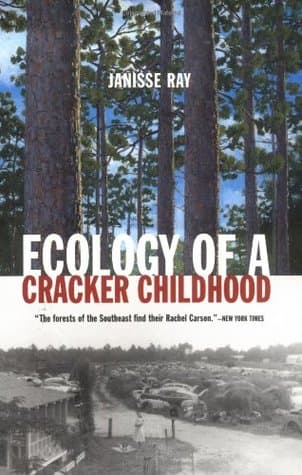
Ecology of a Cracker Childhood cover
Archivist's Choice

Ecology of a Cracker Childhood

Janisse Ray (1999)

Genre

Biography / Memoir / History

Reading Time

6-8 hours

Key Themes

See below

Track Your Reading

Sign in to track this book

From a childhood steeped in rural isolation and religious fundamentalism amidst a junkyard, Janisse Ray forged a passionate quest to resurrect the vanishing longleaf pine ecosystem, weaving together personal history and ecological elegy.

Core Idea

Janisse Ray's "Ecology of a Cracker Childhood" is a memoir interwoven with an ecological history of the vanishing longleaf pine ecosystem of the American South. Ray chronicles her childhood in a junkyard in rural Georgia, comparing her family life and 'cracker' identity with the beauty and destruction of the longleaf pine forests that once defined the region. The book argues that personal history, cultural identity, and environmental degradation are linked, showing how the destruction of a natural landscape mirrors and impacts human lives and memory. It also calls for conservation rooted in a deep understanding and love of place.
Reading time
6-8 hours
Difficulty
Medium
✓ Read this if...
You are interested in environmental literature, Southern American culture, the history of the longleaf pine, or memoirs that blend personal narrative with ecological advocacy.
✗ Skip this if...
You prefer straightforward historical accounts without personal reflection, or are not interested in detailed descriptions of natural environments and their destruction.

Core idea

The central argument and framework that powers the entire book.

Janisse Ray's "Ecology of a Cracker Childhood" is a memoir interwoven with an ecological history of the vanishing longleaf pine ecosystem of the American South. Ray chronicles her childhood in a junkyard in rural Georgia, comparing her family life and 'cracker' identity with the beauty and destruction of the longleaf pine forests that once defined the region. The book argues that personal history, cultural identity, and environmental degradation are linked, showing how the destruction of a natural landscape mirrors and impacts human lives and memory. It also calls for conservation rooted in a deep understanding and love of place.

At a glance

Reading time

6-8 hours

Difficulty

Medium

Read this if...

You are interested in environmental literature, Southern American culture, the history of the longleaf pine, or memoirs that blend personal narrative with ecological advocacy.

Skip this if...

You prefer straightforward historical accounts without personal reflection, or are not interested in detailed descriptions of natural environments and their destruction.

Key Takeaways

1

The Junkyard as a Microcosm

Early life in isolation shaped an ecological conscience.

Quote

My family was a junkyard, and I was a junkyard child.

Janisse Ray's upbringing in a rural Georgia junkyard, isolated by geography and her family's fundamentalist beliefs, shaped her. This environment, filled with discarded objects and natural processes, created a deep connection to the land. The junkyard, often seen as a blight, became her classroom, teaching her about decay, resilience, and the interplay between human impact and natural persistence. This early exposure to a changing landscape laid the groundwork for her later ecological activism, showing how environmental awareness can ...

Supporting evidence

Ray's detailed descriptions of her family's junkyard, including the types of cars, the accumulation of waste, and the wildlife that coexisted within it, serve as the primary evidence. Her recounting of daily life, such as scavenging and observing nature among the scrap, illustrates this formative period.

Apply this

Reflect on your own 'junkyard' – the unconventional or overlooked spaces in your past or present – and identify how these environments might have shaped your unique perspectives and passions, especially concerning the natural world or societal issues.


rural-isolationenvironmental-awakeningfound-landscapes
2

The Longleaf Pine's Ghost

A vanished ecosystem's memory fuels a fight for restoration.

Quote

The longleaf pine ecosystem, once covering ninety million acres, is now less than three percent of its original range.

The longleaf pine ecosystem, once common in the American South, is the book's central ecological focus. Ray details its past grandeur, its unique biodiversity—supporting species like the red-cockaded woodpecker and gopher tortoise—and its rapid destruction due to logging, agriculture, and fire suppression. Her narrative expresses a deep sense of loss, not just for the trees, but for the entire web of life and cultural heritage it sustained. This account of a lost world is a call to action, showing how understanding past ecological dev...

Supporting evidence

Ray provides historical data on the longleaf pine's original range and its drastic reduction. She describes the specific flora and fauna dependent on the ecosystem, such as wiregrass and various bird species, and recounts the historical logging practices that led to its decline.

Apply this

Research a critically endangered or lost ecosystem in your region. Understand its historical significance, the reasons for its decline, and current efforts for its restoration. Support local conservation groups working on these issues.

longleaf-pineecosystem-restorationbiodiversity-loss
3

Faith and the Forest

Reconciling fundamentalist upbringing with ecological reverence.

Quote

I was raised to believe that the earth was a temporary dwelling, a place to be used up, not cherished.

Ray's exploration of her fundamentalist Christian upbringing shows a tension between her inherited beliefs and her growing ecological consciousness. Her family's belief in the earth as a temporary human dominion, destined for destruction, conflicted with her love and respect for nature. This internal struggle is a theme, highlighting the challenges of combining religious doctrines with modern environmental ethics. Ray finds a way to bridge this divide, reinterpreting faith not as an excuse for exploitation, but as a mandate for stewar...

Supporting evidence

Ray recounts specific sermons, family discussions, and scriptural interpretations from her childhood that emphasized human dominion over nature and the impending end times. She contrasts these with her own developing sense of wonder and connection to the natural environment.

Apply this

Examine your own foundational beliefs or cultural narratives regarding nature. Identify any inherent conflicts with environmental stewardship and explore how these beliefs might be reinterpreted or evolved to support ecological responsibility.

religious-fundamentalismenvironmental-ethicsstewardship
4

The Power of Place

How specific landscapes shape identity and purpose.

Quote

You can never love a place until you know its history, its people, its dirt.

The concept of 'place' is important in Ray's memoir, showing how a specific geographical and cultural landscape shapes an individual's identity and life's purpose. For Ray, rural South Georgia, with its history of poverty, religious fervor, and ecological destruction, is an active character in her story. Her deep connection to this 'Cracker' South—a term she reclaims with nuance—informs her understanding of its beauty and its wounds. This connection turns her personal narrative into a commentary on the link between human and natural h...

Supporting evidence

Ray's detailed descriptions of the specific flora, fauna, and geology of South Georgia, coupled with her family history and local anecdotes, illustrate her deep connection to the region. She refers to specific towns, roads, and natural features.

Apply this

Spend time intimately exploring a local natural area or neighborhood. Learn its history, its ecological specifics, and the stories of the people who have lived there. This deeper connection can foster a stronger sense of responsibility and belonging.

sense-of-placesouthern-cultureregional-identity
5

Reclaiming 'Cracker'

Deconstructing a derogatory term to understand Southern identity.

Quote

To be a cracker meant to be poor, often uneducated, and tied to the land.

Ray reclaims and redefines the derogatory term 'Cracker,' using it to examine a specific, often misunderstood, segment of Southern identity. She unpacks the historical and cultural meanings of the term, linking it to working-class, often marginalized, white Southerners who lived off the land and whose lives were tied to the longleaf pine forests. By embracing this identity, she challenges stereotypes and reveals the complex relationship between poverty, land, and environmental impact. Her reclamation is about understanding the human e...

Supporting evidence

Ray delves into the etymology and historical usage of 'Cracker,' connecting it to cattle-driving and the sound of whips. She shares personal anecdotes and family stories that illustrate the lived experience of being 'Cracker' in rural Georgia.

Apply this

Consider a derogatory or misunderstood term associated with your own background or region. Research its origins and challenge its negative connotations by highlighting the complex realities and often-overlooked resilience of the people it describes.

southern-identitycultural-reclamationsocio-ecological-history
6

Memory as a Conservation Tool

Personal and collective memory as catalysts for ecological action.

Quote

The past is not dead. It's not even past.

Ray combines personal memoir with ecological history, showing how memory—both individual and collective—helps conservation. Her recollections of childhood, family stories, and community oral histories create a picture of a past landscape, contrasting it with the degraded reality. This act of remembering is a strategy to highlight what has been lost and to inspire action to restore it. By connecting the loss of the longleaf pine to the loss of a way of life, Ray argues that memory provides the emotional drive for environmental advocacy...

Supporting evidence

Ray's entire narrative structure is built on this premise, alternating between personal childhood memories and historical accounts of the longleaf pine. Specific family stories about hunting, farming, and observing nature serve as evidence of a past way of life intimately connected to the land.

Apply this

Engage with elders in your community or family to collect oral histories about local landscapes, changes they've witnessed, and the natural world. Documenting these memories can provide valuable insights for local conservation efforts.

oral-historycollective-memoryenvironmental-advocacy
7

The Interconnectedness of All Things

Human lives and natural systems are inextricably linked.

Quote

We are part of the land, not separate from it.

A core message of Ray's work is the link between human lives, culture, and natural ecosystems. She shows how the fate of the longleaf pine was an ecological and human tragedy, affecting the livelihoods, traditions, and spiritual well-being of the 'Cracker' people. The exploitation of the forest mirrors the economic and social marginalization of the people who lived within it. This perspective challenges the idea of nature as a separate entity to be managed or exploited, instead presenting it as an integral part of human identity and s...

Supporting evidence

Ray details how the decline of the longleaf pine affected local economies, traditional hunting practices, and the overall health of the community. She connects the poverty of her family to the broader exploitation of natural resources in the region.

Apply this

When considering any environmental issue, consciously seek to understand its human dimensions: how it impacts local communities, cultures, and economies, and conversely, how human actions contribute to or alleviate the problem. Advocate for solutions that address both.

systems-thinkinghuman-ecologyenvironmental-justice
8

Finding Beauty in the Broken

Appreciating resilience and potential in damaged landscapes.

Quote

Even in the junkyard, life found a way.

Ray's perspective, shaped by her junkyard childhood, allows her to find beauty and potential even in degraded landscapes. She depicts the ugliness of environmental destruction but also highlights nature's resilience and echoes of what once was. This ability to see beyond immediate damage and envision restoration helps conservationists, preventing despair and fostering hope. It teaches us that even scarred environments hold stories of survival and seeds of renewal, challenging us to look closer and invest in their recovery.

Supporting evidence

Ray's descriptions of the plants and animals that thrived in her family's junkyard, adapting to the altered environment, serve as evidence. She also notes the persistent presence of longleaf pine remnants in degraded areas, offering hope for restoration.

Apply this

Visit a local neglected or degraded natural area (e.g., an abandoned lot, a polluted creek). Observe signs of resilience and natural recovery. Consider how small-scale restoration efforts could amplify these natural processes.

ecological-resilienceurban-ecologyenvironmental-hope
9

The Call to Action for the Ordinary

Environmentalism is not just for experts, but for everyone.

Quote

It is not enough to love the land; you must fight for it.

Ray's memoir is a personal narrative that becomes a call to action, showing that environmental advocacy is not only for scientists or policy-makers. Her journey from a 'Cracker' childhood to a conservationist shows how ordinary individuals, rooted in their specific places and experiences, can become forces for change. She argues that love for the land, combined with an understanding of its history and threats, creates a reason to act. This empowers readers, suggesting that their unique perspectives and local knowledge are valuable in ...

Supporting evidence

Ray's own life story, from her childhood observations to her adult activism in longleaf pine restoration, is the primary evidence. She shares her personal struggles, doubts, and eventual triumphs in becoming an advocate, making her journey relatable.

Apply this

Identify a local environmental issue you care about. Research it, connect with local groups, and take a small, actionable step, whether it's volunteering, contacting a representative, or educating others. Your personal involvement matters.

citizen-sciencegrassroots-activismenvironmental-stewardship

Critical analysis

Notable Quotes

The longleaf pine is a tree of fire. It needs fire to clear out the understory, to expose the mineral soil for its seeds, to kill off competing hardwoods. It needs fire to live.

Describing the ecological role of fire in the longleaf pine ecosystem.

We are a nation of forgetters. We forget the land, we forget the trees, we forget the animals. We forget the people who knew these things.

Reflecting on the loss of ecological knowledge and connection to nature.

My childhood was a crack in the pavement, a sprout pushing through, a tenacious green thing in a world of concrete.

Metaphorically describing her resilient childhood in a challenging environment.

To love a place is to know its history, its geology, its plants, its animals, its people, its spirit.

Defining what it means to truly love and understand a place.

The greatest gift you can give your children is a love of the wild.

Advocating for instilling a connection to nature in future generations.

There are no empty places, only places that we have emptied of our attention.

Challenging the notion of 'wilderness' as devoid of human impact or meaning.

My father was a junkman, a collector of what others discarded. He saw value where others saw only trash. And in that, he was an ecologist before his time.

Reflecting on her father's unique relationship with waste and resources.

The South is a land of contradictions, of beauty and brutality, of generosity and meanness, of progress and stubborn resistance.

Describing the complex and often paradoxical nature of the American South.

To be a naturalist is to be a detective, always looking for clues, always trying to piece together the story of the living world.

Explaining the inquisitive and observant nature of a naturalist.

The world is not a machine, it is a living being, and we are part of it, not separate from it.

Expressing a holistic view of the natural world, rejecting a mechanistic perspective.

What we save, saves us.

A concise statement on the reciprocal relationship between conservation and human well-being.

There is a kind of holiness in the wild, an untamed grace that speaks to the deepest parts of us.

Reflecting on the spiritual and profound connection to untamed nature.

Every landscape has a story, and if you listen closely enough, it will tell you its secrets.

Encouraging a deep engagement with the natural world to understand its history and processes.

The destruction of a forest is not just the loss of trees; it is the loss of memory, of history, of future.

Emphasizing the profound and multifaceted impact of deforestation.

Quiz

Test Your Knowledge

Ready to see how well you understood this book? Take our interactive quiz with 10 questions.

10
Questions
~5
Minutes
?
Best Score

Key Questions (FAQ)

The book explores the intertwined themes of Janisse Ray's unconventional childhood growing up in a junkyard, her family's 'Cracker' heritage, and her developing passion for environmental conservation, particularly the protection of the longleaf pine ecosystem.

About the author