BookBrief
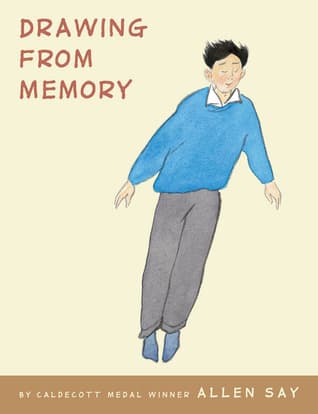
Drawing from Memory cover
Archivist's Choice

Drawing from Memory

Allen Say (2011)

Genre

Biography / Memoir / Children's / Creativity

Reading Time

30 min

Key Themes

See below

Track Your Reading

Sign in to track this book

During WWII in Japan, young Allen Say finds his artistic passion and a father figure in the demanding but inspiring Noro Shinpei, who teaches him drawing and self-discovery.

Core Idea

Allen Say's "Drawing from Memory" shows how an artistic apprenticeship, especially under Noro Shinpei, gave him a place and identity during post-war Japan's chaos. The book argues that true artistic skill and personal happiness come from dedicated work, an artist's unique way of observing details and feelings, and balancing cultural background with personal goals. It emphasizes that art is a transformative personal calling and a way to record history and build deep, family-like bonds.
Reading time
30 min
Difficulty
Easy
✓ Read this if...
You are interested in the formative years of a celebrated artist, the role of mentorship in creative development, or how art can be a sanctuary and a bridge between cultures.
✗ Skip this if...
You prefer purely instructional drawing guides, highly academic analyses of art, or extensive historical overviews of post-war Japan.

Core idea

The central argument and framework that powers the entire book.

Allen Say's "Drawing from Memory" shows how an artistic apprenticeship, especially under Noro Shinpei, gave him a place and identity during post-war Japan's chaos. The book argues that true artistic skill and personal happiness come from dedicated work, an artist's unique way of observing details and feelings, and balancing cultural background with personal goals. It emphasizes that art is a transformative personal calling and a way to record history and build deep, family-like bonds.

At a glance

Reading time

30 min

Difficulty

Easy

Read this if...

You are interested in the formative years of a celebrated artist, the role of mentorship in creative development, or how art can be a sanctuary and a bridge between cultures.

Skip this if...

You prefer purely instructional drawing guides, highly academic analyses of art, or extensive historical overviews of post-war Japan.

Key Takeaways

1

The Power of Artistic Apprenticeship

Mentorship provides not just technical skill but also a sense of belonging and validation.

Quote

Noro Shinpei became my spiritual father. He understood me, and in his studio, I found a home.

Allen Say's journey shows the great impact a mentor can have, especially for a young artist dealing with a disapproving family. His apprenticeship with Noro Shinpei, Japan's top cartoonist, was more than learning to draw; it was finding emotional and intellectual safety. Shinpei gave Say the encouragement and understanding his biological father lacked, confirming his artistic interests and helping him feel worthy. This relationship shows how important it is for aspiring artists to find guides who teach craft and also support their spi...

Supporting evidence

Say's description of his daily routine in Shinpei's studio, the rigorous training, and the emotional connection he felt with his master, contrasting sharply with his father's dismissive attitude towards his art.

Apply this

Seek out mentors who resonate with your creative vision and values, not just those with impressive résumés. Prioritize relationships that offer both technical guidance and emotional support. Don't be afraid to form 'spiritual' families when your biological one doesn't understand your path.

artistic-mentorshipapprenticeshipcreative-validation
2

Art as a Refuge Amidst Turmoil

In times of war and personal conflict, creative pursuits can offer solace and a sense of purpose.

Quote

While the war raged outside, inside Shinpei's studio, I found peace and a world I could control with my pencil.

The memoir clearly shows Allen Say's artistic growth during World War II. Despite constant danger, shortages, and emotional upset, his dedication to drawing and his apprenticeship with Noro Shinpei gave him a firm anchor. Art became more than a hobby; it was a sanctuary, a way to process the chaos, and a way to keep a sense of normalcy and purpose when the outside world was anything but normal. This shows the deep psychological benefit of creative work during hard times, demonstrating how creating can be a strong coping method, offeri...

Supporting evidence

Say's recounting of air raids and the general wartime atmosphere juxtaposed with his intense focus on his drawing lessons and the tranquility he found in Shinpei's studio.

Apply this

Cultivate a creative practice, however small, as a personal refuge. When facing stress or uncertainty, turn to your art or craft as a way to find calm, process emotions, and maintain a sense of agency over a small part of your life. Don't underestimate the therapeutic power of making things.

art-therapycreative-resiliencewartime-coping
3

The Artist's Eye for Detail and Emotion

True artistry lies in observing the nuances of the human condition and translating them honestly.

Quote

Shinpei taught me to look, really look, beyond the surface, to see the character and story in every face.

A repeated idea in Say's story is the strict training in observation he received from Noro Shinpei. It was not just about drawing shapes accurately; it was about capturing a subject's core, understanding their inner life, and showing emotion through small details. Shinpei pushed Say to see past the surface, to understand the 'why' behind what he saw. This focus on deep observation and emotional truth is key to Say's unique style as a memoirist and illustrator. It shows that great art is not just technical skill, but deep empathy and a...

Supporting evidence

Shinpei's insistence that Say draw from life, not just copy, and his critiques focusing on capturing personality and feeling in his portraits and caricatures.

Apply this

Practice mindful observation in daily life. Look at people, objects, and environments with a curious, analytical, and empathetic eye. Try to discern the story or emotion behind what you see, and then practice translating that into your chosen medium, focusing on conveying truth rather than just surface accuracy.

observational-drawingemotional-truthvisual-storytelling
4

Reconciling Cultural and Personal Identity

An artist's journey often involves grappling with heritage and forging a unique sense of self.

Quote

Being Japanese-American in Japan during the war, I often felt like I belonged nowhere and everywhere at once.

Say's mixed background as a Japanese-American living in wartime Japan created a complex challenge to his identity. This memoir explores how he dealt with feeling like an outsider, questioning his loyalties and sense of belonging. His art became a way to process these inner conflicts, letting him explore his heritage and eventually define who he was, separate from national pressures. The book suggests that for many artists, the creative process is linked to the search for self-identity, especially when dealing with multiculturalism or ...

Supporting evidence

Say's internal monologues about his 'American' and 'Japanese' sides, and his observations of the shifting attitudes towards foreigners during the war.

Apply this

If you have a complex background, use your creative work as a means to explore and integrate different aspects of your identity. Don't shy away from themes of heritage, belonging, or displacement; these can be rich sources of artistic inspiration and personal growth. Allow your art to be a space for self-definition.

cultural-identitybiculturalismartist-identity
5

The Enduring Value of Traditional Craft

Mastering fundamental skills provides a timeless foundation for any artistic expression.

Quote

Shinpei didn't believe in shortcuts. He believed in practice, repetition, and understanding the basics inside and out.

Noro Shinpei's teaching method, as Say describes it, was based on strict, traditional art training. This involved many hours of drawing from life, mastering anatomy, perspective, and composition – basic skills that apply to all styles and trends. Say's memoir supports the lasting value of this kind of disciplined craft. It suggests that while modern art often values concept over execution, a deep understanding of traditional techniques gives an artist the flexibility and control needed to express any idea well. This commitment to basi...

Supporting evidence

Say's detailed accounts of his drawing exercises, such as drawing the same object hundreds of times, and Shinpei's emphasis on meticulous observation and rendering.

Apply this

Regardless of your artistic medium, commit to mastering its fundamental skills. Don't chase fleeting trends before you understand the basics of your craft. Dedicate time to practice, repetition, and studying the 'grammar' of your art form; this foundation will empower your creativity in the long run.

art-fundamentalstraditional-artcraftsmanship
6

Finding Family Beyond Bloodlines

Meaningful connections can form through shared passions and mutual respect, creating a chosen family.

Quote

My father may have dismissed my dreams, but Noro Shinpei welcomed them as his own. He was the father I needed.

Allen Say's relationship with Noro Shinpei shows a powerful idea: finding family and belonging outside of traditional blood ties. Shinpei became not only Say's artistic mentor but also a father figure, giving the emotional support, understanding, and encouragement that Say's biological father did not. This 'spiritual father' provided stability and acceptance essential for Say's development, both as an artist and as a person. The memoir beautifully shows how shared passions and deep respect can form bonds as strong, or stronger, than f...

Supporting evidence

The contrast between Say's father's disinterest in his art and Shinpei's enthusiastic guidance and personal care, including providing food and shelter during difficult times.

Apply this

Actively seek out communities and individuals who share your passions and values. Don't limit your definition of 'family' to blood relatives; cultivate deep, supportive relationships with mentors, peers, and friends who uplift your creative and personal journey. Be open to giving and receiving this kind of chosen family support.

chosen-familysurrogate-parentcommunity-support
7

The Artist as a Recorder of History

Art provides a unique, personal lens through which to document and interpret historical events.

Quote

My drawings weren't just practice; they were a record of what I saw, what I felt, during those unbelievable times.

Beyond being a personal memoir, 'Drawing from Memory' is a historical document, offering a child's view of wartime Japan. Say's illustrations, with old photographs and maps, turn his personal story into a clear picture of a specific historical time. His art not only reflects his individual experiences but also captures the wider social and cultural mood of the time. This highlights the artist's important role as a record-keeper, someone who can give historical events personal meaning and emotional depth, offering perspectives that tra...

Supporting evidence

Say's use of his own childhood drawings and new illustrations depicting scenes of wartime life, such as air raid shelters, rationing, and the general mood of the populace.

Apply this

Consider how your own creative work can intersect with history or current events. Use your artistic skills to document, interpret, or respond to the world around you, whether it's personal history, community changes, or global events. Your unique perspective can offer valuable insights and emotional resonance to historical narratives.

art-historyvisual-journalismmemoir-as-history
8

Embracing Your Creative Calling

Despite obstacles, following your true passion is essential for self-fulfillment and purpose.

Quote

Even when my father told me to give up drawing, something inside me knew I couldn't. It was who I was.

Allen Say's story shows the strong pull of a creative calling. Despite his father's active discouragement and the huge challenges of wartime, Say never gave up his passion for drawing. This firm commitment was not just stubbornness, but a deep understanding that art was key to his identity and purpose. The memoir suggests that ignoring such a deep-seated calling leads to an unfulfilled life. Following one's creative path, even against societal or family expectations, is shown as a necessary act of self-preservation and the only way to...

Supporting evidence

Say's consistent return to drawing, even when facing punishment or criticism from his father, and his intense dedication to Shinpei's lessons.

Apply this

Identify your core creative calling and commit to it, even if it's challenging or misunderstood. Don't let external pressures or doubts extinguish your inner drive. Make time for your passion, protect it, and recognize that pursuing it is not a luxury, but a vital part of who you are.

creative-callingartistic-passionself-actualization
9

The Transformative Power of Storytelling

Sharing personal narratives through art allows for reflection, healing, and connection.

Quote

To draw from memory is to relive, to understand, and to share a part of yourself that words alone cannot fully capture.

'Drawing from Memory' is not just a retelling of events; it is an act of deep thought and healing through graphic storytelling. Say uses his adult artistic skill to revisit and re-interpret his childhood experiences, adding layers of understanding and emotional detail that a purely text-based memoir might miss. The mix of watercolor paintings, original cartoons, and photographs creates a rich, immersive experience that lets readers connect with his journey on many levels. This shows how storytelling, especially visual storytelling, ca...

Supporting evidence

The book itself is the evidence – a graphic novel combining various visual elements to tell a complex, personal story, showcasing the author's ability to reflect on his past through his art.

Apply this

Consider using visual elements in your own storytelling, whether personal or professional. Explore how images, sketches, or other visual aids can deepen the emotional impact and clarity of your narrative. Embrace the act of revisiting your past through creative expression as a path to greater self-understanding and connection.

graphic-memoirvisual-narrativeautobiographical-art
10

The Interplay of Loss and Inspiration

Significant personal losses can paradoxically fuel creative drive and provide new perspectives.

Quote

Losing Shinpei was like losing a part of myself, but it also solidified my resolve to carry on his legacy and find my own path.

The memoir explores how moments of loss, especially the eventual separation from his mentor Noro Shinpei, affected Allen Say's artistic journey. While very painful, this loss also pushed Say to fully embrace his own artistic identity and create his independent path. It highlights a common event in creative lives: that big personal setbacks or losses, while devastating, often force artists to dig deeper, find new inspiration, and ultimately define their unique voice. The emptiness left by a cherished figure can become a space for great...

Supporting evidence

The narrative arc covers Say's eventual departure from Shinpei's studio and Japan, implying a necessary step towards independence, even if tinged with sadness.

Apply this

When experiencing loss or significant life changes, allow yourself to grieve, but also look for how these experiences might transform your creative work. Consider how new perspectives, challenges, or emotional depths can inform and enrich your art. Sometimes, the end of one chapter is the beginning of a powerful new creative direction.

creative-resiliencegrief-and-artartistic-evolution

Critical analysis

Notable Quotes

I drew and drew. I drew on anything I could find.

Describing his early passion for drawing as a child in Japan.

My father said, 'You want to be an artist? Then you must go to the best art school in the world.'

His father's reaction to his artistic aspirations.

My parents believed that children should be seen and not heard, but they also believed that children should be given every opportunity to pursue their dreams.

Reflecting on his parents' seemingly contradictory but ultimately supportive nature.

Mr. Noro was a master of the brush, and he taught me to see with my heart, not just my eyes.

Learning from his art teacher, Noro Shinpei, in Japan.

He taught me that every line, every stroke, has a life of its own.

Further insight into Noro Shinpei's teaching philosophy.

America was a land of dreams, a place where anything was possible, even for a boy from Japan.

His perception of America before and upon his arrival.

I learned to speak English by reading comic books and watching movies.

Describing his method of learning English in America.

Drawing was my way of understanding the world, of making sense of it all.

Explaining the fundamental role of drawing in his life.

The hardest thing about being an artist is not the drawing, but the seeing.

A profound realization about the true challenge of art.

Memory is a tricky thing. It changes with time, like a river flowing over stones.

Reflecting on the nature of memory and its role in his memoir.

I wanted to draw stories that would make people feel something, just as the stories I read had made me feel.

His motivation for becoming a storyteller through his art.

Sometimes, the most important things are the ones you can't see, only feel.

A general observation about life and art, often related to emotion and intuition.

Every drawing is a journey, and you never know where it will take you.

Describing the unpredictable and exploratory nature of the creative process.

My life has been a series of fortunate accidents, each one leading me to the next.

Reflecting on the serendipitous path his life has taken.

Quiz

Test Your Knowledge

Ready to see how well you understood this book? Take our interactive quiz with 10 questions.

10
Questions
~5
Minutes
?
Best Score

Key Questions (FAQ)

'Drawing from Memory' is a graphic novel memoir by Allen Say, chronicling his journey as an artist in Japan during WWII. It details his apprenticeship under the renowned cartoonist Noro Shinpei, who became his mentor and 'spiritual father,' and explores themes of heritage, identity, and the pursuit of art amidst wartime.

About the author

Allen Say

Allen Say is an acclaimed Japanese-American author and illustrator, celebrated for his evocative autobiographical works. His Caldecott Honor book, 'Drawing from Memory,' and 'Grandfather's Journey' are masterpieces of visual storytelling, blending poignant narratives with his distinctive watercolor art. Say's writing often explores themes of identity, immigration, and cultural heritage, drawing deeply from his own experiences.