BookBrief
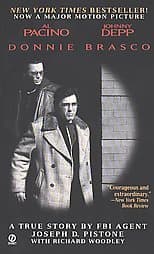
Donnie Brasco cover
Archivist's Choice

Donnie Brasco

Joseph D. Pistone (1988)

Genre

Biography / Memoir / History

Reading Time

8-10 hours

Key Themes

See below

Track Your Reading

Sign in to track this book

Undercover FBI agent Joseph Pistone goes deep into the 1970s mob as 'Donnie Brasco,' showing six years of deception, shifting loyalties, and the chilling reality of Mafia life.

Core Idea

Joseph D. Pistone's "Donnie Brasco" is a first-person account of going undercover into the Bonanno crime family. It shows the psychological and operational demands of such a job. The book details how Pistone built a new identity, navigated the complex social rules of the Mafia, and made great personal sacrifices to maintain a years-long deception. It argues that successful undercover work requires not just acting, but truly 'being' the false identity, blurring the lines between self and role.
Reading time
8-10 hours
Difficulty
Medium
✓ Read this if...
You are fascinated by true crime, the psychological aspects of deception, the inner workings of organized crime, or the personal sacrifices made by law enforcement agents.
✗ Skip this if...
You prefer fictionalized accounts over detailed, procedural memoirs, or are sensitive to gritty depictions of criminal life and its consequences.

Core idea

The central argument and framework that powers the entire book.

Joseph D. Pistone's "Donnie Brasco" is a first-person account of going undercover into the Bonanno crime family. It shows the psychological and operational demands of such a job. The book details how Pistone built a new identity, navigated the complex social rules of the Mafia, and made great personal sacrifices to maintain a years-long deception. It argues that successful undercover work requires not just acting, but truly 'being' the false identity, blurring the lines between self and role.

At a glance

Reading time

8-10 hours

Difficulty

Medium

Read this if...

You are fascinated by true crime, the psychological aspects of deception, the inner workings of organized crime, or the personal sacrifices made by law enforcement agents.

Skip this if...

You prefer fictionalized accounts over detailed, procedural memoirs, or are sensitive to gritty depictions of criminal life and its consequences.

Key Takeaways

1

The Art of 'Being' Undercover

Successful infiltration demands complete immersion, not just acting.

Quote

Living undercover means you are no longer yourself. You are the person you pretend to be, twenty-four hours a day, seven days a week. There is no off switch.

Pistone's six years as 'Donnie Brasco' were not just performances; they were a full immersion into a new identity. He became Donnie, adopting his mannerisms, speech, values, and even his biases. This was not about memorizing lines, but about internalizing a persona so deeply it became natural. This level of immersion is important for gaining trust from suspicious people like mobsters, who can often detect fakes. Any slip, any moment of 'Joseph Pistone' showing, would have meant immediate exposure and likely death. The book shows that ...

Supporting evidence

Pistone recounts constantly having to think like Donnie, making decisions based on Donnie's perceived motivations, and even experiencing emotional shifts consistent with the persona. His constant fear of being 'made' by mobsters like Lefty Ruggiero highlights the pressure to maintain the illusion flawlessly.

Apply this

When facing a challenging new environment or role, commit fully to understanding and adopting its inherent culture and expectations, rather than just superficially engaging. Authenticity, even if feigned initially, builds trust and rapport.

identity-transformationundercover-psychologytrust-building
2

The Mafia's Twisted Code of Honor

Loyalty and respect are paramount, but easily betrayed for self-preservation or profit.

Quote

To them, 'honor' was a flexible concept, bending to whatever served their interests at the moment. Loyalty was given until a better deal came along, or until you became a liability.

The book details the mafia's internal 'code,' which seems to value loyalty, respect, and omertà (silence). However, Pistone quickly learns this code is fake. While some loyalty exists within immediate crews, it is constantly weakened by paranoia, greed, and a ruthless practicality. 'Respect' is often fear, and 'honor' is used selectively. The ultimate loyalty is to oneself and the organization's profit, even if it means betraying associates, killing rivals, or sacrificing lower members to protect higher-ups. This hypocrisy drives the ...

Supporting evidence

The constant discussions among mobsters about 'getting whacked,' the swift and brutal retaliation for perceived slights, and the readiness of figures like Lefty to betray others if it meant saving himself, all illustrate this fluid morality. The ultimate example is the mob's willingness to 'make' Donnie Brasco, a virtual stranger, after he proves his 'worth,' only to turn on him instantly once his true identity is revealed.

Apply this

Don't mistake superficial displays of loyalty or camaraderie for genuine, deep-seated commitment. Always assess underlying motivations and potential conflicts of interest, especially in high-stakes environments.

omertamafia-culturebetrayal
3

The Mundane Reality of Crime

Beyond the glamour, mafia life is often tedious, petty, and driven by small-time cons.

Quote

People imagine big scores and constant action, but much of our time was spent on nickel-and-dime stuff, or just waiting around, talking nonsense.

Pistone breaks down the romantic image of the mafia often shown in popular culture. While there are moments of violence and high-stakes dealings, much of 'Donnie Brasco's' daily life involves ordinary activities: running small scams, collecting protection money from struggling businesses, gambling, and many hours of 'hanging out' in social clubs. The 'glamour' is often superficial, hiding a life of constant paranoia, limited legal opportunities, and a surprising amount of boredom. The 'big scores' are rare, and many mobsters live surp...

Supporting evidence

Pistone details numerous small-time operations, like fixing horse races, operating illegal gambling dens, and extorting local businesses for protection. The constant surveillance and the need to maintain a low profile despite their 'power' underscores the less-than-glamorous reality.

Apply this

Challenge romanticized notions of any profession or lifestyle. Seek to understand the day-to-day realities and less glamorous aspects to gain a more accurate and grounded perspective.

crime-realitymafia-mythgrind
4

The Psychological Toll of Deception

Maintaining a false identity exacts a heavy personal and emotional price.

Quote

Every day you live as someone else, you lose a little bit more of who you truly are. It's a constant battle to remember your real name.

Pistone's memoir explores the psychological burden of undercover work. For six years, he lived a lie, constantly fearing exposure, maintaining a fake past, and seeing horrific violence. This sustained deception led to deep personal sacrifices: separation from his family, the erosion of his own identity, and the blurring of lines between Joseph Pistone and Donnie Brasco. The emotional strain is clear throughout the book, as he deals with the morality of his actions, the empathy he sometimes feels for his targets, and the sheer loneline...

Supporting evidence

Pistone's descriptions of missing his family, the difficulty reconnecting with them after the operation, and his internal struggles with the violence he witnessed or participated in (even if feigned) clearly illustrate the psychological toll.

Apply this

Recognize that sustained periods of high-stress performance or emotional suppression can have significant long-term psychological impacts. Prioritize mental health and seek support when operating under extreme pressure.

undercover-stressidentity-crisisemotional-toll
5

The Power of Vulnerability (and Exploiting It)

Mobsters, despite their tough exterior, are deeply insecure and seek validation.

Quote

Lefty, for all his bluster, was a lonely man who craved respect and a loyal friend. I became that friend, and it was my most potent weapon.

One of Pistone's most insightful observations is how he used the deep insecurities of mobsters like Lefty Ruggiero. Despite their violent reputations, many mobsters are lonely, paranoid individuals who want respect, loyalty, and a sense of belonging. Donnie Brasco's consistent 'loyalty,' his willingness to listen, and his apparent admiration for Lefty's 'wisdom' created a strong bond. This vulnerability, hidden by bravado, became Pistone's entry point. He was not just a criminal associate; he was a trusted confidant, a 'friend' who pr...

Supporting evidence

The entire relationship between Donnie and Lefty hinges on this. Lefty constantly seeks Donnie's approval, confides in him about family issues and mob politics, and takes Donnie under his wing, demonstrating a profound need for connection and mentorship.

Apply this

When building rapport, look beyond surface-level bravado or posturing. Identify underlying human needs for connection, validation, or understanding, and address them genuinely (or strategically, if the context demands).

rapport-buildingpsychological-manipulationhuman-vulnerability
6

The Bureaucracy of Organized Crime

The mafia, like any large organization, suffers from internal politics, petty squabbles, and structural inefficiencies.

Quote

They were constantly fighting amongst themselves over territory, money, and perceived slights. It was like a dysfunctional corporation, but with more dead bodies.

Pistone reveals that the mafia, far from being a perfectly run criminal machine, is full of internal politics, turf wars, and disputes over hierarchy. Crews within the same family, and even members within the same crew, often fought over territories, rackets, and percentages. This constant infighting led to inefficiencies, missed opportunities, and ultimately, weakened the organization. The 'bosses' struggled to maintain control, often using violence to enforce their will, but even then, dissent and betrayal were common. This bureaucr...

Supporting evidence

Pistone details numerous instances of inter-family conflicts, disputes over gambling operations, and the constant jockeying for position and favor within the Bonanno family. The 'sit-downs' to resolve disputes often escalate into further tension, demonstrating the inherent instability.

Apply this

Understand that even seemingly powerful or monolithic organizations can be undermined by internal friction and inefficient structures. Look for these vulnerabilities when analyzing complex systems.

organizational-dysfunctioninternal-politicsmafia-structure
7

The Enduring Legacy of the Undercover Agent

The sacrifice of an undercover agent impacts both the individual and the fight against organized crime.

Quote

When you come out, you're not the same. And the world isn't either. The mafia was exposed, but a part of me remained with Donnie Brasco.

Pistone's operation had a huge impact on the American mafia, leading to many indictments and convictions, and significantly weakening several crime families. His testimony gave valuable insight into their inner workings, breaking the myth of their impenetrable secrecy. However, the book also shows the lasting personal cost to Pistone. He became a marked man, always living under threat, and his family suffered greatly. The 'Donnie Brasco' case became a standard for law enforcement, showing the power of deep infiltration, but also the e...

Supporting evidence

The book details the aftermath: the mob's $500,000 bounty on Donnie Brasco's head, Pistone's permanent placement in the witness protection program, and the widespread arrests and convictions that followed his testimony.

Apply this

Recognize that significant achievements often come with substantial personal sacrifices. Evaluate the long-term implications and support systems needed for individuals undertaking high-impact, high-risk endeavors.

law-enforcement-impactwitness-protectionpersonal-sacrifice
8

The Allure and Illusion of 'Made Man' Status

Becoming a 'made man' is a coveted but ultimately binding and dangerous illusion of power.

Quote

They talked about being 'made' like it was the highest honor, a sacred bond. But it was just another chain, tightening around your neck.

Throughout the book, becoming a 'made man' is presented as the ultimate goal for aspiring mobsters. It gives a perceived invincibility, a brotherhood, and a license to operate with more freedom. Pistone, as Donnie Brasco, was close to this 'honor,' which would have been an unprecedented deep penetration for the FBI. However, Pistone's story subtly shows this allure as a trap: a ritual that ties you to a life of crime, paranoia, and constant danger, where your 'brothers' can turn on you at any moment. The 'power' is fleeting, often an ...

Supporting evidence

Pistone describes the ceremony for becoming a 'made man' and the intense pressure and excitement surrounding it. Simultaneously, he details how even 'made men' like Lefty live in constant fear of being 'whacked' or imprisoned, illustrating the illusion of security.

Apply this

Critically evaluate any 'exclusive' status or membership that promises power or belonging. Assess the true costs and limitations associated with such affiliations, and whether the perceived benefits outweigh the binding commitments.

mafia-initiationillusion-of-powercult-of-personality
9

The Symbiotic Relationship with Law Enforcement

The success of undercover operations often relies on a deep understanding of the criminal psyche.

Quote

To catch a criminal, you have to think like one. You have to anticipate their moves, understand their fears, and exploit their weaknesses.

Pistone's success was not just about mimicry; it was about a deep, almost empathetic, understanding of the criminal mind. He did not just observe; he internalized the motivations, fears, and vulnerabilities of the mobsters he targeted. This deep psychological insight allowed him to predict their reactions, navigate dangerous situations, and build genuine-seeming rapport. The book suggests that effective law enforcement, especially in undercover roles, needs more than just legal knowledge or tactical skills; it demands a sophisticated ...

Supporting evidence

Pistone's ability to manipulate Lefty by appealing to his need for respect and loyalty, and his quick thinking to avoid suspicious questions or dangerous situations, are prime examples of his psychological acumen.

Apply this

In any negotiation or conflict, invest time in understanding the motivations, fears, and perspectives of the other party. This empathy, even if strategic, can provide critical leverage and lead to more effective outcomes.

criminal-psychologyempathetic-intelligencestrategic-thinking
10

The Unseen Sacrifices of Family

Undercover work extends its toll beyond the agent to their innocent family members.

Quote

My family paid a price for my duty that no one truly understands. They lived with the fear, the absence, and then the permanent threat.

While the book focuses on Pistone's experiences, it subtly highlights the huge and often unacknowledged sacrifices made by the families of undercover agents. Pistone's wife and children endured years of his unexplained absence, the constant fear for his safety, and the permanent disruption of their lives once his identity was revealed. They became targets, forced into witness protection, and forever lived with the consequences of his mission. This part of the story shows that 'duty' often has effects that go far beyond the individual,...

Supporting evidence

Pistone's brief, poignant mentions of phone calls with his wife, his longing for his children, and the necessity for his family to enter witness protection after the operation, all speak to their profound sacrifice.

Apply this

When evaluating career choices or high-stakes projects, consider not just the personal impact, but also the potential long-term consequences and sacrifices demanded of your family and close relationships.

family-sacrificecollateral-damageunseen-heroes

Critical analysis

Notable Quotes

When you're with wiseguys, it's like you're in a bubble. You're in their world, and nobody else exists.

Describing the insular nature of the Mafia world.

A wiseguy's word is his bond, until it's not. Then it's just a lie like any other.

Reflecting on the shifting loyalties and deceptive nature within the mob.

Forget about it.

A common mob phrase, often used to dismiss a topic or indicate something is not important.

For six years, I was Donnie Brasco. It's hard to just turn that off.

Pistone reflecting on the psychological impact of his deep cover.

Every day was a tightrope walk. One wrong move, one slip, and it was over.

Describing the constant danger and pressure of his undercover operation.

Lefty was a dinosaur, a relic from an older, more 'honorable' era of the mob.

Pistone's perception of Lefty Ruggiero's character and place in the changing mob.

The hardest part wasn't pretending to be a criminal; it was remembering I wasn't one.

Highlighting the internal struggle of maintaining his true identity while deep undercover.

They trusted me with their lives, and I was betraying them every single day.

Pistone grappling with the moral complexities of his role.

Money talks, and bullshit walks.

A pragmatic mob saying emphasizing the importance of profit and results.

You can't just be an acquaintance. You have to be a friend, a confidant, a brother.

Explaining the depth of relationships required to infiltrate the Mafia successfully.

The mob is like a spiderweb. Once you're in, it's very hard to get out.

Illustrating the pervasive and inescapable nature of organized crime.

I was living a double life, and both lives were equally real to me at times.

Describing the blurring lines between his true self and his undercover persona.

In the end, it was just business. Always just business.

A recurring theme about the underlying motivation for mob actions, even violence.

The streets teach you things that no academy ever could.

Reflecting on the practical, dangerous education gained from his undercover experience.

Quiz

Test Your Knowledge

Ready to see how well you understood this book? Take our interactive quiz with 10 questions.

10
Questions
~5
Minutes
?
Best Score

Key Questions (FAQ)

"Donnie Brasco" is the true story of FBI agent Joseph D. Pistone, who spent six years undercover infiltrating the New York Mafia posing as a jewel thief named Donnie Brasco. The book details his experiences, the people he met, and the inner workings of the mob world.

About the author